
POWER
-
 Smart Grid
Smart Grid Award: Vermont Electric Cooperative Takes Wise Approach to Smart Grid Projects
A cooperative in northern Vermont serving a largely rural area has proven that even small utilities can achieve great smart grid results by planning wisely. For improving service to its members by developing a grid modernization strategy before “smart grid” was a buzz phrase, Vermont Electric Cooperative is the winner of the first POWER Smart Grid Award.
-
News
Fracking Problems
By most estimates, natural gas is likely to become the dominant power generation fuel in the U.S. within perhaps a decade. The rapid growth in natural gas supplies follows advanced drilling techniques that can economically tap large shale gas reserves located deep beneath Earth’s crust. Unfortunately, it only takes one outlaw drilling company to frack it up for the rest of us.
-
 O&M
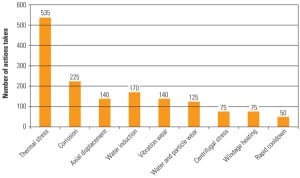
O&MMake Your Plant Ready for Cycling Operations
Cycling your steam power plant is inevitable, so now is the time to learn how to minimize equipment damage and assess the true costs of cycling. Whether cycling is required by the grid operator because of renewable integration or other factors, you must be proactive about updating operating processes and upgrade equipment so the transition to cycling operation goes smoothly.
-
Nuclear
Germany to Shut Down All Nuclear Reactors
Germany’s Chancellor Angela Merkel at the end of May officially endorsed a plan to shut down all 17 of the nation’s nuclear power plants by 2022. The decision, which gives the power-intensive nation just over a decade to find new sources of power for 23% of its energy needs, has had reverberations all over the world, though the future of nuclear—through growth in developing nations—continues to look sturdy.
-
Business
FERC Surrenders Jurisdiction over Station Power in California
In a surprising decision, a federal agency surrendered some of its regulatory authority—and parts of the industry don’t approve. The Federal Energy Regulatory Commission declined to defend its jurisdiction over station power in the California power market, potentially giving an economic advantage to utility generators nationwide and putting merchant generators at a disadvantage.
-
 Nuclear
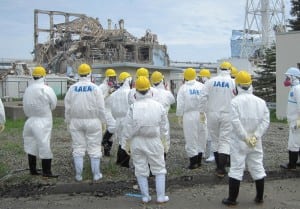
TEPCO: Most Fuel at Daiichi 1 Melted
Tokyo Electric Power Co. (TEPCO) in May discovered—after calibrating water gauges—that the water level in the reactor pressure vessel of Unit 1 at the quake- and tsunami-ravaged Fukushima Daiichi nuclear plant may have dropped to such low levels that the fuel was completely uncovered. This caused almost all the fuel pellets to melt and fall to the bottom of the vessel at a relatively early stage in the accident—roughly 15 hours after the March 11 earthquake that killed an estimated 28,000.
-
 Coal
CoalConsolidation, Market Distortions Underlie Remarks by Industry Executives
If you needed additional proof that the power industry is changing, the ELECTRIC POWER keynote and panel discussions over the past few years have provided it—top-of-mind issues have been significantly different each year. For the 2011 keynote speaker and panelists, the challenges of reliability, regulatory compliance, financing, and getting the fuel mix right took center stage. In the wake of Japan’s nuclear crisis, safety also featured prominently.
-
 Nuclear
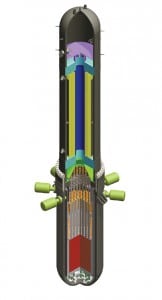
Holtec, Westinghouse Roll Out Small Modular Reactor Designs
As the Daiichi nuclear crisis has governments around the world reconsidering their nuclear-heavy energy plans and scrutinizing the safety of existing reactors and third-generation designs, several developers are touting the merits of small modular reactors (SMRs).
-
 Nuclear
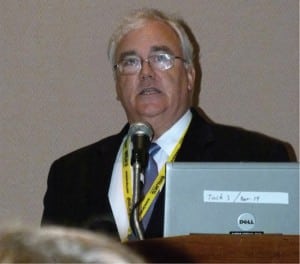
Nuclear Power in the Shadow of Fukushima
Risk, risk management, and the specter of Fukushima ran through the nuclear track at May’s ELECTRIC POWER Conference in Chicago. The reality of risk, driven home by the horrendous events in Japan, was a recurring theme in many presentations, in questions to speakers, and in the conversations among delegates during informal moments.
-
 Hydro
HydroCarbon Trust: Marine Energy Has High Potential but Faces Several Challenges
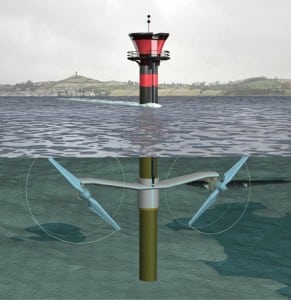
In a an analysis released this May, nonprofit UK group Carbon Trust admits that there is “still considerable uncertainty as to whether wave and tidal systems will play a meaningful role in meeting global energy needs,” but it suggests, based on high and low scenarios, that up to 240 GW of marine capacity could be deployed globally by 2050. Roughly 75% of this capacity will come from wave and the remainder from tidal energy.
-
 O&M
O&MSolid Fuels: Moving Material and Managing Emissions
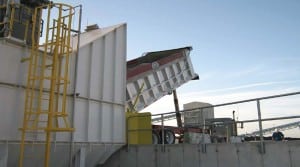
In today’s solid-fueled power plant, managing emissions and moving materials more defines the task than the traditional work of making megawatts. That’s the message that emerged from the coal and solid fuels track at this year’s ELECTRIC POWER.
-
Business
POWER Digest (July 2011)
Indonesia Sees Surge in Contracts for New Power Plants. Indonesia is Southeast Asia’s largest economy, but because it is stricken by chronic power shortages that limit economic growth, the nation’s government is pushing for massive infrastructure improvements. A consortium of Japan’s Electric Power Development (J-Power), Itochu Corp., and Adaro Energy, an Indonesian coal miner, on […]
-
 Solar
SolarUtilities Increase Renewable Energy Capacity
Driven by state RPS requirements and the desire to diversify their energy sources, U.S. utilities continue to add more renewable power to their generation portfolios. As a result, they must deal with a number of important issues, including resource availability that varies geographically.
-
Legal & Regulatory
California’s New RPS: Opportunity Squandered
In April, California Governor Jerry Brown (D) signed Senate Bill 2 (SB2) into law. When it becomes effective later this year, SB2 will be the primary legislation governing implementation of the California Renewables Portfolio Standard (RPS) program.
-
 Solar
SolarSunny Days Ahead for Solar
In the U.S., developers of thermal and photovoltaic solar plants face a number of challenges in their efforts to deploy more utility-scale solar power. Some trends, however, are helping solar proponents move this renewable energy source closer to becoming a mainstream generating option.
-
O&M
Texas Competitive Model Spreads to Pennsylvania and Illinois
A record 400 attendees participated in KEMA’s 22nd annual Executive Forum in San Antonio, Texas, in late April to debate and discuss the “retail resurgence” of competitive electricity sweeping America.
-
 News
NewsSpectrophotometer with Radio Frequency Identification
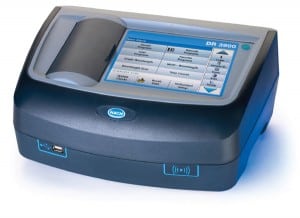
Hach Co. unveiled its DR 3900 spectrophotometer featuring state-of-the-art radio frequency identification (RFID) technology. Hach, which describes the device as being “similar to a GPS telling you when to turn,” also says that the DR 3900 requires less training and increases confidence in the test results. This helps water and wastewater facilities prevent measurement errors. […]
-
Business
New Opportunities Abound for Retail Electric Suppliers
Following the conclusion of the KEMA conference (see previous story), Mark Axford had the opportunity to talk with Phillip Tonge, recently appointed president of Spark Energy LP. Spark Energy is a retail energy provider (REP) of electricity and natural gas in 16 states that have opened their markets to competition for industrial, commercial, or residential customers.
-
 News
NewsNew Winding Resistance Meter
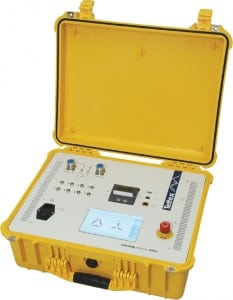
The Tettex 2293 from Swiss firm Haefely Test AG is the result of extensive research and years of experience testing transformers. A simple one-time-connection system, together with the simultaneous winding magnetization method (SWM), drastically reduces measuring time. The SWM guarantees fast and reliable measurements even on large power transformers with delta windings on the low-voltage […]
-
O&M
Predictive Maintenance That Works
This installment of the series continues our review of different conditioning-monitoring techniques commonly in use at power plants using any generation technology. In the May issue we began exploring specific PdM techniques with an examination of electrical surge comparison and motor-current signature analysis.
-
 News
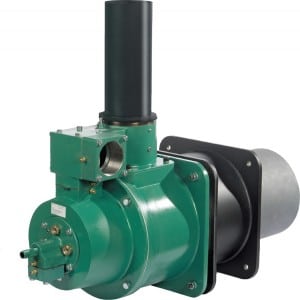
NewsSelf-Recuperative Burner
Eclipse Inc. introduced the TJSR v5 self-recuperative burner for direct-fired furnace heating applications. The advanced burner design combines a high-velocity flame with fuel-saving recuperation. A space-saving integral eductor pulls the furnace exhaust through an internal ceramic recuperator. The recuperator preheats the incoming combustion air to very high levels, which improves furnace operating efficiency to reduce […]
-
 Coal
CoalUsing Fossil-Fueled Generation to Accelerate the Deployment of Renewables
It may seem counterintuitive, but the strategic coupling of simple- and combined- cycle technologies with renewable generation could establish the conditions necessary for adding more renewable megawatts to transmission grids around the world.
-
 News
NewsAerogel Coating for Surface Insulation
Massachusetts-based Cabot Corp. recently introduced Enova, an aerogel that is a new high-performance thermal additive designed specifically for insulation coatings. Enova aerogel is designed for application to surfaces that are not already insulated but ideally should be. Cabot researchers have found that applying a 1-millimeter coating containing Enova aerogel to a 200C metal surface meets […]
-
 Coal
CoalUnderground Coal Gasification: Another Clean Coal Option
Underground coal gasification (UCG) is the gasification of coal in-situ, which involves drilling boreholes into the coal and injecting water/air or water/oxygen mixtures. It combines an extraction process and a conversion process into one step, producing a high-quality, affordable synthetic gas, which can be used for power generation. Still in the early stage of commercialization, UCG is poised to become a future major contributor to the energy mix in countries around the world.
-
 News
NewsSmart Grid–Ready Small Wind Turbine
Distributed wind generator supplier Southwest Windpower unveiled a small wind turbine for commercial and residential use, the Skystream 600, which it claims is the “most efficient power grid-connected turbine in its class, providing an average of 7,400 kWh of clean, low-cost energy per year per household in 12 mph average annual wind speeds.” The company […]
-
 Hydro
HydroHydro: The Forgotten Renewable Rebounds
When President Obama unveiled his “clean energy standard” in the 2011 State of the Union address in February, and again when he spoke of his administration’s energy policy in late March, one form of electrical energy was conspicuous by its absence: hydropower. Hydro is the forgotten form, the politically incorrect renewable, the invisible generation. To borrow the complaint of comedian and Caddyshack movie star Rodney Dangerfield, hydro projects “don’t get no respect.”
-
 News
NewsMicrogrid System Controller
Encorp LLC announced the launch of its Microgrid System Controller, which it says is the industry’s first microgrid system controller to connect onsite synchronous generators with renewable energy assets—such as photovoltaic systems, wind, and microturbines—and then monitor and control the resulting microgrid. The controller has already been successfully installed at a major international defense contractor […]
-
 O&M
O&MDefeating Concrete Reinforcing Steel Corrosion
Four concrete cooling towers at a coal-fired electrical generation plant exhibited reinforcing steel corrosion that was causing concrete deterioration. This case study follows the repairs to those towers—how the corrosion control solution was selected, how repairs were made, and how follow-up tests found the repairs to be effective three years later.
-
 News
NewsEmergency Lighting Management System
Thomas & Betts’ Emergi-Lite Nexus Emergency Lighting Management System provides real-time status of the entire emergency lighting and exit-sign system, runs system diagnostics, performs required monthly and annual functional tests, generates maintenance logs, and runs compliance reports from a central control unit. Additionally, the system operates independently of the emergency lighting and exit sign, so […]
-
Business
A Level Playing Field No More
FERC has surrendered jurisdiction over station power in California, putting merchant generators nationwide at risk of disadvantage to utility generators.