
Global Monitor
-
 Gas
GasMitsubishi Wraps Up Development of J-Class Mega Turbine
This March, Japan’s Mitsubishi Heavy Industries Ltd. (MHI) quietly completed development of the "J-series" gas turbine — a machine that has been extolled in the turbo-machinery world for its ability to produce one of the world’s largest power generation capacities and highest thermal efficiencies.
-
 Nuclear
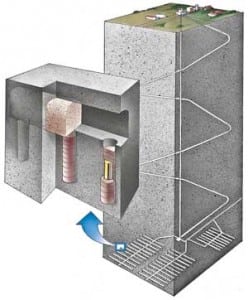
Sweden Selects Site of First Permanent Spent Nuclear Fuel Repository
In early June, as U.S. Energy Secretary Steven Chu confirmed to a House Subcommittee that Yucca Mountain repository was, without doubt, "off the table" and that a blue ribbon panel would further advise the government on what it should do with its high-level nuclear waste, Sweden announced the site of what could be the world’s first permanent spent fuel repository.
-
 Hydro
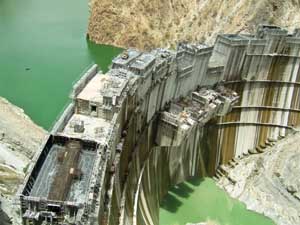
HydroEthiopia Completes Construction of Africa’s Tallest Dam
Ethiopia, the landlocked nation in East Africa from which key tributaries to the Nile River originate, completed construction of the continent’s highest dam, the 188-meter Tekezé Arch Dam (Figure 3) in February.
-
 Gas
GasQatar Starts Construction on Middle East’s Largest Power and Water Plant
The gas-rich Persian Gulf state of Qatar in May commenced construction of the region’s largest power and water plant, a massive project comprising eight gas turbine generators, eight heat-recovery steam generators, four steam turbine generators, and 10 desalination units.
-
 Wind
Wind"Smart Turbine Blades" to Improve Wind Power
Engineers at Purdue University and Sandia National Laboratories have developed a technique that uses sensors and computational software to constantly monitor forces exerted on wind turbine blades. Their achievement could one day improve the efficiency of wind turbines by providing the blades’ "smart" structure with necessary data to adjust to rapidly changing wind conditions.
-
 Business
Energy Storage Efforts Making Progress
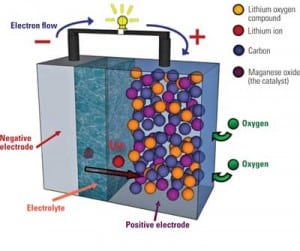
The intensifying spotlight on renewable energy seems to be casting a brighter light on the energy storage problem, with lawmakers, researchers, and investors scrambling to seek out the most feasible solution to bridge the intermittent nature of renewable power sources.
-
 Solar
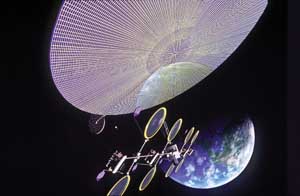
SolarPG&E Makes a Deal for Space-Based Power
Just as reports emerged earlier this year that NASA had abandoned, for lack of financial resources, its research into space-based solar power that would be harnessed via orbiting solar arrays beaming microwaves to earthly receivers, California’s Pacific Gas & Electric Co. (PG&E) wrote the California Public Utilities Commission (PUC) requesting its approval of a power purchase agreement from a similar technology.
-
 News
NewsSouth Korea to Install Longest Superconductor Cable System
South Korea is gearing up to install the world’s longest distribution voltage superconductor cable system near Seoul by mid-2010. This April, the nation’s largest power cable manufacturer, LS Cable, ordered about 50 miles of 344 superconductors — American Superconductor Corp.’s (AMSC) second-generation high-temperature superconductor (HTS) wire. It plans to strand that wire into a 22.9-kV […]
-
 Nuclear
China Begins Construction of World’s First AP1000 Reactor
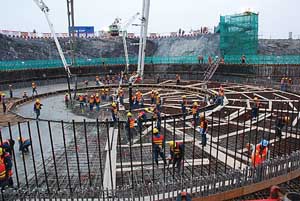
Construction of the world’s first nuclear power plant to use U.S.-based Westinghouse Electric’s AP1000 reactor technology commenced this April in China, with the pouring of 5,200 cubic meters of concrete at the nuclear island at Sanmen in Zhejiang province (Figure 3). The two-unit Sanmen plant will be built in three phases, with the first reactor […]
-
 Coal
CoalAustralia Faces Imminent Power Supply Issues, Groups Say
Australia, the world’s second-largest exporter of thermal coal and uranium, and a significant exporter of liquefied natural gas (LNG), faces inevitable electricity rationing and the threat of blackouts unless the government acts urgently to ensure large-scale investments are made in new power-generating capacity, experts from five nations said in April. The Australian Academy for Technology […]
-
 Solar
SolarMajor Advancements for Polymer Solar Cell Technology
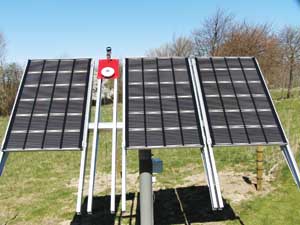
Denmark’s Risø DTU National Laboratory for Sustainable Energy in late April announced it had connected the world’s first polymer solar cell plant to the grid. The achievement follows years of research into the novel photovoltaic (PV) technology that has been touted as a future inexpensive, flexible, and customizable alternative to silicon crystal solar cells. The […]
-
 Gas
GasHungary Building High-Efficiency Gas-Fired Plant
Germany’s E.ON laid the foundation stone in late March for a 433-MW combined-cycle power plant in Gönyü (Figure 6), a power-stricken region in northwestern Hungary. The power plant, expected to begin operation in 2011, will operate with a net efficiency of more than 58% — making it one of the most efficient power plants in […]
-
-
 Waste to Energy
Microbe Turns Carbon Dioxide into Methane
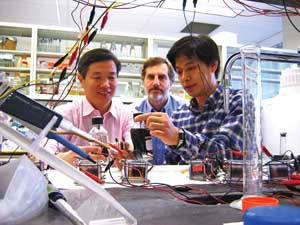
Microbe Turns Carbon Dioxide into Methane A team of Penn State engineers say that a tiny self-perpetuating microbe can take electricity and directly convert carbon dioxide and water into methane, potentially producing a portable energy source with a carbon-neutral footprint. Methanogenic microorganisms produce methane in marshes and dumps, but scientists thought that the organisms turned […]
-
-
 Coal
CoalFirstenergy to Convert Coal-Fired Burger Plant to Biomass
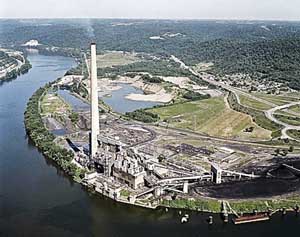
Confronted with a district court ultimatum that would have forced it to install expensive pollution controls or close two coal-fired units at its R.E. Burger Plant in Shadyside, Ohio, Akron-based FirstEnergy Corp. announced in April that it would convert them to biomass. When the $200 million retrofit is complete, as is expected by 2013, the Burger Plant will likely be one of the largest biomass facilities in the U.S.
-
 Solar
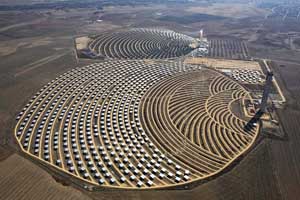
SolarInterest in Solar Tower Technology Rising
Though solar thermal tower technology has been around since the 1970s, to date, only one plant in the world commercially generates electricity: Abengoa Solar’s 11-MW PS10 tower just outside Seville, in Spain’s Andalucía desert has been grid-connected since early 2007. Because the technology relies on heat from solar energy that is reflected by mirror arrays (heliostats) onto a tower-mounted receiver, installations tend to be site-specific, expensive, and high-maintenance.
-
 Hydro
HydroTidal Barrages Could Power 5% of UK
Barrages across the Solway Firth, Morecambe Bay, and the Mersey and Dee estuaries in the northwest UK could provide more than 5% of the nation’s electricity and meet half the region’s electricity, a study by engineers at the University of Liverpool has found.
-
 Coal
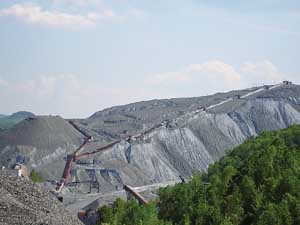
CoalGeologists Map Carbon-Trapping Rock Formations
U.S. scientists concerned about carbon dioxide (CO2) leaks from sequestration attempts have been pursuing the option of natural chemical reactions within the earth to turn the carbon back into a solid, and they have identified an abundant supply of large rock formations around the world that could be used a vast sink for the heat-trapping gas.
-
 Geothermal
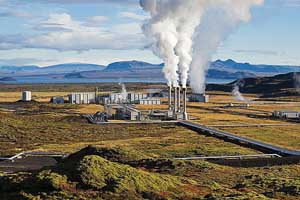
Tapping Geothermal Energy with a Comprehensive Strategy
Geothermal energy in Europe may have been used for centuries — it was popularized by the Romans and adopted by the Turks — but geothermal-generated electricity was first produced at Larderello, Italy, in 1904. Since then, its growth on the continent has shot up to 820 MW. But, according to the European Renewable Energy Council, the resource’s full potential has barely been harnessed.
-
 News
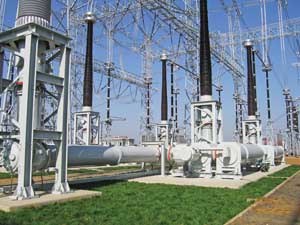
NewsSwitchgear Technology Surpasses 1 Million Volts
Swiss power technology group ABB, which pioneered gas-insulated switchgear 50 years ago, in April announced it had commissioned switchgear rated to handle 1,100 kV. The development marks the biggest leap in capacity and efficiency of AC power transmission in more than two decades.
-
 Gas
GasGas Hydrates: Fuel of the Future?
Gas hydrates, a form of natural gas that forms when methane from the decomposition of organic material comes into contact with water at low temperatures and high pressures, could play a role — even if a small one — in future fuel supplies, researchers attending a March meeting organized by the American Chemical Society suggested.
-
 Coal
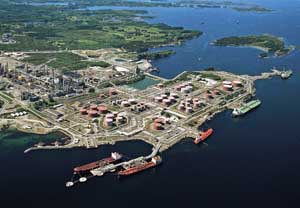
CoalNorway Leads the Way on CCS
According to a new study from Emerging Energy Research, more than $20 billion will be spent on carbon capture and storage (CCS) projects this year at 50 power generation projects totalling 16 GW around the world. The European Union (EU), with an investment of $11.6 billion, leads all efforts, because it is pressed to achieve a target to reduce carbon emissions by 20% of 1990 levels by 2020. In December, the governing body reached agreement on a climate and energy package, which includes a framework for CCS and a directive on the way EU members and Norway will regulate licenses to ensure reliable carbon storage. The U.S. takes second place, earmarking $6 billion, and Canada is third, at $2.7 billion.
-
 Nuclear
Problems Plague Russia’s Nuclear Power Ambitions
"The Russian Nuclear Industry: Status and Prospects," a February report from a Canadian-based think tank, Centre for International Governance Innovation, examines a revival of Russia’s Soviet-era plans for a massive nuclear expansion within the current state of the country’s nuclear power industry. It concludes that although the industry has been greeted with renewed funding and enthusiasm, achieving its ambitious plans will require the federation to overcome considerable problems and limitations.
-
 Wind
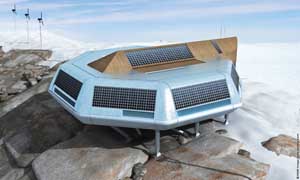
WindTurbines Spinning at Antarctica’s First "Zero-Emissions" Station
About 110 years after the Belgica expedition — a polar voyage organized by the Geographical Royal Society to establish the world’s first Antarctic scientific research program — a new, unique research station sponsored by the Belgian Federal Government has been commissioned. Inaugurated on Feb. 15 after two years of construction, the Princess Elizabeth Station (Figure 4) is the only polar base to run entirely on renewable energies.
-
 Environmental
Researchers: Spanish Electricity Model Is Unsustainable
The current Spanish electricity model is unsustainable: Carbon dioxide (CO2) emissions are hard to control, demand shows no sign of weakening, and the country is overly dependent on imported fuel. These are the conclusions of a team of scientists from the Institute for Research in Technology of the University of Pontificia Comillas in Madrid, who looked at how the Spanish electricity sector would evolve in four different scenarios.
-
 Waste to Energy
Compact, Portable System Converts Trash to Energy
Post-consumer waste could be the newest, ubiquitous fuel source for distributed energy generation if a mobile waste-to-energy conversion system launched this January finds its way onto the parking lots of facilities that produce more than two tons of waste daily. According to its developer, Massachusetts-based IST Energy, the GEM system can process up to 3 tons of waste daily — which can include paper, plastic, food, wood, and agricultural materials — and produce up to 120 kWe and 240 kWth.
-
 Waste to Energy
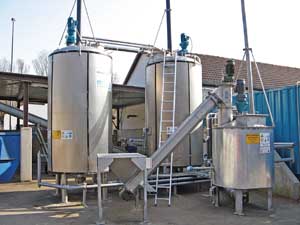
New Biogas Plant Runs Purely on Nonedible Materials
German researchers in February said they had developed the first-ever biogas plant to run purely on waste instead of edible raw materials. The team from the Fraunhofer Institute for Ceramic Technologies and Systems IKTS (Institut Keramische Technologien und Systeme) in Dresden said that the plant, which uses a fuel cell to convert the gas into electricity, exclusively uses agricultural waste such as corn stalks — and it generates 30% more biogas than conventional plants.
-
-
 Nuclear
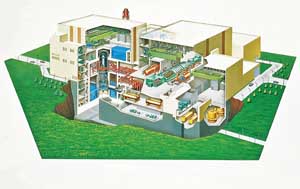
Toshiba Completes EPC Negotiations for STP
The pace at which next-generation nuclear power is developing in the U.S. accelerated this February as the U.S. arm of Toshiba inked an engineering, procurement, and construction (EPC) agreement with an advanced boiling water reactor (ABWR) nuclear development company jointly owned by NRG Energy and Japan’s Toshiba Corp. The agreement seeks to ensure that the two ABWRs planned to expand the South Texas Project (STP) in Bay City, Texas, will be constructed on time, on budget, and to exacting standards.