
Global Monitor
-
-
 Nuclear
World’s First EPR Gets a Roof
Olkiluoto 3, the world’s first EPR whose construction in Finland has been plagued by major delays, in September reached a significant milestone as its 200 – metric ton, 47-meter-diameter steel dome was hoisted into position 44 meters above the ground.
-
 Coal
CoalThree CCS Tests Worldwide
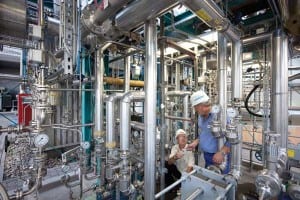
This September — a year after Vattenfall launched the world’s first oxyfuel pilot plant for carbon capture and sequestration (CCS) at the Schwarze Pumpe lignite-fired plant south of Berlin, Germany — three high-profile and long-awaited carbon capture tests started operation around the world.
-
 Nuclear
India Designs Thorium-Fueled Reactor for Export
While the global spotlight is fixed on India’s massive coal-fired power capacity expansion, the country with meager uranium reserves has been pressing on with a unique long-term program that pushes for research and development of nuclear reactors using all three main fissionable materials.
-
Environmental
New Pressurized CCS System Could Cut Energy Penalty
Researchers at the Massachusetts Institute of Technology (MIT) looking into new power generation cycles have designed an innovative oxyfuel system that uses a pressurized coal combustor to capture and concentrate carbon dioxide emissions for direct injection into deep geological formations.
-
 Wind
WindEurope’s Offshore Wind Race
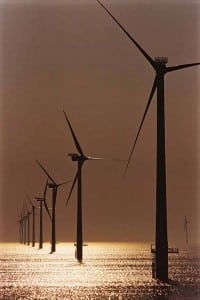
Denmark in September inaugurated a 209-MW offshore wind park — the world’s largest to date — off the west coast of Jutland, in the North Sea.
-
 Environmental
PNNL Pioneers New Sulfur and Carbon Dioxide Scrubbing Liquid
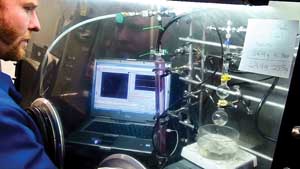
A reusable organic liquid developed by the U.S. Department of Energy’s Pacific Northwest National Laboratory (PNNL) to remove carbon dioxide (CO2) or sulfur dioxide (SO2) from power plant emissions could one day replace current scrubbing methods and allow power plants to capture the gases in a cost-efficient way that uses no water and less energy.
-
 Nuclear
Using the Sterling Engine for Solar and Lunar Power
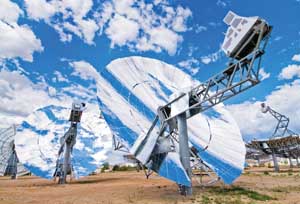
Since Robert Stirling invented the Stirling engine in 1816, it has been used in an array of specialized applications. That trend continues today. Its compatibility with clean energy sources is becoming apparent: It is an external combustion engine that can utilize almost any heat source, it encloses a fixed amount of a gaseous working fluid, and it doesn’t require any water — unlike a steam engine.
-
 Coal
CoalEnel’s Fusina Hydrogen-Fueled Plant Goes Online
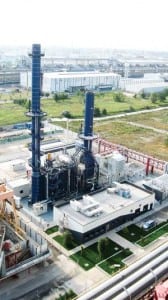
Italy’s Enel said in August that it has successfully begun operating a power plant in Fusina, near Venice, in the Veneto region of Italy, that is fueled 100% by hydrogen. The industrial-sized plant’s building site was officially opened in April 2008, after which infrastructure and technology work was carried out on schedule. Initial testing of the turbine using methane gas was conducted in the spring of 2009, and now — after completion of the special pipeline — the plant has switched to 100% hydrogen fueling, Italy’s largest energy company said.
-
 Nuclear
Africa Looks to Nuclear for Future Generation
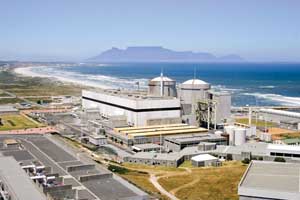
Africa is emerging as a prominent voice in calling for a global nuclear renaissance. Driven by chronic shortages from population explosions, decades of drought, and dependence on hydropower — and spurred by discoveries of significant uranium reserves on the continent — several countries are considering nuclear power as a viable option.
-
 Solar
SolarDLR to Commercialize Technology from Solar Tower Demonstration
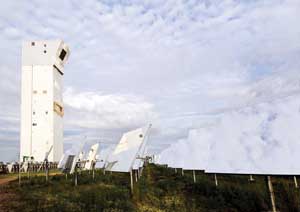
A solar thermal demonstration power plant in Jülich, Germany, that was developed by the German Aerospace Center (Deutsches Zentrum für Luft- und Raumfahrt; DLR), was formally handed over to its future operator, the Jülich Department of Works this August.
-
-
 Coal
CoalOperation of World’s First Supercritical CFB Steam Generator Begins in Poland
The world’s first supercritical circulating fluidized-bed (CFB) steam generator began successful operation at the Lagisza power plant in Poland early this July, according to power equipment and engineering firm Foster Wheeler. The new CFB — believed to be the world’s largest — replaced 1960s-era pulverized coal units at the power plant owned by Polish utility […]
-
 Coal
CoalReport: Costs for First-Generation Carbon Capture Plants Will Soar
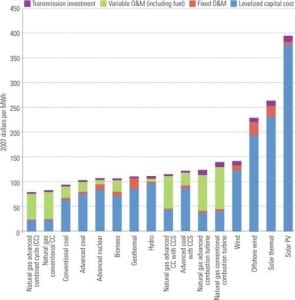
Carbon capture and storage (CCS) has of late gained steam as the best way to mitigate emissions of the greenhouse gas carbon dioxide (CO2) from fossil fuel power plants, despite evidence that the approach would require much energy and increase the fuel needs of a coal-fired plant by more than 25%. A new study from […]
-
 Nuclear
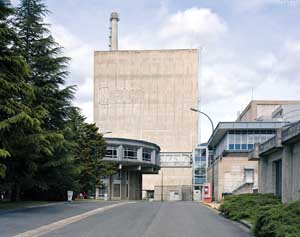
Nuclear Developments in Europe
Recent months brought several developments in Europe’s much-touted "nuclear renaissance." Spain Extends Life of Nation’s Oldest Reactor Spain’s government on July 2 granted a four-year extension to the operating permit of the 466-MW Santa María de Garoña nuclear power plant (Figure 3). The decision follows a nonbinding recommendation by Spain’s nuclear regulator in June to […]
-
 Solar
SolarSwiss Solar Plane Prototype Designed to Fly Day and Night
The first aircraft designed to fly day and night propelled solely by solar energy was unveiled at Dübendorf airfield, Switzerland, in late June. The Solar Impulse has the wingspan of a Boeing 747-400 and the weight of an average family car (1,600 kg) (Figure 4). More than 12,000 solar cells mounted onto the wings will […]
-
 Hydro
HydroScotland Officially Opens 100-MW Glendoe Hydro Plant
In late June, Scotland officially opened the Glendoe Hydro Scheme, a 100-MW project whose construction near Loch Ness in the Scottish Highlands was the region’s biggest civil engineering project in recent times. Planning for the project began in 2001, and it took three years to build. Today, the project has the highest head — the […]
-
Waste to Energy
Biomass Electricity More Efficient than Ethanol, Researchers Say
Biomass — plant matter that’s grown to generate energy — converted into electricity could result in 81% more transportation miles and 108% more emissions offsets than ethanol, according to U.S. researchers. In addition, the electricity option would be twice as effective at reducing greenhouse gas (GHG) emissions. The study, published in the May 22 issue […]
-
 Business
DOE Funds Electrification of Transportation Sector
On August 5, President Barack Obama announced that 48 new advanced battery and electric drive projects will receive $2.4 billion in funding from the Department of Energy under the American Recovery and Reinvestment Act. The announcement marks the single largest investment in advanced battery technology for hybrid and electric-drive vehicles ever made. DOE funds will […]
-
-
 Coal
CoalRevived FutureGen Faces Renewed Funding Obstacles
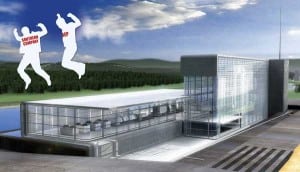
A little more than a year after the Bush administration abruptly withdrew its support for the FutureGen project, the Department of Energy has again announced it will back the proposed Illinois gasified coal power plant and carbon capture initiative. Though the 275-MW project may be different in technical aspects — it will be initially designed for 60% carbon capture, not 90%, and gasify only Illinois Basin Coal (Figure 2) — it is still riddled with many of same funding problems. Making matters worse, it may have been revived too late: Since the DOE withdrew its support, several major carbon capture and storage (CCS) projects and alliances have sprouted in the U.S., and these could give FutureGen a run for its money.
-
Coal
How Much Coal Does the U.S. Really Have?
The U.S. Geological Survey (USGS), a federal mapping agency, has of late been propounding the difference between "resources" and "reserves." It says that although the two terms are used interchangeably, the distinction is simple: Reserves are a subset of resources. Coal resources, as an example, include those in-place tonnage estimates determined by summing the volumes for identified and undiscovered deposits of coal, whereas coal reserves are those resources considered "economically producible" at the time of classification, even though extraction facilities are not in place and operative.
-
 Coal
CoalOf Fracking, Earthquakes, and Carbon Sequestration
Hydraulic fracturing — the process of drilling and then pumping fluid deep into a formation to generate fractures or cracks, typically for extracting natural gas from shale formations — has been under fire lately, owing to concerns that it contaminates drinking water. But while Congress debates proposed legislation that would impose new restrictions on the technology, an entirely different concern related to fracturing — or "fracking" — is emerging: It may trigger earthquakes.
-
 Wind
WindFloating and Flying Wind Turbines
After months of preparation, Norway’s StatoilHydro and Germany’s Siemens in June erected the world’s first large-scale floating deepwater wind turbine some 7 miles offshore Karmøy, southeast Norway, on the 720-feet-deep waters of the Amoy Fjord. The developers are now gearing up to connect the Hywind turbine to the local grid, and it could begin producing power as early as mid-July.
-
 Coal
CoalMajor Scottish Coal Plant Starts CCS Pilot Program
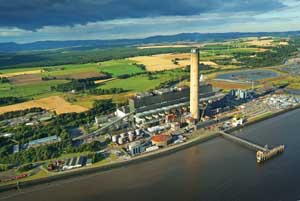
Energy provider ScottishPower on May 29 flicked on the switch of a carbon capture and storage (CCS) pilot program at its 2,304-MW coal-fired Longannet power plant, in Fife, Scotland, marking the beginning of a seven-month test — and the first time a UK coal-fired power plant has reportedly attempted to capture its carbon emissions.
-
 Solar
SolarEuropean Interest in Saharan Solar Project Heats Up
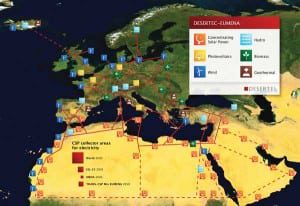
Plans to install a series of solar panel farms in the Sahara Desert to power Europe and North Africa are heating up. The idea was discussed in May as part of the newly formed Mediterranean Union, launched at a summit in Paris, and it now has the backing of both UK Prime Minister Gordon Brown and French President Nicolas Sarcozy.
-
 Waste to Energy
Turning Sewage into Renewable Energy
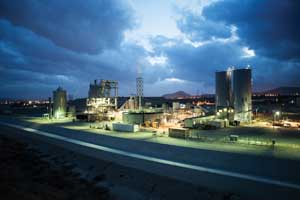
News has been emerging from around the world about several projects that seek to turn human sewage — arguably the dirtiest of manmade wastes — into clean energy.
-
-
 Environmental
Help Build the Global Energy Observatory
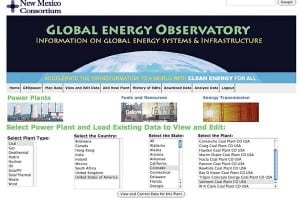
How would you like to be able to access data on all the power plants in the world and all of their performance metrics, analyze that data, and map it? Those abilities are part of the vision behind the Global Energy Observatory (GEO), an OpenModel website that serves as a wiki for global energy data.
-