For data center developers and operators, access to reliable power is becoming a defining commercial risk. Power availability and certainty can influence where projects are built, how quickly capacity can be brought online and ultimately whether development can move forward at all.
The new data center power paradigm
Speed to market remains a commercial imperative for data center developers, but access to power is increasingly determining whether that speed is achievable. For decades, data center power architecture followed a relatively static model: grid connection, high-voltage substation, medium-voltage distribution, UPS, PDU and ultimately the IT load.
In this model, utility generation sat upstream, while onsite generation primarily provided standby resilience. That architecture remains fundamental to many facilities, but its underlying assumptions are being challenged by three structural pressures: grid capacity
constraints, AI-driven load density and variability, and evolving energy and emissions requirements.
AI infrastructure is not a single category. While large-scale model training can be located where substantial power, land and supporting infrastructure are available, inference and other production workloads may need to operate closer to users and population centers, where grid capacity is often more constrained. This creates two related challenges: securing sufficient capacity and designing power systems capable of responding to increasingly dynamic AI workloads.
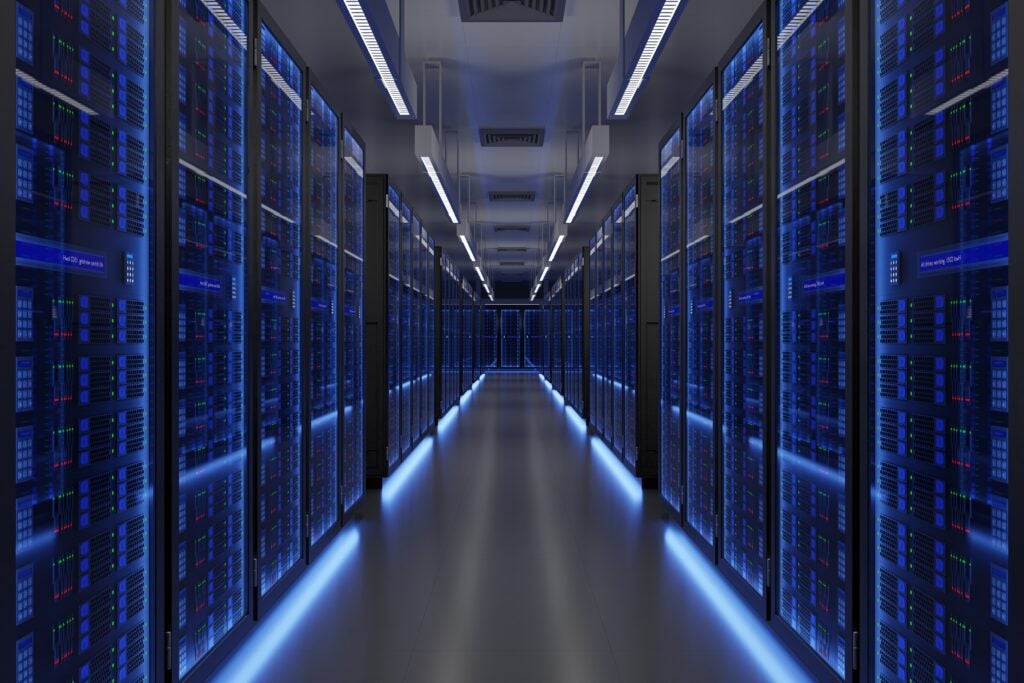
The challenge is not simply the amount of power required. AI infrastructure can also introduce much greater variability in how that power is consumed. GPU-based AI clusters can create rapid changes in demand as workloads move between different computational states, placing different demands on generation, UPS systems, transformers and other electrical infrastructure than relatively predictable enterprise loads.
Power constraints are reshaping data center development
The challenge is not confined to one region. Across established and emerging data center markets, developers are increasingly balancing proximity to customers and network infrastructure against the availability and timing of new power capacity.
In the U.S., the scale of the challenge is significant. Lawrence Berkeley National Laboratory estimates that data centers could account for 11.8% of total electricity consumption by 2030, illustrating the scale of new demand that power systems may need to accommodate. As power constraints intensify, alternative and onsite power strategies are becoming a larger part of the conversation globally.
A report from Mordor Intelligence states that In Europe, the AI data center market size is estimated to grow from $21.67 billion USD to $65.18 billion by 2031. Mandates in legacy hubs that reduce available capacity and call for the adoption of liquid cooling are advancing investments, despite power grid challenges.
The report goes on to state, “Amsterdam, Dublin, and Frankfurt municipalities have frozen new data-center power hookups until grid upgrades are completed, sidelining 2.5 GW of queued projects in Amsterdam alone. The policy inflates the asset values of existing high-density spaces and redirects new builds to secondary metropolitan areas, such as Madrid, Milan, and Warsaw.”
At the same time, power availability cannot be considered in isolation from location. Many workloads still need to be deployed near population centers, network infrastructure, enterprise customers or other demand hubs. Those are often the same markets where existing electrical infrastructure is already under pressure.
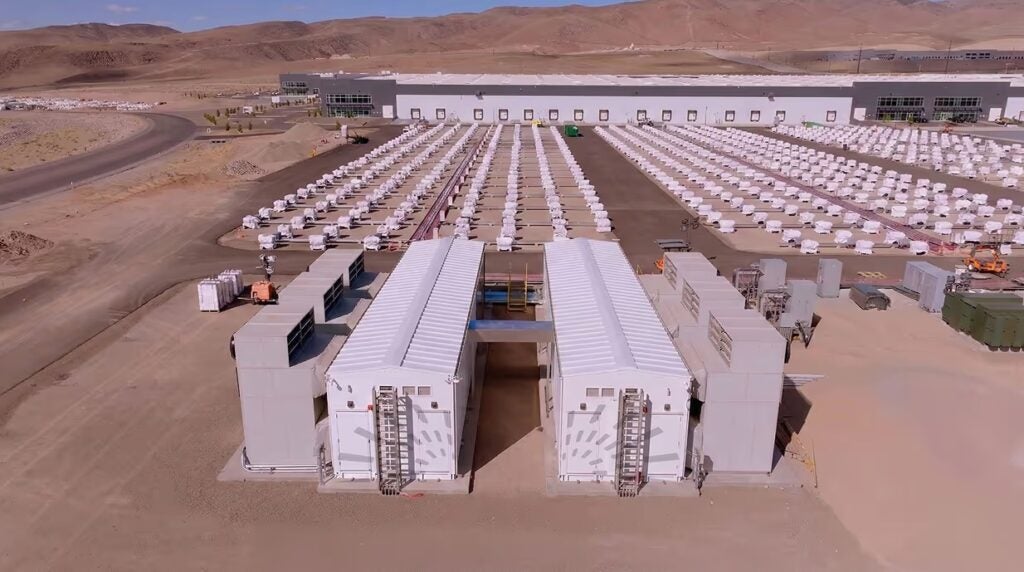
The result is a growing need to consider onsite generation, energy storage, advanced controls and grid interaction as part of an integrated data center power strategy from the outset.
Building a more flexible power architecture
Rather than relying on a linear flow of power from the grid to the IT load, emerging architectures can integrate multiple resources: utility power, onsite generation, battery energy storage systems (BESS), advanced controls, demand response and, where appropriate, thermal recovery.
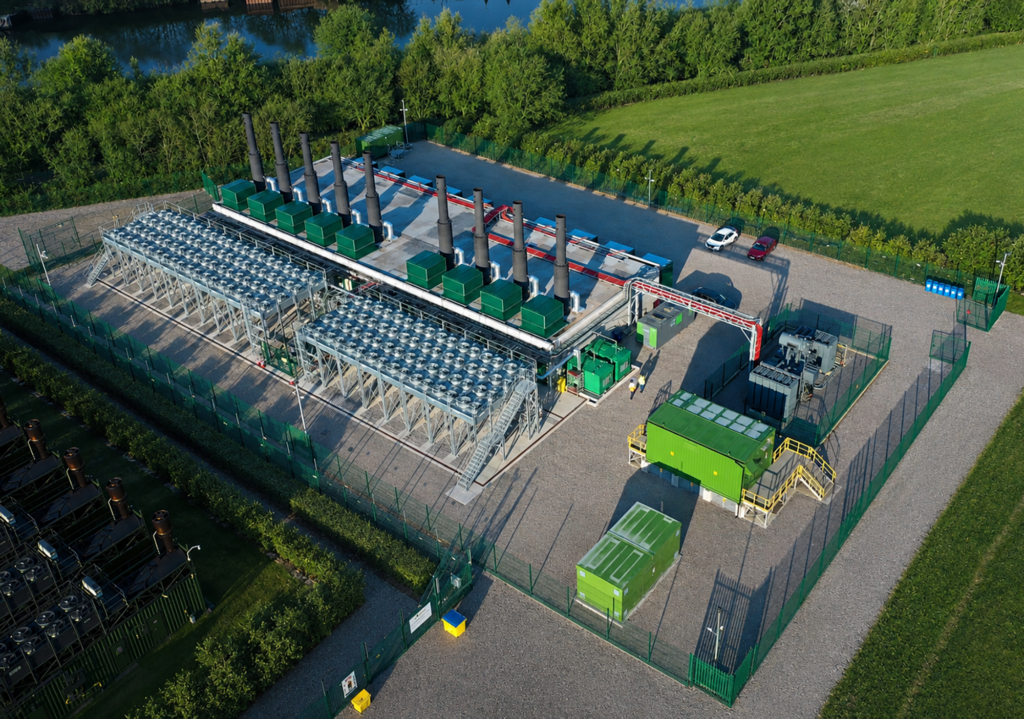
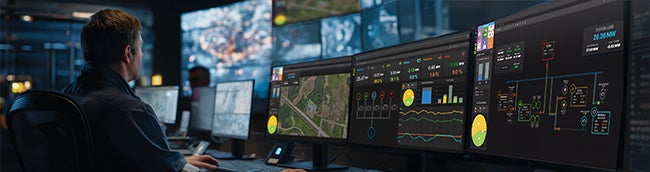
The challenge is therefore no longer simply one of generation capacity. It is an energy and control systems engineering problem involving how multiple assets respond together as conditions change.
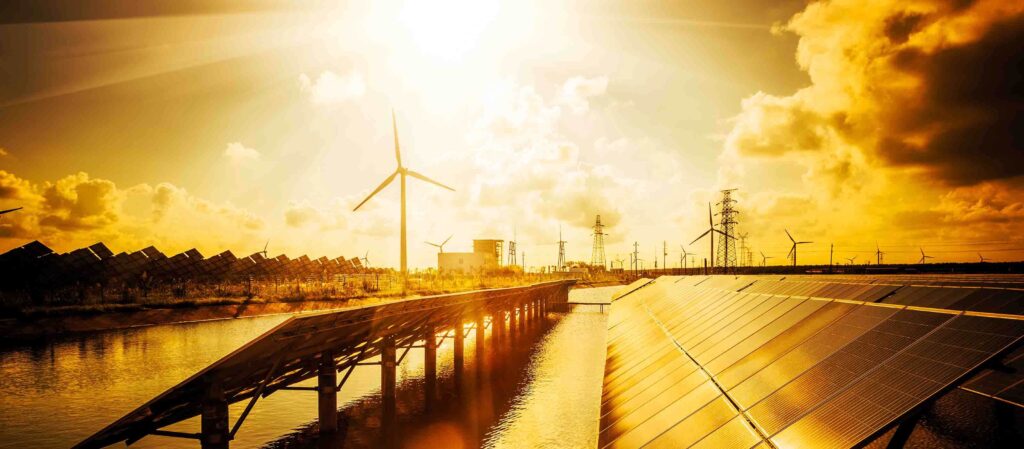
Microgrids can provide the control architecture needed to coordinate resources including dispatchable generation, renewables and battery energy storage while supporting grid-connected and islanded operation. The appropriate mix will vary according to the site’s load profile, available grid capacity and resilience requirements, enabling a shift from passive standby generation toward a more active and resilient power strategy.
The increasing complexity of these architectures makes it difficult to evaluate every real-world condition through conventional testing alone. Modeling can allow engineers to evaluate how generation, storage, controls and IT loads interact across different operating scenarios, which is particularly important for AI infrastructure where rapid changes in load can affect the behavior of the complete power system.
Energy storage beyond ride-through
Depending on the facility and market, BESS can support functions including transient smoothing, peak management, black start capability and reserve capacity. For rapidly changing AI loads, storage can also act as a buffer between sudden changes in IT demand and the response characteristics of the wider power system.
Greater onsite flexibility can also change the relationship between a data center and the grid. Where market structures and utility requirements allow, generation, storage and controls can help facilities manage demand, respond to grid conditions and reduce pressure during periods of constraint.
As AI computing creates unprecedented load dynamics, energy storage is evolving from a ride-through solution into a core component of system stability. Acting as a buffer between dynamic IT loads and the wider power system, storage helps manage rapid demand changes while supporting generation performance. When combined with pre-integrated, modular power infrastructure, it can also accelerate deployment and reduce site integration complexity.
Designing for today’s constraints and tomorrow’s opportunities
Grid constraints and growing power demand are unlikely to be resolved through a single technology. At the same time, data center developers cannot always wait for long-term transmission upgrades or emerging generation technologies before bringing new capacity online.
The more immediate opportunity is to design integrated power systems around the resources available today while preserving the flexibility to incorporate new technologies and energy sources over time.
For data center developers, operators and utilities alike, the opportunity lies in building integrated power systems that combine proven and emerging technologies to deliver reliable, resilient and flexible energy where and when it is needed. As power infrastructure evolves, success will increasingly depend on solutions that can be planned, deployed and supported across the full lifecycle.
Download Rehlko’s whitepaper, https://direc.to/fXq1, to learn more about the company’s layered power approach.