On March 4, the Cuban Electric Union (UNE) reported, through its official account on the social network X, that at 12:35 pm a partial power outage occurred affecting the national grid from the province of Camagüey to Pinar del Río province. Following the outage, all established protocols for system restoration were immediately activated, with the goal of restoring electrical service as quickly as possible. The following time-stamped updates provide details on the restoration process.
🚨 #AHORA || Se produjo una desconexión del Sistema Electroenergético Nacional desde Camagüey hasta Pinar del Río. Ya se encuentran activados todos los protocolos para el restablecimiento del SEN. pic.twitter.com/yMZK048Tey
— Unión Eléctrica de Cuba (@OSDE_UNE) March 4, 2026
March 4 at 1:50 p.m.: Prime Minister Evaluates Actions to Restore the National Grid
Prime Minister Manuel Marrero Cruz is at the National Load Dispatch Center with the Minister of Energy and Mines, Vicente de la O Levy, to clarify the details related to the recent disconnection of the national grid and define the next steps for its restoration. At the headquarters responsible for coordinating the operation of the country’s electrical system, both leaders are meeting with sector specialists to evaluate the causes of the event and monitor the implementation of the protocols established for service restoration.
March 4 at 1:59 p.m.: Outage of the Antonio Guiteras Substation Caused the SEN Interruption
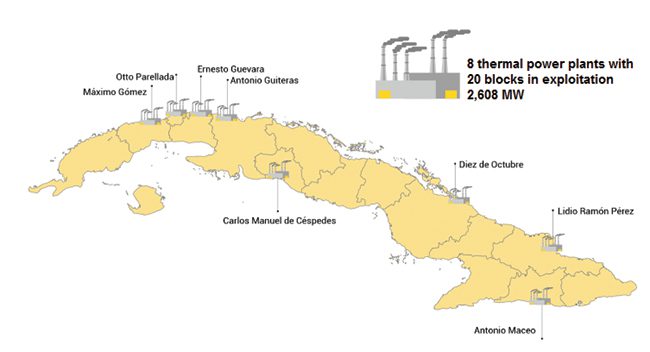
The unexpected outage of the Antonio Guiteras Substation caused the interruption of the national grid. Power is supplied from part of Las Tunas province to Guantánamo province. Electricity service is interrupted from western Las Tunas to Pinar del Río. Protocols for its gradual restoration are being defined and implemented. Radio and television signals were also interrupted due to technical problems.
March 4 at 2:31 p.m.: Protocols for Restoring the National Grid Have Begun
The UNE reports that protocols for restoring the national grid have begun through the startup of the Energás Boca de Jaruco plant. In Las Tunas, there is electrical power, although the substations are not energized, so there is no service. Protocols are being established to bring power to Unit 3 of the Carlos Manuel de Céspedes Power Plant and begin the startup process. Unit 1 of the Lidio Ramón Pérez “Felton” Power Plant is in service, but is only supplying power to the eastern part of the country.
March 4 at 2:49 p.m.: Boiler Malfunction Causes Guiteras Plant Outage
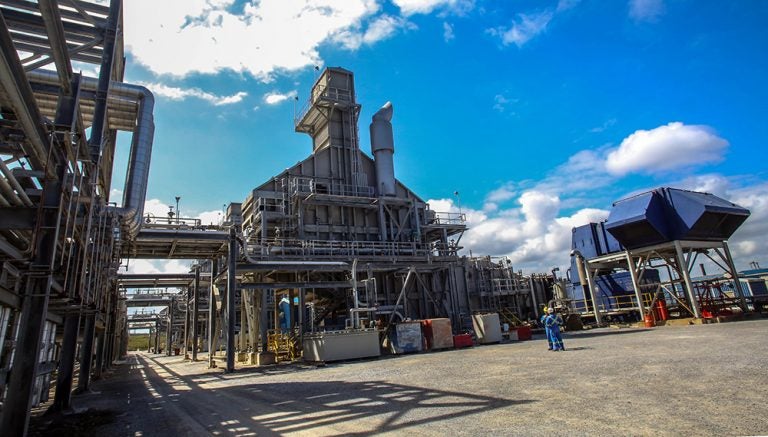
The Girón newspaper reports that the Antonio Guiteras thermoelectric plant in Matanzas experienced a malfunction this Wednesday, which, after its shutdown, caused a blackout of the national grid in a large part of the country. “We had a malfunction in the lower part of the boiler, where a pipe exploded, causing a water leak, which is what took the unit offline,” said Román Pérez Castañeda, the plant’s technical director. “This also caused the boiler’s gas seal to fail. It seems that a burner didn’t close properly, and since the fuel used is hot, ready for combustion, when it fell to the floor, at the boiler’s ground level, it caused a fire. The workers were alarmed, but thanks to the firefighters’ quick action, it was brought under control without causing any damage,” he added. Regarding the reintegration of the Antonio Guiteras power plant, the manager stated that it should take at least 72 hours. “The procedure is to locate the fault, determine its type, determine the repair method, carry out the work, monitor the process, and then restore the entire structure. The next step would be the startup and synchronization process.”
March 4, 2:56 p.m.: Announcements by the General Director of Electricity
The General Director of Electricity at the Ministry of Energy and Mines, engineer Lázaro Guerra Hernández, reported that at 12:41 p.m. the “Guiteras” generating unit went offline, causing a partial outage of the national grid from Pinar del Río to Camagüey. According to the official, the outage primarily affected the western region and part of the central region of the country. However, he specified that the eastern region maintains electrical service from Holguín province to Guantánamo, with backup from unit number one of the Felton thermoelectric plant. In the specific case of Las Tunas, there is an electrical system, although service has not yet been restored at the provincial substations, so interruptions in supply to consumers persist.
Guerra Hernández detailed that system restoration protocols are already activated throughout the country. He also reported that the startup process has begun in Boca de Jaruco, a key point for initiating recovery in the western region. The unit in the startup process reached 1,000 revolutions per minute and was close to synchronization, an essential step to begin the gradual restoration of service. Likewise, in the central region, procedures are being established to start up the Carlos Manuel de Céspedes thermoelectric plant in Cienfuegos, as part of the recovery strategy of the national grid.
The official stated that, following a general review of the thermoelectric power plants, all units that were in service are available, with the exception of one unit that went offline due to a boiler leak. This will allow them to be gradually reintegrated into the system once the necessary energy for self-sufficiency is available. The system outage was described as recent and partial, as the eastern region continues to operate using its own generation. Energy authorities assured that the restoration process will be carried out gradually and that further updates on the progress of restoring electricity service nationwide will be provided in the coming hours.
March 4 at 3:19 p.m.: The Startup of ENERGAS Boca de Jaruco Has Begun
The Minister of Energy and Mines, Vicente de la O Levy, reported that work continues to restore the national grid, amidst a complex energy situation affecting the country. Through the social media platform X, the official specified that the startup of ENERGAS Boca de Jaruco, a key facility for the recovery process in the western region, has already begun. He also highlighted that Unit 1 of the Felton thermoelectric plant continues generating electricity, allowing service to be maintained in part of the eastern territory.
March 4 at 3:41 p.m.: 2.5% of Customers in Havana Have Electricity
As of 3:30 p.m., two substations and seven distribution circuits have been restored, representing 14.96 MW serving 21,176 customers (or 2.5% of the city). The restoration will be carried out gradually as conditions allow.
March 4 at 4:16 p.m.: Cienfuegos Creates a Power Island with the Junco Sur Diesel-Powered Generating Plant
A power “island” has been created in Cienfuegos with the Junco Sur diesel-powered generating plant. This has made it possible to provide electricity service to the entire 17th circuit, which supplies power to the Provincial Hospital and the Pediatric Hospital. Additionally, a portion of the 18th circuit was energized to provide service to the Agricultural Experimental Station.
March 4 at 4:27 p.m.: Villa Clara Continues Work on Creating Microsystems
The Electric Company in Villa Clara province reports that work continues in the province on creating microsystems. These systems are prioritizing service to vital centers such as hospitals, dairy plants, and water pumping stations, as well as to customers in those areas. This is a complex process due to the system’s unstable condition, until the national grid is gradually synchronized. “Therefore, it is recommended to disconnect all equipment, leaving only essential items powered on, until service stability is achieved,” officials said.
March 4 at 4:59 p.m.: Matanzas Begins Assembling Its Microsystem
Journalist José Miguel Solis reports that electrical service has been restored to the Faustino Pérez Hospital via the Guanábana micro-island. Electrical service has been restored to the Guiteras pumping station and to circuit 4945 Cidra and Triunvirato.
March 4 at 6:54 p.m.: Matanzas Continues Gradual Restoration Efforts
TV Yumurí reports that the Comandante Faustino Pérez Hospital in Matanzas and the circuit known as Chirimoya in the city of Matanzas have power from the Guanábana generators. Alejandro Rodríguez Aspeitía, director of the provincial electric company, explained that with the 16 generators, they will also try to reach Energás Varadero to energize the plant. As on other occasions, he said, it is necessary to create micro-islands. This time, he reported, the situation is different, as the generator sets in Colón, Girón, and Los Arabos are out of service due to a lack of fuel. The director explained that they must activate the circuits in downtown Matanzas to connect to the provincial power grid.
March 4 at 7:19 p.m.: 5.49% of Power Restored in Havana
Havana Electric Company reports that, as of 6:55 p.m., 5.49% of the city’s power has been restored.
March 4 at 7:24 p.m.: The Manufactured Gas Company Reports Disruption to the Playa-Marianao Network Due to a Disconnection from the National Grid
The Manufactured Gas Company reports that due to the disconnection from the SEN, service is affected in the Playa-Marianao network. They are working in conjunction with the Havana Electric Company to restore service as quickly as possible. The Havana network is receiving normal service. The company apologizes for any inconvenience caused.
March 4 at 8:04 p.m.: Three Substations with Service in Havana
The restoration of the national grid continues. The Ministry of Energy and Mines reported on X that in the east, generation continues, providing service to vital centers as far as Camagüey. In the west, at 7:15 p.m., two ENERGAS units began generating power, supplying the Diezmero, Naranjito, and Melones substations in Havana.
March 4 at 8:21 p.m.: Work Is Underway to Incorporate Thermal Units into the Western and Central Power Grid
The director of the National Load Dispatch Center, Félix Estrada Rodríguez, reported to the Cuban television station that power has been restored, via the eastern grid, from Guantánamo to the city of Camagüey, albeit on a limited basis. He specified that vital systems such as hospitals and water supply sources are being prioritized.
In the west, with the commissioning of the Energas Boca de Jaruco plant, approximately 40 MW are currently being supplied, a figure that will be increased as resources allow, in order to bring the Santa Cruz Thermoelectric Plant online. Additionally, the necessary infrastructure has been created to allow the Energas Varadero plant and the Carlos Manuel de Céspedes Thermoelectric Plant in Cienfuegos to begin operating. The official emphasized that they are working step by step to avoid setbacks in the progress achieved. Thermal units are expected to be incorporated into the western and central systems in the coming hours.
Meanwhile, Juventud Rebelde newspaper reported that from the east, they will continue to deliver power to reach Ciego de Ávila province. In these efforts in different territories, priority is being given, as has been done so far, to circuits related to vital centers: hospitals, polyclinics, water supply sources, among others.
March 4 at 8:26 p.m.: More Than 45,000 Customers with Service in Havana
Following the disconnection of the national grid, the province’s authorities are at the Provincial Load Dispatch Center, along with directors of the Havana Electric Company and other institutions responsible for ensuring basic services to the population. Led by Livan Izquierdo Alonso, First Secretary of the Communist Party in Havana, and Governor Yanet Hernández Pérez, the meeting highlighted the following in the capital: Currently, the operation of seven water intakes allows for water delivery via tanker truck to key socioeconomic facilities. Basic health services are ensured through the use of generators. Manufactured gas service is being gradually restored. Fifteen electrical circuits, benefiting 45,378 customers, have electricity service. During the meeting, authorities affirmed that restoring these services, as soon as the availability of the national grid allows, is a priority.
March 4 at 8:31 p.m.: Work Is Underway to Activate Microsystem in Pinar del Río
Radio Guama reports that the Pinar del Río Electric Company is working to activate microsystems to provide priority service to the León Cuervo Rubio, Abel Santamaría, and Pepe Portilla Pediatric Provincial Hospitals.
March 4, 8:49 p.m.: Vital Services in Las Tunas Have Electricity Restored
Journalist Itsvan Ojeda reports from Las Tunas the following: The restoration of electricity to vital services in the province has begun. This reportedly includes to the Guillermo Domínguez General Hospital and the Raymundo Castro Morales Pediatric Hospital, both in the municipality of Puerto Padre. Meanwhile, the electric company reports service has also been restored to the Health Complex in the provincial capital, including the Ernesto Che Guevara General Hospital, the Mártires de Las Tunas Provincial Pediatric Hospital, and the Provincial Blood Bank, along with the province’s main water supply centers. Currently, sources say efforts are focused on connecting the system from the east to the 10 de Octubre thermoelectric plant, with the goal of synchronizing the plant and continuing progress toward the full restoration of the national grid.
March 4 at 9:10 p.m.: Boiler Cooling Work Underway at Guiteras Thermoelectric Plant
A press team visited the Antonio Guiteras thermoelectric plant in Matanzas on Wednesday to learn about the circumstances of the disconnection from the national grid, the ongoing technical work, and the morale of the workers as the recovery process continues.
March 4 at 9:20 p.m.: 16.9 MW Available in Camagüey Province
The Camagüey Electric Company reports that work continues to restore the national grid. Currently, 16.9 MW are available in Camagüey province. Circuits 2024 Guáimaro and 3162 Nuevitas are operational, providing electricity to the Guáimaro and Nuevitas Hospitals, respectively. In the city of Camagüey, the following circuits are operational: Y-281, which provides electricity to the Provincial Hospital, Maternity Hospital, and Oncology Hospital, and Y-450, which provides electricity to the Amalia Simoni Hospital.
March 4 at 9:30 p.m.: Preparations Are Underway to Start the Ciego de Avila Microsystem
At night, only the hospitals in Ciego de Ávila and Morón will be able to receive power, but this will allow the province’s solar parks to come online in the morning, and the different circuits can be rotated throughout the day.
March 4 at 9:40 p.m.: 48,403 Customers with Service in Havana
As of 9:00 p.m., six substations and 16 distribution circuits have been restored to operation in Havana’s electrical system. This benefits 48,403 customers (31.7 MW), representing 5.6% of the city. Restoration of three vital health service systems (hospitals) will be carried out gradually as conditions of the national grid allow.
March 5 at 12:30 a.m.: Ciego de Ávila, Sancti Spíritus, Villa Clara, and Cienfuegos Connected to the Central-Eastern Grid
In a statement released at 11:30 p.m. on Wednesday, March 4, Félix Estrada Rodríguez, Director of the National Load Dispatch Center of the UNE, announced modest progress in the recovery of the national grid following the recent power outage. According to official information, the provinces of Ciego de Ávila, Sancti Spíritus, Villa Clara, and Cienfuegos have been reconnected to the central-eastern grid, representing a crucial step toward stabilizing service in the central region of the country.
In Matanzas, the province remains operational thanks to a microsystem powered by an Energás generator located in Varadero, allowing for partial service to be maintained in that area. Energy authorities anticipate that the system will be fully integrated, extending to Pinar del Río, within the next few hours. However, Estrada Rodríguez explained that the restoration process is more complex this time due to a lack of diesel fuel to support distributed generation.
March 5 at 1:00 a.m.: Update on the Antonio Guiteras Power Plant Outage
At the Antonio Guiteras Thermoelectric Power Plant in Matanzas province, work is underway to identify the cause of the thermal unit’s outage following the failure of the National Power System. “It occurred in the lower part of the boiler. Everything seems to indicate, firstly, some combustion residue, as a space may have opened up allowing that residue to escape from the boiler, which suggests it caused damage to some piping,” explained engineer Rubén Campos Olmo, General Director of the Antonio Guiteras Power Plant (CTE). The management of the country’s largest unitary power plant states that the necessary actions will be taken after the boiler cools down.
Helmer García Romero, Director of the Maintenance Unit of the Antonio Guiteras power plant, commented that the cooling process will take between 36 and 40 hours. He also noted that they are preparing to carry out a series of actions related to the breakdown within 72 hours. “We want to clarify that we have not had a fire at any time. The combustion residue is coming out incandescent, but that is on the floor, on the concrete of the boiler. We managed this process without any accidents,” added Campos Olmo. The staff at the Antonio Guiteras Thermoelectric Power Plant in Matanzas province are working to repair the fault and bring the unit back online as quickly as possible.
March 5 at 2:00 a.m.: Manufactured Gas Service Restored to the Playa-Marianao Network
The Manufactured Gas Company announced in recent hours the restoration of gas service to the network serving the municipalities of Playa and Marianao, following disruptions caused by the power outage. In an official statement, the company explained that the main electrical circuit of production plant number 2, the facility responsible for supplying manufactured gas to the network, has been restored. Currently, the pumping equipment is being restarted to begin normalizing service to customers in the area. The company reminded that, due to the technical characteristics of the system, service restoration is being carried out gradually, and therefore gas will reach homes and businesses slowly.
March 5 at 3:25 a.m.: Havana Has 74 MW Available
The Havana Electric Company reported early Thursday morning on the status of the electrical system recovery in the capital, as part of the process of restoring the national grid. According to the official report issued at 2:27 a.m., a total of 15 substations and 48 distribution circuits have been restored in the city. As a result, 145,208 customers (representing a consumption of 74 MW) now have electricity, equivalent to 16.8% of the capital.
Recovery efforts have prioritized the protection of vital services for the population. Currently, 33 health facilities (hospitals and clinics) and two water supply centers have electricity, which helps mitigate the impact of the outage on basic services. The Havana Electric Company clarified that the restoration of service in the capital will be carried out gradually, as conditions of the national grid allow. Authorities are monitoring the system’s performance and will continue to provide updates in the coming hours.
March 5 at 3:31 a.m.: 29% of Customers in the Capital Have Electricity
Amidst the contingency efforts to stabilize the national grid, the Havana Electric Company reported progress in restoring service to the capital during the early hours of Thursday. According to the official report issued by the company, as of 3:26 a.m., the work had resulted in the partial restoration of power, benefiting 29% of customers in the city. The report details that 16 substations and 83 distribution circuits were operational at that time, representing a restoration of service to 251,089 customers and a demand equivalent to 125 MW.
Recovery efforts have prioritized essential services for the population. In this regard, electricity supply has been guaranteed to 37 vital health facilities (hospitals) and three water supply services, which are fundamental for providing water to the population. The Havana Electric Company (EELH) clarified that, due to technical conditions and the stability of the national grid, service restoration will be carried out gradually. Energy authorities are working continuously to extend coverage to more circuits as system conditions allow.
March 5 at 6:27 a.m.: 296,000 Customers with Service in Havana
The Havana Electric Company reported that, as part of the efforts to restore the electrical system in the capital, service was restored to more than 296,000 customers during the early hours of Thursday morning, representing 34% of the city. According to the latest operational report issued by the company at 5:28 a.m., 20 electrical substations and 98 distribution circuits were operational, with an estimated demand of 146 MW.
The restoration efforts have prioritized essential services for the population. At the time, 37 hospitals in the capital had electricity, ensuring the continuity of medical care and emergency services at the institutions. Additionally, five water supply facilities had been energized, allowing the pumping and distribution systems to operate in several communities. The Havana Electric Company specified that the restoration of service was being carried out gradually and as conditions of the national grid allowed, with the aim of maintaining system stability and protecting the facilities.
March 5 at 6:30 a.m.: National Grid Interconnected
The Cuban Ministry of Energy and Mines (Minem) reported that at 5:01 a.m. on Thursday, March 5, the national grid was fully interconnected, establishing a link from Guantánamo province in the far east to Pinar del Río in the west of the country. The information was released by Minem through its official profile on the social network X, where it specified that work continues on the progressive incorporation of generating units into the system.
A las 5 :01 de esta madrugada quedó interconectado el Sistema Eléctrico, SEN, desde #Guantánamo hasta #PinarDelRío
Continúa la incorporación de unidades de generación.— Ministerio de Energía y Minas Cuba 🇨🇺 (@EnergiaMinasCub) March 5, 2026
March 5 at 6:39 a.m.: Power Restoration Continues in Matanzas
The Matanzas Electric Company reported on the progress in restoring service in the province, as part of the efforts to recover the national grid after the power outage that affected the country in recent hours. According to the update provided by the UNE and the provincial entity, efforts have focused on guaranteeing supply to priority facilities and communities in the province. Among the circuits already energized is the one that provides service to the Provincial Pediatric Hospital, thus guaranteeing the continuity of medical care to the children of Matanzas.
Similarly, circuit MI1452 has been restored, benefiting the Epidemiology Laboratory, the TV Broadcasting Center, and the Los Mangos neighborhood—facilities of vital importance for health surveillance and telecommunications in the region. Recovery efforts have also reached several communities. Circuit 4073 is now operational, bringing electricity to Batey Luisa, Peralta, San Carlos, and the town of San José de Marcos. Circuit MI1456, which covers the section from Calzada de San Luis to Parque Maceo, as well as the La Jaiba settlement, has also been energized.
The Matanzas Electric Company explained that work continues to gradually restore the remaining circuits belonging to the 110-kV Cocal substation, one of the key facilities for electricity distribution in the province. Authorities clarified that while the consolidation of the microsystems is underway, service may experience instability. This means that in those circuits where electricity has already been restored, the power may come and go intermittently until the system is fully stabilized. The UNE and the Matanzas Electric Company assured that they are continuing to work to extend the supply to the remaining affected circuits and urged the public to stay informed through official channels about the progress of this recovery process in the province.
March 5 at 6:49 a.m.: More Than 308,000 Customers in the Capital Have Electricity Service
The Havana Electric Company updated the operational report of the Capital’s Electrical System this Thursday morning, reporting further progress in restoring service to the city. According to the report, issued at 6:28 a.m., recovery efforts have increased the number of substations and circuits in operation, benefiting more than 308,000 customers in the capital.
Currently, 22 electrical substations are operational, enabling the energization of 102 distribution circuits. These circuits serve 308,568 customers, with an estimated demand of 155.68 MW, representing 35.8 % of the city’s demand. Authorities have maintained their priority of ensuring service to essential facilities for the population. In this regard, 39 hospitals in the capital now have power, ensuring the continuity of health services and patient care in hospital facilities. Likewise, six water supply facilities have been energized, allowing the pumping systems to operate and contributing to the gradual restoration of water service in several communities in the city. The Havana Electric Company continues working to extend service to the remaining affected circuits, while awaiting conditions in the national grid to move forward with full recovery.
—Amaury Pérez Sánchez (amauryps@nauta.cu) is a chemical engineer based in Cuba with the University of Camagüey.