
Coal
-
 O&M
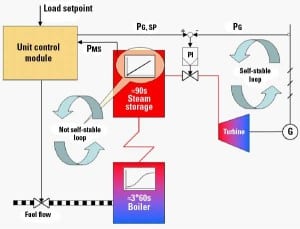
O&MA New Era in Power Plant Control Performance
Recent improvements in the performance of steam power plants have been achieved with advanced computerized controls. These new control schemes not only reduce fuel consumption and make the plant much more responsive, but they also can significantly decrease start-up commissioning time and cost.
-
 Coal
CoalCommercial Experience with Concrete-Friendly Mercury Sorbents
Commonly, 20% of the cement (by weight) in a concrete mix is replaced by fly ash. Fly ash enhances the workability, durability, and ultimate strength of concrete at a lower cost than cement. However, mercury sorbents can change the ash properties to make it unsuitable as a concrete additive. New “concrete-friendly” sorbents can keep the revenues from ash sales flowing.
-
 O&M
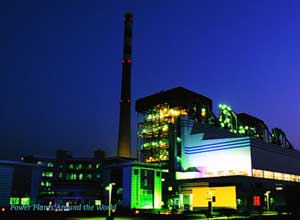
O&MBetter Combustion Airflow Monitoring at the Hunan Yiyang Power Plant
Measuring combustion airflow in a coal-fired power plant can be problematic when using annubar instruments that feature small holes that can easily plug with coal dust. Sierra Instruments eliminates this big maintenance headache with its more-accurate, nonplugging thermal mass flow meter design.
-
 Coal
CoalNew Federal Rules for Coal Ash Storage on the Horizon
By the end of this year, U.S. power plants with coal ash surface impoundments could face new federal regulations related to the management of coal ash at their facilities. Currently, there are no federal requirements governing coal ash management because in 2000 the U.S. Environmental Protection Agency (EPA) determined it to be a nonhazardous waste under the federal Resource Conservation and Recovery Act.
-
 Coal
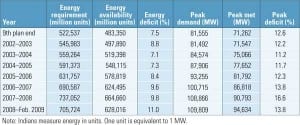
CoalPowering the People: India’s Capacity Expansion Plans
India has become a global business power even though hundreds of millions of its citizens still live in poverty. To sustain economic growth and lift its people out of poverty, India needs more — and more reliable — power. Details of government plans for achieving those goals demonstrate that pragmatism may be in shorter supply than ambition and political will.
-
 Coal
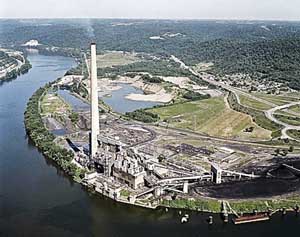
CoalFirstenergy to Convert Coal-Fired Burger Plant to Biomass
Confronted with a district court ultimatum that would have forced it to install expensive pollution controls or close two coal-fired units at its R.E. Burger Plant in Shadyside, Ohio, Akron-based FirstEnergy Corp. announced in April that it would convert them to biomass. When the $200 million retrofit is complete, as is expected by 2013, the Burger Plant will likely be one of the largest biomass facilities in the U.S.
-
 Coal
CoalGeologists Map Carbon-Trapping Rock Formations
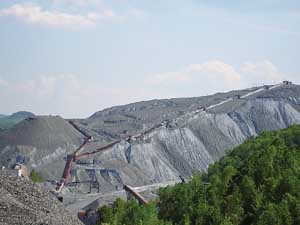
U.S. scientists concerned about carbon dioxide (CO2) leaks from sequestration attempts have been pursuing the option of natural chemical reactions within the earth to turn the carbon back into a solid, and they have identified an abundant supply of large rock formations around the world that could be used a vast sink for the heat-trapping gas.
-
 Coal
CoalFossil Fuels + Solar Energy = The Future of Electricity Generation
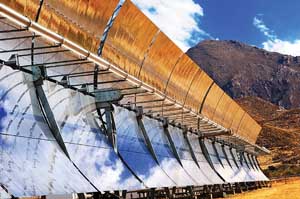
Renewable energy, though still accounting for a comparatively small portion of overall supply, generates a larger portion of the world’s electricity each year. Combining many of the available solar energy conversion technologies with conventional fossil-fueled technologies could reduce fuel costs while simultaneously helping utilities that are struggling to meet their renewable portfolio goals.
-
 Coal
CoalNorway Leads the Way on CCS
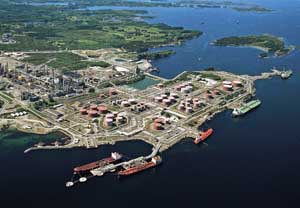
According to a new study from Emerging Energy Research, more than $20 billion will be spent on carbon capture and storage (CCS) projects this year at 50 power generation projects totalling 16 GW around the world. The European Union (EU), with an investment of $11.6 billion, leads all efforts, because it is pressed to achieve a target to reduce carbon emissions by 20% of 1990 levels by 2020. In December, the governing body reached agreement on a climate and energy package, which includes a framework for CCS and a directive on the way EU members and Norway will regulate licenses to ensure reliable carbon storage. The U.S. takes second place, earmarking $6 billion, and Canada is third, at $2.7 billion.
-
 Coal
CoalCERAWeek 2009: Floundering Economy Eclipses Renewable, Carbon Plans
For the past 26 years, Cambridge Energy Research Associates (CERA) has hosted an annual conference in Houston that is world-renowned for its high-profile speakers and attendees’ willingness to exchange ideas and share industry forecasts. The consensus this year was that the power industry remains strong but market and political forces, often working at cross-purposes, make bringing any new power generation to market more problematic than ever.
-
 Coal
CoalEPA Considers Regulating Coal Ash Ponds
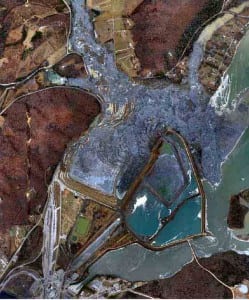
The Environmental Protection Agency has ordered a review of some 300 U.S. utility coal combustion waste sites and said it will develop new regulations to ensure that incidents like December’s colossal coal ash spill in Kingston, Tenn., are not repeated.
-
Coal
EPA to Reconsider Setting CO2 Standard for New Power Plants
Environmental Protection Agency Administrator Lisa Jackson has said that the EPA will reconsider a controversial policy memorandum issued by the agency late last year stating that the agency would not establish a carbon dioxide emission standard for new power plants and other large industrial sources of the heat-trapping gas.
-
Coal
Obama Answers Critics of Climate Allowance Auction
In the face of growing criticism from congressional Democrats of his plan to require electric utilities and other industries to pay for greenhouse gas emission allowances, President Obama told business leaders he is willing to negotiate on the issue, but warned that broad, free allowance allocations would mask the carbon price signal economists say is crucial to speed the deployment of clean technologies needed to fight global warming.
-
 Coal
CoalCFB Technology Offers Short- and Long-Term Environmental and Power Generation Benefits
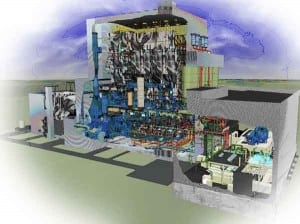
Circulating fluidized bed technology has the potential to significantly reduce carbon emissions when burning coal and adds the additional flexibility of burning other renewable fuels. Foster Wheeler’s Flexi-Burn technology allows the CFB to produce a CO2-rich flue gas and be part of a practical carbon capture and storage solution.
-
 O&M
O&MBalanced Pipe Fuel Flow Is Not Enough for Uniform Combustion
Conventional wisdom tells us that the key to good boiler combustion requires carefully balancing the fuel-air ratios across all the coal pipes. Recent tests show that the uniformity of the burner-to-burner stoichiometries—not balanced pipe-to-pipe fuel flow distributions—dictates combustion uniformity.
-
 O&M
O&MDominion Solves Mt. Storm’s Fuel-Handling Problems with Improved Coal Silo Design
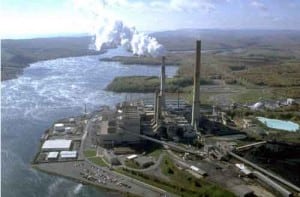
Many coal-fired power stations built before 1980 were designed for handling relatively easy-handling lump coal. If your plant’s bins, bunkers, and silos aren’t up to dealing with today’s range of more variable coal properties, this case study shows one way to minimize coal flow problems.
-
 Coal
CoalPolish Plant Beats the Odds to Become Model EU Generator
Once a Soviet satellite, Poland is now transforming into a thoroughly modern nation. To support its growing economy, this recent European Union member country is modernizing its power industry. Exemplifying the advances in the Polish electricity generation market is the 460-MW Patnów II Power Plant — the largest, most efficient (supercritical cycle), and environmentally cleanest lignite-fired unit in the country.
-
O&M
"Blueprint" Your Pulverizer for Improved Performance
Pulverizer throughput is determined by the coal fineness desired for a given coal. However, compromising on coal fineness when your pulverizer isn’t up to snuff can increase NO x and cause many furnace problems. Your least costly option for increasing pulverizer capacity is to pay careful attention to key dimensions and critical tolerances during your next overhaul.
-
 O&M
O&MBest Management Practices for Coal Ash Ponds
The unfortunate coal ash spill at the Tennessee Valley Authority’s (TVA’s) Kingston Fossil Plant that occurred on December 22 has heightened national awareness of the problems associated with utilities’ coal ash surface impoundments if they are not properly maintained.
-
 Coal
CoalNew Laser Technology Helps Reduce Coal-Slagging Headaches
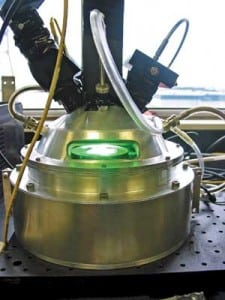
Laser-induced breakdown spectroscopy is starting to light the way for power plant operators who want to reduce coal ash deposition in their boilers.
-
 Coal
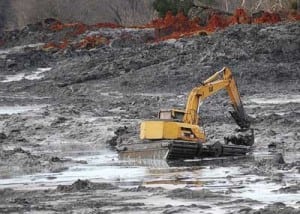
CoalTVA Containment Pond Bursts, Causing Massive Coal Ash Flood
Just after midnight on Dec. 22, 2008, a 40-acre pond holding coal combustion waste for a Tennessee Valley Authority (TVA) steam power plant ruptured, sending a wave of wet ash across 300 acres of rural land in Harriman County, Tenn. It was the largest coal slurry spill in U.S. history — more than three times the size of the Martin Country, Ky., sludge spill of 2000, and about eight times that of the 1972 Buffalo Creek flood in West Virginia. Unlike that flood, which killed 125 people and injured scores others, this one, Tennessee authorities reported, resulted in no serious injuries or hospitalizations.
-
 Coal
CoalSri Lanka Commissions Major Thermal Power Plant
The Sri Lankan government in December commissioned the first phase of the 300-MW Kerawalapitiya Thermal Power Plant, the nation’s biggest combined-cycle power plant project. The $300 million plant in the western part of the country commenced operations by generating 200 MW (Figure 7). In its second phase, it will expand to 300 MW. Per government estimates, power produced by the plant is priced at about 20 rupees or $0.18/kWh.
-
Coal
Nation’s NOx Emissions Continue to Drop While Court Reinstates CAIR
In a major decision aimed at preserving the air quality benefits of the program, a federal court on December 23 modified its July 11 decision to throw out the Environmental Protection Agency’s (EPA’s) Clean Air Interstate Rule (CAIR).
-
 Coal
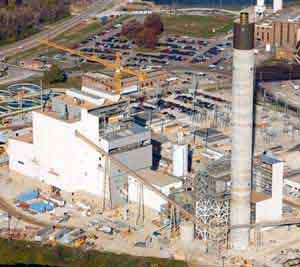
CoalDesigning New Composite Stack Liners
The 200-MW Dallman Unit 4 under construction in Springfield, Ill., is expected to cost approximately 20% less to operate per megawatt-hour than the most efficient of the three existing Dallman units. A composite stack liner is one element enabling that cost savings.
-
Coal
Conquering Insurance Obstacles for Carbon Sequestration Technologies
Whatever type of carbon-limiting regulations the U.S. faces in the future, they will affect the ability of the insurance industry to offer economic insurance options to the power industry.
-
 Coal
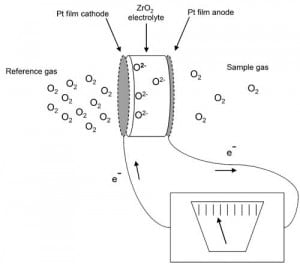
CoalA New Instrument for In Situ SCR NOx Measurement
A zirconium oxide sensor technology originally developed for automotive applications could make in situ, simultaneous measurement of O2 and NOx a breeze for coal-fired power plants.
-
 Coal
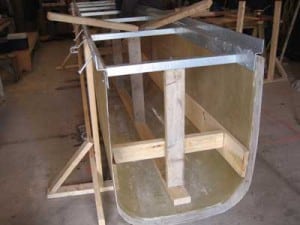
CoalCustom FRP Trench Drains Speed Up FGD System Installation
The flue gas desulfurization process requires the use of aggressive liquids that significantly shorten the life of typical construction materials such as metals and concrete. That makes fiberglass-reinforced plastic (FRP) the material of choice for many components in a typical flue gas desulfurization (FGD) system.
-
 Coal
CoalA Fresh Look at Coal-Derived Liquid Fuels
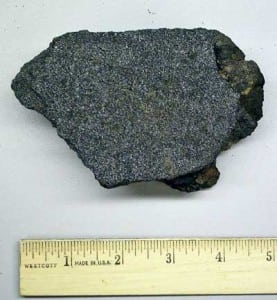
Thirty-five percent of the world’s energy comes from oil, and 96% of that oil is used for transportation. The current number of vehicles globally is estimated to be 700 million; that number is expected to double overall by 2030, and to triple in developing countries. Now consider that the U.S. has 27% of the world’s supply of coal yet only 2% of the oil. Coal-to-liquids technologies could bridge the gap between U.S. fuel supply and demand.
-
 Coal
CoalCO2 Source and Sink Tracking Improving
Many opponents of climate change policies and regulations argue that it is unfair to penalize some sectors — like power generation — more heavily than others when it’s difficult to prove precisely where specific greenhouse gas (GHG) emissions are coming from, where they’re going, and what effect they are having. Toward the ends of scientific understanding and sound public policy, scientists are making progress in isolating GHG sources and sinks.
-
 Coal
CoalEnel to build first industrial-scale hydrogen power plant
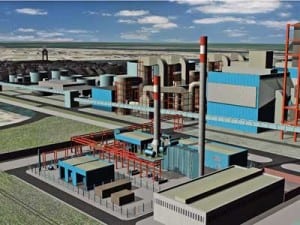
Italy’s largest energy company, Enel, is gearing up to build an innovative hydrogen-fueled combined-cycle power plant — the first of its kind in the world — in Fusina, near Venice, in the Veneto region of Italy. The €47 million plant is under construction at the site of Enel’s "Andrea Palladio" Fuina plant, a 960-MW coal-fired […]