
Articles By

-
News
Smart Grid Offers Something for Everyone
Whether you are a customer (and we all are), a utility executive, a power plant manager, or a grid operator, the smart grid has the potential to provide benefits beyond electricity. That was one theme of the presentations on Tuesday, the first day of the GridWise Global Forum (GGF) in Washington, D.C.
-
News
South Africa Abandons Pebble Bed Modular Reactor Project
South Africa’s government on Thursday announced it would no longer invest in the Pebble Bed Modular Reactor (PBMR) project, despite providing nearly 80% of the R9.2 billion ($1.3 billion) that has been poured into development of the Generation-IV helium-cooled high temperature reactor design. The decision was reached with the “fiscal constraints in these hard economic times” in mind, the government said.
-
News
Legislative Briefs: Bingaman, Udall Introduce 15%-by-2021 RES Bill
The week brought important news from Washington on energy- and climate change–related legislation. Sens. Jeff Bingaman (D-N.M.) and Tom Udall (D-N.M.) introduced a bill to create a federal renewable electricity standard, the White House said it had received permitting guidance on greenhouse gases from the Environmental Protection Agency, and Sen. Tom Carper (D-Del.) reportedly canceled a key vote on a bill that sought to curb power plant emissions.
-
News
MIT Fuel Cycle Study: Uranium Supplies Will Not Constrain Industry Growth
A new study from the Massachusetts Institute of Technology’s Energy Initiative (MITEI) concludes that uranium supplies will not limit growth of the nuclear industry, contrary to a view that has prevailed for decades.
-
News
Duke Energy, Indiana OUCC Cap Edwardsport IGCC Costs at $2.98 B
Costs passed onto consumers associated with the construction of Duke Energy Indiana’s Edwardsport coal gasification plant near Vincennes, Ind., will be capped at $2.975 billion, according to a settlement agreement reached last week between the utility, the Indiana Office of the Utility Consumer Counselor (OUCC), and Nucor Steel Indiana.
-
News
California Commission Approves Third Major CSP Project in Three Weeks
The California Energy Commission (CEC) last week unanimously approved construction and operation of Solar Millennium’s 1,000-MW Blythe Solar Power Project. If built, the project, consisting of four parabolic trough units, could be the world’s largest concentrating solar power (CSP) facility and among the first commercial solar thermal plants permitted on federal land.
-
News
Explosion Shuts Down Xcel Coal-Fired Plant in Minn.
Xcel Energy shut down its 538-MW Black Dog Power Plant in Burnsville, Minn., on Tuesday after an explosion rocked the coal- and gas–fired plant, causing visible damage to the exterior of the building. No personnel were harmed, but three firefighters responding to a smoldering fire in a coal hopper received minor injuries, police said.
-
General
MIT Report Buries Breeders, Reprocessing
By Kennedy Maize Let us hope that the false hope of fast breeder reactors fueled with plutonium reprocessed from spent light water reactor fuel is finally properly interred. A new report from the same MIT crew that examined the future of nuclear power in 2003 buries the pipe dream of breeder reactors, or, at least, […]
-
News
Old Dominion to Delay Permitting for Proposed Va. Coal-Fired Plant
Old Dominion Electric Cooperative (ODEC) last week said it would delay plans to obtain air permits necessary to begin construction of its proposed coal-fired Cypress Creek Power Station in southeastern Virginia, citing a slump in demand growth caused by the slackened economy.
-
News
Governors Urge Passage of Federal Renewable Energy Standard
As lawmakers returned to Capitol Hill this week, a bipartisan group of 26 governors on Monday urged Congress to pass a federal renewable energy standard (RES), saying that it could spur rapid growth of the nation’s renewable electricity sources.
-
News
States Ask Supreme Court to Decide on Public Nuisance Case
Indiana and 11 other states filed an amicus brief with the U.S. Supreme Court last week, asking it to overturn a September 2009 decision by 2nd U.S. Circuit Court of Appeals that allows greenhouse gas emitters to be sued for contributing to a public nuisance—climate change and global warming.
-
News
DOE Designates Federal Funds for Renewable, Transformational Projects
The U.S. Department of Energy last week committed millions of dollars to accelerate the technical and commercial readiness of renewable and energy storage technologies. Commitments include the largest single federal award to date for emerging U.S. marine and hydrokinetic technologies.
-
News
Steelworkers Accuse China of Unfair Cleantech Trade Policies, Japan Takes Issue with Ontario’s FIT Program
Disputes concerning dominance of the world’s renewable energy sector heated up in the past week: The U.S.-based United Steelworkers (USW) filed a trade case alleging that “illegal” Chinese policies and practices threatened America’s industries, while Japan complained to the World Trade Organization (WTO) that Ontario’s feed-in-tariff (FIT) program violated rules and is protectionist.
-
News
Report Questions Taylorville IGCC Project’s Cost, Benefits, Timeline
A report issued by the Illinois Commerce Commission (ICC) last week to the state’s General Assembly lambastes the proposed $3.5 billion Taylorville Energy Center (TEC) as too costly “with uncertain future benefits.” The commission also questioned the 716-MW integrated gasification combined cycle (IGCC) facility’s construction timeline, concluding that uncertainties could “potentially add to already-significant costs.”
-
News
Germany Strikes Deal to Extend Nuclear Plant Life Span
Under a deal made this weekend between energy companies and the government of Chancellor Angela Merkel, the life of Germany’s 17 nuclear power plants, located in five of the country’s 16 federal states, will be extended by up to 15 years. The decision has spurred opposition from the country’s local utilities and renewable industry.
-
News
California Fails to Pass 33%-by-2020 Renewable Mandate
The California Legislature failed last week to pass S.B. 722, a bill that would have required all utilities to obtain at least 33% of their electricity from renewable sources by 2020. The bill passed the Assembly, but the State Senate ran out of time before the legislative session ended on Aug. 31.
-
News
IEA: World’s Generation Increased 230% Since 1973
Electricity generation around the world was 20,181 TWh in 2008 and has soared nearly 230% since 1973, according to the International Energy Agency’s (IEA’s) newly released Key World Energy Statistics. The 2010 edition of the booklet that addresses global energy facts and figures also shows that although the world’s coal/peat shares for power generation increased just 3% during that timeframe, nuclear and gas generation jumped about 10%, while oil generation plunged almost 20%.
-
News
RWE, BASF, and Linde Claim CCS “Breakthrough”
Germany’s largest electricity producer, RWE Power, last week said efforts to test a new technology for separating carbon dioxide from flue gas in a pilot plant at its Niederaussem power station had resulted in a “breakthrough.” The technology, which captures carbon dioxide by means of unnamed chemical solvents, could reduce energy input by 20%, RWE and project partners BASF and the Linde Group claim.
-
News
DOE Grants $575M to 22 Projects for CCS Research and Development
The DOE on Tuesday announced it would grant $575 million in Recovery Act funds to 22 projects in 15 states to accelerate carbon capture and storage (CCS) research and development. The projects are expected to complement industrial demonstration projects already being funded by the Recovery Act, but most have power plant applications.
-
News
Nevada Geothermal’s Blue Mountain Geothermal Project Gets Loan Guarantee
Nevada Geothermal’s 49.5-MW Blue Mountain “Faulkner 1” geothermal project in northwestern Nevada has been awarded a $98.5 million partial loan guarantee by the U.S. Department of Energy (DOE).
-
General
The End of the Climate War
By Kennedy Maize Washington, D.C., Sept. 7, 2010 — The time has come for all of us to abandon the sterile, and now futile, brawl over massive federal legislation to deal with the alleged problem of global warming. For the advocates of measures such as carbon taxes, cap-and-trade (a second-best tax), or Environmental Protection Agency […]
-
General
Election Means Major Energy Policy Changes
By Kennedy Maize Washington, D.C., Sept. 3, 2010 – Look for significant changes in the way Congress addresses energy policy and legislation when the 112th Congress convenes in January 2011. By most expert accounts, Democrats are going to suffer major losses at the polls in November, with many pundits predicting a Republican takeover of the […]
-
 Gas
GasTop Plant: Sloe Centrale Power Plant, Vlissingen-Oost, Zeeland Province, Netherlands
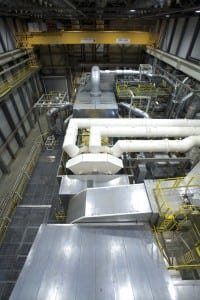
There’s nothing slow about the fast-track operations at the new 870-MW Sloe Centrale Power Plant. The combined-cycle plant is designed for 250 starts per year and is capable of supplying power to the grid within a mere 30 to 40 minutes. In addition to its impressive rapid load response, the gas-fired plant produces low CO2 and NOx emissions by using the latest technology. It also attains an efficiency of 59%.
-
News
Cap and Trade Is Dead
Cap and trade officially died on July 22 when Senate Majority Leader Harry Reid announced at a news conference that the Democratic Caucus was unable to reach a consensus on any form of energy bill, even a recent short-lived version that proposed reducing carbon emissions from only the utility sector. I predict that carbon cap and trade is now dead for at least a decade, maybe longer.
-
 Gas
GasTop Plant: Timelkam Power Plant Vöcklabruck District, Upper Austria, Austria
Now that the 412-MW Timelkam Power Plant has replaced a 47-year-old coal-fired power plant located in the Vöcklabruck District, northern Austrians can bid auf wiedersehen (goodbye) to high levels of air pollution. Compared to its predecessor, the new gas-fired combined-cycle plant has dramatically cut CO2 and NOx emissions and produces seven times more energy.
-
 Gas
GasIndustry Trends: Map of Natural Gas Generation in North America
Courtesy: Platts Data source: POWERmap All rights reserved. No reproduction allowed.
-
Smart Grid
"Perfect Citizen" Program to Protect the Power Grid
The National Security Agency is launching a program to protect the grid from cyber attack, along with other civilian and military critical infrastructure, while a new Department of Energy report highlights grid vulnerabilities.
-
Legal & Regulatory
Coal Ash Regulation: Playing the Name Game
What’s in a name? Would coal ash labeled as “special” hazardous waste be as easily recycled as that labeled nonhazardous waste?
-
 Gas
GasTop Plant: West County Energy Center, Palm Beach County, Florida
The 3,600-MW West County Energy Center, with two recently commissioned power blocks and a third just entering start-up, is the first “greenfield” combined-cycle plant constructed by FPL since the 1970s. Thanks to FPL’s long history with repowering projects, the project team commissioned Unit 2 seven months early, with no operator errors during start-up. At just over $600/kW, the cost of the plant was a bargain.
-
 Solar
SolarFeed-in-Tariffs Around the World
Feed-in-tariffs (FITs)—above-retail rates paid for renewable power that producers "feed" into the grid—are gaining momentum all over the world as a means of driving project growth. Here are some of those established and proposed FITs.