
Articles By

-
 Coal
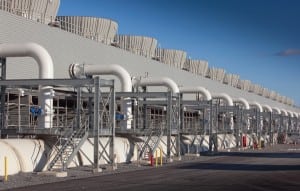
CoalTop Plant: Brunner Island Power Plant, York Haven, York County, Pennsylvania
The 1,456-MW Brunner Island coal-fired plant has implemented advanced environmental improvements in order to be a good neighbor to the residents of south central Pennsylvania. For example, between 2006 and 2010, PPL invested more than $860 million in pollution control upgrades for air, water, and solid waste treatment at the facility.
-
 News
NewsSafety Bolt Bag
Ergodyne’s new Arsenal 5725 Safety Bolt Bag is designed to safely store tools, fasteners, and equipment at any vertigo-inducing job site. Featuring a loop design and wide-body, one-handed cinch top, this safety bolt bag increases aerial job safety and productivity by keeping loose gear securely stored in a durable canvas pouch. The bag has a […]
-
 Coal
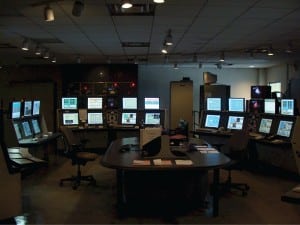
CoalTop Plant: Dickerson Generating Station, Dickerson, Maryland
Owner/operator: Mirant Corp. Dickerson Generating Station, a 50-year-old facility servicing Maryland and Washington, D.C., was recently upgraded with a flue gas desulfurization system and a unique draft system that allows an electrostatic precipitator and a baghouse to share flue gas cleanup chores on each unit. In addition, state-of-the-art equipment monitoring and diagnostics keep plant reliability high for this baseload unit.
-
 News
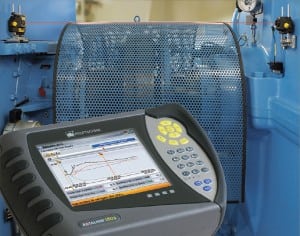
NewsMachine Positional Change–Measuring Application
LUDECA launched the ROTALIGN Ultra Live Trend, a short-term continuous-monitoring application that helps to accurately determine the relative positional changes between coupled machines during run-up or shutdown. It utilizes the unique ROTALIGN five-axis sensor to monitor continuously, in real time and simultaneously, both the vertical and horizontal parallel and angular displacement of rotating machinery, from cold […]
-
News
Solving the Coal Conundrum
A recent U.S. Government Accountability Office (GAO) report examines two key options for reducing carbon dioxide (CO2) emissions from coal-fired power plants. The first is horribly expensive and will be years in the making. The second is blocked by current regulations in the U.S. The GAO report “Opportunities Exist for DOE to Provide Better Information […]
-
 Coal
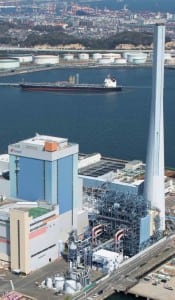
CoalTop Plant: Isogo Thermal Power Station Unit 2, Yokohama, Japan
Unit 2 at J-POWER’s Isogo Thermal Power Station entered commercial service in July 2009. The 600-MW ultrasupercritical unit joins an earlier, similar plant built in 2002. Together, these two new plants replaced 1960s-vintage coal-fired plants and doubled power generation from the small project site. In addition, the new unit improves the plant’s gross thermal efficiency to about 45% while reducing air emissions to those of a gas-fired combined-cycle plant.
-
 Nuclear
TVA to Complete Bellefonte Unit 1
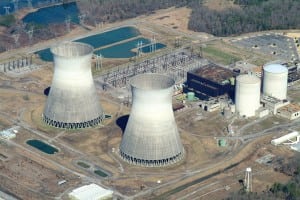
Thirty-six years after work first began at the 1,600-acre site housing the Bellefonte Nuclear Power Plant in Hollywood, Ala., the Tennessee Valley Authority (TVA) in August said it plans to invest $248 million to maintain the option to complete the 1,260-MW Unit 1 reactor. The announcement was made as the nation’s largest publically owned utility […]
-
 Coal
CoalTop Plant: Oak Creek Power Plant, Elm Road Units 1 and 2, Milwaukee and Racine Counties, Wisconsin
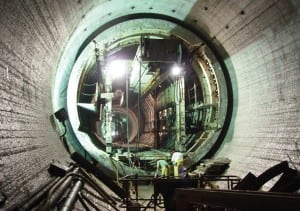
Adding two 615-MW supercritical pulverized coal units to the 1,135-MW Oak Creek Power Plant is part of We Energies’ ongoing master plan to “Power the Future” of Wisconsin well into the 21st century. The new Elm Road Unit 1 went into service in February, and Unit 2 is expected to start operations during the fourth quarter of 2010. With operations marked by high efficiency and low emissions, these new units will provide large amounts of cleaner energy to the Great Lakes area.
-
 Solar
SolarAustralia Fires Up Solar-Diesel Hybrid Plant
Australian company Horizon Power opened the country’s first hybrid solar-diesel power station in August near Marble Bar, and it is readying another for operation in the neighboring town of Nullagine, Western Australia—a region infamous for extremely hot temperatures. The power stations are the first “high penetration, hybrid solar-diesel systems” in the world, claims Horizon, adding […]
-
 Coal
CoalTop Plant: Tolk Station, Earth, Texas
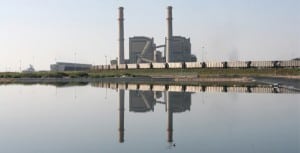
Located in a semi-arid region, this “Texas tough” coal-fired power plant uses a number of smart practices to increase water-use efficiency. For example, a pipeline was constructed to send blowdown water from nearby Plant X for treatment and recycling at the 1,080-MW Tolk Station, making both plants “zero-discharge” facilities. For its environmental stewardship and superior plant operations, the Powder River Coal Users’ Group named Tolk Station its 2010 Plant of the Year.
-
 Wind
WindThe Art of Power Generation
Much opposition to large-scale renewable projects concerns aesthetics. U.S. federal regulators, for example, ordered the developer of the $1 billion Cape Wind project—a 468-MW offshore wind farm proposed to be built in a 25-square-mile section of Nantucket Sound off the Massachusetts coast—to change the design and configuration of the project to reduce “visual impacts.” Among […]
-
 Coal
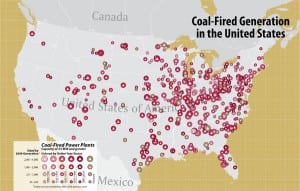
CoalMap of Coal-Fired Generation in the United States
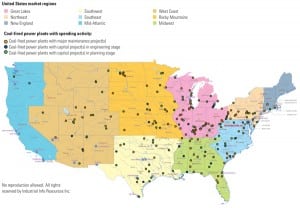
Courtesy: Platts Data source: POWERmap All rights reserved. No reproduction allowed.
-
News
Storing Energy Cryogenically
Researchers at the University of Leeds in the UK and the Chinese Academy of Sciences say they may have found a solution to dealing with short-lived power demand spikes—and it could be more environmentally friendly and halve the fuel needed when compared with gas-fired generation. Noting that gas-fired generators typically used to feed peaking demand […]
-
 O&M
O&MAir Preheater Seal Upgrades Renew Plant Efficiency
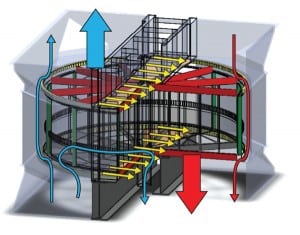
The air preheater is a critical, yet often overlooked, component of the boiler combustion air system. Evaluating and optimizing a heater’s performance is difficult given how entwined it is with the entire combustion system and the lack of standardized calculation tools. Reducing leakage by using modern seal technology will improve combustion efficiency, maintain fan performance, and keep your downstream air quality control equipment operating within spec.
-
 Wind
WindOffshore Devices Get Bigger and Lighter
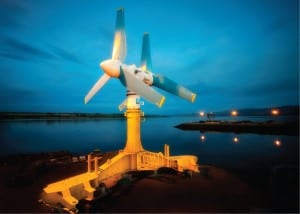
UK firms unveiled two innovative offshore turbines in July and August—one to reap the wind’s energy and the other, tidal power. Wind Power Ltd. made public the latest embodiment of its Aerogenerator project, a lighter 10-MW design, while Atlantis Resources Corp. unveiled and then deployed its mammoth AK1000 tidal turbine, which it says is the […]
-
 O&M
O&MTaming Condenser Tube Leaks, Part II
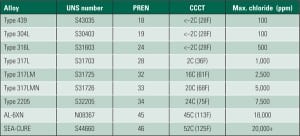
In Part I of this two-part report we examined the various chemical forces at work in condenser tube leaks, the steam plant components placed at risk, and the suite of instrumentation most capable of providing early warning of a leak. Assuming you were able to repair the leak and quickly resume operation, the next step is to identify the damage mechanisms that caused the problem so you can minimize future leaks.
-
Nuclear
India Kicks Off Construction of Indigenous Nuclear Fleet
India in August began building two 700-MW indigenous nuclear power reactors at Rawatbhatta, in the desert state of Rajasthan. The two pressurized heavy water reactors (PHWRs), which will use uranium as fuel and heavy water as both moderator and coolant, are the largest to be built by the central government–run Nuclear Power Corp. of India […]
-
 O&M
O&MFBC Control Strategies for Burning Biomass
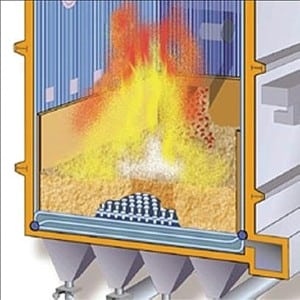
As a boiler fuel, biomass has shown great promise while suffering from a slow development history. One factor limiting its use has been the combustion system. For the most part, conventional grate-fired boilers have been the only option. Today, the most efficient approach to burning biomass to produce electricity and steam is fluidized bed combustion (FBC). Whether you choose FBC or grate, biomass presents unique challenges to control system designers.
-
-
 News
NewsDeep Excavation Support Systems Speed Plant Construction
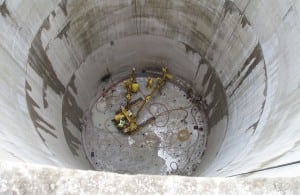
As part of constructing the recently commissioned We Energies’ Oak Creek Power Plant Elm Road units, four remarkable below-ground structures were built. Each unique structure required creative designs and meticulous construction techniques to meet the project’s distinctive requirements.
-
Business
Lessons Learned in Reliability Standards Compliance
It has been three years and a few months since the North American Electric Reliability Council (NERC) Reliability Standards (Standards) became mandatory and noncompliance became subject to sanctions by the Federal Energy Regulatory Commission (FERC). You might assume that because we have had no further instances of widespread cascading outages that the Standards are working. You may also assume that—considering the database of documented noncompliance with the Standards—the industry as a whole is puzzled, unprepared, or negligent in carrying out its responsibility to keep the high-voltage electric grids reliable and secure. The truth likely lies somewhere in the middle.
-
 Coal
CoalU.S. Coal-Fired Power Development: Down but Not Out
Environmentalists renewed their attacks on coal-fired power development in 2010. At the same time, Congress dithered on cap-and-trade legislation while the Environmental Protection Agency marched forward rules to reduce carbon emissions from coal-fired power plants. Couple the regulatory uncertainty with lean economic times that have flatlined electricity demand growth plus low natural gas prices, and the result is predictable: New coal-fired plant construction is in the doldrums.
-
General
Obama Panders on Alaska Land
By Kennedy Maize Washington, D.C., Sept. 29, 2010 – I love Alaska. The beauty of the mountain ranges, rivers, islands, and glaciers is stunning. The diversity of habitat and wildlife inspires wonder. The summer days and winter nights are filled with mystery. The people, of all ethnicities and political persuasions, are endearing and quirky. My […]
-
News
Reports: SCADA-Attacking Worm Infects Computers at Iran Nuclear Reactor
Computers at Iran’s Bushehr nuclear reactor and around the country have reportedly been infected by the Stuxnet worm, a sophisticated malware that attacks supervisory control and data acquisition (SCADA) systems at power plants, factories, and military installations.
-
News
DOE Awards $30 Million to Projects Boosting Grid Cybersecurity
Electric grid cybersecurity in the U.S. was revved up in the past week as the Energy Department announced investments of more than $30 million in 10 solution-seeking projects. At the same time, the DOE selected an Electric Power Research Institute- (EPRI-) led collaborative to assess and develop technologies and standards to protect the nation against cyber attacks.
-
News
California Air Board Passes 33% Renewable Energy Standard
Regulators at the California Air Resources Board (CARB) unanimously voted to increase that state’s renewable electricity standard (RES) to 33% by 2020 last week. The regulation applies to all entities that deliver power, including publicly owned utilities and investor-owned utilities.
-
News
California Regulators Greenlight 370-MW BrightSource Solar Thermal Project
The California Energy Commission (CEC) last week approved BrightSource Energy’s 370-MW Ivanpah Solar Electric Generating System proposed for construction in the Mojave Desert. The project is the fourth solar thermal power plant approved in the past month despite presenting “significant environmental challenges,” the commission said.
-
News
AEP, Allegheny File New Application to Build PATH in Virginia
American Electric Power and Allegheny Energy last week said they filed a new application with the Virginia State Corporation Commission (SCC) to build the Virginia segment of the Potomac-Appalachian Transmission Highline (PATH).
-
News
U.S. Milestone: OPT Connects Hawaii Wave Energy Device to Grid
A wave energy device was connected to the grid for the first time in the U.S. this week. Ocean Power Technologies (OPT) hooked up its PowerBuoy system, a device that had been deployed in December 2009 in waters 100 feet deep and nearly three-quarters of a mile off the coast of Oahu, Hawaii.
-
News
DOE Formally Commits $1B to FutureGen 2.0; Ameren Charts Project’s Next Steps
The Energy Department on Tuesday said it had signed a final cooperative agreement with the FutureGen Industrial Alliance and Ameren Energy Resources, formally committing $1 billion in Recovery Act funding to build the revamped FutureGen project.