
Articles By

-
 O&M
O&MSteam Turbine Cleaning Using Chemical Foams
In the May issue, we discussed the importance of either preventing copper plating of the high-pressure (HP) steam turbine rotor or finding a good foam or mechanical removal means of restoring lost efficiency. In that article we noted that “copper deposits typically form on the stationary nozzle block or first-stage stationary blades” and that those deposits usually result in a steam turbine loss of capacity at a rate of about 2 to 3 MW per month. We also stated that the “general rule of thumb is that there is a reduction of about 1 MW of generating capacity for each 1 to 2 pounds of deposit that accumulates on the HP turbine.
-
 Gas
GasNordic Nations Provide Clean Energy Leadership
In the past few years, nuclear concerns, rising oil prices, and a growing understanding of our environmental impact has given energy issues a higher profile worldwide. In this report on the Continental Nordic countries, we look at the efforts being made in much of the Nordic region to secure a sustainable energy supply for the future and at the extent to which the innovative solutions of these countries can be exported around the globe.
-
 News
NewsCombustion Gas Analyzer
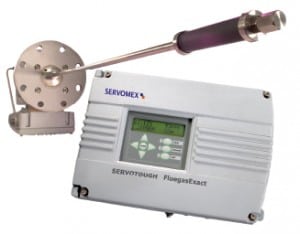
Building on the success of the Fluegas 2700 combustion gas analyzer, the new SERVOTOUGH FluegasExact integrates Servomex’s unique Flowcube flow sensor technology to give users even more confidence in their combustion gas measurements. The analyzer features a patented zirconium oxide cell for oxygen measurement and a thick film catalytic sensor for measuring carbon monoxide (CO) […]
-
Business
Legal Issues That Float in the Cloud
Cloud computing is a growing phenomenon for many businesses, large and small, promising significant efficiencies and cost savings. But, as with anything new, computing in the cloud poses some unforeseen legal issues.
-
 O&M
O&MPredictive Maintenance That Works
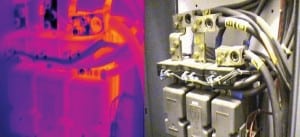
This is the fourth in a series of predictive maintenance (PdM) articles that began in the April “Focus on O&M” with an introduction to PdM as a process whereby maintenance is performed based on the condition of the equipment rather than on a predetermined interval. In the May and July issues, we began exploring specific PdM techniques, such as motor-current signature analysis and oil analysis.
-
 Nuclear
Crossing the Digital Divide
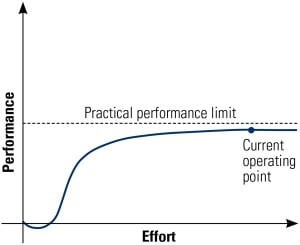
One of the great successes of the power generation industry over the past two decades has been the significant increase in nuclear plant reliability and other performance standards. However, there is reason to be concerned that the design, operation, and maintenance practices used by the current fleet of plants do not leverage all the possible advantages from a digital controls upgrade. Perhaps past success is the biggest barrier to future success.
-
HR
Navigating the World of Social Media and the Job
Social media are transforming the world around us, and not just the world of our family and friends. Understanding how the new tools of social interaction impact the job is part of the role of today’s effective manager.
-
Legal & Regulatory
The Water-Energy Balancing Act
Water has long been energy production’s silent partner. In the past, we Americans seemed to take it for granted that plentiful water supplies would be available for a variety of energy needs ranging from the operations of coal-fired power plants to natural gas production activities.
-
 Nuclear
Browns Ferry Unit 1 Restart: World-Class ALARA Performance
TVA completed the $1.9 billion restart of the 1,100-MW Browns Ferry Unit 1 in 2007. That restart project provided the opportunity to incorporate state-of-the-art materials and radiation-reduction techniques to ensure that Unit 1 would be an industry-leading low-ALARA-exposure plant when it returned to service. The reductions achieved were significant.
-
HR
Why Meetings Fail and How to Make Them Work
Have you seen too many eyes-glazed-over expressions betraying a lack of interest at your employee meetings? Getting folks to pay attention at meetings is important, and there are ways to make it happen.
-
 Nuclear
Top Plants: Four Plants Demonstrate Global Growth of Nuclear Industry
The global nuclear industry is moving forward at a brisk pace, only slightly slowed by the Fukushima Daiichi accident. The International Atomic Energy Agency’s most realistic estimate is that 90 new nuclear plants will enter service by 2030. Ten new nuclear plants went online over the past two years. We profile four of them as POWER’s nuclear Top Plants for 2011.
-
Gas
Global Gas Glut: An Update
In our September article about the global profusion of natural gas, we based a portion of our discussion on the latest, vastly increased natural gas reserve estimates reported by the U.S. Energy Information Administration (EIA). Since our article was published, the EIA has adjusted its estimates downward. We want you to be aware of those lower recoverable reserve estimates. We also want you to know that the conclusions reached in that article do not change with the new estimates of natural gas reserves.
-
Commentary
A Renaissance for U.S. Nuclear Power? Not Anytime Soon
In many quarters, nuclear power generates enthusiasm. A single pound of reactor-grade uranium oxide produces as much electricity as 16,000-plus pounds of coal—enough to meet the needs of the average U.S. household for more than one year. And whereas burning coal emits carbon dioxide, sulfur dioxide, and nitrogen oxides, nuclear power generation is virtually emissions […]
-
 O&M
O&MOptimizing Condenser Tube Selection
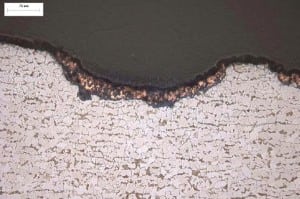
Selecting the most economical tube for a new condenser, or the retrofit of an existing one, is much more complex than mere price shopping. Each material has unique performance characteristics that affect the operating economics of the entire plant. A case study illustrates the importance of carefully choosing the tube material that is right for your plant.
-
 News
NewsEmergency Lighting Solution
BIRNS introduced what it is calling the “world’s most advanced, seismically qualified (per IEEE-344) emergency lighting solution” for nuclear containment: the BIRNS Emergency Light Fixture-LED. The slim-profiled, wall-mounted system provides in excess of 24 hours of continuous, brilliant LED light in the case of power loss in nuclear power facilities and is capable of withstanding […]
-
Commentary
California’s RAM for Small Renewables
With its powerful new renewable portfolio standard, California will boost the market for small renewable technologies. The key is the reverse auction mechanism, which fine-tunes the regulatory regime.
-
 Nuclear
Combustion Gas Analyzer
Building on the success of the Fluegas 2700 combustion gas analyzer, the new SERVOTOUGH FluegasExact integrates Servomex’s unique Flowcube flow sensor technology to give users even more confidence in their combustion gas measurements. The analyzer features a patented zirconium oxide cell for oxygen measurement and a thick film catalytic sensor for measuring carbon monoxide (CO) […]
-
News
Final FERC Rule Backs Reasonable Rates for Frequency Regulation Service Providers
A new rule enacted by the Federal Energy Regulatory Commission (FERC) on Thursday orders organized wholesale power market operators to pay “just and reasonable rates” for providers of regulation service, an ancillary transmission service that protects the grid by correcting deviations in grid frequency and balance on transmission lines with neighboring systems.
-
News
Alberta Court Rejects Environmental Group’s Challenge to Planned Coal Plant
An Alberta court on Friday rejected an environmental group’s challenge to the August-issued Alberta Utility Commission approval of a planned 500-MW supercritical coal-fired addition at the 150-MW H.R. Milner Generating Station in the Grande Cache area. The court’s decision paves the way for Maxim Power to begin construction of the controversial unit—the first coal plant built in the province in a decade.
-
News
California Adopts Final Cap-and-Trade Regulation
After three years of development, dozens of public workshops, and hundreds of meetings with stakeholders, the California Air Resources Board (ARB) on Thursday adopted a final rule to cap California’s greenhouse gas emissions and put a price on carbon. The cap-and-trade program starts in 2013 for electric utilities and large industrial facilities.
-
News
Florida Regulators Greenlight Cost Recovery for New Nuclear Builds, Capacity Additions
Florida’s Public Service Commission (PSC) on Monday approved cost recovery amounts for construction of new nuclear power facilities and additions to existing nuclear plants planned by Progress Energy Florida and Florida Power & Light Co. (FPL). The decision would help secure “a diversified and stable energy future for Florida,” regulators said.
-
News
FERC: Gas Demand to Result in Supply Constraints
Surging coal prices have continued to prompt generators to displace some coal used for power generation with natural gas, and gas demand is again expected to jump this winter, which could pose some supply restraints, the Federal Energy Regulatory Commission (FERC) said in its Winter 2011-2012 Energy Market Assessment.
-
News
DOE Invests $60M to Reduce Cost of CSP Technologies
The Department of Energy (DOE) is seeking contenders for a three-year-long funding opportunity for applied scientific research to advance novel concentrating solar power (CSP) technologies. The $60 million investment is part of the DOE’s SunShot Initiative, a collaborative effort to reduce the cost of solar energy 75% and make it cost competitive with other forms of energy by the end of the decade.
-
News
Companion Coal Ash Bill Introduced in Senate
A companion bill to the U.S. House’s recently passed Coal Residuals Reuse and Management Act (H.R. 2273) was last week introduced in the Senate by Sens. John Hoeven (R-N.D.) and Kent Conrad (D-N.D.).
-
News
House Votes to Leave Coal Ash Management to States, Not EPA
On Friday, following passage of a bill to delay Environmental Protection Agency (EPA)–promulgated Boiler MACT rules, the U.S. House of Representatives also passed the Coal Residuals Reuse and Management Act (H.R. 2273), legislation that would impede the federal agency from proceeding with its May 2010 proposed rule to regulate coal ash residuals.
-
News
European Transmission Operators Warn of Possible Load Shedding This Winter
An association of 41 European transmission system operators (TSOs) from 34 countries last week warned that adequacy margins in the coming winter could dip dangerously and threaten power supply for most of the continent.
-
News
U.S. Solar Panel Makers Petition Govt. to Investigate Chinese Solar Subsidies, Dumping
A coalition of seven U.S. manufacturers of solar cells and panels today petitioned the U.S. International Trade Commission (ITC) to investigate whether Chinese manufacturers are illegally dumping crystalline silicon solar cells into the U.S. market and receiving illegal subsidies from China. The measure follows a string of bankruptcy filings by several U.S. solar manufacturers in the past few months.
-
News
Stuxnet Variant Discovered in European Systems
New variants of Stuxnet—the sophisticated computer virus designed to attack control systems and which was used last year to sabotage the Iranian Bushehr nuclear power plant—has been detected in European computer systems. The malware, dubbed “Duqu” is “essentially the precursor to a future Stuxnet-like attack,” computer security firm Symantec said on Tuesday.
-
News
NYISO: RGGI Has Not Caused GHG Increases in Nonparticipating States from Increased Imports
A study conducted by the New York Independent System Operator Inc. (NYISO) to evaluate whether the cost of compliance with the Regional Greenhouse Gas Initiative (RGGI)—a regional cap-and-trade program—has caused an increase in greenhouse gas (GHG) emissions in neighboring non-RGGI areas such as Pennsylvania concluded RGGI has not caused an increase in emissions or significantly affected the pattern of power supply.
-
News
USDA Approves $2.1B in Loans for Rural Power and Infrastructure Projects
The U.S. Department of Agriculture (USDA) on Thursday announced approvals of loans worth $2.1 billion to 43 projects in 27 states that would help rural electric utilities build and upgrade infrastructure in rural America.