
Articles By

-
News
FERC Proposes Annual Charge for Federal Land Hydropower Licensees
The Federal Energy Regulatory Commission (FERC) earlier this month issued a proposal to revise the methodology for calculating rental rates for the use of government lands by hydropower projects. Under the proposal, FERC-regulated hydropower licensees must compensate the federal government for the use of federal lands, significantly increasing annual charges for many hydropower projects occupying federal lands.
-
News
Google Retires Solar Power Tower Research Initiative, Citing Plunging PV Prices
Google, the Internet search giant that has invested millions in solar power technology, last week quietly abandoned a four-year-old project to make renewable power cheaper than coal-fired power. The company, which cited the recent dramatic decline of photovoltaic panel prices and design limitations, said other institutions were “better positioned” to take research to the “next level.”
-
News
Large-Scale Distributed Solar Project Gets Major Boost from Private Financial Backer
SolarCity Corp., a solar power company that lost a $344 million conditional loan guarantee from the Department of Energy (DOE) in the political rumpus following the Solyndra’s failure, today announced it would move ahead with an ambitious five-year plan to build more than $1 billion in solar power projects for privatized U.S. military housing communities across the country.
-
News
NERC: EPA Rules Could Stress the Nation’s Grid
The cumulative impact of rules proposed and finalized by the Environmental Protection Agency (EPA) could, over the next six years, stress the nation’s power grid "in ways never before experienced," the North American Electric Reliability Corporation (NERC) warns in a new report.
-
News
Ameren Quits Federally Backed Clean Coal Project
The FutureGen Alliance, a nonprofit coalition of coal producers, coal users, and coal equipment suppliers, on Monday said it was negotiating an option to buy portions of the Meredosia Energy Center in Illinois from Ameren Corp. to continue development of the FutureGen 2.0 carbon capture and storage project, an initiative begun in 2003.
-
General
Abolish This!
By Kennedy Maize Washington, D.C., November 17, 2011 — Let’s stipulate: Texas Gov. Rick Perry is a doofus. I’ve elsewhere characterized him as “a stuffed shirt, in an empty suit, talkin’ through his hat.” I was being kind. In his recent debate “Oops!” moment, Perry was able to name only two of the three federal […]
-
News
Senate Defeats Two EPA Rule-Curbing Measures
The U.S. Senate on Thursday blocked two key bills proposed by Republicans that would have thwarted the Environmental Protection Agency (EPA) from promulgating rules they say are unrealistic and would harm the economy. One measure was Sen. Rand Paul’s (R-Ky.) resolution to disapprove the EPA’s Cross-State Air Pollution Rule (CSAPR), and the other was Sen. John McCain’s (R-Ariz.) bill that would have required agencies to get congressional approval for federal rules that cost more than $100 million.
-
News
Administrative Judge: Pollution Controls Are Least Cost Option for Coal-Fired Big Stone
A Minnesota administrative judge on Thursday backed a $489 million plan to retrofit the 36-year-old coal-fired Big Stone power plant in South Dakota with an air quality control system (AQCS) rather than scrap the plant.
-
News
Calif. Consumer Advocate Division Decries CPUC Approval of “Overpriced” CSP Project
The California Public Utilities Commission’s (CPUC’s) approval on Thursday of Abengoa Solar’s 250-MW Mojave Solar concentrating solar power (CSP) parabolic trough facility in San Bernardino County—the second “overpriced renewable contract” approved by the CPUC in recent weeks—was disappointing, the regulatory commission’s Division of Ratepayer Advocates (DRA) said in a statement.
-
News
EPA Grants First GHG Permit to Texas Facility
The U.S. Environmental Protection Agency (EPA) on Thursday issued the first greenhouse gas (GHG) permit in Texas. The move comes nearly a year after Texas refused to implement federal GHG regulations that require air permits for high-emission projects and the EPA seized the state’s authority to grant permits.
-
News
Report: Wind Power Could Reach Parity with Gas Power by 2016
Power costs from onshore wind turbines are expected to plunge 12% over the next five years due to the availability of lower-cost equipment and gains in output efficiency—and, in areas offering fair wind conditions, this could make wind power “fully competitive” with power produced from combined cycle gas turbines by 2016, new research from Bloomberg New Energy Finance shows.
-
News
Dominion Begins Restart of North Anna Reactors
Dominion Virginia Power on Friday began the restart of North Anna Power Station after garnering the Nuclear Regulatory Commission’s (NRC’s) permission and more than two months of inspections, testing and engineering, and seismic analysis to investigate effects of the Aug. 23 5.8-magnitude quake whose epicenter was only about 11 miles away from the company’s twin-reactor station in Mineral, Va.
-
News
Energy Efficiency Measures Could Cut Power Consumption Between 5% and 15% by 2020, Study Says
A survey of 50 energy experts released on Tuesday by economists at The Brattle Group reveals that energy efficiency is likely to cause a drop of 5% to 15% in U.S. electricity consumption by the year 2020, relative to forecast trends. Electric peak demand is likely to drop by 7.5% to 15% and natural gas consumption is expected to drop by 5% to 10% compared to forecast trends.
-
News
Council Throws Out Plans for Major Scottish CCS Plant
A plan to build a controversial $4.7 billion coal-fired power plant in Scotland’s Ayrshire County that would have been fitted with experimental carbon capture and storage (CCS) technology was last week thrown out by the North Ayrshire Council, and citizens lodged more than 20,000 objections with the legislative body.
-
News
New Bill Pursues Delayed Compliance Deadlines for Utility MACT, CSAPR Rules
A new bill to extend compliance deadlines for the Cross-State Air Pollution Rule (CSAPR) and Utility Maximum Achievable Control Technology (MACT) rule was introduced in the U.S. Senate today by Senators Joe Manchin (D-W.Va.) and Dan Coats (R-Ind.).
-
News
N.D. Sues Minn. for Law Restricting Carbon Emissions from Imported Generation
Minnesota’s Next Generation Energy Act (NGEA) of 2007—a law that restricts carbon dioxide emissions produced by power generators who export electricity to the state—violates the Commerce Clause in the U.S. Constitution and interferes with North Dakota’s energy production, North Dakota argued in a lawsuit filed against Minnesota last week.
-
News
Black Hills to Shutter Coal Plants, Build Gas-Fired Facility in Coal-Rich Wyo.
Black Hills Corp. will build and begin operating a natural gas–fired power plant in Wyoming and shutter three aging coal plants in the state by 2014 as part of a “future compliance” plan to meet growing power demand as federal environmental rules go into effect.
-
News
Environmental Groups Seek Federal Court Review of EPA Avenal PSD Permit
Several environmental groups have asked a federal appeals court to review the Environmental Protection Agency’s (EPA) decision to grant a Clean Air Act Prevention of Significant Deterioration (PSD) permit to the 600-MW gas-fired Avenal Energy Project proposed for construction in California’s San Joaquin Valley. The groups contend that the agency exempted the project from several key air pollution standards.
-
News
IEA: Bold Change of Policy Direction Needed for Sustainable World Energy Future
Without a bold change of policy direction, the world will lock itself into an insecure, inefficient, and high-carbon energy system, the International Energy Agency (IEA) warned as it launched the 2011 edition of the World Energy Outlook (WEO) today in London.
-
News
White House Threatens to Veto CSPAR-Blocking Senate Resolution
If the Senate votes on a measure this week to overturn the Cross-State Air Pollution Rule (CSAPR) using the Congressional Review Act, as has been spearheaded by Sen. Rand Paul (R-Ky.), President Obama would veto the resolution.
-
News
EPA Moves Forward with GHG Regulations for Power Plants
The Obama administration on Tuesday posted a notice on the White House Office of Management and Budget (OMB) website that indicates the Environmental Protection Agency (EPA) has filed a copy of proposed rules to limit greenhouse gas (GHG) emissions from new, modified, and existing power plants.
-
News
Bluff Collapse at Wisconsin Coal Plant Sends Coal Ash into Lake Michigan
The collapse of a retaining bluff near We Energies’ coal-fired Oak Creek Power Plant on Monday morning sent debris, dredging equipment, and parts of a ravine filled with coal ash more than 50 years ago spewing into Lake Michigan.
-
News
NRC Certifies Amended ABWR Design
The Nuclear Regulatory Commission (NRC) on Tuesday certified an amended version of the Advanced Boiling Water Reactor (ABWR), the third-generation reactor design offered separately by GE-Hitachi and Toshiba, which has been chosen for new nuclear builds at the South Texas Project (STP) site. The NRC’s decision means that nuclear developers in the U.S. can use the reactor in proposed projects.
-
News
EPA Grants First Ever Single-Source Petition; Finds for N.J., Against Penn. Coal Plant
GenOn’s coal-fired 400-MW Portland Generating Station in Pennsylvania’s Northampton County must significantly cut its sulfur dioxide (SO2) emissions with three years because they are adversely impacting air quality in Warren, Sussex, Morris, and Hunterdon counties in New Jersey, the U.S. Environmental Protection Agency (EPA) ruled on Monday as it granted its first-ever single source petition.
-
News
Coal Bunker Fire Sends Workers to Hospital for Carbon Monoxide Poisoning
A fire that ignited in three of four steel coal bunkers at the 503-MW John Twitty Energy Center in Springfield, Mo., has sent three City Utilities (CU) of Springfield employees to the hospital for carbon monoxide poisoning. Investigation into what caused the fires is ongoing.
-
News
EIA Report: Clean Energy Standard Could Boost Renewables But Drastically Increase Power Prices
A new Energy Information Administration (EIA) report analyzing the economic impacts of a proposed national Clean Energy Standard (CES) projects that in 2035, a CES could increase power generation costs by almost 30% nationwide.
-
News
Bankrupt Beacon Power Disputes Parallels with Solyndra
Beacon Power, a much-watched flywheel energy storage developer that last year received a $43 million loan guarantee from the Energy Department, on Sunday filed for bankruptcy to allow the company to operate its business “without interruption.”
-
News
TEPCO Finds Fission By-Products at Fukushima Daiichi
Fresh concerns surfaced for Tokyo Electric Power Co. (TEPCO), the embattled owner of tsunami-hit Fukushima power plant, on Tuesday. TEPCO, which is struggling to bring reactors at the plant to cold shutdown by the end of the year, detected substances from a nuclide analysis of gas emitted from Daiichi 2 that showed a fission reaction had occurred.
-
 Wind
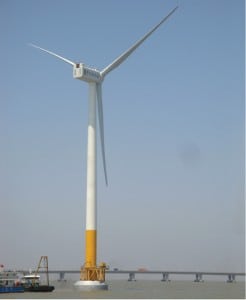
WindAMSC Former Employee Convicted in Sinovel Intellectual Property Case
An intellectual property battle between Massachusetts-based American Superconductor Corp. (AMSC) and China’s giant wind turbine maker Sinovel in late September culminated with an Austrian court conviction of a former AMSC employee, who was arrested in Austria and who pled guilty to corporate espionage charges. The court charged Dejan Karabasevic, a 38-year-old Serbian engineer, with stealing AMSC’s software, modifying it, and secretly selling it to Sinovel.
-
 Nuclear
Siemens Joins Trend to Quit Nuclear
The number of companies pulling out of the nuclear business continues to grow. Just weeks after Louisiana-based engineering firm The Shaw Group announced it would sell its 20% stake in the nuclear company Westinghouse back to partner Toshiba, German engineering conglomerate Siemens said that, prompted by the German government’s decision to phase out nuclear power by 2022, it would quit the nuclear business.