
Articles By

-
 Solar
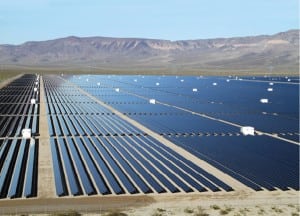
SolarTop Plant: Copper Mountain Solar 1, Boulder City, Nevada
The current largest photovoltaic plant in the U.S., the 48-MW Copper Mountain Solar 1, utilizes approximately 775,000 solar panels to generate emission-free electricity for about 14,000 homes without the use of water. The facility was constructed in less than a year—an unprecedented achievement for a project of this size.
-
 News
NewsInteractive Virtual Training Content Software
Advanced graphical interface technology provider DiSTI Corp. unveiled Replic8, a new software tool to effortlessly create interactive virtual training content from Autodesk’s 3D Studio Max. Replic8 allows users to easily produce compelling 3-D interactive training content through a simplified development process. (The image is a Relic8-generated 3-D Cummins 855 Diesel Engine.) The software tool works […]
-
 Wind
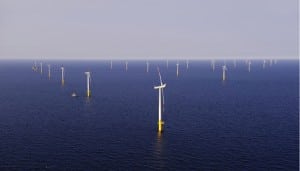
WindTop Plant: EnBW Baltic 1, Darss-Zingst Peninsula, Mecklenburg Province, Germany
Owner/operator: EnBW Energie Baden-Württemberg AG/EnBW Renewables GmbH Germany’s first commercial offshore wind farm—the 48.3-MW EnBW Baltic 1—consists of 21 Siemens wind turbines, each with a capacity of 2.3 MW and a rotor diameter of 93 meters. Siemens constructed the facility in an area covering about 7 square kilometers in the Baltic Sea.
-
Commentary
Wind Energy: Dealing with Intermittency Challenges
The wind power industry has exploded over the past decade. In the U.S. alone, almost 40,000 MW of wind power have come online since 2000. As more wind generation has been added, grid operators have been challenged to integrate a large amount of intermittent generation. As the state with by far the most installed wind power capacity, Texas has had to face this problem head on.
-
Coal
EPA Moves Forward with GHG Regulations for Power Plants
The EPA’s proposed rules on limiting greenhouse gas emissions from new, modified, and existing power plants has taken another step forward.
-
 Solar
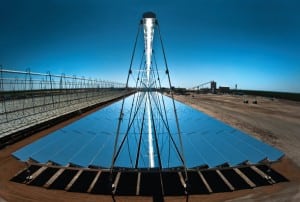
SolarTop Plant:Â Kimberlina Solar Thermal Energy Plant, Bakersfield, California
The 5-MW Kimberlina Solar Thermal Energy Station is the first to use compact linear Fresnel reflector technology developed to generate continuous superheated steam, a key element for higher-efficiency power generation and integration with new and existing plants. The facility’s innovative technology helps deliver power even during periods of transient cloud cover.
-
Coal
California Adopts Final Cap-and-Trade Regulation
After three years of development, dozens of public workshops, and hundreds of meetings with stakeholders, the California Air Resources Board (ARB) on Oct. 20 adopted a final rule to cap California’s greenhouse gas emissions and put a price on carbon. The cap-and-trade program starts in 2013 for electric utilities and large industrial facilities.
-
 Solar
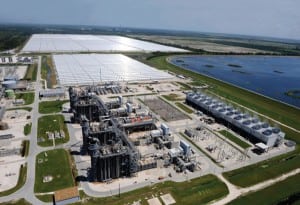
SolarTop Plant: Martin Next Generation Solar Energy Center, Indiantown, Martin County, Florida
The 75-MW Martin Next Generation Solar Energy Center is the first hybrid solar facility in the world to combine a solar thermal array with a combined cycle natural gas power plant. Because the facility uses a steam turbine, transmission lines, and other infrastructure from an existing combined cycle unit, financial savings of approximately 20% were achieved compared to what a similar stand-alone solar plant would have cost.
-
Coal
Consultancy Group Downgrades Coal Plant Retirement Projections
ICF International, a consultancy group that earlier this year had predicted 68 GW of coal-fired power plants could retire by 2030 as a result of finalized and proposed regulations from the Environmental Protection Agency (EPA), downgraded its retirement projections to 50 GW this fall.
-
News
Irrational Exuberance
Germany’s government has decided to shutter all 17 of its nuclear plants (23 reactors); eight plants are now closed for business, six more will be closed by 2021, and the final three will close by 2022. What is lacking is an honest discussion of the rising cost Germans will pay for electricity for what The Economist describes as “the greatest change of political course since unification.”
-
 Hydro
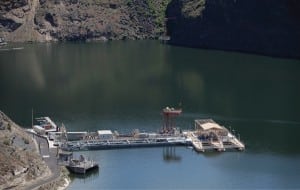
HydroTop Plant: Pelton Round Butte Hydroelectric Project’s Selective Water Withdrawal Project, Oregon
In December 2009, construction of an underwater tower and fish collection structure was successfully completed at the 465-MW Pelton Round Butte Hydroelectric Project. The first-of-its-kind fish bypass and intake structure returns temperatures in the lower Deschutes River to historic patterns and restores downstream passage of Chinook, steelhead, and sockeye salmon while maintaining existing generating capacity.
-
 Commentary
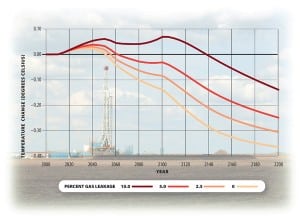
Switching from Coal to Natural Gas Does Little for Global Climate
Although the burning of natural gas emits far less carbon dioxide than coal, a new study concludes that a greater reliance on natural gas would fail to significantly slow down climate change.
-
 Waste to Energy
The Big Picture: Big Biomass
The world’s biomass power facilities, not counting those in the pulp and paper industry, average just 18 MWe to 20 MWe. In the U.S., passage of the Public Utility Regulatory Policies Act of 1978 ignited development of many existing biomass plants. Greenhouse gas rules and renewable policies around the world have kindled a new generation of much larger biomass facilities. New announcements routinely are for plants 50 MW or larger, presumably to leverage economies of scale.
-
 Solar
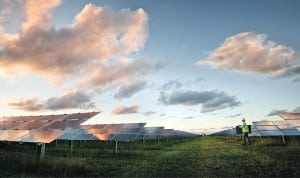
SolarTop Plant: Sarnia Solar Project, Sarnia, Ontario, Canada
The 80-MW Sarnia Solar Project is the world’s largest operational photovoltaic plant, with 1.3 million solar modules. The facility utilizes First Solar’s proven thin-film photovoltaic (PV) technology, which has the lowest environmental footprint and the fastest energy payback of current PV technologies.
-
Commentary
Surprise: China’s Energy Consumption Will Stabilize
As China’s economy continues to soar, its energy use and greenhouse gas emissions will keep on soaring as well—or so goes the conventional wisdom. A new analysis by researchers at Lawrence Berkeley National Laboratory now is challenging that notion, one widely held in both the United States and China.
-
 Gas
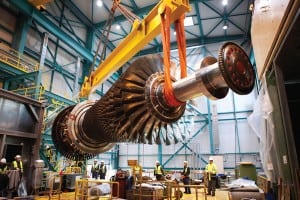
GasGas Turbine Makers Gear to Flexibility Needs with New Models
Competition among gas turbine makers heated up this September as Alstom unveiled its upgraded GT24 gas turbine and corresponding 60 Hz KA24 combined cycle power plant, while Mitsubishi Heavy Industries (MHI) introduced the M701F5 gas turbine—a 50 Hz F-class gas turbine upgrade. An Upgraded GT24 Alstom’s upgraded product launches came on the heels of its […]
-
 Gas
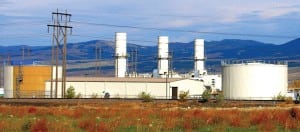
GasNorthWestern Energy Builds a Regulating Reserve Plant
Stable grid operation is challenging, especially when intermittent and unpredictable renewable generation is added to the generation mix. For NorthWestern Energy, the best solution was adding fast-acting gas-fired generation to its Montana electricity grid to meet required reliability standards while replacing expensive third-party contracts for ancillary services.
-
 O&M
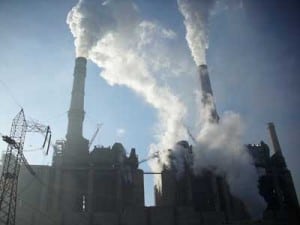
O&MWet Booster Fans Optimize Power Station Performance with FGD and Wet Stack
A Romanian lignite-fired power station wanted to minimize the operating cost of the flue gas desulfurization (FGD) system by placing the booster fans in the "wet position," between the wet FGD scrubber and the wet stack, where they would consume significantly less power. A number of combined environmental effects must be considered in this design.
-
 Coal
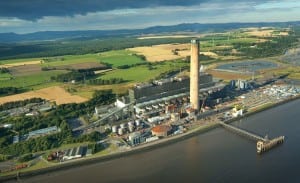
CoalUK Pulls Funding for Flagship Longannet CCS Demonstration
Ditching the only project remaining in its £1 billion ($1.60 billion) carbon capture and storage (CCS) competition, the UK government declined to back the much-watched CCS project at the Longannet power station in Fife, Scotland, in October. The decision balances the UK’s low-carbon ambition with the need to ensure that taxpayer money is invested in “the most effective way,” the nation’s Department of Energy and Climate Change said. The funds are now expected be used to “pursue other projects” in both Scotland and England.
-
 Coal
CoalRestructuring the South African Power Industry
South Africa is at a critical turning point. An uncertain environment for private investment, escalating electricity prices, and a lack of available power threaten South Africa’s position as an attractive investment destination for many of the country’s most important industries. Power has been placed at the forefront of the government’s agenda, but South Africa needs a collaborative effort to meet the country’s energy demands and diversify its generation portfolio in order to drive economic growth.
-
 O&M
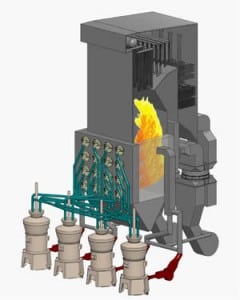
O&MPulverizers 101: Part III
Pulverizers prepare raw fuel for burning by grinding it to a desired fineness and mixing it with the just the right amount of air before sending the mixture to boiler burners for combustion. Part I of this three-part report examined the essentials of pulverizer design and performance; Part II discussed the importance of fuel fineness. This final article discusses the importance of air and fuel measurement.
-
 Hydro
HydroBurma Halts Massive Chinese-Developed Hydropower Dam
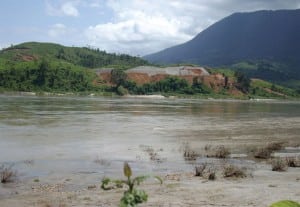
China’s efforts to build the Myitsone Dam—a $3.6 billion hydropower project planned at the confluence of the Mali and N’Mai Rivers at the source of the Irrawaddy River in Burma’s Kachin State—were thwarted in late September after Burma’s President Thein Sein suspended construction “to respect the will of the people.”
-
 Gas
GasSiemens Releases “Shaping Power” Option for Renewables Integration
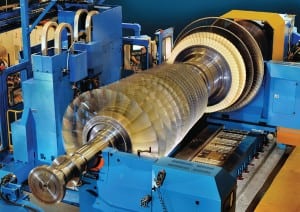
The need for flexible power generation has increased drastically over the past few years, particularly when integrating renewables. Another driver is seasonal peaks in demand that have become more severe as global drought conditions have reduced hydropower production. One option for addressing this need is the Siemens Energy SGT6-5000F with Shaping Power. It offers the familiar gas turbine reoptimized for increased output and higher efficiency during hot weather and for improved operating flexibility at part-load conditions.
-
Commentary
Divide and Conquer
The U.S. Environmental Protection Agency (EPA) is expected to release new air quality standards for coal-fired power plants this month. Division in the power industry is encouraging the EPA to set an unachievable compliance timetable.
-
 Nuclear
Airtight Cover Completed for Daiichi 1
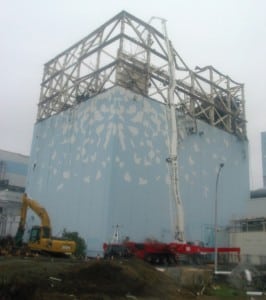
Tokyo Electric Power Co.’s (TEPCO’s) Fukushima Daiichi 1 reactor—a unit that suffered a core melt and hydrogen gas explosion after the March 11 earthquake in Japan and subsequent tsunami devastated the six-reactor facility—was fully encased in an “airtight” cover in October.
-
 Gas
GasGE Develops FlexEfficiency 50 for Increased Operational Flexibility
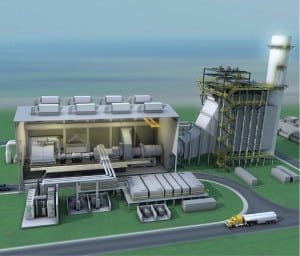
The newest member of the 60% thermal efficiency combined cycle club is GE Energy’s FlexEfficiency 50. In an era when flexible grid operation is growing in importance, this 50 Hz, single-shaft combined cycle also holds its design point efficiency down to 87% load and features turndown to 40% of rated load.
-
 O&M
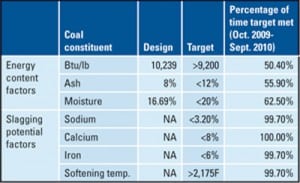
O&MImproved Performance from Priority-Based Intelligent Sootblower Systems
When sootblower operation frequency is too high, a plant risks losing power generation from tube leaks; but when sootblower frequency is too low, there is a risk of boiler pluggage. Intelligent sootblowing finds the right balance between tube erosion and plant economic operation.
-
 Waste to Energy
Does Cow Power Pay Off?
Since a 2008 University of Texas-Austin study showed that converting farm animal droppings into renewable power could generate enough power to meet up to 3% of North America’s consumption, interest in cow power has been piling up.
-
 Geothermal
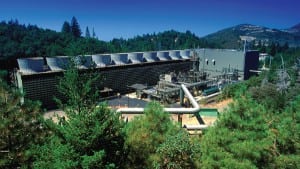
Can U.S. Geothermal Power Fulfill Its Potential?
Geothermal power and conventional fossil fuel–powered technologies have similar power production cycles, and both generation types can be dispatched. Geothermal power’s primary advantage is its renewable fuel. Its primary disadvantage is that its fuel requires large investments over many years to characterize uncertain sources. Enhanced recovery techniques that use fracking may be the future of this renewable resource.
-
News
FERC Proposes Annual Charge for Federal Land Hydropower Licensees
The Federal Energy Regulatory Commission (FERC) earlier this month issued a proposal to revise the methodology for calculating rental rates for the use of government lands by hydropower projects. Under the proposal, FERC-regulated hydropower licensees must compensate the federal government for the use of federal lands, significantly increasing annual charges for many hydropower projects occupying federal lands.