
Articles By

-
 News
NewsHandheld Vibration Meter
Columbia Research Laboratories’s Model VM-300 is a general purpose vibration measuring instrument designed for periodic routine checks of industrial equipment where portability and ease of use are required. Acceleration, velocity, and displacement measurement modes are provided, along with a number of value-enhancing features. Dual power allows the VM-300 to be powered from its internal battery […]
-
News
Failed Insulator Triggers Loss of Offsite Power at Byron Nuclear Plant
A failed electrical insulator at a switchyard at Exelon Generation Co.’s two-unit Byron nuclear plant in Lisle, Ill., has been blamed for the loss of offsite power on Monday morning that automatically shut down Unit 2 and forced Exelon to declare an “Unusual Event.”
-
Coal
EPA Releases, Federal Court Blocks CSAPR
The U.S. Court of Appeals for the District of Columbia Circuit temporarily blocked the Cross-State Air Pollution Rule (CSAPR) just two days before it was set to go into effect. The federal court ordered the Environmental Protection Agency (EPA) to continue administering the previously promulgated Clean Air Interstate Rule (CAIR) until a final decision can be made on the merits of the rule, likely this summer or fall.
-
Business
POWER Digest (February 2012)
ANDRITZ to Rebuild Oldest Egyptian Nile Dam. Austrian firm ANDRITZ HYDRO on Dec. 22 won a $138.4 million contract from the Egyptian Ministries of Energy and Water Resources for the supply and installation of four bulb turbines, generators, and the electrical and hydro-mechanical equipment to rebuild the Assiut barrage—the oldest dam in the Egyptian section […]
-
 News
NewsDuctile and Flexible Seal Rings
Milan-based ATO S.r.l. has introduced a series of flexible seal rings made of KetaSpire polyetheretherketone (PEEK) resin, which is made by Solvay Specialty Polymers. KetaSpire KT-820 PEEK provides greater flexibility and elasticity than competitive PEEK grades, the company says. The parts can be folded or twisted in half and then twisted again into three or […]
-
News
Blue Ribbon Commission: U.S. Nuclear Waste Policy “Completely Broken Down”
The 15-member Blue Ribbon Commission (BRC) appointed by Energy Secretary Steven Chu in January 2010 to provide comprehensive recommendations for a long-term solution to managing and disposing the nation’s spent nuclear fuel and high-level radioactive waste released its much-anticipated final report last week.
-
 O&M
O&MAudit Your Coal Dust Prevention Program
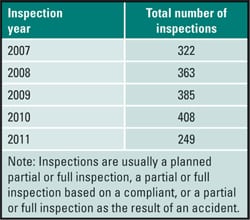
The hazards of coal dust accumulation in power plants are familiar to coal-fired plant operators. Operators of plants that burn Powder River Basin coal are particularly aware of necessary housekeeping and fuel-handling practices, but any plant that allows excessive amounts of coal dust to accumulate is playing Russian Roulette with its staff and equipment.
-
 Gas
GasIndustry Shift in Gas Line Cleaning Practice
The National Fire Protection Association has issued a new standard for gas line cleaning in response to the urgent recommendations prepared by the U.S. Chemical Safety Board.
-
 News
NewsBatch Chemical Reactor Simulation Software
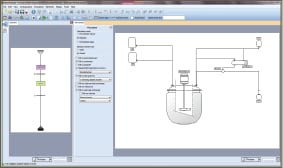
French company ProSim, which provides process simulation and optimization software to the process industries, released a new version of BatchReactor, its software for batch chemical reactors simulation. The new software combines detailed equipment modeling, reaction engineering, and advanced numerical methods to create a state-of-the art simulation environment for chemists and chemical engineers, providing a complete […]
-
News
Federal Judge Ruling Poses Another Hurdle for Sunflower Coal Plant
A federal district court judge on Tuesday ruled that the Rural Utilities Service (RUS), an arm of the U.S. Department of Agriculture (USDA), must complete an environmental impact study (EIS) before any approvals or other major federal action can be taken on the $2.8 billion expansion at Sunflower Electric Power Corp.’s coal plant in Holcombe, Kansas. The ruling may delay construction of the 875-MW plant, a politically controversial project in the Kansas Legislature.
-
O&M
Constructing and Managing Coal Ash Landfills
Creating a landfill to hold dry boiler ash is a challenging proposition these days. There’s more to the project than you might imagine, as you’ll learn from this article about the development of a typical new ash landfill.
-
 O&M
O&MVirtual Co-Driver to Improve Truck Safety
POWER recently talked with Erika Jakobsson, a project manager at Volvo Technology in Gothenburg, Sweden, who is responsible for developing intelligent trucks in response to European Union (EU) directives.
-
 News
NewsHigh-Performance Air Pressure Regulator Series
The Precision Controls Division of Marsh Bellofram Corp. launched the Type 41 high-performance air pressure regulator series, which is designed to support a variety of demanding industrial and original equipment manufacturer flow-monitoring requirements. Available in two different packages with identical performance characteristics, both with ¼-inch NPT BSPT port size, the Type 41 incorporates a patented […]
-
News
Biomass Plant Fire Sends Workers to Hospital
A high-voltage electricity panel arc reportedly sparked a brief fire at the 100-MW Nacogdoches Power, LLC biomass power plant under construction in Sacul, Texas, and sent two workers to hospital in critical condition on Tuesday.
-
Commentary
The Broken Window
The expectation of millions of "green jobs" has disappeared from public debate. Today, the debate is narrowly focused on "jobs" and selecting the best approach to developing permanent jobs, regardless of color. Some look to the government to create jobs through regulation or subsidy, and others trust companies operating under free market principles to create permanent jobs.
-
 Business
Data Center’s Standby Power System Is “Money in the Bank”
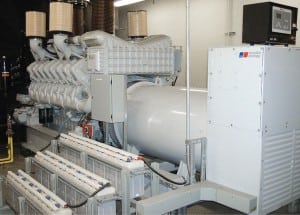
Synovus relies on emergency standby generator sets to prevent any loss of services or data in the event of a utility outage.
-
 News
NewsCapacitive Accelerometer Modules
Silicon Designs, a designer and manufacturer of rugged industrial-grade microelectromechanical systems (MEMS) capacitive accelerometer chips and modules, has introduced a ±5 g model to its 2210 accelerometer series. The low-noise, single-axis model 2210-005 accelerometer module incorporates high-quality MEMS capacitive sensing elements. Sensing elements are packaged within a compact, lightweight, anodized epoxy-sealed aluminum housing, occupying a […]
-
News
FERC Seeks Comment on EPA MATS Rule
Federal Energy Regulatory Commission (FERC) on Monday released a white paper that seeks comment on its proposals to “provide a fair, timely and transparent process” for FERC to advise the Environmental Protection Agency (EPA) on requests for extension of time to comply with its Mercury and Air Toxics Standards rule.
-
 O&M
O&MCollecting Dust
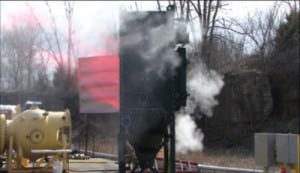
Rules requiring removal of combustible dust from the workplace will undoubtedly improve worker safety and health. A survey of equipment suppliers finds a variety of dust collection systems are available to meet just about every dust collection need in the power house.
-
Legal & Regulatory
Debate Heats Up over New Mercury and Air Toxics Rule
The U.S. Environmental Protection Agency’s (EPA’s) new Mercury and Air Toxics Standards (MATS) rule for power plants has critics’ tempers flaring. Not surprisingly, a number of electric power representatives, industry groups, and elected officials oppose the rule, which was released on Dec. 21, 2011.
-
Commentary
Clean Air, Jobs, and Power Reliability
The electric power generation system is the backbone of our economy. Recently, however, sudden outages or rolling blackouts have increased.
-
 Instrumentation & Controls
Power Generation: Automation Today and Tomorrow
Handheld smart devices providing custom applications and Internet access at the touch of a virtual button are common today. Hidden beneath their touchscreens is a global network of digital technologies that respond to each command. Will these familiar commercial technologies and apps make their way to industrial digital control systems?
-
 Nuclear
Comprehensive Asset Management for Nuclear Plant
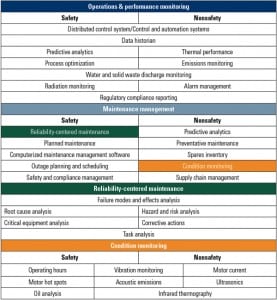
Asset management means different things to different people. But it boils down to converting raw data and observations about equipment and components into information and knowledge that is then used, propagated, and shared by workers and digital components to manage performance. Nuclear plants have special asset management needs, given the level of their safety, reliability, and regulatory requirements.
-
 Coal
CoalEnhanced Load Dispatch Rate and Furnace Protection Through Model Predictive Control
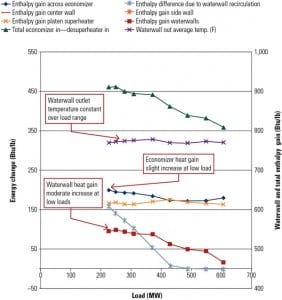
The enhanced plant performance achieved at the 1,477-MW Morgantown Generating Station shows the value of model predictive control in conjunction with intelligent distributed control algorithms. This project update looks at how the project team moved from ramp rate improvements to reducing tube metal temperatures to improved component life.
-
 Instrumentation & Controls
Monitoring Control Loop Performance
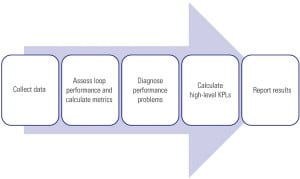
Control loop performance-monitoring software can help to improve loop performance at electric power plants by automatically collecting data, assessing several aspects of loop performance, and providing the results in reports and user interfaces.
-
News
Battle of the Bulb
When then-President George W. Bush signed the Energy Independence and Security Act of 2007, he noted that, “New technologies will help usher in a better quality of life for our citizens.” One provision of the act required an increase in the efficiency of newly manufactured lightbulbs, starting with 100-watt incandescent bulbs in 2012.
-
 Nuclear
Specifying Nuclear DCS Power Supplies
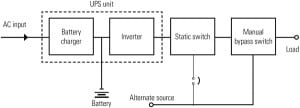
The consideration of power supplies has become critical to the success of converting analog instrumentation and control systems to digital control systems (DCSs). Careful planning is particularly necessary for nuclear power plants, where instrumentation systems are required for safely shutting down a reactor, mitigating the consequences of an accident, and performing post-accident analysis.
-
 Nuclear
The Big Picture: DOE Loan Guarantees
Of the $35.9 billion in loan guarantees awarded by the U.S. Department of Energy (DOE) since 2009, roughly $26.5 billion have financed nuclear and renewable power projects across the nation through the Section 1703 and 1705 loan guarantee programs.
-
 Coal
CoalAbundant Clean Energy Fuels Brazil’s Growth
Brazil’s power industry has long been dominated by its vast hydro resources, which historically have accounted for over 80% of the country’s generation capacity. With engineering marvels like the massive Itaipú dam and the proposed Belo Monte project, the country is a leader in the development and use of hydroelectricity on a grand scale. But as the 2001 energy crisis proved, dependence on a single source leaves the country vulnerable to severe shortages. Thanks to government programs designed to take advantage of the country’s favorable climate, Brazil is committed to diversifying its energy mix while continuing to maintain a renewable energy focus.
-
 Wind
WindEuropean Firms Complete Wind-to-Hydrogen Power Plant
A consortium of European developers, with funding from the German federal government, have completed a power plant in Prenzlau, near Berlin, Germany, that uses excess wind energy to convert water into oxygen and hydrogen in a process called hydrolysis, and then uses hydrogen and biogas to generate power and heat.