
Articles By

-
News
Vt. Challenges Vermont Yankee Nuclear Plant District Court Decision
Vermont’s attorney general on Saturday appealed a federal district court’s January decision that invalidated two Vermont statutes and ruled that Entergy could operate the Vermont Yankee nuclear plant beyond a state-mandated shutdown deadline of March 21, 2012.
-
News
Spain’s Oldest Nuclear Plant Gets Safety OK from Regulators for Life Extension
Spain’s oldest nuclear reactor, Santa María de Garoña, can continue to operate safely until 2019, the country’s nuclear regulator the Consejo de Seguridad Nuclear (CSN) told the government last week. The report follows a decision last month by Spain’s recently elected conservative government to overturn a decree that would have forced the plant to close by April 2013.
-
News
DOE to Spend Millions to Strengthen U.S. Competitiveness in Global Nuclear Sector
In a speech today to hundreds of Southern Co. employees at that company’s Plant Vogtle in Waynesboro, Ga.—the site of the first new reactors approved in the U.S. since 1978—Energy Secretary Steven Chu said federal agencies were preparing to strengthen U.S. competitiveness in the global nuclear sector by earmarking $770 million in the Fiscal Year 2013 budget.
-
News
AEP to Trim Coal Retirement Capacity
American Electric Power (AEP) may continue operating Big Sandy Unit 2, an 800-MW coal-fired power plant in Kentucky, if state regulators approve a 31% rate increase to help pay for pollution controls. The measure would trim the company’s planned coal retirements to 5,138 MW, not 5,909 MW, as the company had announced last June.
-
News
Domestic Power Sector Coal Consumption Slumped in 2011, but Exports Ramped Up
About 93% of total coal consumed in the U.S. in 2011 was used in the electric power sector, but electric sector coal consumption dropped by an estimated 40 million short tons—or 4% compared to 2010—as generators turned to cheaper natural gas instead, the Energy Information Agency (EIA) says.
-
News
Independent DOE Loan Program Review Finds Room for Improvement
A White House–commissioned independent review of the Department of Energy’s (DOE’s) loan portfolio concludes that the DOE could better manage its loan program and ongoing monitoring of its loan portfolio, but that the loan portfolio as a whole is expected to perform well and holds less risk than envisioned by Congress when it created and funded that program.
-
News
States Sue EPA to Force Issuance of PM 2.5 NAAQS Proposal
Eleven states filed a lawsuit in federal court on Friday to induce the Environmental Protection Agency (EPA) to promptly revise national air quality standards for fine particulate matter (PM 2.5, also known as soot) and adopt them by a certain date.
-
News
New Mexico Tosses Out Cap-and-Trade Program
New Mexico’s Environmental Improvement Board (EIB) last week unanimously repealed a statewide cap-and-trade program adopted in 2010, when Democratic Governor Bill Richardson was in office. Current Republican Gov. Susana Martinez has been fiercely opposed to the measure.
-
News
Vogtle Nuclear Expansion Gets First Federal Approval in 33 Years
Commissioners at the Nuclear Regulatory Commission (NRC) on Thursday voted 4–1 to direct staff to prepare a construction and operation license (COL) for Southern Co.’s two AP1000 reactors at Plant Vogtle, south of Augusta, which could become operational between 2016 and 2017. NRC Chair Gregory Jaczko, who cast the lone vote against the COL, cited the need for safety enhancements recommended as a result of the Fukushima accident last March for reasons of his dissent.
-
General
Do Old Coal Plants Ever Die?
By Kennedy Maize Washington, D.C., February 13, 2012 — Environmental activists have a long record of miscalculation and misadventure. That’s been particularly true when it comes to coal. Remember acid rain? No such thing, according to a decade-long government scientific inquiry (which can’t ever quite turn itself off). Global warming? A global yawn, Al Gore […]
-
News
FirstEnergy to Shutter West Virginia Coal Plants on MATS Cost Concerns
Just two weeks after FirstEnergy Corp. said it would close more than 2 GW of six older coal-fired power plants Ohio, Pennsylvania, and Maryland by September, the Akron, Ohio–based company today said it would retire three more plants in West Virginia. The company cited “high costs” to implement the Environmental Protection Agency’s (EPA’s) recently finalized Mercury and Air Toxics Standards (MATS).
-
News
Series of Events Puts Spotlight on San Onofre Nuclear Plant
The two-unit San Onofre nuclear power plant in the northwest corner of San Diego County, Calif., remained shut down today, more than a week after a leak from a tube in one unit released a small amount of radiation. On Thursday, regulatory officials found extensive wear on tubes in the second unit, which is offline for maintenance. Also this week, reports confirmed that a worker had fallen into and climbed out of a reactor pool at the facility.
-
News
Utility Opposes Bill to Force Sale of Generation Facilities
New Hampshire’s Legislature is considering a bill that could require Public Service of New Hampshire (PSNH)—the state’s largest electric utility—to divest all 12 of its generation facilities by 2013 to complete restructuring of its electric sector. At a hearing on Thursday, PSNH staunchly opposed the measure, saying the bill could have “far-reaching economic risks, and reliability consequences for all New Hampshire business and residential customers.”
-
News
Thursday’s NRC Vote on New Vogtle Reactors Prompts Legal Challenges
As the U.S. Nuclear Regulatory Commission (NRC) prepares to vote on Thursday on whether to approve a combined construction and operating license (COL) for Southern Co.’s proposed 2,234-MW expansion of its Vogtle nuclear plant, anti-nuclear activists are gearing up to oppose the decision. Meanwhile, Progress Energy is reportedly considering shelving its proposed Levy County, Fla., reactor.
-
News
After Federal Lawsuit Settlement, Dominion Prepares to Close Salem
A settlement reached between Dominion and conservation groups that was last week approved by a federal court makes the utility’s plans to shutter all four units at its 60-year-old Salem Harbor Station in Salem, Mass., by 2014 legally enforceable.
-
News
CPUC: Renewable Market in California Is “Robust”
Renewable power prices in California surged from 5.4 cents/kWh in 2003 to 13.3 cents/kWh in 2011. However, they are slated to fall as new contract bids submitted to utilities last year were estimated at about 30% lower than in 2009, a new report from the California Public Utilities Commission (CPUC) suggests.
-
News
EWEA: Renewables Made Up 71.3% of 2011 EU New Capacity
More renewable power capacity was installed than ever before in the European Union (EU) during 2011, the European Wind Energy Association (EWEA) says in a new report published on Monday. The EU saw a 3.9% increase in power capacity compared with 2010, much of which was driven by renewable power capacity increases. In 2011, the EU added 37.7% more renewable power capacity than in 2010.
-
 News
NewsCost-Cutting Nanoparticle Electrode for Batteries
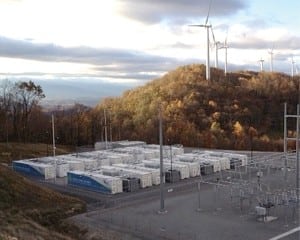
Using nanoparticles of a copper compound to develop an inexpensive and durable high-powered battery electrode could be the breakthrough solution to the problem of sharp drop-offs in the output of wind and solar systems, scientists at Stanford University say.
-
 O&M
O&MCondenser Backpressure High? Check Vacuum System Sizing
In a power plant, the primary use of vacuum systems is to remove air and other noncondensable gases from the shell side of the condenser in order to maintain design heat transfer and thus design vacuum. If holding condenser vacuum is a persistent problem, one often-overlooked cause is an inadequately sized vacuum system.
-
News
New Report Further Polarizes Solar Manufacturers on China-Tariff Issue
A new report commissioned by the Coalition for Affordable Solar Energy (CASE)—an alliance of about 70 solar companies whose rallying message declares global competition has made solar energy a reality around the world—finds that if the U.S. government imposes a 100% tariff on imported solar PV cells and modules from China, the nation could see as many as 50,000 net lost jobs over the next three years.
-
Coal
EPA Finalizes Air Toxics Rule
The Environmental Protection Agency (EPA) on Dec. 21 issued its final Mercury and Air Toxics Standards (MATS), which will require about 40% of all coal-fired power plants in the U.S. to deploy pollution control technologies to curb emissions of mercury and other air pollutants such as arsenic and cyanide within three years.
-
 Wind
WindNovel Floating Wind Turbine Deployed in the Atlantic
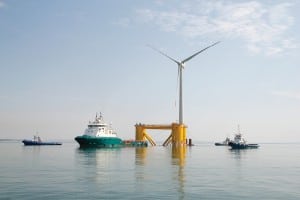
A semi-submersible structure supporting a 2-MW wind turbine was towed nearly 350 kilometers (217.5 miles) to water depths of about 35 meters (114.8 feet) into open Atlantic waters and deployed off the coast of Aguçadoura, Portugal, last November.
-
 O&M
O&MAvoiding Flow-Induced Sympathetic Vibration in Control Valves
Compressible fluid flow through control valves will inevitably cause some form of flow-induced vibration in the fluid system. Identifying the type and cause of the vibration requires detective work. Determining the design changes required in the valve and fluid system to prevent the vibration from occurring requires advanced analytical techniques.
-
News
Environmental Rules Prompt Closure of More Coal Plants, Pause Development of New Plant
Citing newly finalized and proposed environmental regulations that could make costs uncertain, FirstEnergy Corp. on Thursday said it would shutter six older coal-fired power plants with capacities totaling 2,689 MW in Ohio, Pennsylvania, and Maryland by September. The same uncertainties prompted a major backer of a $2 billion coal-fired power plant planned for Washington County in Georgia to pull its funding.
-
Commentary
Top 12 Energy Issues for ’12
With the 2012 election year upon us, it promises to be an interesting time for energy politics and policy. Here are 12 (really 13 because of some creative headline writing) issues that will keep the sector hopping this year.
-
 Coal
CoalOne Step Forward, Two Steps Back for CCS Projects
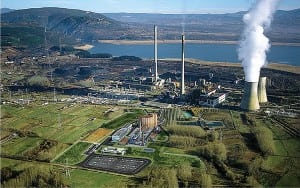
Last December, as Spain’s national carbon capture and storage (CCS) research laboratory Fundación Ciudad de la Energía (CIUDEN) began a much-watched testing phase of oxycombustion in its 30-MWth circulating fluidized bed (CFB) boiler in Cubillos del Sil, Vattenfall scrapped the €1.5 billion ($2 billion) Jänschwalde CCS demonstration project that it had planned to build and begin operating by 2015 in the German federal state of Brandenburg.
-
 News
NewsHandheld Fluorometer
Turner Designs has introduced the Opti-Check Handheld Fluorometer for performing system verifications for industrial water process control applications. The Opti-Check is a small, lightweight, highly durable handheld fluorometer that is ideal for quick measurements in the field. Configurable for either PTSA or Fluorescein as well as both dyes, the Opti-Check enables monitoring of either cooling […]
-
News
Heed New Seismic Model, NRC Tells Nuclear Plants in Central, Eastern U.S.
The Nuclear Regulatory Commission (NRC) on Tuesday urged owners of 62 nuclear power plants in the Central and Eastern U.S.—facilities housing 96 of the nation’s 104 commercial nuclear reactors—to reevaluate seismic hazards using a new seismic model and information from a recent report.
-
Commentary
Taking Energy Independence Seriously
At year end 2011, as Americans emptied their wallets at the gas pump and crude oil reached almost $100 a barrel, OPEC kingpin Saudi Arabia reported an $81.6 billion 2011 budget surplus.
-
 Coal
CoalIndonesia Inaugurates Three Coal Plants
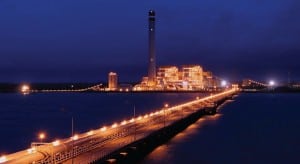
Indonesian state-owned utility Perusahaan Listrik Negara (PLN) formally launched operations at three new coal-fired power plants on Dec. 28.