
Articles By

-
Nuclear
The Fukushima Fallout: Six Months After the Nuclear Crisis
(WEB EXCLUSIVE) Much has transpired during the nearly six months following the Great East Japan Earthquake—a 3-minute, magnitude 9.0 temblor that generated a series of tsunami waves as tall as 38.9 meters (130 feet), killed more than 25,000 people, and set off the worst nuclear disaster in 25 years.
-
Coal
Explosion Devastates Major Cypriot Power Plant
A brush fire that spread and detonated explosives stored at the Evangelos Florakis naval base in Mari on the southern coast of Cyprus on July 11 killed 13 people, injured 62 others, and severely damaged the Vassilikos Power Station—an oil- and gas-fired plant that supplied almost 60% of the island nation’s power. Cyprus, which was once considered an “economic miracle,” has been battling crippling power shortages that have beleaguered its financial and tourism sectors since the blast and left it on the verge of economic collapse.
-
 O&M
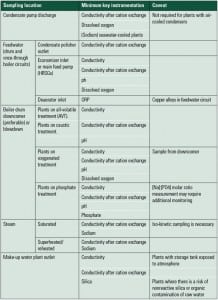
O&MThe New Water Lab
Recent advances in water laboratory instrumentation—from improved sample conditioning to advanced online instruments—have reached the market. Here’s a look at the equipment you’ll find in the best-equipped power plant laboratory this year.
-
 Nuclear
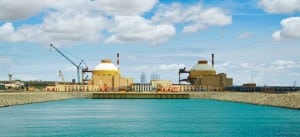
India’s Indigenous Nuclear Program Advances While U.S.-India Trade Stalls
Since a landmark 2008 deal that lifted global sanctions and allowed countries to conduct nuclear trade with India, the nation struggling to keep up with domestic power demand has signed deals with the U.S., France, Russia, Canada, Mongolia, Kazakhstan, Argentina, Namibia, and, in August, South Korea, for construction of large nuclear power plants (in technical collaboration with foreign vendors) or for nuclear fuel.
-
 Coal
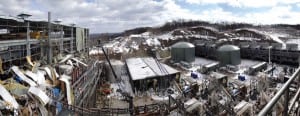
CoalBest Practices for Natural Gas Line Cleaning
As barriers to new coal-fired generation expand and enthusiasm for nuclear plants wanes, the commissioning of natural gas–fired plants promises to increase. However, gas plants pose hazards, too. An explosion last year that was caused by unsafe use of natural gas to blow residue from a gas pipeline during commissioning of a gas-fired power plant has focused regulator and industry attention on finding safer alternatives for this task. Fluor shares its gas pipeline cleaning best practices.
-
 Solar
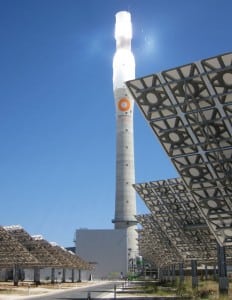
SolarSpanish Power Tower Supplies 24 Hours of Electricity
In Spain this June, a new 19.9-MW concentrated solar power (CSP) tower in Fuentes de Andalucía, Seville, reached the unprecedented milestone of storing thermal energy to its fullest capacity and supply power for an uninterrupted 24-hour period.
-
 Gas
GasWho Pays for Firming Up Variable Energy Resources?
The major economic hurdle for renewable power generation technologies continues to be substantial installation costs. But another cost is associated with continuous load-balancing, made possible by backstopping that variable generation with dispatchable generators that typically consume expensive fossil fuels. Bottom line: Who pays for the capacity firming or backstopping resources?
-
 Hydro
HydroCommercial Oscillating Water Column Marine Power Plant Commissioned
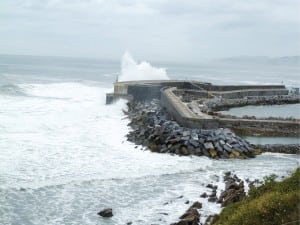
One of the world’s first breakwater wave power stations was commissioned this July by Ente Vasco de Energia (EVE), an energy agency in the northern Basque region of Spain. The €2.3 million ($3.3 million) project in Mutriku uses oscillating water column technology developed by Voith Hydro’s Wavegen, based in Inverness, Scotland. The technology is integrated into a concrete power station built on a breakwater or coastal protection project.
-
 News
NewsClose-Coupled Pumps for Low-Flow Applications
Moyno introduced the Moyno 2000 WA and WB close-coupled pumps designed for lower-pressure, lower-flow applications that do not require the full features and benefits of the Moyno 2000 GI pump. The Moyno 2000 WA (shown here) and WB models are ideal for municipal and industrial applications that require the transfer of highly viscous fluids and […]
-
 News
NewsNovel Nanotube Applications for Power Generation
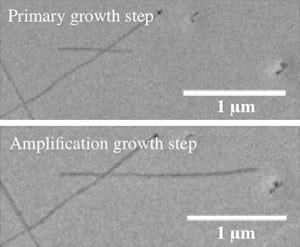
As it does for sectors such as global defense and transportation, nanotube technology holds great promise for the energy sector—and, in particular, for power generation. This July, researchers from the Massachusetts Institute of Technology (MIT) said carbon nanotubes showed potential as an innovative approach to storing solar energy, and Rice University scientists claimed they were closer to developing a unique wire that could transmit power with few losses.
-
 News
NewsGlycol Pumps for Gas Dehydration
Cat Pumps launched a new series of glycol pumps developed to supply triethylene glycol for natural gas dehydration systems. System reliability, especially of the pump, is essential to minimize production interruptions and costly equipment failures. The TEG triglycol pumps have been field-proven in the most rigorous dehydration systems, Cat Pumps says. The electric engine–driven TEG […]
-
Commentary
Demand Response Demands Response
What the summer heat wave, and one utility’s less-than-stellar response, teaches us about communicating with customers.
-
Coal
POWER Digest (September 2011)
Australia Pursues Carbon Tax. Australia’s Prime Minister Julia Gillard on July 10 laid out an ambitious plan to cut national greenhouse gas emissions by 5% of 2000 levels by 2020 by imposing a A$23 (US$23.4) per metric ton carbon tax, starting next year. If parliament approves the plan before year-end, the carbon tax will increase […]
-
 News
NewsEquipment Line for Industrial Gas Applications
Air Liquide America Specialty Gases equipment group recently announced the introduction of a comprehensive line of “industrial grade” equipment for use with gases commonly used in welding, cutting, and other industrial applications, as well as with liquid cryogenics. The equipment is ideally suited for use with Air Liquide brands of industrial gases such as ALIGAL, […]
-
Finance
TREND: Geothermal Heats up after Fukushima
While the vast power of one form of energy below Earth’s crust (tectonic plate shifts) doomed the Fukushima nuclear power plant in Japan last March, using another form—heat and steam—is getting renewed attention in the wake of the Japanese meltdown.
-
O&M
Advanced Coatings Protect Plant FGD Systems
Now that many flue gas desulfurization (FGD) systems are reaching middle age, corrosion repairs of structural and process vessels are becoming more common. Corrosion is caused by condensates of acids formed during the FGD process, which accelerate pitting and crevice corrosion, particularly in scrubbers where high sulfate solutions are present. Scrubbers lined with 2205 duplex stainless steel are among the most vulnerable to pit or crevice corrosion, from both chlorides and fluorides.
-
Commentary
Advancing America’s Nuclear Infrastructure
It is fair to say that 2011 is bringing some uncertainty into the nuclear energy industry. The tsunami and subsequent events at Fukushima present Japan and our industry with new challenges but also serve as a catalyst for continuous improvement. In the U.S., we are learning from these events and improving our operations, designs, and emergency response approaches to make our plants safer, more efficient, and more environmentally friendly.
-
Legal & Regulatory
Utility Managers Ponder Rules, Money, People
What’s on the agenda for the utility industry today and into the future? Platts and Capgemini asked the industry leadership in their latest survey. The answers revolve around regulation, finance, and human resources.
-
Instrumentation & Controls
NERC CIPS Update: The Advantages of an Integrated Factory Acceptance Test
When adding, modifying, or upgrading a system, many critical infrastructures conduct a factory acceptance test (FAT). A FAT includes a customized testing procedure for systems and is completed before the final installation at the critical facility. Because it is difficult to predict the correct operation of the safety instrumented system or consequences due to failures in some parts of the system, a FAT provides a valuable check of these safety issues. Similarly, because cyber security can also impact the safety of critical systems if a system is compromised, it makes sense to integrate cyber security with the FAT.
-
Legal & Regulatory
WTO China Ruling Could Impact Rare Earths
Uncertainty about China’s role in world trade and its current monopoly over critical rare earth minerals continues to roil supply chains in energy technology markets. Will the World Trade Organization bring China into the fold, or will China ignore the international forum that it lobbied hard to join several years ago?
-
Legal & Regulatory
Critics Get Crossways with New Cross-State Air Rule
From the East Coast to the Lone Star State, a number of elected officials and power industry representatives are bashing the new aggressive regulation aimed at controlling specific power plant emissions. Complying with a federal court mandate, the U.S. Environmental Protection Agency (EPA) finalized the Cross-State Air Pollution Rule (CSAPR) on July 6. The new […]
-
HR
How to Screw Up an Employee Complaint Investigation
The process of handling employee complaints of workplace discrimination or harassment is filled with potentially disastrous pitfalls. Here are some things to avoid.
-
 Gas
GasTop Plant: Adapazari Power Plant, Adapazari, Sakarya Province, Turkey
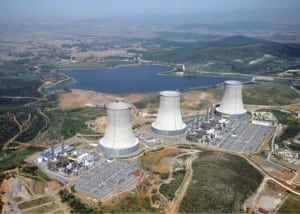
In 2010, the 2,310-MW Adapazari Power Plant achieved 99.8% availability, which is nearly 7% higher than the industry average and a global record in F-class gas turbine technology. The new turbine upgrade is helping ENKA Power bolster Turkey’s evolving economy by improving its energy sector’s efficiency and productivity.
-
HR
Getting Employees to Apply Training on the Job: How to Turn Hope into Reality
Employee training is one of the most important human resource functions, and one of the most difficult to manage. But there are some proven ideas to help guide training programs in the work environment.
-
 Gas
GasTop Plant: Arvah B. Hopkins Generating Station, Unit 2, Tallahassee, Florida
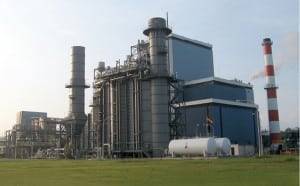
Known for its progressive, pro-sustainability policies, the City of Tallahassee recently repowered a 30-year-old conventional steam plant unit, turning it into a new 300-MW facility. The utility redesigned the Arvah B. Hopkins Generating Station, Unit 2 as a 1 × 1 combined cycle plant in order to improve efficiency, switched the primary fuel from oil to natural gas, and thereby reduced fuel costs and emissions. The plant’s flexible design even will enable expansion to a 2 × 1 configuration when additional capacity is needed in the future.
-
Business
How to Break Down the Barriers Between Information and Operations Data
"Asset health" offers a conceptual path to integrating information technology with operations technology, thereby overcoming the common management problem of "siloed data," according to a recent study by The McDonnell Group.
-
 Gas
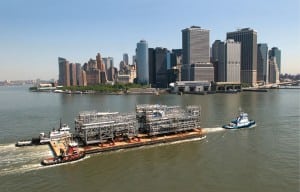
GasTop Plant: Astoria II Combined Cycle Plant, Queens, New York
Managing construction of the 550-MW Astoria II Combined Cycle Plant in the midst of Queens, a densely packed New York City borough, required extensive off-site modular construction and a high level of logistical organization. Now the new Astoria II plant is operating successfully in conjunction with the Astoria Energy I plant as the largest natural gas–fired power plant in the Big Apple.
-
 Commentary
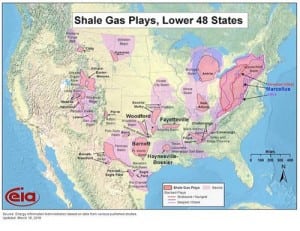
The Development of U.S. Shale Gas Resources: Regulation and Litigation
The rise of shale gas in U.S. energy markets has profound economic implications. It has the potential to transform the existing market and bring opportunities for new markets. But shale gas also raises regulatory challenges and the likelihood of litigation. Here’s an introduction to the issue and a primer on the regulatory and legal ramifications of the shale revolution.
-
 Gas
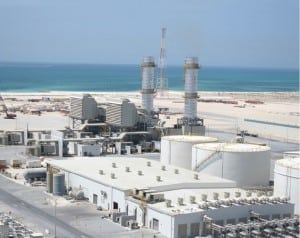
GasTop Plant: Emirates Aluminum Smelter Complex (EMAL), Al-Taweelah, Abu Dhabi, United Arab Emirates
The new 2,100-MW Phase 1 EMAL combined cycle power plant provides dedicated power with a high level of reliability to the Emirates Aluminum Smelter Complex, which is designed to be the world’s largest aluminum smelter upon completion. Located on the Persian Gulf, the gas-fired combined cycle plant uses seawater cooling towers to eliminate thermal stress on local marine life.
-
Commentary
Climate Pragmatism: Introduction
Last summer, an international group of scientists and policy analysts under the auspices of the London School of Economics launched an ambitious effort to reshape the debate over global warming policy in a document known as The Hartwell Paper. This July, a similar group followed up with a new report, titled "Climate Pragmatism: Innovation, Resilience and No Regrets," which puts the earlier work into a North American context.