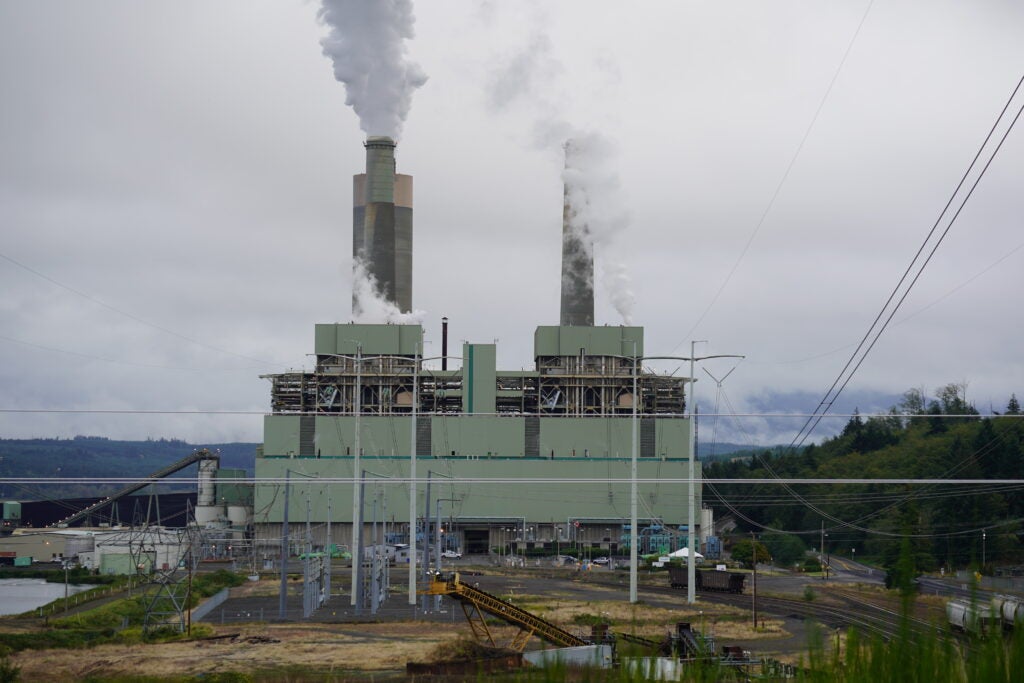
Since May 2025, the U.S. Department of Energy (DOE) has issued more than 40 emergency orders and extensions under Section 202(c) of the Federal Power Act—more than in any comparable period in the past two decades. The orders have fallen into two broad categories: retirement deferrals, which compel utilities and grid operators to keep specific generating units online past their planned shutdown dates, and active emergency dispatches, which authorize or require generators to exceed normal operating or environmental permit limits during acute grid stress events.
Section 202(c) of the Federal Power Act (16 U.S.C. §824a(c)) grants the Secretary of Energy broad authority to temporarily direct the operation of the U.S. electricity system during emergencies—defined as a sudden increase in electricity demand, a shortage of generation or transmission capacity, or a wartime situation. The authority dates to the FPA’s enactment in 1935 and was transferred to DOE when the department was established in 1977.
A 2015 amendment added provisions allowing emergency orders to temporarily override federal, state, and local environmental permit requirements, subject to 90-day renewal limits. From 2000 through June 2025, the DOE exercised the authority in response to 20 events, 11 of them weather-related, according to a Congressional Research Service report published July 1, 2025. The CRS report noted that the Trump administration’s May 2025 orders—which directed delays in the retirements of coal and gas plants in Michigan and Pennsylvania—represented a novel interpretation of the authority. Unlike prior orders, the relevant grid operators had neither requested DOE action nor identified reliability risks specifically tied to those plant retirements at the time they approved them.
As of March 2026, across all orders issued since May 2025, the DOE has stalled the retirement of at least 4.4 GW of coal capacity.
Scorecard — Updated March 17, 2026
| Total orders and extensions since May 2025 | 40 |
| MW currently held open by retirement-deferral orders | ~4.4 GW |
| Plants currently compelled to stay online | 6 |
| Most recent order | No. 202-26-18—TransAlta / Centralia Unit 2 (March 16, 2026) |
| Currently active orders | 8 |
🟢 Active Orders
Orders currently in force. Retirement-deferral orders compel utilities and grid operators to keep specific generating units online past their planned shutdown dates. Ongoing emergency orders authorize generators to exceed normal operating or environmental permit limits. This section is updated as new orders are issued or existing orders are extended.
Retirement Deferrals
Currently Active
-
J.H. Campbell Generating Station—West Olive, Mich. (1,560 MW)
-
Eddystone Generating Station, Units 3 & 4—Eddystone, Pa. (760 MW)
-
Centralia Generating Station, Unit 2—Centralia, Wash. (~730 MW)
-
Craig Station, Unit 1—Craig, Colo. (~446 MW)
-
Schahfer Generating Station, Units 17 & 18—Wheatfield, Ind. (~847 MW)
-
F.B. Culley Generating Station, Unit 2—Warrick County, Ind. (~103 MW)
Retirement Deferral — Coal
Active
3rd Extension
J.H. Campbell Generating Station — West Olive, Mich.
Original retirement date: May 31, 2025 | Currently active under Order No. 202-26-16 through May 18, 2026
| Current order | No. 202-26-16 |
| Issued | Feb. 17, 2026 |
| Expires | May 18, 2026 |
| Recipient | MISO / Consumers Energy |
| Grid region | MISO |
| Capacity | 1,560 MW |
| Fuel | Coal (subbituminous) |
| Units | 3 units; commissioned 1962, 1967, 1980 |
| Original retirement date | May 31, 2025 |
| Order chain | 202-25-3 → 202-25-7 → 202-25-9 → 202-26-16 |
| FERC docket |
FERC cost‑recovery proceeding on Consumers’ complaint—see FERC’s Aug. 15, 2025 order accepting tariff revisions and related filings in the J.H. Campbell case as linked from DOE’s 202‑25‑3 rehearing order. |
| Challenged? |
Yes—Michigan, Illinois, Minnesota, and several public interest groups have petitioned the D.C. Circuit to review DOE’s Order No. 202‑25‑3; opening briefs were filed Dec. 19, 2025, and a related petition challenges FERC’s Aug. 15, 2025, cost‑allocation order referenced in DOE’s rehearing order. |
Why it mattersCampbell is Michigan’s largest remaining coal plant and a critical baseload resource for the MISO North/Central zone. Consumers Energy had announced plans to close the 1,560-MW, three-unit plant—commissioned between 1962 and 1980—15 years ahead of schedule, and MISO approved the retirement in March 2022, finding no reliability problem with the closure.The DOE’s original Order No. 202‑25‑3, issued May 23, 2025, cited NERC’s 2025 Summer Reliability Assessment, which warned MISO faced “elevated risk of operating reserve shortfalls” during peak demand periods, combined with the retirement of approximately 2,700 MW of Michigan coal generation since 2020. Subsequent extensions leaned on operational data. Over the summer of 2025, MISO issued grid alerts on at least 40 of 69 days between June 11 and August 18, including an Energy Emergency Alert on June 23.The DOE also cited the OMS‑MISO annual survey, which projected MISO would face a capacity deficit of 1.4 GW in 2027, growing to 8.2 GW by 2030, as retirements outpace new firm capacity additions.
As POWER reported in August 2025, the DOE used that operational record to justify continued emergency intervention through fall and winter. The plant has now been kept online nearly a full year past its planned closure—the longest-running retirement deferral in this series of orders—with the current Order No. 202‑26‑16 running through May 18, 2026.
Retirement Deferral — Gas/Oil
Active
3rd Extension
Eddystone Generating Station, Units 3 & 4 — Eddystone, Pa.
Original retirement date: May 31, 2025 | Currently active under Order No. 202-26-17 through May 24, 2026
| Current order | No. 202-26-17 |
| Issued | Feb. 23, 2026 |
| Expires | May 24, 2026 |
| Recipient | PJM / Constellation Energy |
| Grid region | PJM |
| Capacity | 760 MW combined (380 MW each) |
| Fuel | Dual-fuel (natural gas/distillate oil) |
| Units | Unit 3 commissioned 1974; Unit 4 commissioned 1976 |
| Original retirement date | May 31, 2025 |
| Order chain | 202-25-4 → 202-25-8 → 202-25-10 → 202-26-17 |
| FERC docket | PJM RAA/tariff cost‑allocation proceeding for Eddystone—PJM’s June 26, 2025 filing and FERC’s Aug. 15, 2025 order accepting revisions, as described in DOE’s 202‑25‑4 rehearing order—plus a generic PJM RAA filing accepted Dec. 5, 2025 establishing a regionwide 202(c) cost‑allocation framework. |
| Challenged? | Yes—the Illinois Office of Attorney General, Maryland Office of People’s Counsel, New Jersey Division of Rate Counsel and several public‑interest organizations also petitioned the D.C. Circuit in September 2025 to review DOE’s emergency Order No. 202‑25‑4 regarding the Eddystone Generating Station, requesting that the court set the order aside, as summarized in DOE’s 202‑25‑4B rehearing order and the public‑interest petition for review. |
Why it mattersEddystone Units 3 and 4 are dual-fuel (natural gas/distillate oil) steam turbines on the Delaware River just south of Philadelphia—380 MW each—and among the last dispatchable peakers in the densely loaded PJM East zone. Constellation submitted its deactivation notice to PJM in December 2023, citing economic pressures, and PJM approved the retirement, finding no reliability concerns. As POWER reported in June 2025, the units were more than 50 years old and had seen maintenance deferred in anticipation of shutdown.
The DOE’s original Order No. 202‑25‑4, issued May 30, 2025—the last day before the planned retirement—cited PJM’s own reliability projections showing that under extreme conditions the grid could face supply shortfalls requiring emergency demand response, combined with a tightening supply-demand outlook driven by accelerating retirements across PJM’s footprint. Unlike the Campbell case, PJM publicly supported the order, stating it had “repeatedly documented and voiced its concerns over the growing risk of a supply and demand imbalance driven by the confluence of generator retirements and demand growth.”
Subsequent extensions pointed to PJM’s broader capacity crunch. As POWER reported in August 2025, the DOE’s extension orders cited continued tightening reserve margins in PJM East and the absence of near-term replacement firm capacity. The February 2026 extension order also noted that the DOE’s July 2025 Resource Adequacy Report projected mounting national capacity deficits absent intervention.
The units have now been kept online nearly a full year past their planned closure, with the current Order No. 202‑26‑17 running through May 24, 2026.
Retirement Deferral — Coal
Active
1st Extension
Centralia Generating Station, Unit 2—Centralia, Wash.
Original retirement date: Dec. 31, 2025 | Currently active under Order No. 202-26-18 through June 14, 2026
| Current order | No. 202-26-18 |
| Issued | March 16, 2026 |
| Expires | June 14, 2026 |
| Recipient | TransAlta Centralia Generation LLC |
| Grid region | WECC (Pacific Northwest) |
| Capacity | ~730 MW |
| Fuel | Coal |
| Original retirement date | Dec. 31, 2025 |
| Order chain | 202-25-11 → 202-26-18 |
| FERC docket | |
| Challenged? |
Yes—on March 2, 2026, Washington Attorney General Nick Brown petitioned the Ninth Circuit Court of Appeals to vacate the DOE’s emergency order requiring TransAlta to keep Centralia Unit 2 online; Earthjustice and other environmental groups have filed separate challenges in the same court |
Why it matters
Centralia Unit 2 is Washington state’s last coal-fired power plant—a 729.9-MW unit commissioned in 1973, with Unit 1 retired in 2020. Its planned 2025 closure was anchored in both a 2011 state law and a memorandum of agreement between TransAlta and the state that locked in the retirement dates ahead of the units’ expected 2035 end-of-life. As As POWER reported in December 2025, Washington state officials said the original order would violate state law, and opponents—including Earthjustice—called it a “manufactured” emergency issued “against everyone’s wishes.”
The DOE’s original Order No. 202‑25‑11, issued Dec. 16, 2025, cited NERC’s 2025–2026 Winter Reliability Assessment, which found the WECC Northwest region at “elevated risk during periods of extreme weather, such as prolonged, far-reaching cold snaps,” and an E3 study projecting a resource gap in the Pacific Northwest growing to 9 GW by 2030 as retirements outpace new capacity development. The DOE also emphasized that, as a coal-fired unit, Centralia would be difficult to restart once retired. Thermal cycling alone could trigger failures requiring 30–60 days to repair, it said.
The March 2026 extension (Order No. 202‑26‑18) acknowledged a new stressor: a Feb. 25, 2026 federal court injunction ordering higher spill on Columbia River dams, which Bonneville Power Administration (BPA) modeling projected would significantly cut hydro generation from March through November and raise the risk of regional outages during summer heat waves. On Jan. 13, 2026, the State of Washington filed a motion to intervene and a request for rehearing and stay of the original order, marking one of the more direct state challenges to the DOE’s actions.
The current order runs through June 14, 2026. Notably, it will put the DOE in direct conflict with Washington state’s Clean Energy Transformation Act, which bans coal-generated electricity starting in 2026.
Retirement Deferral — Coal
Active
Craig Station, Unit 1—Craig, Colo.
Original retirement date: Dec. 31, 2025 | Currently active under Order No. 202-25-14 through March 30, 2026
| Current order | No. 202-25-14 |
| Issued | Dec. 30, 2025 |
| Expires | March 30, 2026 |
| Recipient | Tri-State G&T / Platte River Power Authority / Salt River Project / PacifiCorp / Xcel Energy / WAPA Rocky Mountain Region / SPP West |
| Grid region | WECC (Mountain West) |
| Capacity | ~446 MW |
| Fuel | Coal |
| Original retirement date | Dec. 31, 2025 |
| FERC docket | |
| Challenged? |
Why it mattersCraig Station Unit 1 is a ~446-MW coal unit in Craig, Colo., co-owned by five utilities—Tri-State G&T, Platte River Power Authority, Salt River Project, PacifiCorp, and Xcel Energy—and coordinated through WAPA Rocky Mountain Region and SPP West. Its retirement had been planned since 2016, driven by both economics and state and federal environmental compliance requirements, including Colorado’s 2016 regional haze State Implementation Plan.
As POWER reported in December 2025, the DOE’s Order No. 202‑25‑14, issued Dec. 30, 2025—one day before the planned shutdown—cited a shortage of electric energy and generation facilities in the WECC Mountain West region under the same resource adequacy framework driving other December orders.
The Craig order stands out for two specific reasons. First, the unit went into an unplanned outage on Dec. 19, 2025, due to a mechanical valve failure, which means it was not even operational when the order was issued. Tri-State confirmed the unit was not made available to operate until Jan. 20, 2026. Second, and more unusually, two of the order’s own recipients—Tri-State and Platte River Power Authority—filed a request for rehearing on Jan. 29, 2026, arguing the order was unwarranted and that keeping the unit available “will not best meet the DOE’s goal of securing dispatchable electricity resources.” The State of Colorado and a coalition of public-interest organizations, including Sierra Club, GreenLatinos, Vote Solar, Public Citizen, and EDF, have separately filed motions to intervene and requests for rehearing and stay on Jan. 28, 2026.
Retirement Deferral — Coal
Active
Schahfer Generating Station, Units 17 & 18—Wheatfield, Ind.
Original retirement date: Dec. 31, 2025 | Currently active under Order No. 202-25-12 through March 23, 2026
| Current order | No. 202-25-12 |
| Issued | Dec. 23, 2025 |
| Expires | March 23, 2026 |
| Recipient | NIPSCO / MISO |
| Grid region | MISO |
| Capacity | ~847 MW combined |
| Fuel | Coal |
| Units | Unit 17 commissioned 1983; Unit 18 commissioned 1986 |
| Original retirement date | Dec. 31, 2025 |
| FERC docket | |
| Challenged? |
Why it mattersSchahfer Units 17 and 18—commissioned in 1983 and 1986, respectively—at ~847 MW combined, represent the largest single block of capacity frozen by a retirement-deferral order after Campbell. Northern Indiana Public Service Co. (NIPSCO), a regulated natural gas and electric utility, had planned to cease coal combustion at Schahfer by year-end 2025 as part of its long-running “Your Energy, Your Future” transition plan, which included significant investment in renewables and storage. MISO reviewed and approved the retirement plan, finding no reliability concerns with the closures.
The DOE’s Order No. 202‑25‑12, issued Dec. 23, 2025, determined that an “emergency exists in portions of the Midwest region of the U.S. due to a shortage of electric energy, a shortage of facilities for the generation of electricity, and other causes.” The order cited the same MISO capacity deficit projections driving the Campbell extensions—a 1.4 GW shortfall projected for 2027 growing to 8.2 GW by 2030—and the same national resource adequacy framing from the DOE’s July 2025 Resource Adequacy Report. As POWER reported at the time, the Schahfer and Culley orders were part of a rapid-fire series of December 202(c) actions that collectively froze more than 2 GW of coal capacity in a single week.
NIPSCO said publicly that the order delays its retirement plans and noted in a February 2026 regulatory filing that it “now expects” to keep Units 17 and 18 available through March 23, 2026, consistent with the order’s terms. The order will expire on March 23, 2026.
Retirement Deferral — Coal
Active
F.B. Culley Generating Station, Unit 2—Warrick County, Ind.
Original retirement date: Dec. 2025 | Currently active under Order No. 202-25-13 through March 23, 2026
| Current order | No. 202-25-13 |
| Issued | Dec. 23, 2025 |
| Expires | March 23, 2026 |
| Recipient | CenterPoint Energy / MISO |
| Grid region | MISO |
| Capacity | ~103 MW |
| Fuel | Coal |
| Unit commissioned | 1966 |
| Original retirement date | Dec. 2025 |
| FERC docket | [update when filed] |
| Challenged? | [update] |
Why it matters
F.B. Culley Unit 2 is a small, aging coal unit in Warrick County, Indiana—about 103 MW and nearly 60 years old—that CenterPoint Energy had planned to retire by the end of 2025 as part of its long-term coal transition. It is one of the last coal units in CenterPoint’s Indiana portfolio. Culley is also the smallest plant in this series of retirement-deferral orders, underscoring that the DOE is willing to intervene even for relatively modest capacity when it believes regional reserves are tight.
The DOE’s Order No. 202‑25‑13, issued Dec. 23, 2025, paired Culley with NIPSCO’s much larger Schahfer plant in its description of an “emergency” in MISO’s footprint due to a shortage of electric energy, a shortage of facilities for generation, and other causes. The order relied on the same building blocks used in the Campbell and Schahfer orders: NERC’s 2025–2026 Winter Reliability Assessment describing elevated risk in MISO during extreme cold, the OMS‑MISO survey projecting a capacity deficit of 1.4 GW in 2027 growing to 8.2 GW by 2030, and the The DOE’s July 2025 Resource Adequacy Report warning that accelerated retirements and surging load from data centers and industrial growth are outpacing new firm capacity additions.
The Culley order is notable given the DOE’s signal that even relatively small coal units can be deemed “critical” under national emergency framing—potentially affecting dozens of similar aging plants across MISO.
Active Emergency — Ongoing
Active Emergency — Capacity/Reliability
Active
3rd Extension
Puerto Rico Electric Power Authority (PREPA)
Original orders issued May 16, 2025 | Currently active under Orders No. 202-25-1C / 202-25-2C through May 11, 2026
| Current orders | No. 202-25-1C / 202-25-2C |
| Issued | Feb. 10, 2026 |
| Expires | May 11, 2026 |
| Recipient | PREPA |
| Grid region | Puerto Rico |
| Order chain | 202-25-1/2 → 202-25-1A/2A → 202-25-1B/2B → 202-25-1C/2C |
| FERC docket | N/A |
| Challenged? | No |
Why it mattersThe PREPA orders were the first in this series and remain the longest-running, continuous since May 16, 2025. The DOE’s initial Orders No. 202‑25‑1 and 202‑25‑2 followed an island‑wide blackout and warnings that Puerto Rico could face up to 135 days of forced load shedding absent emergency action. Order 202‑25‑1 directs PREPA to dispatch specified fossil generation units “necessary to expand baseload generation for the island and maintain grid reliability, closing the gap in generation shortfall,” while Order 202‑25‑2 requires aggressive vegetation management and asset management on key transmission corridors to keep critical lines in service.
Three successive renewals—202‑25‑1A/2A (Aug. 15–Nov. 12, 2025), 202‑25‑1B/2B (Nov. 13, 2025–Feb. 10, 2026), and 202‑25‑1C/2C (Feb. 10–May 11, 2026) keep those directives in place, expanding them to cover ongoing “asset management” of specified transmission facilities. The orders effectively federalize key aspects of PREPA’s dispatch and line maintenance under an open‑ended emergency rationale, even as Puerto Rico moves through grid privatization and post‑Hurricane Maria reconstruction.
⚫ Expired Orders
Orders that have expired and were not extended. Orders for an active extension chain are documented in the order chain field of each active card listed above.
Retirement Deferrals Approaching Expiry With No Active Extension
| Order | Plant / Recipient | Region | Capacity | Issued | Expires | Type |
|---|---|---|---|---|---|---|
| 202-25-14 | Craig Station Unit 1 — Tri-State G&T et al. Craig, Colo. |
WECC | ~446 MW | Dec. 30, 2025 | March 30, 2026 | No extension issued |
| 202-25-12 | Schahfer Station Units 17 & 18 — NIPSCO / MISO Wheatfield, Ind. |
MISO | ~847 MW | Dec. 23, 2025 | March 23, 2026 | No extension issued |
| 202-25-13 | F.B. Culley Station Unit 2 — CenterPoint / MISO Warrick County, Ind. |
MISO | ~103 MW | Dec. 23, 2025 | March 23, 2026 | No extension issued |
Active Emergency Dispatches — Expired
Expired
January 2026 Cold Weather Emergency
A series of orders issued Jan. 24–31, 2026, across ERCOT, PJM, ISO-NE, NYISO, Duke Energy (Carolinas and Florida), FMPA, OUC, Lakeland Electric, and HPS Energy in response to extreme cold weather. All orders expired by Feb. 14, 2026.
| Order | Recipient | Region | Authorization | Issued | Expired |
|---|---|---|---|---|---|
| 202-26-01 | ERCOT | ERCOT | Data center backup gen, EEA 3 | Jan. 24, 2026 | Jan. 27, 2026 |
| 202-26-02 | PJM | PJM | All units, max output, permit waiver | Jan. 25, 2026 | Jan. 31, 2026 |
| 202-26-03 | ISO-NE | ISO-NE | All units, max output, permit waiver | Jan. 25, 2026 | Jan. 31, 2026 |
| 202-26-04 | ERCOT | ERCOT | Specified resources, as-needed dispatch | Jan. 25, 2026 | Jan. 27, 2026 |
| 202-26-05 | Duke Energy | SERC | All Duke units, max output, permit waiver | Jan. 26, 2026 | Jan. 30, 2026 |
| 202-26-06 | PJM | PJM | Data center backup gen, EEA 3 | Jan. 26, 2026 | Jan. 31, 2026 |
| 202-26-07 | Duke Energy Carolinas / Duke Energy Progress | SERC | Data center backup gen, EEA 3 | Jan. 26, 2026 | Jan. 30, 2026 |
| 202-26-08 | NYISO | NYISO | All units, max output, permit waiver | Jan. 26, 2026 | Feb. 2, 2026 |
| 202-26-09 | HPS Energy | Florida (FRCC) | All units, max output, permit waiver | Jan. 30, 2026 | Feb. 3, 2026 |
| 202-26-05A | Duke Energy (ext.) | SERC | All Duke units, max output, permit waiver | Jan. 29, 2026 | Feb. 3, 2026 |
| 202-26-06A | PJM (ext.) | PJM | Data center backup gen, EEA 3 | Jan. 29, 2026 | Feb. 2, 2026 |
| 202-26-02A | PJM (ext.) | PJM | All units, max output, permit waiver | Jan. 29, 2026 | Feb. 2, 2026 |
| 202-26-10 | Duke Energy Florida | Florida (FRCC) | All units, max output, permit waiver | Jan. 31, 2026 | Feb. 3, 2026 |
| 202-26-11 | OUC | Florida (FRCC) | All units, max output, permit waiver | Jan. 31, 2026 | Feb. 6, 2026 |
| 202-26-12 | FMPA | Florida (FRCC) | All units, max output, permit waiver | Jan. 31, 2026 | Feb. 3, 2026 |
| 202-26-13 | FMPA | Florida (FRCC) | Backup units, max output, permit waiver | Jan. 31, 2026 | Feb. 3, 2026 |
| 202-26-14 | Lakeland Electric | Florida (FRCC) | Specified resources, as-needed dispatch | Jan. 31, 2026 | Feb. 6, 2026 |
| 202-26-15 | OUC | Florida (FRCC) | Backup units, max output, permit waiver | Jan. 31, 2026 | Feb. 6, 2026 |
| 202-26-07A | Duke Energy Carolinas / Duke Energy Progress (ext.) | SERC | Data center backup gen, EEA 3 | Jan. 30, 2026 | Feb. 3, 2026 |
| 202-26-03A | ISO-NE (ext.) | ISO-NE | All units, max output, permit waiver | Jan. 30, 2026 | Feb. 14, 2026 |
Expired
Wagner Generating Station, Unit 4 — PJM / Talen Energy
PJM | Two orders authorized Talen Energy to operate Wagner Unit 4 beyond its environmental run-hour limits. Both expired Dec. 31, 2025.
| Order | Type | Issued | In Effect | Expired |
|---|---|---|---|---|
| 202-25-6 | Original | July 28, 2025 | July 28, 2025 | Oct. 26, 2025 |
| 202-25-6A | Extension | Oct. 24, 2025 | Oct. 26, 2025 | Dec. 31, 2025 |
Expired
Duke Energy Carolinas — June 2025 Heat Emergency
SERC | Issued June 24, 2025, due to extreme weather conditions threatening grid reliability in the Duke Energy Carolinas service area. Expired without extension.
| Order | Recipient | Authorization | Issued | Expired |
|---|---|---|---|---|
| 202-25-5 | Duke Energy Carolinas | Specified units, max output, permit waiver | June 24, 2025 | June 25, 2025 |
—Sonal C. Patel is a POWER senior editor (@sonalcpatel, @POWERmagazine).
Editor’s Note: This is a living resource tracking every Section 202(c) emergency order issued by the Department of Energy since May 2025. The piece is updated as new orders are issued and as existing orders are extended or expire. Order details are sourced directly from DOE’s CESER office. Readers who identify errors or omissions are encouraged to contact the editors.
Last updated March 18, 2026.