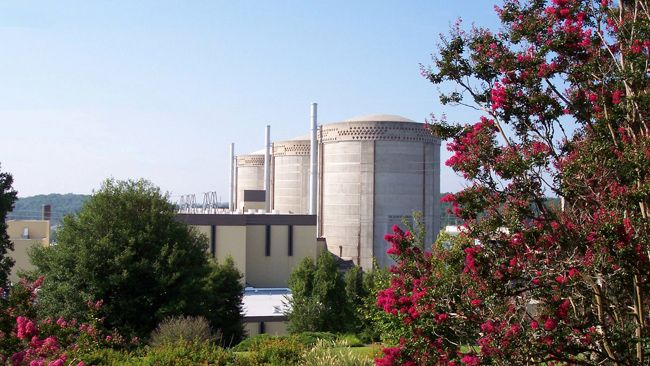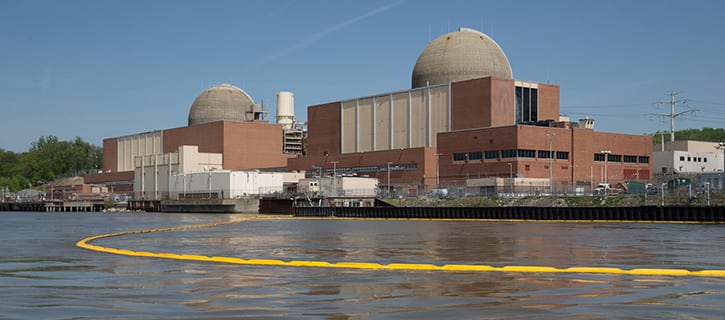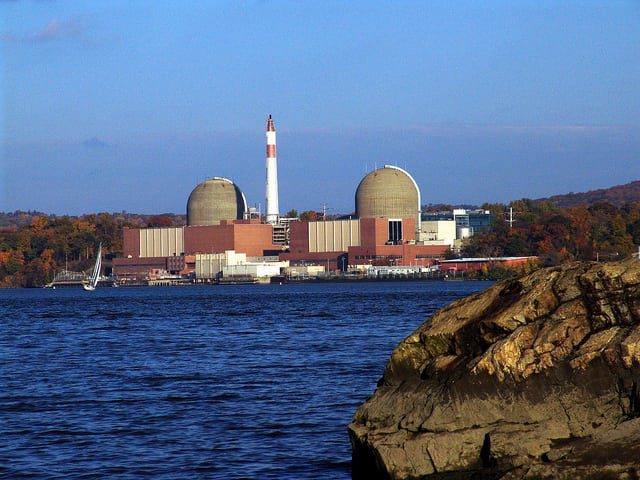

Early last month, Governor Eliot Spitzer and Attorney General Andrew M. Cuomo—both New York Democrats—asked the U.S. Nuclear Regulatory Commission (NRC) to reject Entergy Nuclear’s application to extend the operating licenses of Indian Point Units 2 and 3 for 20 years. The units, each rated at about 1,000 MW, are a major source of power for New York City, 35 miles to the south, and points north. Unit 1 was decommissioned in 1974.
Citing numerous potential safety issues and past safety problems at the nuclear plant, Spitzer and Cuomo said they don’t just want the two units to be shut down when their current licenses expire in September 2013 (Unit 2) and December 2015 (Unit 3). Cuomo said, “Indian Point should . . . be closed now . . . in my opinion, [it is] a catastrophe waiting to happen.”
The Atomic Safety Licensing Board (ASLB), comprising three administrative law judges, is expected to decide by March 2008 whether New York State can intervene in the relicensing process by raising issues it thinks the NRC should consider.
Bait the hook
The Cuomo-Spitzer petition was second-page news for most of the country, but the announcement drove energy and environmental bloggers on both sides of the political see-saw into a frenzy. Opposing Indian Point is a perennial favorite for local and state politicians pandering for votes. But I suspect Cuomo and Spitzer know the ultimate fate of their 313-page petition.
Indian Point Energy Center, originally owned by Consolidated Edison (Unit 2) and the New York Power Authority (Unit 3), was purchased by Entergy Nuclear Northeast just over six years ago. After Entergy submitted a relicensing application covering both units in May 2007, Cuomo’s lawyers began working overtime.
But their efforts may have been in vain because the NRC has approved every one of the 48 nuclear-unit relicensing requests it has received to date. The process typically takes 22 to 30 months and includes parallel-track reviews of whether the reactor can continue to be operated safely and whether the plant can continue to protect the environment over the 20-year license term. By law, those are the only two areas that the NRC is required to review.
Although the agency prepares an environmental impact statement (EIS) for each license renewal, as required by the National Environmental Policy Act of 1969 (NEPA), it’s not a full-blown EIS. The NRC has prepared a Generic Environmental Impact Statement for License Renewal of Nuclear Plants (GEIS) that assesses environmental issues common to all 104 nuclear stations operating in the U.S. Entergy must assess environmental issues at Indian Point that are at odds with the GEIS as well as other site-specific issues.
What’s more, NEPA does not require the NRC to perform an environmental review of a unit’s existing operating license. It does, however, mandate that the NRC make a studied assessment of “reasonable alternatives [including] those that are practical or feasible from a technical and economic standpoint.” NEPA says this assessment must be developed “using common sense rather than [being] simply desirable from the standpoint of the applicant” and must “include the alternative of no action.” In other words, the process takes into account how a unit will be expected to perform in the future, not how it has performed in the past.
Throw the line
This is where the review process begins to look murky to those not familiar with nuclear plant relicensing. The safety of operations, a site’s emergency preparedness, and potential acts of terrorism are not considered by the environmental review process. Nor are issues related to the storage or disposal of high-level nuclear waste on plant property germane to the overall relicensing process.
Because every one of the issues raised by Spitzer and Cuomo is beyond the scope of the process, I expect the ALSB will deny the request to have the NRC consider them. If that happens, the New Yorkers could file in Federal Court to keep their stance in the public eye, possibly improving prospects for Democrats this national election year. But I suspect that they will lose in that venue, too. Using the courts to stretch out the relicensing process won’t help get Indian Point shut down now. NRC rules state that if a relicensing application is filed five years before a unit’s original license is set to expire, it can continue to operate until the NRC rules on the extension request. New York politics is a contact sport, and the tag team of Spitzer and Cuomo has put on its game face.
Reel ’em in
Here’s how you can tell the petition is just a political red herring: No opponent of Indian Point has proposed concrete ways to replace the plant’s 2,000-MW generating capacity, which supplies 11.5% of New York State’s electricity demand.
Indian Point operated with a 93% capacity factor last year. The Nuclear Energy Institute notes that the average wholesale cost of nuclear power in the U.S. is a low 1.72 cents/kWh. In the densely populated U.S. northeast and mid-Atlantic states, where building anything that makes electricity is anathema, economic baseload replacement power alternatives simply do not exist.
But then I have to remind myself that ensuring the region has an affordable and reliable electricity supply is not part of the reactor relicensing process. Should it be? I invite your opinions.
–Dr. Robert Peltier, PE, Editor-in-Chief