Using nonhazardous waste for power generation is a trend that’s gaining steam for several reasons. Though there are several environmental reasons, another is the reliability of the fuel supply.
"Fossil fuels will play a smaller role in our energy future. Renewable and indigenous fuels will become more prominent. Carbon management is here to stay," said Dr. Marco J. Castaldi, a professor in the Department of Earth and Environmental Engineering at Columbia University in New York City, citing the findings of the National Research Council of the National Academies.
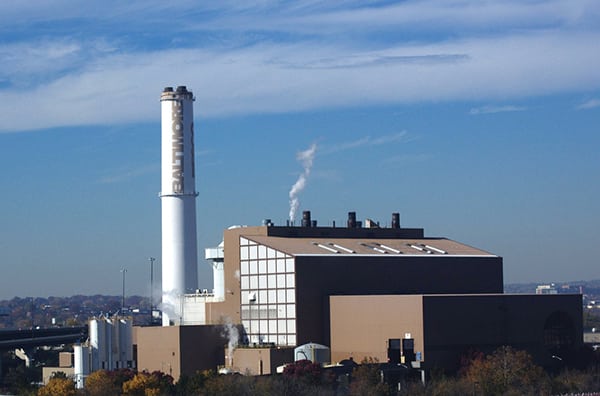
This was just one of many forward-looking statements made during the presentations and discussions that occurred on May 11 at the preconference workshop on biomass fundamentals and applications, which was held in conjunction with ELECTRIC POWER. In particular, Castaldi’s presentation centered on trends related to U.S. power plants that use waste-to-energy (WTE) technology. He emphasized that WTE plants are poised to become an important part of the U.S. electric generation industry.
New Power Paradigm
Castaldi pointed out that the new paradigm emerging in U.S. energy policy has an emphasis on the following issues:
-
The security of the procurement of fuel and growing concerns about supply chain disruptions.
-
The projected increased energy demand.
-
The rising concentration of atmospheric CO2.
-
Space-constrained or preferred land use.
"In the U.S., there is a strong need for carbon-neutral energy production," he said. "Zero emissions mean more than just sequestering CO 2 from fossil fuels. We need to reduce our dependence on single feedstocks. We need to turn to indigenous and distributed sources of fuel. However, power produced from waste/biomass must be as economically attractive as current sources such as fossil fuels."
Castaldi’s presentation focused on the increased use of WTE facilities as a response to these issues. "WTE conserves fossil fuels by generating electricity," he said. "One ton of municipal solid waste (MSW) combusted equals 45 gallons of oil or 0.28 tons of coal. Currently, WTE facilities process 14% of all U.S. MSW."
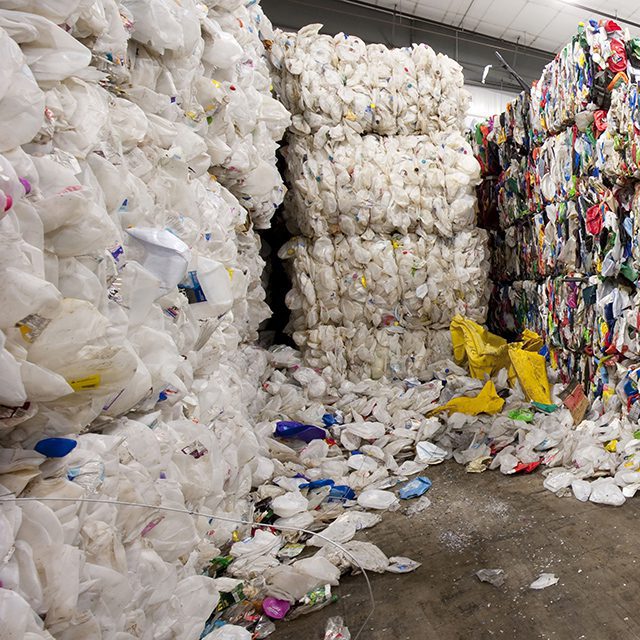
One clear advantage of using nonhazardous MSW as a fuel source for American electric power generation is its sheer volume. More than 220 million tons of MSW are generated each year in the U.S., according to Castaldi. U.S. landfills are filling up, and MSW disposal costs are steadily increasing. Another benefit of using MSW as a fuel source for generating electricity is that it emits two-thirds less CO2 than coal when combusted.
"Currently, two modern ways to dispose of post-recycling solid waste exist," Castaldi said. "First, there is thermal treatment with energy recovery. The heat content per MSW metric ton can generate more than 2,800 kWh of electricity. The second way is through controlled landfilling with partial methane recovery. The heat content in the methane generated from an MSW metric ton can generate more than 760 kWh of electricity."
The use of WTE is experiencing strong international growth (Figure 1). Castaldi cited the following statistics:
-
Thirty-five nations are currently using WTE technology.
-
More than 600 WTE plants are in operation.
-
The global WTE industry processes approximately 170 million metric tons of waste per year.
-
In the U.S., the WTE industry processes more than 26 million metric tons of waste per year.
-
Globally, urban landfilling manages approximately 830 million metric tons of waste per year.
-
In comparison, U.S. landfills handle around 225 million metric tons of waste per year.

1. WTE goes worldwide. Several Asian countries, including Japan and Taiwan, are the global leaders in terms of extensive use of waste-to-energy facilities. There are 780 WTE plants worldwide processing 140 million tons of waste per year. Courtesy: Waste to Energy Research & Technology Council
Overcoming Dioxin Challenges
In the past, there was a widespread perception that WTE facilities emit a large amount of dioxins, Castaldi noted. "The reality is that the total dioxin emissions from all U.S. WTE plants have been estimated by the U.S. Environmental Protection Agency (EPA) to be at 12 grams TEQ (toxic equivalent) of dioxins," he said. "However, before the Maximum Achievable Control Technology regulations under the Clean Air Act were enacted, they emitted about 10,000 grams TEQ. Now the major source of dioxins in the U.S. comes from backyard barrel burning, with levels at 580 grams TEQ."
According to EPA data, dioxin emissions from WTE generators now account for less than 1% of total dioxin emissions in the U.S., he pointed out (Figure 2).

2. Dispelling dioxin myths. Due to improved air quality control systems, present-day WTE plants no longer emit high levels of dioxin. Today, U.S. municipal waste incinerators produce less than 1% of known dioxin emissions. Courtesy: Waste to Energy Research & Technology Council
Benefits of WTE Plants
"Most WTE facilities in the U.S. process between 500 and 3,000 tons of waste per day, which provides enough electricity to power 2.8 million homes," he said. "Furthermore, WTE is compatible with recycling and helps to promote resource minimization. For example, WTE plants annually remove more than 700,000 tons of ferrous materials."
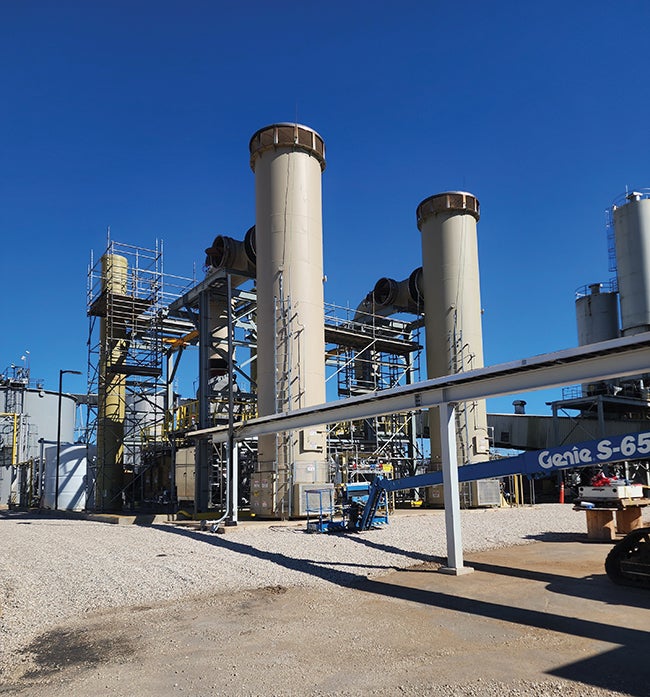
Another important advantage of WTE facilities is their positive impact on U.S. air quality, according to Castaldi. He emphasized that today’s U.S. WTE facilities have to meet some of the world’s most stringent environmental standards. They achieved compliance with new Clean Air Act pollution control standards in 2000.
In addition, as stated earlier, WTE facilities produce lower levels of greenhouse gas emissions compared to traditional coal-fired power plants. The EPA estimates that WTE facilities prevent 33 million metric tons of CO2 per year from being emitted, he noted.
"WTE facilities also save valuable real estate," he added. "They reduce the space required for landfills by about 90%."
Finally, one important fact not to be ignored during this challenging economic period is that WTE facilities provide positive economic benefits. "WTE is a $10 billion industry that employs more than 6,000 U.S. workers, and the annual wages exceed $400 million," he noted.
Future Outlook
In 2007, the U.S. WTE industry had 87 plants that used approximately 29 million tons of MSW as a fuel source. The net generation of these WTE plants totaled approximately 2.6 GW, and there’s potential for an additional 20 GW of WTE capacity in the U.S., which would be equivalent to saving 200 million barrels of oil or avoiding the mining of 70 million tons of coal and 420 million tons of overburden ore, according to Castaldi.
Abundant supplies of MSW make WTE electricity generation well-positioned to be an attractive and dependable source of renewable power in the years ahead.
—Angela Neville, JD is POWER‘s senior editor.