
Learning theorists tell us that one of the key reasons we don’t learn from our mistakes is that we don’t or won’t recognize them as such. We attribute good outcomes to our skill and intelligence and blame bad ones on others or on just plain bad luck. This unhealthy mind-set can be tolerated for a season, but it isn’t going to create a strong foundation for a long-term, mutually beneficial relationship. A breakup is inevitable unless both partners compromise and dedicate themselves to making it work. No, I’m not a marriage counselor—I’m talking about troubled power markets.
Failure to launch
Witness the most obvious example. In December 2000, the California ISO issued its first Stage 3 power alert when reserves dropped below 3%. Rolling blackouts began. Regulated utilities teetered on bankruptcy in a power market wrecked by high wholesale prices and retail price caps. Six years after the debacle, ex-Governor Davis is back to practicing law, the state still owes millions to utilities and public power agencies, and Kenneth Lay beat his rap the hard way. Those were expensive lessons that shouldn’t soon be forgotten.
It’s generally agreed that two key causes of the meltdown—besides flawed deregulation legislation and the willingness of those able to exploit its vulnerabilities for a buck—were lagging investment in new power plants and overreliance on imported power (about 22% today). The U.S. Energy Information Administration reports that while California’s power demand increased 11% from 1990 to 1999, net capable generation decreased by 2% over the same period.
The impact on the state was devastating. Developers, which as a group abhor uncertainty, left California in droves, sacrificing dozens of vital projects in the process. Since 1999, the California Energy Commission has approved 54 facilities totaling about 23,000 MW, but only 12,908 MW are on-line today. Netting retirements, mothballed plants, and expired licenses have left a mere 5,500 MW increase in installed generation capacity since 1999. In a recent draft decision, the California Public Utilities Commission found that 3,700 MW of new generation must come on-line by 2009 for the state to have adequate capacity and reserves. Future reserves will be tight, considering the dearth of projects in the queue.
Repeating mistakes
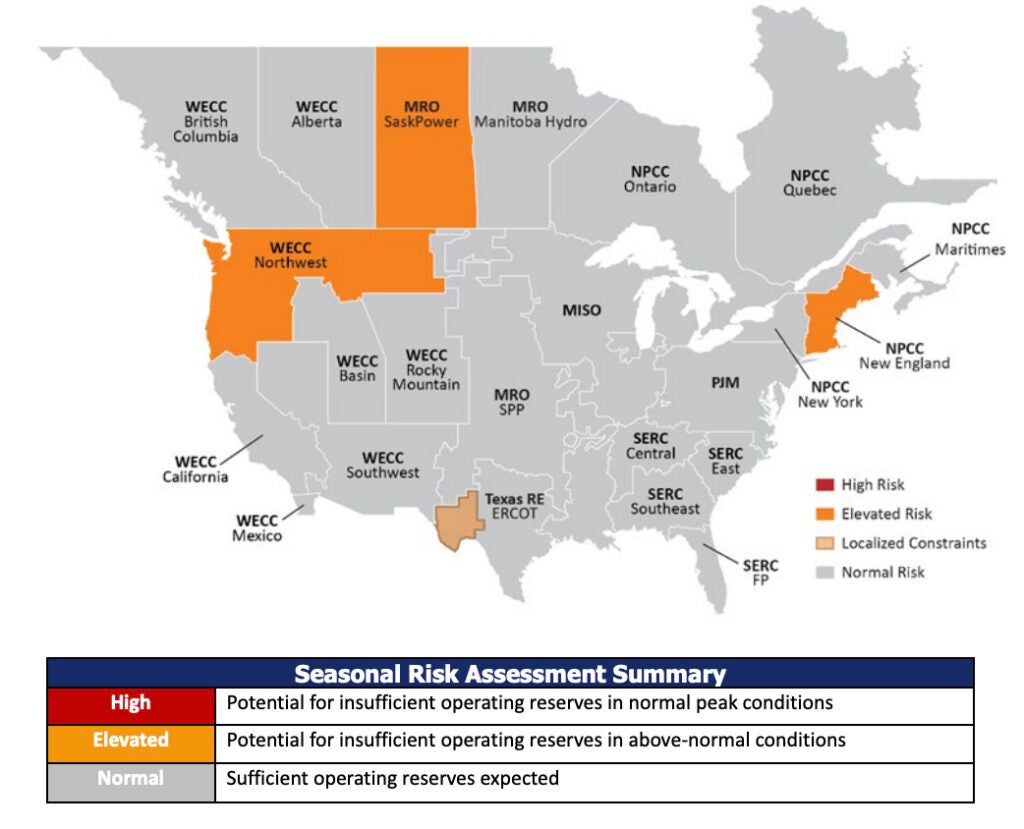
Would you expect developers to invest in a region with an antidevelopment NIMBY (not in my backyard) mentality, a dependency on imported natural gas and oil for over 60% of its fuel mix, and a history of overregulation? In the words of Yogi Berra, "It’s déjà vu all over again." But this time it’s not California but the six New England states that constitute the ISO New England (ISO NE).
This April, ISO NE predicted that peak demand on its system would reach 27,025 MW on at least one day this summer. The current record of 26,885 MW was set last July 27. Stephen G. Whiteley, ISO NE’s senior vice president and COO, has noted that, "While demand for electricity continues to grow across New England, construction of new generating resources has stagnated. Without new investment in power infrastructure and greater energy efficiency and conservation, New England could soon be consuming more electricity than it can produce or buy from its neighbors." ISO NE projects that summer peak demand will grow to 32,000 MW in two years. Sound familiar?
Federal Energy Regulatory Commission Chairman Joseph Kelliher demonstrated that he also clearly understands the imminent disaster facing New Englanders—as well how to avoid future blame-shifting—when he put them on notice last fall that the problem must be fixed immediately. "The collapse of generation additions and the threat that poses to reliability and just and reasonable wholesale power prices in New England cannot be ignored. I do not want to see the California crisis visited upon New England, and I do not want to see the commission criticized for not acting to assure reliability."
Ignoring reality
Residents of New England are on notice, much as Californians were in 1999, that the clock is ticking. Procrastination on building new capacity will result in fewer, more expensive, and more painful solutions. Wholesale markets collapsed post-Enron when independent generators with scores of assets went bankrupt; some threatened to shut down their older, less-economic plants, and others stopped building new plants altogether. ISO NE reliability-must-run contracts were an interim solution but, now totaling over 6,000 MW, they cost ratepayers around $700 million/year.
Naysayers blame New England’s competitive markets for the looming crisis. But Gordon van Welie, president and CEO of ISO New England, says the markets are merely revealing the structural cracks in their underlying fundamentals. Combine antidevelopment sentiments, environmentalists’ opposition to any power plant development, an unstable regulatory environment, plus retail and wholesale price caps, and you have all the ingredients for a California-size implosion.
Tracking the location of new plants is a key indicator of a region’s economic future. As a region, New England has 26% of its power needs met by nuclear power. But not one of the 14 or so announced next-generation nuclear projects is in New England, where no major generating project of any type is in the queue. One developer, finding it hard to overcome NIMBY opposition to a small 30-MW wind project, astutely observed that the region has gone beyond NIMBY to BANANA—build absolutely nothing anywhere near anyone. That’s not a healthy attitude.