"If you build it, they will come" — the litigants, that is. The lawsuit involving the construction of Southwestern Electric Power Co.’s (SWEPCO) John W. Turk Jr. ultrasupercritical coal-fired power plant in Arkansas gives new meaning to that popular quote from the movie Field of Dreams.
Legal Background
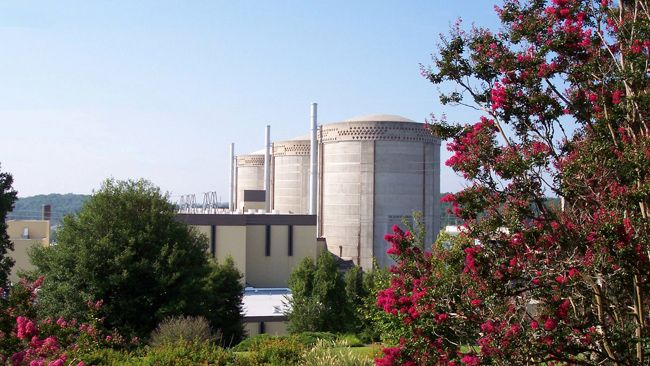
In November 2008, SWEPCO, a subsidiary of American Electric Power, began building a power plant in Hempstead County, about 15 miles northeast of Texarkana. The plant is designed to bring generation and related transmission improvements to southwest Arkansas. The 600-MW coal-fueled plant also is intended to provide baseload power to SWEPCO customers in Arkansas, Louisiana, and Texas. Classified as ultrasupercritical, the Turk plant requires less coal than other technologies per megawatt-hour, leading to lower emissions of CO2 and mercury, higher efficiency, and lower fuel costs per megawatt-hour generated. (See the July 2009 POWER special report on this technology for details.)
Before it began construction, SWEPCO had cleared a number of required regulatory hurdles. However, several local private hunting groups and landowners, including the Hempstead County Hunting Club (HCHC), opposed construction of the plant because of concerns about it releasing air pollutants. On May 9, 2008, the HCHC filed a citizen’s suit against SWEPCO pursuant to the Clean Air Act (CAA), seeking to prevent SWEPCO from building the plant without first obtaining a prevention of significant deterioration permit under the CAA.
On June 24, 2009, the Arkansas Court of Appeals overturned the Arkansas Public Service Commission’s (APSC) decision to grant a certificate of environmental compatibility and public need (CECPN) for construction of the Turk plant. The CECPN is legal authorization granted by Arkansas to a regulated utility to construct a power plant or transmission facilities and is only issued after public and formal review by the state and interested stakeholders. The ruling found in favor of the plant’s opponents.
The appellate ruling is based upon a literal application of the wording of a state statute. The court agreed with private hunting clubs and landowners that a key issue is the wording of Arkansas Code Annotated 23-18-502, commonly known as the Utility Statute.
The court said the APSC violated the "single proceeding" language of the statute by conducting a separate docket for SWEPCO’s application to build the Turk plant and separate dockets for construction of transmission lines, instead of resolving all matters related to the plant in a single proceeding.
Most of the opinion addressed procedural issues; however, the appellate court also dealt with the issue of "the failure of SWEPCO’s application to adequately address alternative locations" for the proposed Turk plant. The opinion stated that SWEPCO failed to adhere to the statutory requirement to detail the comparative pros and cons of each potential location.
Reaction to Appellate Court’s Decision
On June 29, SWEPCO filed an appeal with the Arkansas Supreme Court, saying that the Court of Appeals had "erroneously reversed the APSC based on an incorrect construction of the Act" and that "the ruling abandons 150 years of final-order precedent." For the near term, SWEPCO is continuing construction of the $1.6 billion plant.
Paul Chodak, SWEPCO president and COO, said, "By law, the CECPN issued by the APSC remains in effect during the appeal process. The APSC approval was overturned because the court objected to the approval procedure and not because the judges objected to the Turk plant. We believe the plant holds the best future for long-term reliability and affordable power for our customers."
"Approximately $713 million has already been spent on plant construction, and a total of $1.3 billion has been committed. It would cost even more to stop construction and then restart it," Chodak said.
In July, Scott McCloud, SWEPCO corporate communications representative, told POWER that SWEPCO and the APSC intend to file their briefs with the Arkansas Supreme Court by September 11. The Supreme Court took a recess from mid-July through Labor Day. McCloud expects the Supreme Court to announce its decision related to granting SWEPCO’s request for review some time in September.
Looking Ahead
If the Arkansas Supreme Court upholds the appellate court’s decision, the ruling will promote strong uncertainty about the reliability of the permitting system because SWEPCO will be obligated to restart the permitting process with the APSC. The case also could have long-term policy implications for utilities that build power plants and generate electricity in Arkansas.
Reacting to the appellate court’s decision, APSC Chairman Paul Suskie said the APSC panel had used the same procedures for considering power plants in separate proceedings since 1973.
"As it stands now, the Court of Appeals decision will impact the siting of all future generating plants subject to the commission, whether these plants generate electricity from nuclear, natural gas, coal, wind, solar, hydro, biomass, geothermal or other renewable power sources," Suskie said.
The U.S. electric generation industry needs sensible and predictable permitting procedures for utilities that balance energy needs with protecting our natural resources. At this point in time, coal-fired power plants that use the most advanced available control technology to reduce harmful air emissions and damage to the environment are a necessary part of meeting this country’s growing energy needs.
–Angela Neville, JD, is POWER‘s senior editor