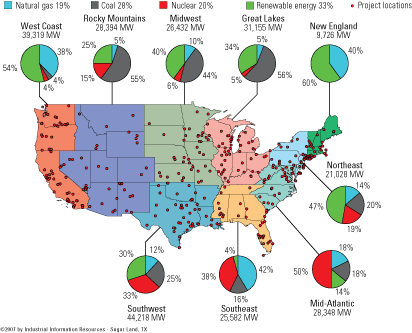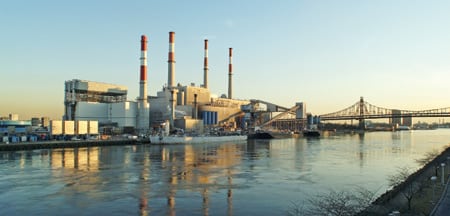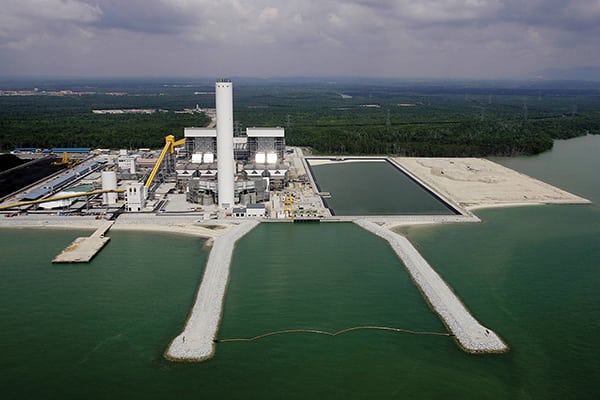
This generation roundup provides snapshots of activity—current, planned, and proposed—in the four distinct U.S. electric power generation market niches. Use the capacity and investment levels provided to gauge the relative maturity of projects within a niche, or to get a feel for one market segment’s promise in the context of the others.
Coal: Still the king
In the intermediate term, capital spending in the coal-fired sector of the North American electric power industry will be driven by two key factors. One is the perceived urgency for building new generating units—primarily in the U.S., but in Canada and Mexico as well. The other factor consists of the collective federal, state, and provincial mandates to reduce existing and new units’ air pollution emissions by equipping them with SO2 scrubbers, selective catalytic reduction units, electrostatic precipitators, and low-NOx burners.
Coal remains the fuel of choice for the new units for two reasons: Baseload capacity is what’s most needed, and coal is far cheaper on a $/Btu basis than natural gas. Still hung over from the last decade’s binge of gas-fired combined-cycle plant construction, developers—both utility-affiliated and independent—now are seeking to make their fleet fuel mixes a bit more diverse. Coal still fuels more than half of U.S. electricity generation, and its share rose 1.9% between May 2005 and May 2006.
The new coal-fired capacity is needed not just to meet future demand growth but also to replace production previously provided by mothballed and permanently shuttered plants. Since 1999, some 1,486 units representing almost 50,000 MW have gone off-line in the U.S. alone. Expect similar numbers in both categories in the near term: By 2010, another 209 units totaling more than 20,000 MW are likely to be decommissioned.
Advanced age is the reason why those units will be retired. In North America today, there are 781 operational coal-fired units representing 86,000 MW that started commercial operation prior to 1967. Many of them soon will be replaced by new coal-fired units that are far more efficient and clean—in some cases, even cleaner than gas-fired units of comparable capacity.
Between now and 2010, some 25 coal-fired units totaling 10,923 MW currently under construction are scheduled to come on-line in the U.S. These projects represent over $15 billion in capital spending. Fourteen of the units (representing 7,758 MW) are being built by utilities or utility affiliates; the other 11 (with a total capacity of 2,615 MW) are owned by independent power producers (IPPs). To slice and dice the numbers in another way: Nine units representing 3,379 MW are greenfield developments, while the other 16, totaling 6,994 MW, are being built as expansions of existing power stations.
In addition to these projects, which already have broken ground, another 246 units totaling over 85,000 MW of new coal-fired capacity are in various earlier stages of development. Combined, these projects represent an investment of more than $127 billion. Some 233 of the new units are proposed for the U.S., 11 for Canada, and two for Mexico. Of the 246 total units, 92 (representing over 37,000 MW) are utility-sponsored; the remaining 154 (totaling roughly 47,000 MW) have been proposed by IPPs.
Unlike the units already under construction, a fair share of the proposed units envision burning coal cleanly via integrated gasification combined cycle (IGCC) or circulating fluidized bed (CFB) technology. At this point, of the new projects proposed, 65 units (over 12,000 MW of capacity) expect to use IGCC, whereas 28 units (representing over 8,000 MW) anticipate going with CFB. The remaining 173 proposed units will use conventional techniques for firing pulverized coal at subcritical or supercritical pressures and temperatures.
Of the 246 coal-fired units that have been proposed, 72 (representing 27,000 MW) could break ground this year, and another 95 units totaling 31,000 MW may get under way in 2008. As a reality check, it helps to remember that developers are always sanguine about project initiation and completion dates. Many of these projects may be stillborn due to difficulties securing financing and siting or environmental permits.
Nuclear power: Rethinking pros and cons
What a difference a few years make. Before global warming captured the public’s attention, American nuclear reactors seemed doomed to suffer the same fate as their counterparts in Europe (with the exception of France): eventual decommissioning. Now, relicensings, uprates, and a potential renaissance in nuclear power are the talk of the U.S. generation industry. Currently, nuclear power—which produces zero emissions of CO2, the primary agent of climate change—accounts for about 20% of total American electricity production. The $64,000 question, however, is whether that share will rise or fall.
Today, the U. S. has 103 operating reactors with a total capacity of over 102,000 MW. Since 1999, nearly 44 of them have had their licenses extended for 30 years. Another eight reactors currently have license-extension applications under review at the Nuclear Regulatory Commission (NRC), and at least another 24 renewal requests are expected to be filed through 2015.
In many cases, power uprates are granted as part of the new license or as an amendment to an existing license. Since the 1970s, those uprates have boosted the collective capacity of the U.S. nuclear fleet by 4,100 MW—avoiding the need to build four typical-sized units. An additional 947 MW are expected to be added via uprates by the end of 2008.
Beyond the uprates, work is well under way to bring the 1,152-MW Browns Ferry Unit 1 back on-line in 2007. In the U.S. and Canada, there are 29 projects at nuclear power plants to either add new generation or overhaul existing units to extend their life. These projects represent investments of over $64 billion in the U.S. and over $4 billion in Canada.
But in the U.S., the answer to the aforementioned $64,000 question (no, not the one about waste) will largely depend on whether some 35 next-generation nuclear units totaling more than 40,000 MW proposed by utilities will be licensed by the NRC. Among the units, which are scheduled to break ground between 2010 and 2015, are several sponsored by NuStart Energy Development, a consortium of utilities and reactor vendors that has lined up six potential sites in the U.S.
Gas-fired capacity: Back on the front burner
Over the past decade in the U.S., several hundred thousand megawatts of natural gas–fired capacity, in the form of simple-cycle combustion turbines and combined-cycle facilities, were rushed on-line. But in short order—as the price of gas shot up, down, and then up again to stay—it became clear that much of this type of capacity (better for peaking and intermediate duty than for baseload service) wasn’t really needed in several regions of the country. The continuing volatility of natural gas prices has led to the delay or cancellation of many gas-fired projects that originally were expected to be finished soon.
Despite the painful lessons learned, investors and utility resource planners expect that natural gas–fired plants will continue to be important contributors to meeting growing domestic electricity demand. At present in North America, more than 600 gas-fired simple- and combined-cycle units representing over 82,000 MW are in various stages of development.
Many of these projects are scheduled to break ground between 2007 and 2012. Of the 82,000-MW total, about 52,500 MW have been proposed for intermediate-load service. Of the remainder, 12,500 MW are expected to provide baseload generation, with over 17,600 MW planned for peaking service. The 418 units can be put into the following three categories:
- 400 combined-cycle units representing 64,600 MW
- 205 simple-cycle combustion turbines with a total capacity of 17,500 MW
- 60 internal combustion engine-generators representing 450 MW
Renewables: Much easier being green
Industrial Info Resources (IIR) expects the growth and maturity of state renewable portfolio standards (RPS), combined with incentives in the 2005 Energy Policy Act (EPAct), to create unprecedented momentum for renewable energy development. Spending in this niche surpassed investment in gas-fired unit construction for the first time in 2005. In that year, just over 3,100 MW of renewables-fired plants worth $3.95 billion reached the construction kick-off stage. The comparable numbers for gas-fired plants were 6,800 MW and $3.4 billion.
Over 5,000 MW of renewable energy capacity—of which wind farms represent 87% and a total investment of more than $7 billion—were scheduled for project kick-off last year. Most of that capacity is scheduled for commercial start-up by the end of 2007. In the longer term, there are over 51,000 MW of renewable energy projects actively being developed in the U.S. They are scheduled to begin construction between now and 2010.
In the short term, wind will continue to dominate the ranks of renewable energy development projects. In August 2005, EPAct extended the federal production tax credit (PTC) before it expired, effectively ending the boom-and-bust cycle suffered by the industry over the past six years. The certainty of the subsidy drove investment in wind in 2006 and 2007 to record levels. But the ensuing spike in demand created a shortfall in wind turbine supply that continues today.
In response, Spain’s Gamesa and homegrown Clipper Windpower are building new turbine manufacturing plants in the U.S. Siemens also has nearly doubled its production capability since acquiring Bonus Energy. In the near term, the tightness of supply may make financing too risky for projects unable to break ground before this summer—a bit too close to the PTC deadline.
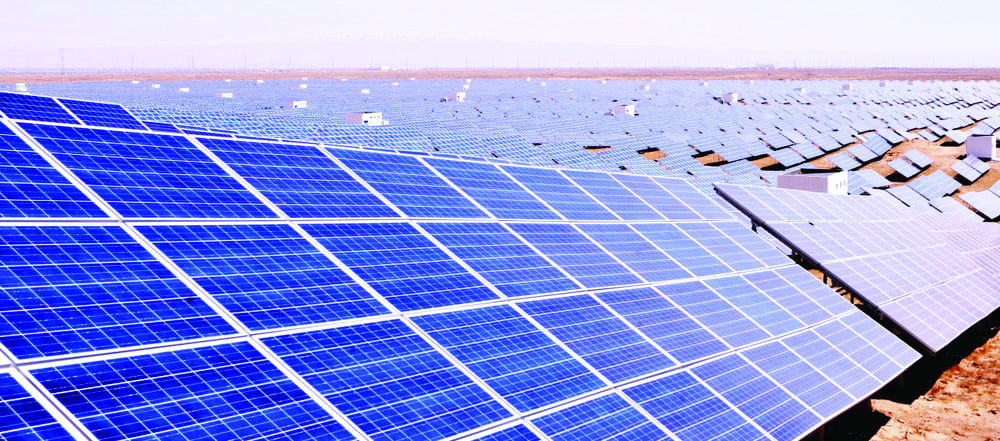
Among other renewable resources, solar energy has the second-largest potential for capacity growth in the U.S.—particularly in Southwest deserts, which have some of the world’s highest insolation levels. Utility-scale concentrated solar power plants provide the lowest-cost and most-efficient methods for harvesting solar energy. Currently, the U.S. has about 350 MW of plants that have proven the technology in California for the past 15 years. Growing RPS requirements are serving to improve the prospects for concentrating solar power. Over the past year alone, over 1,500 MW of power-purchase agreements (PPAs) have been signed for new installations.
Geothermal, landfill gas-to-energy (LFG), and biomass projects complete the increasingly rosy picture for renewables. Because each technology is capable of providing baseload capacity and qualifies for the PTC, project economics in all cases have reached a positive tipping point.
Today, for example, state and federal energy policies are driving geothermal development at a level not seen since the 1980s. Within the past year, over 500 MW of new capacity have secured PPAs. Most geothermal projects in near-term development either are plant expansions or represent an effort to redevelop an existing site and bring it on-line to reap the benefits of the PTC. IIR is now tracking 15 geothermal projects, representing over 312 MW and $780 million, that are scheduled to begin construction by mid-2007.
LFG projects qualify as renewable resource development in nearly all of the states that have adopted an RPS. What’s more, LFG is included among the many green power offerings of local utilities. Together, these two treatments have created favorable conditions for landfill gas-to-energy development in the U.S. (Read how Exelon has reaped the benefits of using landfill gas.)
Today in the U.S., there are more than 300 operational LFG projects with a collective nameplate capacity of just over 1,100 MW. The U.S has nearly 600 other landfills that are thought worthy of exploiting. Of these, about 155 potential sites could produce in excess of 4 MW. Currently, IIR is tracking the development of 35 LFG projects with a total capacity of about 270 MW that are scheduled to begin construction within the next 24 months. Collectively, they have an investment value of $324 million.
Right now, there is limited development of large hydro projects planned for the U.S. But because the installed American fleet is aging, opportunities to boost its efficiency and production exist. We expect that incentives provided by the U.S. Environmental Protection Agency could help stimulate small hydro projects at existing nonhydro power dams as well.
Next to hydroelectric power, more megawatt-hours are generated from solid fuel biomass than from any other renewable energy resource in the U.S. At this point, IIR is tracking 34 solid fuel projects representing 1,360 MW and an investment of more than $2 billion in 19 states. Seven of those projects are already under construction.
The biggest challenge that renewable energy faces in the U.S. is to maintain its current momentum by making sure that the PTC never expires again. The subsidy will help wind, solar, geothermal, LFG, and biomass projects compete on a fair footing against fossil-fueled options in three key areas: cost, reliability, and dispatchability.
Prospects for renewables also would be helped by creation of regional renewable energy credit (REC) markets. Such markets would make state RPS programs more effective by encouraging development of the lowest-cost renewables in each resource category in areas where they are available. The RECs then could be sold wherever they are needed.
—Britt Burt is VP of Power Industry Research and Shane Mullins is VP of Product Development–Power Industry for Industrial Info Resources. The company provides comprehensive market intelligence about industrial processing, heavy manufacturing, and energy-related industries worldwide, including an annual North American Power Forecast that offers a comprehensive outlook of the industry. For more information, call 800-762-3361 or visit www.industrialinfo.com/powerforecast.