
POWER
-
Legal & Regulatory
Regulatory Options for Feed-in Tariffs
Feed-in tariffs (FITs) have been used by European countries to foster the growth of renewable generation resources, notably solar. These tariffs generally require electric distribution companies to purchase power produced by a specified class of generators at above-market rates. The object of the tariffs is to encourage development of the favored generation resources by ensuring the existence of a profitable market for their power production.
-
 News
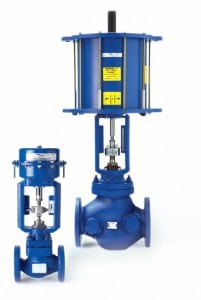
NewsExtended Control Valve Range
Spirax Sarco released a new control valve range, SPIRA-TROL, in 6- and 8-inch sizes and with more control options. The company says the valves are easy to maintain and do not require any special tooling due to the “clamp-in-seat” design, resulting in reduced downtime and cost of ownership. Valve size ranges have been extended due […]
-
 Geothermal
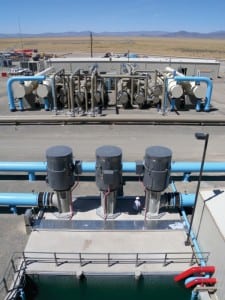
Top Plant: Blue Mountain Faulkner 1 Geothermal Power Plant, Humboldt County, Nevada
Completed in 2009 and partially funded under the American Reinvestment and Recovery Act, the 50-MW Blue Mountain Faulkner 1 Geothermal Power Plant is harnessing large amounts of renewable energy by tapping into an underground geothermal reservoir in northern Nevada. This subterranean source of heat allows the binary plant to generate pollution-free baseload electricity.
-
 News
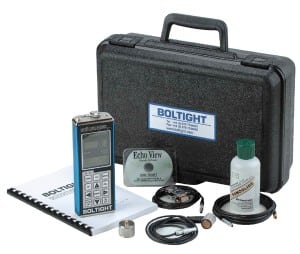
NewsBolt Load and Elongation Measuring Device
Boltight has developed a fast and accurate device for measuring bolt load and bolt elongation that uses the latest ultrasonic technology. Called the Boltight Echometer, the device is used for monitoring critical bolting applications either during the installation of a new plant or while carrying out routine maintenance. The Echometer works by measuring the time […]
-
 Waste to Energy
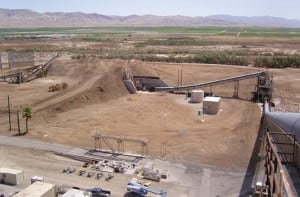
Top Plant: Colmac Energy Inc.’s Biomass- Fueled Power Plant, Mecca, California
The 47-MW Colmac Energy facility is the largest biomass-fueled power plant in California. Colmac operates with a capacity factor consistently in the 92% to 95% range and at a net plant heat rate comparable to waste coal facilities. Colmac Energy has demonstrated that biomass plants using urban wood wastes as fuel can generate significant environmental benefits, including reduced air pollutants from open-air burning and lowered demand for landfill space.
-
 News
NewsUpdated Tube Expansion System
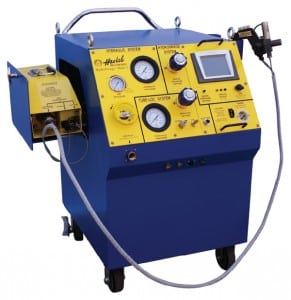
An updated HydroSwage Tube Expansion System featuring new ease-of-use and data collection features is being offered by Haskel International. The compact Mark V system provides high accuracy, speed, and repeatability by expanding heat exchanger tubes into tube sheets through the direct application of high internal hydraulic pressure. It is designed for use in fabricating heat […]
-
News
Three Questions About Renewable Energy
Renewable energy advocates hailed recent poll results as unquestionably demonstrating the public’s support of renewable energy resources. However, answers to follow-up questions showed that the public’s willingness to pay for increased renewable energy is lukewarm at best.
-
 Solar
SolarTop Plant: DeSoto Next Generation Solar Energy Center, DeSoto County, Florida
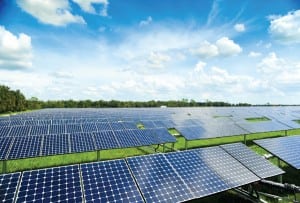
The forecast is looking sunny for the 25-MW DeSoto Next Generation Solar Energy Center, which has more than 90,000 photovoltaic (PV) panels and is the largest solar PV plant in the U.S. Completed in October 2009, it is a sustainable energy solution with minimal maintenance costs. The site uses no fuel, consumes no cooling water, has no air emissions, and creates no waste products.
-
 News
NewsTotal Biogas Package
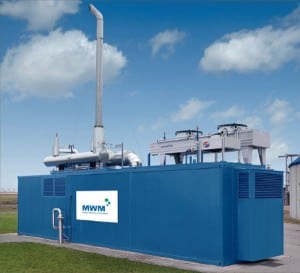
German company MWM introduced the new MWM container, which it says is a highly efficient and economic distributed generation system designed for natural gas and biogas applications. The package, which includes a biogas genset, a standard container, and biogas processing, are aligned with special requirements of biogas operation. For example, it uses specially designed exhaust […]
-
 Wind
WindWind Energy Soars Around the World
Denmark put into operation its 12th offshore wind farm this October. The €440 million Rødsand 2 wind farm, a 90-turbine installation with a nameplate capacity of 207 MW, was erected for owner E.ON by Siemens Energy—both German firms—over a mere 122 days. The wind farm joins Rødsand I, a 72-turbine installation that began operating nearby in the Baltic Sea in 2003.
-
 Waste to Energy
Top Plant: Kajang Waste-to-Energy Plant, Semenyih, Malaysia
At Malaysia’s first waste-to-energy plant, municipal solid waste (MSW) is converted into refuse-derived fuel for use in an integrated steam power plant. This facility was designed to achieve the twin objectives of environmentally friendly MSW disposal and generating renewable power.
-
Commentary
While Congress Bickers, Solar Industry Holds Its Breath
Energy is the most regulated sector of the American economy, making public-private partnerships essential to scaling the solar industry. Such partnerships have helped other energy sectors to reach scale over the past hundred years.
-
 Coal
CoalSpain Makes Headway in CCS Efforts
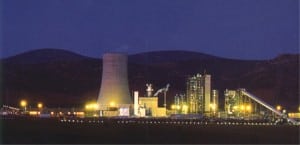
A 14-MW pilot plant built by energy firm ELCOGAS at its 335-MW integrated gasification combined-cycle (IGCC) facility at Puertollano in Spain in September captured its first metric ton of carbon dioxide. Now the company plans to begin tests to procure more technical and economic information about carbon capture and storage (CCS), including how efficient it is to co-produce hydrogen and power with carbon capture processes.
-
 Waste to Energy
Top Plant: Kaukaan Voima Oy Biomass-Fired Power Plant, Lappeenranta, Finland
Located in the heavily forested country of Finland, the Kaukaan Voima biomass-fueled power plant produces process steam and electricity for UPM’s Kaukas pulp and paper mill as well as electricity and district heating for Lappeenrannan Energia, a city-owned power company. Launched in 2009, the plant can provide 125 MW of electricity, 110 MWth of district heat, and 150 MWth of process steam thanks to one of the world’s largest wood-fired fluidized bed boilers.
-
 Gas
GasTurkey Opens Record-Breaking Combustion Gas Engine Plant
Turkey, a country that has seen rapid economic growth since the 1980s, largely spurred by a shift in governmental strategy to open up markets and increase private participation, has been actively overhauling its power infrastructure to meet soaring electricity consumption. According to grid operator Turkish Electricity Transmission Co., national consumption increased to 17 billion kWh this September—an 11% increase over the 15.3 billion kWh consumed in September 2009.
-
 Wind
WindTop Plant: Thanet Offshore Wind Farm, Isle of Thanet, UK
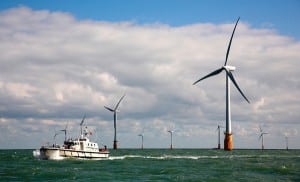
In September, the 300-MW Thanet Offshore Wind Farm, the world’s largest offshore wind energy facility, began operation off the southeastern coast of England. The wind farm has 100 3-MW turbines manufactured by Vestas. The facility will generate electricity equivalent to the annual consumption of more than 200,000 British households.
-
 Coal
CoalSouthern Co. Captures Carbon Dioxide at Plant Yates Pilot
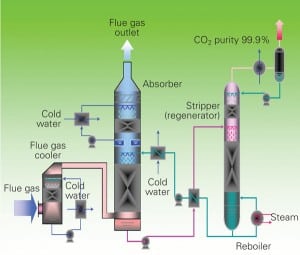
The pilot-scale project at Georgia Power’s Plant Yates near Newnan, Ga.—the first step in one of the industry’s largest demonstrations of a start-to-finish coal-fired power plant carbon capture and storage system—reached a significant milestone this September, capturing the greenhouse gas for the first time.
-
 Nuclear
Are Smaller Reactors Better?
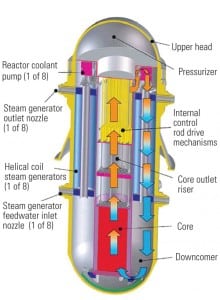
Is a paradigm shift—an economic and engineering earthquake—in nuclear power plant design on the horizon? For most of the past 50 years, the mantra in planning new nuclear plants has been “bigger is better.” But a growing number of nuclear power engineers and designers are contemplating a world where small is beautiful.
-
Business
Turkey Joins European Grid
Turkey, a country that has long vied to become part of the European Union, is finally part of its grid, at least. The nation’s power system was synchronized with Continental Europe’s interconnected grid this September, marking the beginning of a year-long trial period in which security and performance will be monitored.
-
 Nuclear
Benchmarking Nuclear Plant Capital Requirements
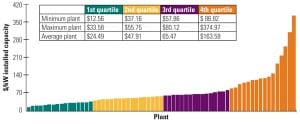
The EUCG Nuclear Committee’s primary goal is to optimize the costs and reliability performance of participating plants by publishing for its members a comprehensive database of performance metrics and best practices derived through surveys of its membership. Earlier reports examined staffing and performance data. In this exclusive EUCG report, we examine nuclear plant capital requirements.
-
 Coal
CoalFrog-Inspired Artificial Foam Could Help Trap CO2
In August, researchers from the University of Cincinnati who are working on creating an artificial foam that could absorb carbon dioxide (CO2) from the flue gas at power plants and convert it into biofuel won the grand prize at the 2010 Earth Awards in London.
-
 Nuclear
The Best of U.S. Nuclear Developments 2010: Uprates and Loan Guarantees
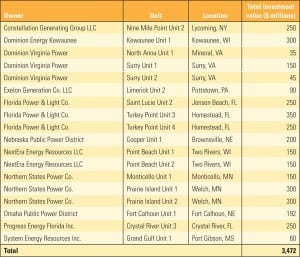
Utilities are spending billions of dollars on nuclear plant uprate projects, and Southern Company has been offered $8.3 billion in federal loan guarantees to build Vogtle Units 3 and 4 (although the final deal has yet to be signed). Meanwhile, other nuclear developers have slashed preconstruction spending as the cost of the “nuclear renaissance” becomes evident.
-
Business
POWER Digest (November 2010)
TVA’s 550-MW Combined-Cycle Plant Starts Operations. The Tennessee Valley Authority (TVA) on Sept. 30 officially began operating the Lagoon Creek Combined Cycle Plant, a 550-MW natural gas–fired plant, near Brownsville, Tenn. The federal utility said that the new plant, the first new power generation source built by TVA since 2002, would provide power during days […]
-
 O&M
O&MRetrofitting BWR Recirculation Pumps with Adjustable-Speed Drives
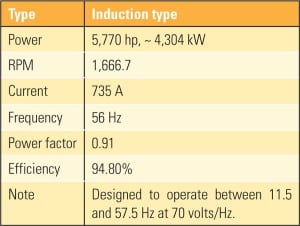
Exelon Nuclear recently replaced the original motor-generator sets for its boiling water reactor (BWR) recirculation pumps at its Quad Cities Generating Station Unit 1 with adjustable-speed drives. We examine the actual energy savings, motor-starting characteristics, control accuracy and stability, and motor and cable thermal behavior of this retrofit project.
-
 Nuclear
NRC Confident in Long-Term Dry Cask Storage
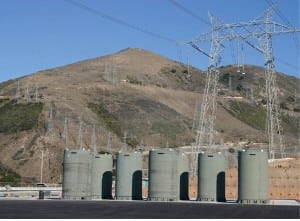
The U.S. Nuclear Regulatory Commission (NRC) approved an updated “waste confidence” rule in mid-September that reflects the agency’s confidence that spent nuclear fuel (SNF) can be safely stored for at least 60 years beyond the closing date of any U.S. nuclear plant. Approval of this rule was required before the NRC can license any new reactors that will be required to store SNF on site indefinitely.
-
Commentary
Biomass Power Under Attack
Biomass energy has been an up-and-down industry for decades. As public awareness grows, it inevitably influences new tax legislation and environmental regulations. Two recent events have made the climate for development of this renewable resource even more volatile.
-
Nuclear
EPRI Updates Spent Nuclear Fuel Storage Handbook
EPRI recently issued a handbook on nuclear spent fuel storage that examines regulatory trends affecting used fuel storage, describes available dry storage technologies, reviews planning considerations for spent fuel storage installations, and discusses technical issues affecting dry storage.
-
 News
NewsSemi-Automated Tube Bundle Cleaner
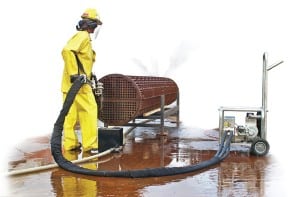
Part of a family of automated and semi-automated tube-cleaning accessories, the new Saflex 2000 makes tube bundle cleaning more productive because it can clean four times as many tubes in a given period as manual water jetting, says NLB Corp. Operating at pressures up to 40,000 psi, the semi-automated accessory cleans two tubes (ranging from […]
-
 O&M
O&MCSB Releases Hot Work Safety Notice
The Chemical Safety Board (CSB)—an independent federal agency charged with investigating serious chemical accidents such as equipment failure, as well as inadequacies in regulations, industry standards, and safety management systems—recently released multiple reports that should be made part of every power plant’s safety training program.
-
 News
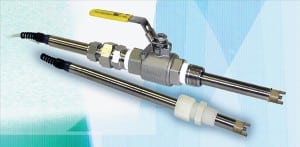
NewsNo-Glass ORP Sensors
Engineers and technicians searching for a high-performance oxidation-reduction potential (ORP) sensing solution will find that the S10 and S17 ORP Sensors from Electro-Chemical Devices (ECD) feature a no-glass design with platinum or gold sensor tips to operate safely in a wide range of applications. ECD’s ORP S10 and S17 Sensors come with easily replaceable ORP […]