PJM Interconnection’s capacity market fell short of its reliability requirement for the second consecutive Base Residual Auction (BRA), clearing at the Federal Energy Regulatory Commission (FERC)-approved price ceiling of $325/MW-day for the June 2028–May 2029 delivery year and leaving the grid operator’s 13-state footprint about 6,800 MW below the reserve target needed to meet its one-in-10 reliability standard—a wider shortfall than the roughly 6,500 MW gap the market posted seven months earlier in the auction for the 2027/2028 delivery year.
The nation’s largest power grid operator on July 14 said the auction secured 138,317.8 MW of unforced capacity (UCAP)—a generator’s installed output discounted for its expected performance during system stress—at the $325 ceiling across all 15 Locational Deliverability Areas, the third auction in a row to bump the cap the RTO’s states, PJM, and federal regulators established last year to blunt price volatility. Regions that self-supply under the Fixed Resource Requirement (FRR) alternative committed another 13,765.6 MW UCAP. Total committed capacity for 2028/2029 reaches 152,083.4 MW UCAP against a reliability requirement of 156,013 MW UCAP.
The clearing price was 2.5% below the 2027/2028 BRA’s $333.44/MW-day cap. That decline reflects the collar methodology, under which the cap floats with the accredited capacity of PJM’s reference resource, rather than a softening of the underlying supply-demand fundamentals. Cleared supply multiplied by the clearing price totals $16.4 billion, though PJM emphasized that the figure is not the total cost to load because self-supplied and bilaterally contracted volumes are not exposed to the auction clearing price.
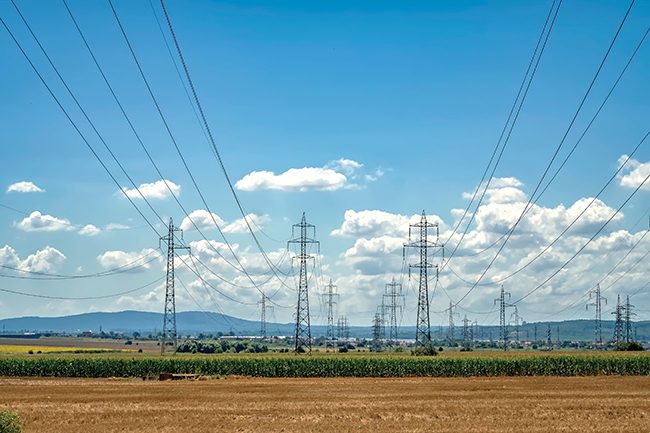
PJM serves 67 million people across all or parts of Delaware, Illinois, Indiana, Kentucky, Maryland, Michigan, New Jersey, North Carolina, Ohio, Pennsylvania, Tennessee, Virginia, West Virginia, and the District of Columbia, and coordinates 88,417 miles of high-voltage transmission. The RPM forecasted peak load for the 2028/2029 delivery year runs about 2,000 MW above the level used in the previous auction. PJM attributes the persistent load-forecast growth largely to new large loads, primarily data centers.
Only 525 MW of Physically New or Upgraded Capacity Cleared
Physically new steel remained scarce. The auction cleared 524.7 MW UCAP of new generation and generation uprates—317.1 MW of new generation and 207.6 MW of uprates—extending a three-auction slide from 2,668 MW in the 2026/2027 BRA to 774.3 MW in the 2027/2028 BRA to this year’s total.
Asked at the July 14 press briefing how much of the cleared UCAP represents physically new or upgraded resources, Stu Bressler, PJM’s chief operating officer, put the figure at “possibly about 500 megawatts that UCAP was sort of new iron in the ground, or upgraded iron.”
The year-over-year increase in cleared UCAP—3,733 MW, from 134,585 MW in the 2027/2028 BRA to 138,317.8 MW in the 2028/2029 BRA—came predominantly from three sources that do not represent net additions of physical steel: higher accreditation values assigned to existing resources, coal units converting to natural gas, and resources that sat out the previous auction returning as must-offers.
Pressed on what the auction signals for investment, Bressler pointed to the collar’s design rationale. “The reason why we have the collar in place—if you go back through the FERC filings that were exchanged—is because of a concern about the ability for developers and investors to build new resources in the time frame to be able to take advantage of a higher price,” Bressler said. He said PJM’s parallel Capacity Interconnection Facilitation Process (CIFP) request for information drew “significant response from developers about interest in bilateral opportunities” to build new resources under long-term contracts.
The 2028/2029 BRA is the third of four consecutive auctions bounded by the price collar FERC approved in April 2025. The mechanism sets an installed-capacity (ICAP) ceiling of $256.75/MW-day and floor of $138.25/MW-day, which translate to $325 and $175 respectively in UCAP terms. The collar governs the 2026/2027, 2027/2028, 2028/2029, and 2029/2030 delivery years.
PJM’s report includes a simulation of what the auction would have cleared absent the collar. Uncapped, the RTO would have cleared at $554.72/MW-day UCAP system-wide, and the ComEd Locational Deliverability Area (LDA) covering the Chicago area and northern Illinois would have separated from the RTO and cleared at $776.69/MW-day UCAP. Applied to the same cleared quantities, uncapped prices would have produced roughly $29.7 billion in RPM charges—about $13.3 billion above the $16.4 billion the collared auction produced.
Bressler acknowledged the collar suppresses locational price signals that would otherwise emerge from the auction. “There’s no doubt that the impact of the collar prevents the price from going where it would otherwise go, given the supply and demand conditions, including the locational supply and demand conditions on the system,” he said in response to a question about whether the collar masks price separation. All 15 LDAs cleared at the $325 ceiling and no locational adder. PJM’s report shows the Capacity Emergency Transfer Limit (CETL)—the transmission-import parameter used in the reliability model—changed enough in the ComEd LDA to bind in the uncapped case, while changes in other LDAs were not sufficient to produce separation even in that simulation.
The Reliability Requirement, meanwhile, grew 3,613 MW year-over-year to 156,013 MW UCAP. Embedded in that requirement is 1,374.5 MW UCAP attributed to Large Loads, a category dominated by data center connections above certain thresholds. The RPM Reserve Margin came in at 14.4%. PJM’s Total Reserve Margin, including FRR, came in at 14.7%. Both fell below the 20.6% Installed Reserve Margin (IRM) target embedded in the reliability requirement.
The Forecast Pool Requirement—the ratio used to translate an ICAP-based load forecast into a UCAP-based reliability requirement—moved from 0.926 in the 2027/2028 BRA to 0.9401. Had the market cleared exactly at the IRM, PJM’s report shows RPM revenue would have been about $0.8 billion higher than actual, a rough measure of the revenue foregone from clearing below target.
Bressler attributed the shift in Effective Load Carrying Capability (ELCC)—the accreditation values used to translate installed capacity into UCAP—to two factors: better performance by resources during recent stressed winter periods, and the reduction in the load forecast at the margin. He said the growth of data center load, which tends to run 24/7, has “shifted our risk into the winter period even more, because it’s sort of bringing the winter peak closer to the summer peak.”
Fuel Mix: Gas Adds 5,639 MW UCAP, Coal Loses 2,941 MW UCAP, Conversions Continue
The auction cleared 46% natural gas, 20% nuclear, 18% coal, 5% demand response, 4% hydro, 2% wind, 2% oil, and 1% solar, measured as a share of committed UCAP for RPM cleared plus FRR resources.
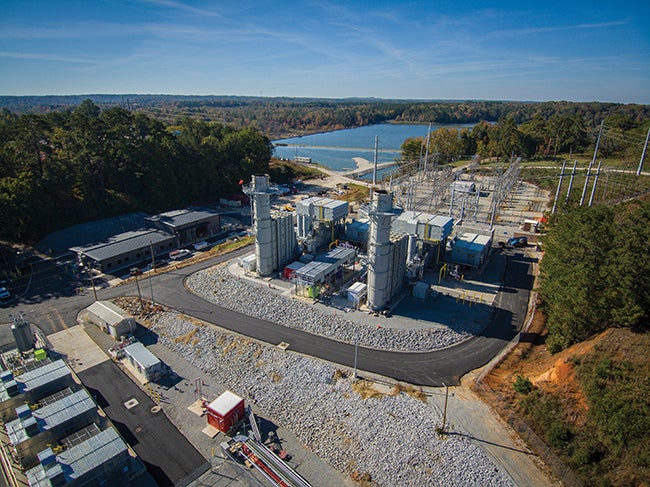
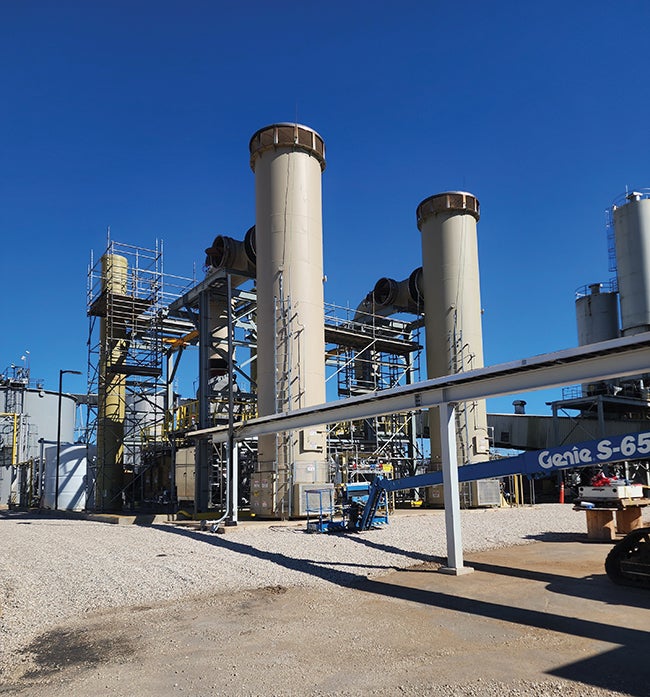
Natural gas added 5,639 MW UCAP year-over-year. PJM said roughly 2,800 MW came from higher accredited UCAP factors on existing units, roughly 2,000 MW from coal-to-gas conversions, about 180 MW from upgrades on existing gas units, and the balance from gas units that had exited the market last year returning as must-offers. Coal lost 2,941 MW UCAP, primarily to retirements and coal-to-gas conversions. Solar added 651 MW UCAP from new or planned resources. Battery and hybrid resources added 273 MW UCAP. Nuclear added 125 MW UCAP. Wind lost 114 MW UCAP even as wind offers rose 139 MW UCAP, a decline PJM attributed to lower ELCC accreditation.
Total supply offered into the auction rose 3,447 MW UCAP, from 136,148 MW to 139,595 MW. Total ICAP eligible to participate in the PJM footprint rose 1,294 MW to 202,288 MW.
Capacity imports from adjacent markets dropped to 1,040.6 MW UCAP from 1,527.1 MW UCAP in the 2024/2025 BRA, the most recent delivery year for which the report cites comparable imports data.
The 2028/2029 BRA was the first auction for which distributed energy resource (DER) aggregations were eligible to offer capacity under FERC Order 2222. Zero DER capacity was offered. Price-responsive demand (PRD) offers also came in at zero, continuing a decline from an approximately 7,500 MW peak in earlier auctions.
Traditional demand response cleared 7,017.4 MW UCAP, or 100% of the DR offered. The largest concentrations were in the AEP zone (1,220.1 MW), ComEd (1,200.3 MW), and Dominion (755.3 MW).
The Three-Pivotal Supplier Test—the market-power screen that determines whether the top three suppliers taken together are pivotal to meeting the reliability requirement—failed at the RTO level. Offer-price mitigation was applied to all Existing Generation Capacity Resources under the Base Offer Price Cap for the auction.
PJM’s report also flags that CETLs in the Mid-Atlantic Area Council (MAAC), Southwest MAAC (SWMAAC), and Dominion LDAs were “significantly impacted” by delayed transmission upgrades, tightening deliverability into those constrained regions in the underlying reliability model.
Two FERC Filings Coming: Backstop Auction and a “Connect and Manage” Framework for Large Loads
PJM has told stakeholders it plans two near-term Section 205 filings at FERC on separate tracks, both flowing from the PJM Board of Managers’ January 16, 2026 decisional letter closing out the Critical Issue Fast Path (CIFP) stakeholder process on Large Load Additions.
The first filing seeks approval for a Reliability Backstop Procurement in September to help close the 6,831 MW gap ahead of the 2028/2029 delivery year. Under the standard 60-day Section 205 review timeline, PJM would need to file by the end of July for a September auction. PJM stakeholders voted this month between a PJM-authored proposal that would size the procurement to the auction shortfall on a state-preference cost-allocation basis, and an alternate willing-buyer proposal advanced by a coalition of electric distribution companies and large data-center loads. A separate joint stakeholder proposal from Constellation, Vistra, AlphaGen, and Earthrise Energy would set the procurement at 100% of the reliability requirement with a $420/MW-day cap and 15-year commitment terms. The stakeholder vote favored the willing-buyer alternate. PJM’s Board of Managers will pick which design goes into the July filing.
The second filing implements a “Connect and Manage” construct for new large loads that do not Bring Your Own New Generation (BYONG). Under the Board’s January 16 decisional letter, new large-load interconnections paired with new generation would qualify for an Expedited Interconnection Track. Large loads that do not pair with new generation would connect faster under a Connect and Manage tariff that accepts curtailment risk during system stress. Bressler said the Connect and Manage framework “is the same backstop that’s referred to in the White House and the governor’s principles” only in the sense that both address the same underlying data-center supply gap. He said “there is only one backstop”—meaning one procurement mechanism—even though the Connect and Manage tariff and the September auction are separate FERC filings.
Two additional initiatives from the CIFP outcome are in progress on longer tracks: a voluntary BYONG tariff construct paired with the Expedited Interconnection Track, and load forecasting improvements covering state review of large-load requests, screening for duplicative requests, benchmarking that may include third-party review, and transparency requirements on data-center customers themselves.
The 2028/2029 BRA ran on a compressed schedule—23 months forward of the delivery year, rather than the roughly three-year forward standard PJM has historically used. The next Base Residual Auction, for the 2029/2030 delivery year, is scheduled for December as PJM works to return to a three-year-forward planning cycle.
Constellation, Vistra, Talen Report Higher Cleared Volumes
Three of PJM’s largest independent power producers reported higher cleared capacity in the 2028/2029 BRA than in the previous auction, according to SEC filings and press releases the companies issued the same day PJM released the results.
Constellation Energy cleared 18,875 MW at $325/MW-day, up from 17,950 MW in the 2027/2028 BRA. The portfolio was 15,700 MW nuclear and 3,175 MW fossil and other resources, with the largest concentrations in the ComEd zone (10,200 MW, all nuclear) and EMAAC (6,550 MW). Gross capacity value for the planning year comes to roughly $2.24 billion at the clearing price.
Vistra Corp. cleared 10,924.4 MW at a weighted-average $325/MW-day, up from 10,566 MW in the 2027/2028 auction. The largest positions were in the broader RTO zone (4,129.9 MW) and ATSI (2,069.5 MW). Implied capacity revenue for the planning year comes to roughly $1.30 billion.
Talen Energy cleared 10,180 MW at $325/MW-day and told investors the auction outcome equates to approximately $1.21 billion in capacity revenues for the planning year. That figure is up from 8,745 MW cleared in the 2027/2028 BRA, the largest year-over-year gain among the three companies.
The three companies’ combined cleared capacity of about 39,979 MW represents 29% of the 138,317.8 MW UCAP that cleared PJM’s 2028/2029 BRA.
Asked at the end of the July 14 briefing whether the results signal that PJM’s supply-side interventions are working, Bressler pointed to the 3,700 MW net increase in cleared UCAP—some of which he attributed to improved winter performance flowing through accreditation values, some to coal-to-gas conversions, and some to returning gas units. “Investors and developers are sort of well aware of the supply and demand condition that exists in the PJM region,” he said, “and I expect that we will continue to see significant interest in development of new supply resources, which is what we really need.”
Mixed Stakeholder Reactions
Stakeholder reactions to the 2028/2029 BRA varied, predictably, along market-design lines. Governors credited the collar for the cost gap the auction did not clear. Independent power producers and demand-response providers pointed to what the collar still costs the supply side. Equity research called the outcome “managed.”
Pennsylvania Credits the Cap for Customer Savings. Pennsylvania Gov. Josh Shapiro (D) tied the $325/MW-day cap directly to the complaint his administration filed at the Federal Energy Regulatory Commission (FERC) against PJM in December 2024 and the January 2025 settlement that first imposed a two-year cap. In a July 15 statement, Shapiro’s office said the extended cap has “saved PJM customers $18.2 billion to date” and, applied to the 2028/2029 BRA, prevented an additional cost that would bring cumulative savings across four auctions to roughly $45 billion—the equivalent of about $800 per household. Pennsylvania is projected to receive roughly $2 billion of the 2028/2029 savings, or about a 9% reduction in average residential bills, roughly $207 per household. Shapiro is pressing for governance reform at the regional transmission organization (RTO) ahead of FERC’s July 23 technical conference and recently signed a Pennsylvania law tightening large-load forecasting requirements.
Maryland Points to State Intervention. Maryland Gov. Wes Moore (D) attributed the $13.3 billion difference between the collared and uncapped clearing prices to the intervention his and Shapiro’s administrations pushed for. Kelly Speakes-Backman, director of the Maryland Energy Administration, said in a July 15 statement that “yesterday’s result demonstrates why state action is necessary to manage regional energy prices,” a direct rebuttal to arguments that state-level pressure on PJM governance distorts wholesale market signals.
EPSA Warns Against Re-Regulation. Todd Snitchler, CEO of the Electric Power Supply Association (EPSA), described the auction as evidence that competitive markets are still producing supply-side response and warned against state re-regulation. In a July 15 statement, Snitchler said “any calls to allow utilities to bypass competitive markets and use non-bypassable charges imposed on captive customer bills to finance new generation should be met with great skepticism.” He cited 811 projects representing roughly 220 GW in PJM’s latest interconnection cycle and more than 130 GW of interest in direct data-center contracts flagged in the RTO’s April request for information—figures EPSA offered as evidence that developers are already responding to price signals the collar suppresses.
BNP Calls the Outcome Managed. BNP Paribas Equity Research described the result as constructive for independent power producers. In a July 15 note to clients, senior analyst Moses Sutton called the 6,831-MW shortfall “manageable—and itself a ‘managed’ outcome given it wasn’t a true reflection of supply/demand.” Sutton warned the $555/MW-day Reliability Backstop Procurement cap PJM has floated for the September auction is “likely insufficient to itself incentivize incremental CCGT build at ~$3,000/kW” and noted PJM forward capacity curves are trading at $66–$68/MWh for 2027–2029. BNP maintains outperform ratings on Talen Energy (TLN), Vistra (VST), NRG Energy (NRG), and Constellation Energy (CEG).
Rodan Sees a Demand-Side Flexibility Case. Paul Grod, CEO of Rodan Energy, translated the clearing price into demand-side terms. In a July 15 statement, Grod said the $325/MW-day outcome equates to roughly $118,625 per MW per year that large power users will pay for capacity—a cost he argued strengthens the economics of demand-side flexibility. Rodan’s FlexOps platform manages more than 1,500 MW of distributed energy resources across North America. Grod’s framing points to the same gap PJM’s report flags: zero distributed energy resource (DER) capacity offered into the first auction eligible under FERC Order 2222.
—Sonal Patel is a POWER senior editor (@sonalcpatel, @POWERmagazine).