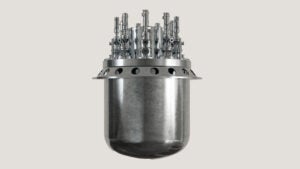
Swedish advanced nuclear developer Blykalla has signed an agreement with Urenco that the companies describe as the world’s first high-assay low-enriched uranium (HALEU) enrichment contract for a commercial lead-cooled reactor. The agreement covers Blykalla’s first commercial 55-MWe Swedish Advanced Lead Reactor (SEALER), which the company plans to deploy in the U.S.
The agreement, signed Nov. 12 at Urenco’s London headquarters and announced Nov. 16, calls for Blykalla to supply the uranium feed and Urenco to enrich the material at its Advanced Fuels Facility in Capenhurst, England. Urenco plans to bring the facility online in 2031 and begin deliveries to Blykalla in the early 2030s.
“We expect to be able to announce more about the location and schedule in the near future,” Blykalla CEO Jacob Stedman said in written responses to POWER.
“Deliveries under the Urenco contract are planned to begin when Capenhurst comes online in the early 2030s, which aligns with the schedule for our first commercial reactor,” he said. “Blykalla holds one of the first contracts on what is set to be one of the first commercial HALEU facilities in the West.”
Neither company disclosed the contract value or the enrichment level specified for the SEALER fuel.
“The quantities under this contract are confidential, but we can confirm that the agreement secures HALEU enrichment for at least our first commercial unit,” Stedman said. “It is a concrete step in executing our fuel supply strategy and provides a foundation for our broader deployment plans.”
Urenco Builds Commercial HALEU Enrichment Capacity
The agreement is Urenco’s third HALEU supply contract. In September 2025, the enrichment company signed an agreement covering Radiant’s Kaleidos microreactor, which Urenco described as the first binding commercial contract by a U.S. advanced reactor developer for Western HALEU enrichment services. A subsequent agreement with Antares Nuclear in May 2026 established a multi-year HALEU supply arrangement.
A February 2026 statement from the U.K. government identified Russia as the world’s only commercial source of HALEU. The U.S. and U.K. are pursuing domestic enrichment capabilities to address anticipated demand from advanced reactor developers and reduce dependence on Russian nuclear fuel supplies. The U.S. ban on imports of Russian low-enriched uranium took effect Aug. 11, 2024, subject to temporary waivers.
The Department of Energy (DOE) defines HALEU as uranium enriched above 5% but below 20% uranium-235, compared to enrichment levels of up to 5% for fuel typically used in the existing commercial reactor fleet. Higher enrichment levels can enable more compact reactor cores, longer operating cycles, and improved fuel utilization. The agency has projected that domestic HALEU demand could reach 50 metric tons annually by 2035.
In May 2024, the U.K. government awarded Urenco £196 million under a program that commits up to £300 million to establish a domestic HALEU supply chain. The Capenhurst facility represents a total investment of approximately £400 million, including Urenco’s contribution. Urenco has outlined an initial production capacity of up to 27 metric tons of HALEU annually and designed the facility to accommodate future expansion.
Blykalla’s Uranium Dioxide Fuel Supply Strategy
The Urenco agreement, notably, covers only the enrichment stage of the nuclear fuel cycle. Blykalla has not identified the suppliers that will provide the finished fuel for its first commercial reactor. “We are developing an integrated sourcing strategy across procurement, conversion, deconversion, and fuel fabrication,” Stedman noted. “The Urenco agreement establishes a clear basis for this work, since it defines the enrichment quantities and delivery schedule around which we can coordinate the other supply chain steps for our first reactor. It also helps define our fuel fabrication requirements, an area where further investment is needed in both the US and Europe.”
Blykalla’s SEALER is a compact, lead-cooled fast reactor designed for factory production and road transport. The small modular reactor (SMR) incorporates the company’s proprietary aluminum-alloyed steel, developed to resist corrosion associated with liquid lead. Lead’s high boiling point allows the coolant to operate at atmospheric pressure, while natural circulation enables residual heat removal without pumps. The company also cites lead’s capacity to retain radioactive iodine and provide gamma radiation shielding as safety attributes.
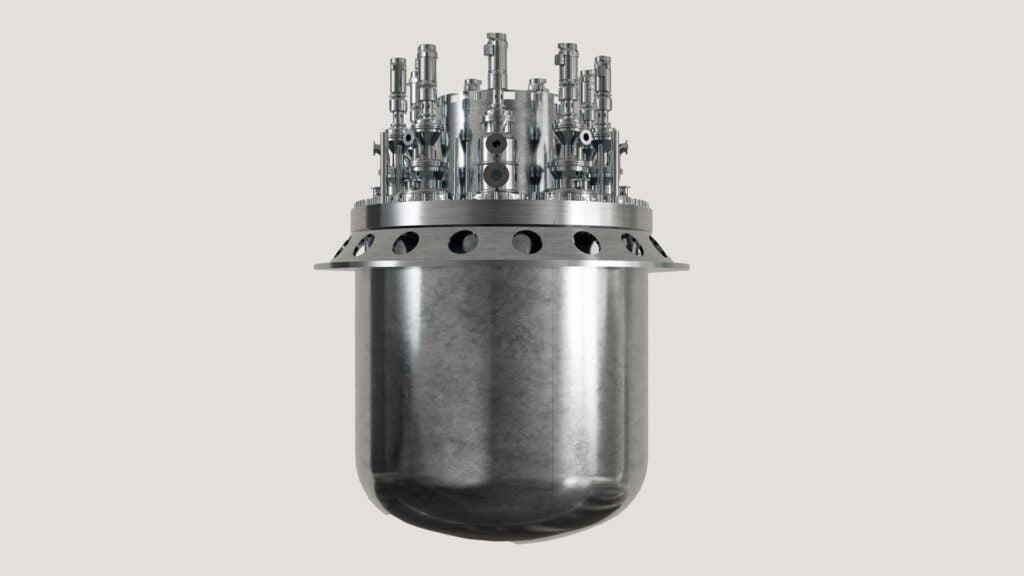
Stedman confirmed that Blykalla has selected uranium dioxide (UO₂)—the predominant fuel material in the existing commercial nuclear reactor fleet—for its SEALER design. “Our choice of uranium dioxide fuel allows us to build on decades of qualification experience and industrial production,” Stedman said. “This provides a strong foundation for fuel development and procurement, with opportunities to draw on capabilities in the light water reactor industry. Our fuel will require qualification for Blykalla’s specific operating conditions, but that established experience can support a faster path to deployment.”
Blykalla Advances U.S. and Swedish Reactor Development
Blykalla’s U.S. development program encompasses Fjäll, its first-of-a-kind nuclear demonstration reactor, and the SEALER-55 for commercial deployment. The company initiated pre-application engagement with the Nuclear Regulatory Commission (NRC) in June 2026 but has not yet filed a license application.
In September, Blykalla opened a technical center in Austin, Texas, to accommodate engineering and reactor development teams. The company also announced a collaboration with Microsoft to incorporate artificial intelligence (AI) tools into its regulatory documentation and licensing processes.
Blykalla has also established a strategic partnership with U.S. sodium-cooled fast reactor developer Oklo. Oklo, Norrsken Launcher, and Armada Investment co-led Blykalla’s $50 million funding round in December 2025. In March 2026, the companies expanded their collaboration to encompass technical work on Oklo’s DOE-authorized reactor pilot project and potential fast-neutron irradiation testing in Oklo powerhouses. Blykalla outlined prospective U.S. commitments of $100 million to $200 million and the involvement of 30 to 40 engineers, subject to final planning and approvals.
In Sweden, Blykalla and Uniper are developing SEALER-E, an electric prototype at the OKG nuclear power plant in Oskarshamn. The company is also pursuing two commercial reactor parks that could accommodate a combined 14 SEALER units.
In May, Blykalla submitted an application to the Swedish government for a six-unit, 330-MW reactor park at Norrsundet in Gävle municipality. In August, it submitted a second application for up to eight units totaling 440 MW at Untra in Tierp municipality. Blykalla targets initial operations at Untra in the first half of the 2030s, contingent on approvals from the Swedish government, regulatory agencies, courts, and Tierp municipality.
“We are coordinating our commercialization efforts in Sweden and the US through a common supply chain strategy,” Stedman told POWER. “We are executing that strategy by securing contracts that give suppliers the demand visibility and commitments they need to invest in additional fuel cycle capacity. Across the two markets, we see opportunities to share fuel suppliers, manufacturing capabilities, and technology qualification work where technical and regulatory requirements allow. Investment in both U.S. and European supply chains will be essential to support our deployment plans and to meet broader SMR demand.”
—Sonal C. Patel is a POWER senior editor (@sonalcpatel, @POWERmagazine).