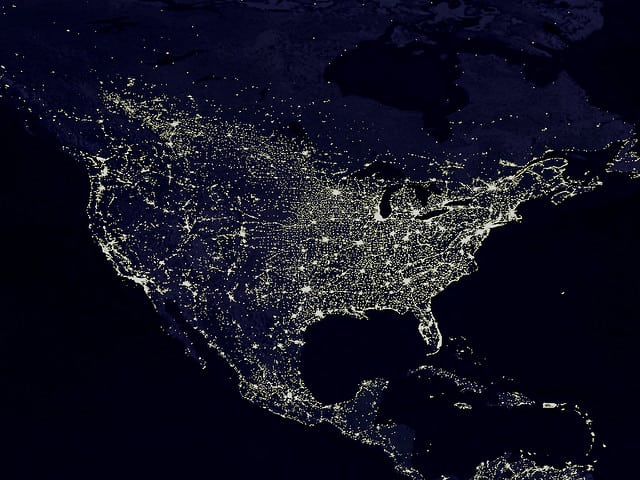
In July 2024, after a fault on a transmission line in Northern Virginia, about 1,500 MW of data center load dropped off the grid all at once.
While concerning, each side’s protection worked as designed: The utility’s automatic reclosing tried repeatedly to restore the line, and each attempt caused a voltage sag. Meanwhile, the data centers’ controls, built to protect sensitive equipment from repeated sags, moved their load to backup power. Grid operators had not anticipated a load loss of that size and had to act to bring voltage back to normal.
The incident typifies some of the ongoing challenges faced by data centers and grid operators.
In response to these types of challenges, an IEEE Standards Association Industry Connections group recently released “Review of Industry Efforts and Standards: Data Center Design for IT Load Protection.” The report reviews current industry practice and identifies where standards work is needed to protect IT loads, while keeping grids stable, and accommodate the next decade of capacity growth.
Questions to Address
Five principal findings—which double as challenges—emerged from our review:
- A widening power gap—Traditional power densities of a few kilowatts per rack are being replaced by AI-driven demands of 10 kW to 100 kW today, with projected racks beyond 500 kW.
- A grid-disturbance conflict is emerging—Large, concentrated data center loads can either degrade grid stability or provide flexibility depending on how their protection and ride-through are engineered.
- A protection mismatch exists—Conventional overcurrent relays expect fault currents of 5–20 per unit, while modern power-electronic converters limit their fault contribution to roughly 1.1–2.0 per unit. Upstream protection can be blind to a fault fed through a converter, so the protection assumptions of the existing standards no longer hold.
- Regulatory evolution is reshaping interconnection—Grid operators, including Electric Reliability Council of Texas (ERCOT), Southwest Power Pool (SPP), and PJM Interconnection (PJM) are imposing new requirements that the industry must meet.
- The standardization gap itself is widening—Data centers are being built faster than the standards they depend on are being written. The report catalogs the relevant standards and shows where the gaps are.
Recommendations
To address these challenges, the IEEE SA Industry Connections report notes that three areas appear to warrant near-term development of standards or guidelines:
- Create a standardized AI load model—The model needs to include definitions of ramp rates, variance, burst duration, and coincidence factors so that transmission planners and data center operators share a common load behavior model.
- Develop a load reporting decomposition standard—This standard should separate data center load from the host utility’s other load and from co-located generation in regulatory filings and interconnection studies.
- Agree on common terms—A workload classification taxonomy should define critical, deferrable, and curtailable categories so that operators and grid coordinators can negotiate flexibility on common terms.
In addition, grid interaction and compliance represent areas where additional standards development may provide significant value. That should be achieved through coordinating ride-through and control settings; establishing protocols for minimum disturbance-telemetry and flexibility signaling; and securing the messages that protection relays exchange, by applying the authentication and integrity requirements of IEC 62443 to the IEEE Std 1815 and IEC 61850 protocols those relays already use.
Finally, the IEEE SA report states that design and infrastructure standards work should focus on three areas: extending dc distribution upstream from the 48 V rack bus toward a low-voltage dc bus at the medium-to-low voltage interface, implementing hierarchical protection, and integrating direct-to-chip liquid cooling for racks above approximately 100 kW, with an electrical specification that supports grid code compliance.
Getting Involved
IEEE SA is encouraging data center operators, utilities and grid operators, equipment manufacturers, and regulators to weigh in on the recommendations. Anyone who wants to take part can use the interest form linked at the end of this article.
In the end, our fundamental objective is to achieve harmony between the data centers and the grid, while helping to improve protection for critical data center loads. This, in turn, implies an urgent need to provide data center developers and operators with specific requirements for interface design and clearly defined, measurable definitions of interoperability needs.
We look forward to all feedback. To learn more about the program and how to join the “Data Centers: Standards Needs Analysis and Recommendations” activity, you can complete the Data Centers: Standards Needs Analysis and Recommendations interest form.
—Wei-Jen Lee chairs the author team that produced the report. He is professor and chair of the Department of Electrical Engineering at the University of Texas at Arlington, an IEEE Fellow, and a past president of the IEEE Industry Applications Society. Ashish Upreti is vice chair of the author team, a co-author of the report, and an IEEE Senior Member. He is a power systems engineer with Google. Marty McEnroe is a co-author of the report and an IEEE Senior Member. He is founder and principal AI architect of ThriveTech.ai, where he works on AI for critical infrastructure. He built Palaestra (palaestra.thrivetech.ai), a competition that measures how large data centers can flex their demand under grid stress. Shalin Savalia is a co-author of the report and an IEEE Senior Member. He is a Senior Electrical Engineer within Data Center Engineering, at Amazon Web Services, where he focuses on electrical infrastructure design and optimization for hyperscale data centers, including power distribution systems, and energy efficiency strategies for AI workloads.