
The State of Texas has opened applications for $350 million in advanced nuclear grants through the Texas Advanced Nuclear Development Fund (TANDF), making the nation’s largest state‑level nuclear package competitive for the first time across two programs aimed at reactor construction and supply chain development. In an exclusive interview with POWER, Texas Advanced Nuclear Energy Office (TANEO) Director Jarred Shaffer said notices of intent are due April 23, with full applications closing May 14.
TANDF’s $350 million funding is divided across two reimbursement programs structured under Chapter 483 of the Texas Government Code, signed into law by Governor Greg Abbott in June 2025 through House Bill 14. The Project Development and Supply Chain Reimbursement Program (PDSCRP) holds $70 million—20% of appropriated grant funds by statute—capped at $12.5 million per award and reimburses up to 50% of expenses tied to technology development, feasibility studies, front-end engineering design, site and environmental characterization, Nuclear Regulatory Commission (NRC) early site permit work, construction permit application preparation, manufacturing capacity development, and fuel processing and fabrication activities essential to the fuel cycle supply.
The Advanced Nuclear Construction Reimbursement Program (ANCRP) holds the remaining $280 million—80% of appropriated funds—capped at $120 million per award. The program covers NRC permit review costs, procurement of long-lead components, and construction activities including fabrication, quality assurance, and installation.
Both programs opened April 1 through a competitive request-for-applications process modeled on federal Notices of Funding Opportunity.
“To power the Texas of tomorrow, we must boost our state’s advanced nuclear capacity,” said Texas Governor Greg Abbott in a statement. “Nuclear energy provides an efficient and reliable energy solution while creating high-wage advanced manufacturing jobs. Through TANEO and the Texas Advanced Nuclear Development Fund, Texas is streamlining the nuclear regulatory environment and making investments to spur a flourishing nuclear energy ecosystem for generations to come.”
Why Texas Is Betting $350 Million on Advanced Nuclear Now
The effort stems from a 2023 directive by Governor Abbott, who asked the Public Utility Commission of Texas (PUCT) to convene the Texas Advanced Nuclear Reactor Energy Working Group to study the industry and recommend strategies to position Texas as a leader in advanced nuclear. Under House Bill 14—authored by Rep. Cody Harris and Sen. Charles Schwertner—the Texas Legislature then charged TANEO to promote advanced nuclear reactors for “dispatchable electric generation while creating high-wage advanced manufacturing jobs,” identify barriers to the financial viability of nuclear energy generation, and support development of an advanced nuclear energy supply chain in the state. The bill passed the House 134 to 9 and the Senate 26 to 5, signaling broad bipartisan agreement.
In This Issue
Full issueThe urgency is strongly driven by Texas’s projected load growth. Load growth projections from Texas grid operator, the Electric Reliability Council of Texas (ERCOT), show peak demand rising from 87 GW in 2025 to 145 GW by 2031 under its adjusted large-load forecast—a 67% increase in six years. Data centers account for the largest single increment, adding more than 24 GW of new demand by 2031, followed by hydrogen production, industrial electrification, and cryptocurrency mining.
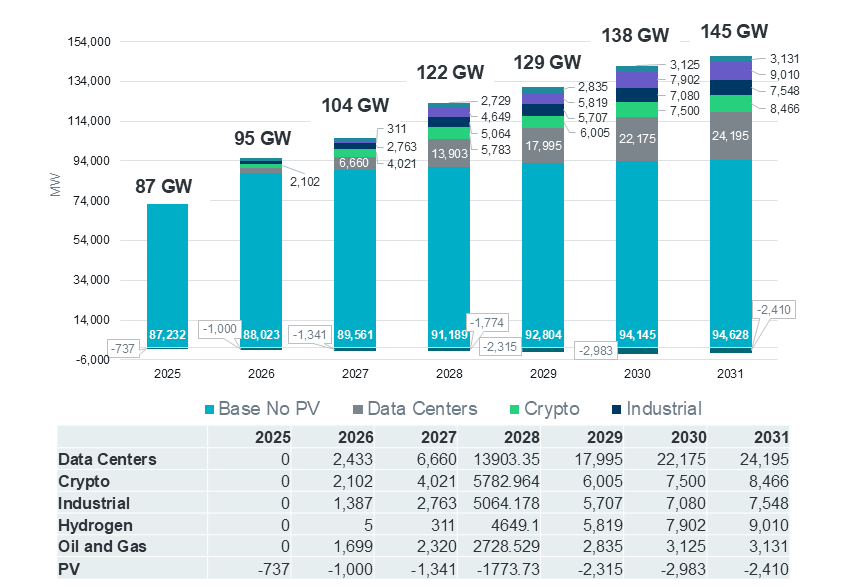
As ERCOT scrambles to keep up with that growth, state officials are increasingly explicit that intermittent renewables and flexible gas alone won’t be enough. The grid has already experienced multiple close calls in recent summers and winters, and large industrial and data‑center customers are pressing for long‑term contracts backed by firm, clean capacity.
“Those three pillars,”—grid reliability, economic development, and supply chain— “really are the basis of this funding,” Shaffer said, stressing that the program is ultimately designed to drive long-term workforce and supply chain development. But another key objective is to shape where and how the industry takes root in Texas, rather than subsidizing individual projects, he said. “We’re also very interested to see who’s interested in applying for us in certain subsegments of what we’re calling the nuclear ecosystem,” he said. “So, primarily for one of the programs, we’re curious about how we can use this grant program to increase the manufacturing capacity and the readiness here in Texas for this industry.”
“While our grant program isn’t a workforce development grant program, the way that we’re structuring how we evaluate applications is this commitment to Texas and its people from the project,” he said. “These are Texas taxpayer dollars. So the way we’re doing this is, how can we get the biggest return on investment out of this?”
Part of that, he added, is deliberately steering money toward manufacturers and industrial employers. “We’ve done a good job on our end to let the reactor side of the conversation know we exist,” he said. “But we’re real keen on seeing if there’s an opportunity to strengthen our manufacturing capacity or help reorient existing players in different manufacturing industries to move toward the nuclear industry—whether that’s on the components or equipment side of the manufacturing conversation. We just want to make sure that people are aware, especially as it relates to the industrial manufacturing supply chain piece.”
A Big Pot of Money with a Narrow Near‑Term Gate
But while Texas has now put $350 million on the table, the near‑term pool of developers who can actually reach the largest part of that money is still small. By statute, the Advanced Nuclear Construction Reimbursement Program (ANCRP)—the $280 million, big‑ticket construction fund—can only sign grant agreements with projects that have an NRC license or permit application “docketed” under §483.204(f) of the Texas Government Code. In practice, that means the NRC has accepted the application for docketing and moved it out of the “pre‑application” lane and into a formal licensing review, which is a stage many advanced reactor concepts have not yet reached.
Shaffer acknowledged that constraint directly. “If we open on Wednesday, we’ve only got two eligible projects in the state that check that docketed box,” he said. Those are the Seadrift Dow–X-energy project on the Texas Gulf Coast—which pairs Dow Chemical as industrial host with X-energy’s 80-MW pebble bed high-temperature gas-cooled reactor—and Fermi America’s four-unit AP1000 plant in the Panhandle, the largest advanced nuclear application pending before the NRC.
To broaden the field, TANEO is allowing developers to apply ahead of formal NRC docketing if they expect to reach that milestone soon. “Any interested applicants that have or expect to have a permit or license docketed at the NRC by the end of this year, please submit an application,” Shaffer said. “We’re trying to extend that further to create more competition in our programs.”
At the same time, the office is balancing pressure to demonstrate near-term progress with the long lead times and regulatory hurdles inherent in project development. “It’s a way of us trying to kind of thread that needle between internal resource management [and] showing success from this program going into the next legislative session in January of next year,” Shaffer said. TANEO also wants “to expand that pool of eligibility by giving a little bit more time so we can get more competition into that second program,” he added.
Who Can Actually Use the Money?
So far, alongside the two fully eligible projects, TANEO has heard from a broader roster of companies exploring Texas. These include Aalo Atomics, Last Energy, Zetta Joule, Blue Energy, and Oklo’s wholly owned subsidiary, Atomic Alchemy.
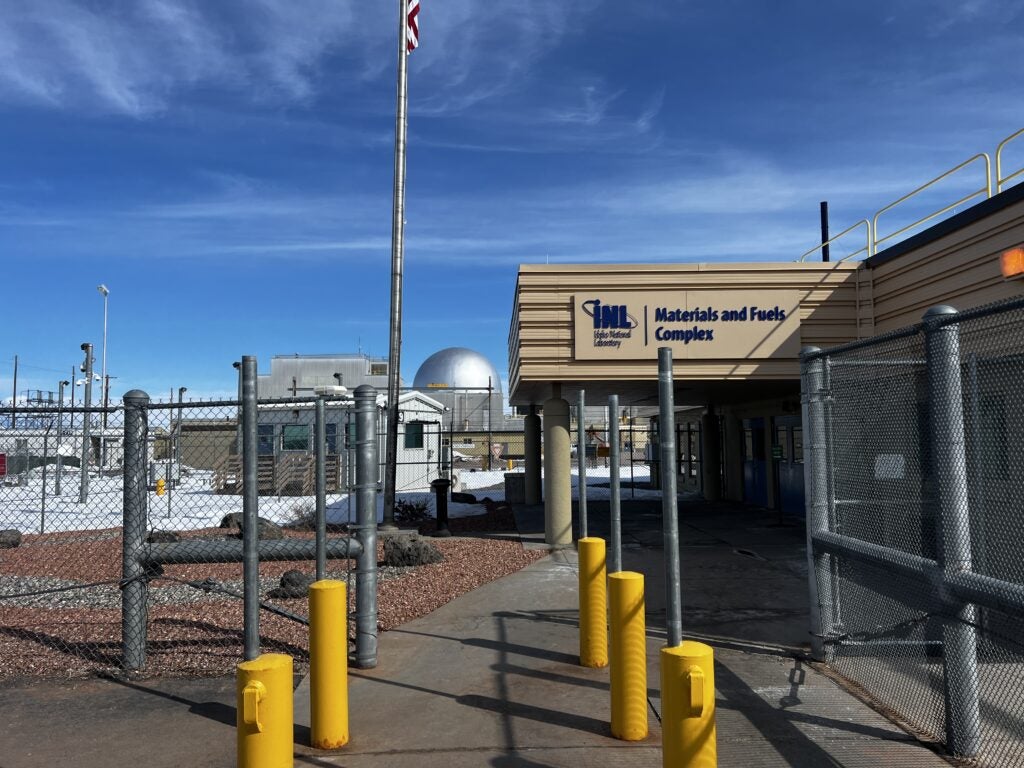
Aalo Atomics, an Austin-based sodium-cooled fast reactor developer selected for the DOE Reactor Pilot Program (RPP), is targeting cold criticality at INL by July 4 and full-power operations by year’s end, building toward a commercial product of five reactors connected to a single turbine aimed at data center customers and a goal of 1 GW of deployed capacity by 2030. Last Energy is developing a 20-MW pressurized-water-reactor microreactor at a Texas site under active construction.
Zetta Joule, meanwhile, has signed a memorandum of understanding with Texas A&M’s Engineering Experiment Station to develop a high-temperature helium-cooled, graphite-moderated research reactor, an effort it told POWER could cost $500 million to $850 million, and will be designed as both an industrial process-heat demonstration for Gulf Coast refineries and hydrogen producers and a workforce development platform. Blue Energy, which is working with data center firm Crusoe on a 1.5-GW gas-to-nuclear project at the Port of Victoria, is structured around a combined-cycle gas plant whose steam supply converts to a small modular reactor (SMR). It plans for major components to be prefabricated in Gulf Coast fabrication yards and barged to the site to reduce cost and schedule risk. Oklo’s wholly owned subsidiary Atomic Alchemy received DOE approval of its Nuclear Safety Design Agreement (NSDA) in March for the Groves Isotopes Test Reactor in Lockhart—a radioisotope production facility under the RPP targeting criticality by July 4, 2026.
Natura Resources, which holds a docketed NRC permit for its molten salt research reactor at Abilene Christian University (ACU) in Abilene, is eligible only for the PDSCRP, Shaffer noted. The company received $120 million in prior state appropriations through Texas Tech University, which bars it from the ANCRP under §483.202(c) of House Bill 14.
How DOE Pathways and NRC Docketing Interact
For now, many of the developers most aggressively pursuing Texas sites are working through DOE‑centered pathways, including the DOE Reactor Pilot Program and potential authorization under 10 C.F.R. Part 830, rather than a conventional NRC Part 50 or Part 52 license for their first reactor.
TANEO’s adopted rules acknowledge that reality—albeit on the back end. Once a project has an NRC‑docketed application and a grant agreement in place, TANEO may accept certain DOE approvals in lieu of NRC milestones when it sequences disbursements, under a carve‑out added in response to public comments.
What the office cannot do is waive the NRC gate itself. “We’re going to stick to the statute, and we might have an opportunity next session to better accommodate some of this new DOE authorization pathway,” Shaffer said. “We will stick with that eligibility requirement and won’t move forward on anybody that doesn’t have a docket or a license, at least for this opportunity. It’s not to say that that won’t be more of an explicit option moving forward after the next legislative session.” It means, in practical terms, until lawmakers change the law, no project can tap the $280 million ANCRP pot without at least filing with the NRC and getting its application docketed, even if its first unit otherwise lives on a DOE pathway.
House Bill 14 authorized a third mechanism—the Completion Bonus Grant Program (CBGP), a per-megawatt grant awarded at successful ERCOT interconnection, administered through the PUCT. The Legislature, however, did not appropriate money for it in House Bill 500, the state’s general appropriations act for the 2026–2027 biennium. No PUCT rulemaking for the program has been published. Until the Legislature funds CBGP, the Texas incentive stack has no payment tied to commercial operation.
But for TANEO, the grant is only one piece of a broader project viability test. “We are trying to assess the viability of this project being completed,” Shaffer said, “and then also how important the expenses associated with the $120 million towards the project are.”
The fund’s design, notably, also implicitly favors small modular and other advanced reactors over gigawatt‑scale builds. ANCRP grants are capped at the lesser of 50% of qualifying construction costs or $120 million per project, a level that can materially support an 80‑ to 400‑MW program but is modest relative to a multi‑unit large‑reactor site. In the rulemaking record, Fermi America argued that the cap does not scale to a four‑unit AP1000 project and that many of the most capital‑intensive activities—site engineering and long‑lead procurement—occur before NRC docketing, when ANCRP funding is not yet available. TANEO responded that both the cap and the docketing prerequisite are set in statute, which effectively leaves the current structure calibrated to advanced and modular technologies rather than to full‑size nuclear builds.
Texas Plays a Long Game on Workforce and Supply Chain
In adopting the rules, notably, TANEO considered comments from Dow, Fermi America, Last Energy, Pacific Square, and X‑energy that pushed on workforce, manufacturing, bankability, and flexibility for large projects. Commenters urged the office to spell out workforce and education investments as eligible project elements, to narrow its waiver authority, to clarify when and how clawbacks would apply, and to scale the $120 million ANCRP cap and pre‑docketing restrictions for multi‑unit AP1000‑class builds. TANEO largely declined to change the rules, stressing its constitutional bar to creating any entitlement to grant funds and its preference to handle workforce, milestones, and repayment terms on a case-by-case basis through grant agreements rather than through prescriptive rule text.
For Shaffer, delivering on the Legislature’s goals will depend less on any single project and more on whether Texas can build and retain the people and factories to support an advanced nuclear sector over decades.
“I think it’ll be very important for the industry, and also the state of Texas, as it tries to position itself as one of the leaders in this space,” Shaffer said. “It really is the workforce development and the supply chain. While our grant program isn’t a workforce development grant program, the way that we’re structuring how we are going to evaluate applications is this commitment to Texas and its people from the project.”
That includes asking developers to show how they will connect into existing education and training systems. “We want the applicants to show us their commitment to Texas, either it be an apprenticeship opportunity or working with the community college to provide an opportunity,” Shaffer said. “Have they engaged the local school districts? What is their community outreach plan? This is going to be real critical for the success of the industry, starting first at the community and really making that engagement and acceptance a priority.”
“There’s not going to be one little silver bullet that gets us to where we need to be,” he added. “But maybe, if we can approach it from many different angles, then maybe we can get there.”
—Sonal C. Patel is senior editor at POWER magazine (@sonalcpatel, @POWERmagazine).
Editor’s note: This article is being actively updated as new information becomes available.