
T&D
-
 Commentary
Power Generation in the Age of AI: Year-End 2025 Outlook
In early 2020, the prevailing narrative in the power sector was a continuation story of the developments from the decade before: renewable buildout will keep compounding, thermal capacity will keep retiring (albeit at a slower rate), markets will evolve to compensate for flexible generation products, capital will keep moving earlier in the development value chain […]
-
 Data Centers
Data Centers, the Grid, and the Assumptions That Don’t Hold Up
The power sector is grappling with a fundamental mismatch: hyperscale data centers demand electricity at unprecedented speed and scale, while the infrastructure to serve them operates on timelines measured in years, not months. According to Stephen Empedocles, PhD, founder and CEO of Clark Street Associates (CSA), an advisory firm specializing in government funding for technology […]
-
 Press Releases
NKT Completes Investment of New Test Hall and Capacity Expansion at Swedish Cable Accessories Site
To support the high demand for high-voltage power cable accessories in Europe, NKT has invested in the construction of a new test hall, the expansion of production capacity, and a new office building at its cable accessories factory in Alingsas, Sweden. The new facilities are now fully operational, enhancing both the factory’s capacity and its […]
-
 Press Releases
GE Vernova to Modernize a Key High-Voltage Power Transmission Link in India
Contract from POWERGRID for Chandrapur 2 x 500-MW back-to-back high-voltage direct-current (HVDC) link Scope includes advanced HVDC controls and valves, delivered from GE Vernova’s facilities in India First HVDC refurbishment project awarded to GE Vernova in India GE Vernova Inc. announced that its Electrification Systems business has been awarded a contract by Power Grid Corp. […]
-
 Legal & Regulatory
Permitting the AI Boom: A New NEPA Landscape for Energy Infrastructure Projects
In the push for more efficient and streamlined permitting processes, recent changes from Congress, the U.S. Supreme Court, and the executive branch have reshaped the National Environmental Policy Act (NEPA) landscape.
-
 T&D
T&DPrisma Photonics Deploys Grid Monitoring Equipment in California
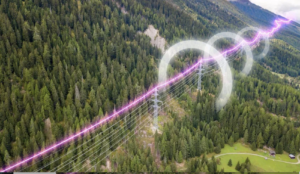
Prisma Photonics, a global provider of advanced optical fiber sensing technology, announced a trial deployment with California’s Pacific Gas and Electric Company (PG&E) to deploy grid monitoring solutions traversing some of California’s most challenging geographic areas in San Luis Obispo and Humboldt counties. The project comes as California’s electrical grid faces surging data center demand, […]
-
 Press Releases
SmartestEnergy US Partners with GridBeyond to Optimize Three Energy Storage Resources in ERCOT Totalling 29.7 MW
SmartestEnergy US, part of a global energy company helping businesses navigate the energy transition, has selected GridBeyond, a global smart energy company, as its technology partner to optimize battery energy storage systems (BESS) in the Electric Reliability Council of Texas (ERCOT) market. The strategic partnership will leverage GridBeyond’s advanced price forecasting, bid optimization, and trading […]
-
 Commentary
Why Smarter Interconnection Must Power the Next Phase of Solar Growth
The demand for distributed generation (DG) solar has never been higher, yet many projects are getting stuck before they even break ground. The problem is utility interconnection. For community or net metered solar systems in the 1 MW to 5 MW range, in particular, the utility’s review of whether the grid can handle new power […]
-
 T&D
T&DTransmission Lines Will Determine America’s Power Future
For decades, U.S. electricity demand was steady, allowing utilities to plan gradual growth and maintain the grid with modest upgrades. That era is over. The convergence of electric vehicles (EVs), data centers, technology advancements, and population growth and shifting is driving an unprecedented surge in electricity demand. According to the National Electrical Manufacturers Association (NEMA), […]
-
 Press Releases
Siemens and Samsung C&T Partner to Drive Next-Generation Infrastructure Projects
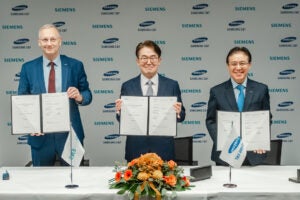
The Global partnership agreement combines Samsung C&T’s EPC expertise with Siemens’ leading capabilities in digitalization, electrification, and automation Collaboration to focus initially on six landmark infrastructure projects in Saudi Arabia, Thailand, and Canada Joint efforts to deliver differentiated, customer-centric solutions in airports, hospitals, buildings and data centers The partnership enables a unified “ONE Tech Company” […]
-
 T&D
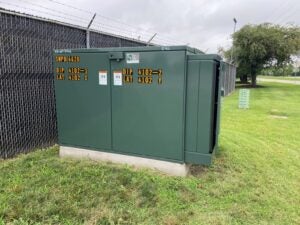
T&DLarge Utility Automates Underground System, Sees Reliability and Restoration Time Improvements
Ameren Missouri faced a pivotal moment in its growth and reliability journeys. The large investor-owned utility identified a high-risk section in its St. Louis-area service: aging manual switchgear combined with a growing base of commercial and industrial customers. This need was made evident by: Extended Outages. Cable faults caused lengthy outages that were difficult to […]
-
 Power
PowerUsing Data to Drive Power Decisions with Energy Management as a Service (EMaaS™)
Sponsored by:Sunbelt RentalsPower requirements for industrial and utility operations change constantly, creating a mismatch with static power solutions. This whitepaper discusses Energy Management as a Service (EMaaS™) and how it transforms temporary power into actively managed systems. Key topics include: How load analysis, real-time monitoring, and specialized expertise optimize power delivery and performance Applications for infrastructure transitions, […]
-
 T&D
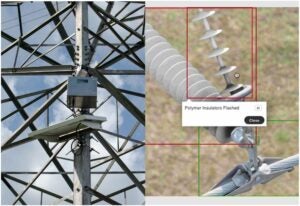
T&DAI’s Growing Appetite: What the Grid Needs to Keep Up
The rise of artificial intelligence (AI) isn’t just transforming industries; it is also transforming the energy grid. Behind every AI breakthrough lies a massive surge in computing power, and with it, an unprecedented demand for reliable and affordable electricity. As the U.S. positions itself for continued technological leadership, meeting the energy needs of AI data […]
-
 Instrumentation & Controls
Selecting the Right Calibration Software for Power Generation Facilities
Sponsored by:BeamexAccurate calibration is essential in power generation, where reliability and compliance must work together. The Beamex Calibration Software Buyer’s Guide explains how digital calibration management helps reduce manual errors, streamline operations, and support compliance with standards such as ISO 17025. It outlines key software features, vendor evaluation criteria, CMMS and ERP integration options, and return-on-investment […]
-
 T&D
T&DPuget Sound Energy, Heimdall Power Launch Smart Sensor Transmission Line Project
Northwest U.S. utility Puget Sound Energy (PSE) has joined with Norway-headquartered Heimdall Power on a dynamic line rating (DLR) pilot project in Washington state. The companies on October 22 said Heimdall is installing 75 advanced monitoring devices, known as “Neurons,” on about 100 miles of electricity transmission lines across five counties in western Washington.
-
 Power
PowerNitrogen as the Safety Blanket for Your Industrial Process
Sponsored by:AIr ProductsIn this paper, Air Products’ representatives explain the basics of nitrogen blanketing, how to elucidate its various value propositions to maximize safety and efficiency, as well as how to practice it effectively and efficiently across a variety of industrial settings. Download the full white paper to learn more.
-
 Commentary
Energy: The Most Critical 7% of America’s GDP
The true engine of America’s economy might surprise you. It’s not tech. It’s not artificial intelligence, finance, or manufacturing. It’s energy. Energy accounts for just 7% of America’s gross domestic product (GDP), but, as former FERC Chair Mark Christie put it, “it’s the foundational 7% … everything else in our economy and lifestyle flows from it.”
-
 Finance
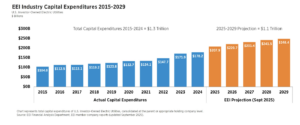
Investor-Owned Utilities to Spend $1.1T in Grid Boost as Power Demand Spirals
America’s investor-owned electric companies are poised to deploy record-setting investment to launch one of the most aggressive infrastructure modernization campaigns in industry history in a bid to confront unprecedented electricity demand growth and prepare for a fundamentally transformed energy landscape. In total, over the next five years, the industry is poised to invest more than […]
-
 Engineering
Mining Our Nation’s Scrap to Transform Our Electric Grid
Today’s demand for energy is extraordinary and expected to continue rising. The rapid growth of data centers, reshoring manufacturing operations and electrification of transportation has accelerated the market demands for electricity. Rethinking how industries use, and re-use materials is central to both the future of the electrified world and the work of Nucor, North America’s […]
-
 Electrification
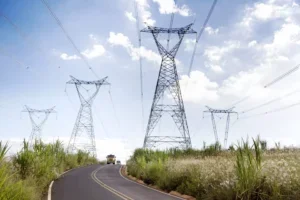
Hitachi Energy, Grid United Advance North Plains Connector to Link Eastern and Western Grids
Hitachi Energy and high-voltage interregional infrastructure developer Grid United have launched the next phase of a collaboration to strengthen transmission capacity between three energy markets straddling the Eastern and Western grids in the U.S., formalizing an agreement for the North Plains Connector (NPC), a ±525 kV, 3-GW high-voltage direct-current (HVDC) line spanning roughly 420 miles […]
-
 T&D
T&DModernizing Central America’s Multinational High-Voltage Backbone
Grid operator Empresa Propietaria de la Red (EPR) is modernizing Central America’s 230-kV SIEPAC backbone with advanced communications, fault-location tools, and cybersecurity to meet the unique challenges of a multinational high-voltage grid.
-
 Nuclear
Igniting Fusion: The Key to Closing Our Energy Gap and Powering the Future
Fusion is the only technology that can deliver continuous, dispatchable power 24/7/365. Not only is fusion clean, sustainable, and cost-effective, but fusion plants can also be built into existing urban and industrial locations, plugging directly into today’s grid, significantly lowering development time and deployment costs.
-
 Research and Development
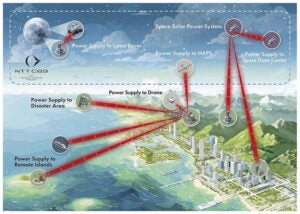
Laser Wireless Power Transmission Breakthrough Could Transform Remote Energy Delivery
NTT Inc. and Mitsubishi Heavy Industries Ltd. (MHI) conducted an optical wireless power transmission experiment using a laser beam to wirelessly transmit energy over a distance of one kilometer. By irradiating a laser beam with an optical power of 1 kW, the team succeeded in receiving 152 W of electric power. This marks the world’s […]
-
 O&M
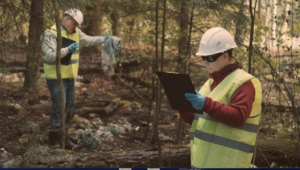
O&MWildfires and Outages: How AI Can Fix Utility Vegetation Management
Vegetation is a much-needed part of the natural world and is essential for life to thrive on Earth. Yet, when unmanaged, it’s also one of the greatest threats to the grid and a leading culprit for causing outages. Fallen branches topple powerlines, roots damage underground cables, and overgrown trees close to energized wires are known […]
-
 Trends
Why Power Plants Need AI That Engineers Can Trust
America’s power producers face growing pressure to do more with less. A rapidly evolving grid, increasing demand, aging infrastructure, and policy uncertainty have created a system where traditional approaches to reliability are no longer enough. The North American Electric Reliability Corporation (NERC) recently issued its 2025 RISC report, highlighting the leading risks facing America’s power […]
-
 Data Centers
Eaton Offers Solution to Detect AI-Related Load Spikes for Power
Intelligent power management company Eaton said it has launched technology for identifying large fluctuations in energy demand from artificial intelligence (AI) computing infrastructure. The edge-based solution, available via a firmware update for its Eaton Power Xpert quality (PXQ) event analysis system, helps detect AI power bursts, including potential subsynchronous oscillations (SSO) in data centers. The […]
-
 Trends
Transforming the Grid: Forging a Path to Resilience
The U.S. power grid has delivered electricity reliably for decades. However, today the grid faces challenges that are driving transformation, reshaping its operational scope and the technologies on which it relies.
-
 T&D
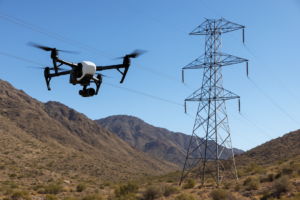
T&DThe Role of Autonomous Drones in Long-Range Transmission Line Inspections
Inspecting and monitoring long-distance transmission lines has always been both costly and dangerous for utilities. Networks that stretch across remote, rugged terrain make traditional methods like climbing towers, deploying helicopters, or sending out ground crews resource-intensive and risky for workers. Today, autonomous drones are changing this process by offering a faster, safer, and more cost-effective […]
-
 Commentary
AI and the Grid: Smarter Paths to Renewable Integration and Grid Modernization
According to the U.S. Department of Energy, more than 70% of the nation’s grid transmission lines and transformers are more than 25 years old, straining under the pressures of rising electrification and renewable integration. As power producers, utilities, and grid operators push toward decarbonization targets, the need for more intelligent, responsive, and resilient grid infrastructure […]
-
 T&D
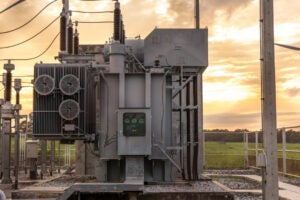
T&DIt’s Time to Listen to Transformers
A transformer fire at Heathrow Airport earlier this year triggered cascading power outages, cutting electricity to more than 66,000 homes, grounding more than 1,300 flights, and causing losses of up to £100 million. According to a recent report, the fire started because of a fault in a 50-year-old asset that subsequently led to short circuiting […]