
Instrumentation & Controls
-
 Nuclear
THE BIG PICTURE: Nuclear I&C
Progress in electronics and information technology has created incentives to replace traditional analog instrumentation and control (I&C) systems in nuclear power plants with digital I&C systems, or systems based on computers and microprocessors. About 40% of the world’s operating reactors have been modernized to include at least some digital I&C systems, according to the International […]
-
 Instrumentation & Controls
Drum Level Instrumentation Update
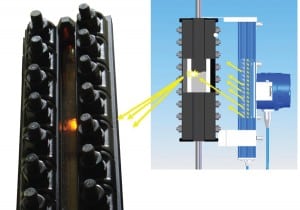
Accurate knowledge of the water level in any boiler drum application is an absolute necessity. While operating a boiler with low water level is one of the leading causes of boiler failure, operating with a high water level may produce less-than-optimal steam, as well as damage to the steam turbine by moisture carryover.
-
 Instrumentation & Controls
Plant Automation Advancements: The Australian Experience
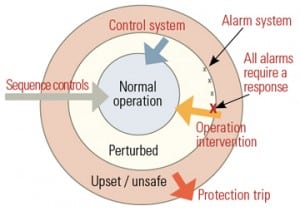
Many recent utility greenfield and rehabilitation power projects have incorporated plant automation, with the goal of reducing the number of operators needed. The essential design principle is to specify control systems and field devices that will achieve the desired operational regime. Here’s how it’s done “Down Under.”
-
 Instrumentation & Controls
Coordinated Feedwater Heater Energy Control
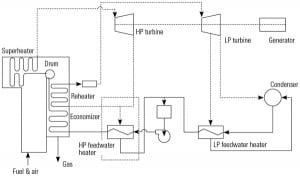
The increased use of intermittent renewable energy sources and the shift to gas-fired combustion turbines places new burdens on the dispatch of many coal-fired units. Steam units must now operate at very low minimum load while maintaining the ability to ramp up and down quickly. High-pressure feedwater heater energy control can improve the system response of such coal-fired units.
-
 Instrumentation & Controls
Thermocouple Response Time Study for Steam Temperature Control, Part II
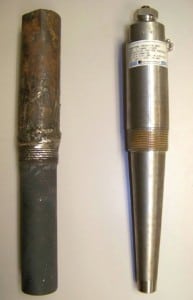
Mismatched or poorly maintained temperature sensors and thermowells can cause an often-unrecognized error in steam temperature measurement. The problem is often recognized only when sluggish steam temperature response times are noticed. Recent tests suggest some simple ways to resolve the problem.
-
 Environmental
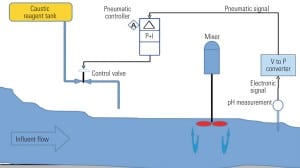
Sediment Pond Effluent pH Control
Many power plants have sediment retention ponds that require control of pH for the effluent. The following guidelines for fossil plant sediment pond pH control will help you design a robust system while staying within budget.
-
O&M
DHS: USB Drives Spread Malware in Control System Environment at Two Power Plants
A report by the U.S. Department of Homeland Security (DHS) Industrial Control Systems Cyber Emergence Response Team (ICS-CERT) reveals that infected USB drives spread common and sophisticated malware in the control systems at two power plants in separate incidents late last year.
-
 Instrumentation & Controls
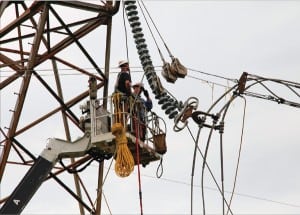
The Electric Grid: Civilization’s Achilles Heel?
Solar flares have proven destructive effects on transmission grids, but there are many other “black swan events” that threaten modern civilization. Experts disagree about which protective steps should be taken today.
-
O&M
As Cybersecurity Bill Dies, Newly Declassified Report Underscores Grid Vulnerabilities
Despite growing concern about cybersecurity both in and outside of Washington, the Senate’s cybersecurity bill died a second time on Nov. 13. The apparent inability of Congress to pass legislation designed to protect critical U.S. infrastructure could lead to President Barack Obama implementing some of the bill’s provisions via executive order. A day after the bill failed to gain 60 votes for passage, a recently declassified report was released that finds the U.S. power grid is vulnerable to attacks that could be more destructive than natural disasters such as Hurricane Sandy.
-
 Nuclear
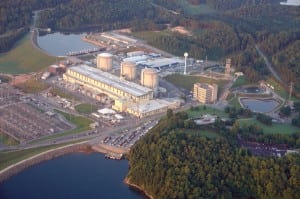
Top Plant: Oconee Nuclear Station, Seneca, South Carolina
With license extensions for its three units in hand, Duke Energy’s Oconee Nuclear Station began a digital controls upgrade program in 2006, and in January 2010, AREVA became the first supplier to receive Nuclear Regulatory Commission approval for a safety-related digital instrumentation and controls system.
-
Instrumentation & Controls
Chinese Hackers Blamed for Breach of Telvent’s SCADA-Related Network
Cyber attacks on the utility industry are no longer theoretical. According to multiple sources, smart grid technology vendor Telvent told U.S., Canadian, and Spanish customers on Sept. 10 that hackers had broken through its firewall and accessed “project files” related to its OASyS SCADA system. On Wednesday, reports surfaced that, based on the perpetrators’ “digital fingerprints,” the attack appears to be the work of a well-known Chinese hacker group.
-
 Distributed Energy
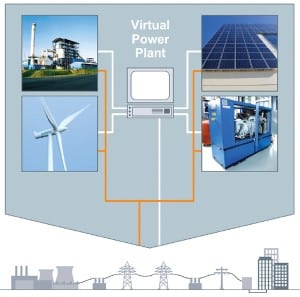
The Rise of the Virtual Power Plant
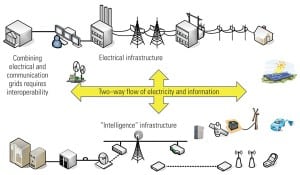
Siemens Infrastructure & Cities and Munich city utility Stadtwerke München (SWM) this April put into operation a virtual power plant (VPP), linking several small-scale distributed energy sources and pooling their resources so they can be operated as a single installation (Figure 1). The project comes on the heels of a February 2012 expansion of a […]
-
 Instrumentation & Controls
Guidance on Cybersecurity for the Electricity Sector
The cybersecurity needs of the electric power industry are unique, due to the critical nature of the product and the wide range of technologies that must be considered—from complex, modern industrial control systems to aging infrastructure elements.
-
 O&M
O&MImprove Condenser Performance Through Better Instrumentation
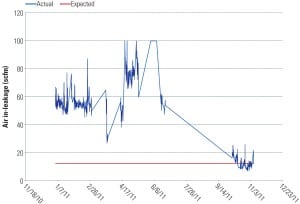
Most power plants use some form of condenser performance-monitoring protocol. Some of those protocols are deficient because the proper instrumentation is not installed to collect the necessary data. Three case studies illustrate how collecting good condenser performance data enabled plant staff to troubleshoot problems and make good plant performance improvement decisions.
-
 Instrumentation & Controls
Ensuring the Cybersecurity of Plant Industrial Control Systems
Industrial control systems (ICSs) manage global industrial infrastructures, including electric power systems, by measuring, controlling, and providing a view of control processes that once were visible to the operator but now are not. Frequently, ICSs are not viewed as computers that must operate in a secure environment, nor are they often considered susceptible to cybersecurity threats. However, recent cybersecurity failures have proven these assumptions wrong.
-
Instrumentation & Controls
Upgraded Controls Position McIntosh Plant for Efficient Operations
Lakeland Electric’s C.D. McIntosh, Jr. Power Plant is a microcosm of the entire power generation industry. On a single site is a once-baseload coal-fired plant that is now operating fewer hours plus a peaking gas-fired combined cycle plant that has swung to baseload operation. A complete controls upgrade of the gas-fired plant last year prepared the plant for its expanded role in producing electricity for this 108-year-old public power provider.
-
 O&M
O&MIntelligent Control of FBC Boilers
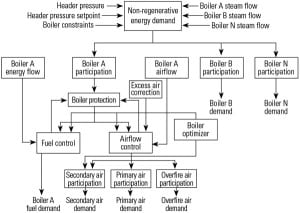
Optimizing combustion control is critical to reducing emissions and increasing plant operating efficiency, particularly for fluidized bed combustion (FBC) boiler plants burning biomass fuel that has unpredictable moisture content. The secret: measuring actual energy flow.
-
 Instrumentation & Controls
Power Generation: Automation Today and Tomorrow
Handheld smart devices providing custom applications and Internet access at the touch of a virtual button are common today. Hidden beneath their touchscreens is a global network of digital technologies that respond to each command. Will these familiar commercial technologies and apps make their way to industrial digital control systems?
-
 Nuclear
Comprehensive Asset Management for Nuclear Plant
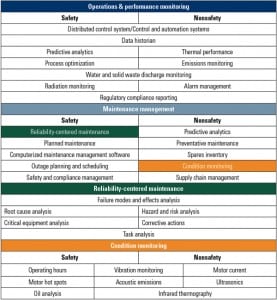
Asset management means different things to different people. But it boils down to converting raw data and observations about equipment and components into information and knowledge that is then used, propagated, and shared by workers and digital components to manage performance. Nuclear plants have special asset management needs, given the level of their safety, reliability, and regulatory requirements.
-
 Coal
CoalEnhanced Load Dispatch Rate and Furnace Protection Through Model Predictive Control
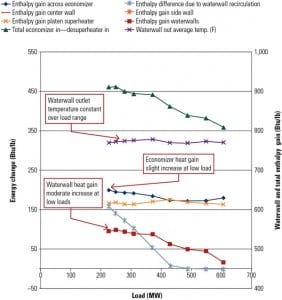
The enhanced plant performance achieved at the 1,477-MW Morgantown Generating Station shows the value of model predictive control in conjunction with intelligent distributed control algorithms. This project update looks at how the project team moved from ramp rate improvements to reducing tube metal temperatures to improved component life.
-
 Instrumentation & Controls
Monitoring Control Loop Performance
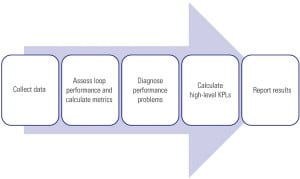
Control loop performance-monitoring software can help to improve loop performance at electric power plants by automatically collecting data, assessing several aspects of loop performance, and providing the results in reports and user interfaces.
-
 Nuclear
Specifying Nuclear DCS Power Supplies
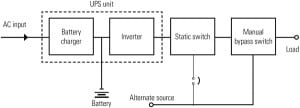
The consideration of power supplies has become critical to the success of converting analog instrumentation and control systems to digital control systems (DCSs). Careful planning is particularly necessary for nuclear power plants, where instrumentation systems are required for safely shutting down a reactor, mitigating the consequences of an accident, and performing post-accident analysis.
-
 Nuclear
Crossing the Digital Divide
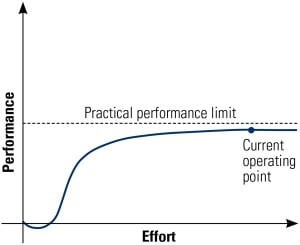
One of the great successes of the power generation industry over the past two decades has been the significant increase in nuclear plant reliability and other performance standards. However, there is reason to be concerned that the design, operation, and maintenance practices used by the current fleet of plants do not leverage all the possible advantages from a digital controls upgrade. Perhaps past success is the biggest barrier to future success.
-
 Instrumentation & Controls
Managing Equipment Data Through Asset Virtualization
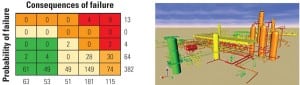
Asset “virtualization” extends and combines the technologies of 3-D visualization and virtual reality to a new, practical level for the life-cycle management of power industry equipment. All pertinent data for a component, subsystem, or plant is associated with, stored, and accessed through as-built 3-D digital models of the actual plant that are constructed using laser scanning techniques.
-
Instrumentation & Controls
NERC CIPS Update: The Advantages of an Integrated Factory Acceptance Test
When adding, modifying, or upgrading a system, many critical infrastructures conduct a factory acceptance test (FAT). A FAT includes a customized testing procedure for systems and is completed before the final installation at the critical facility. Because it is difficult to predict the correct operation of the safety instrumented system or consequences due to failures in some parts of the system, a FAT provides a valuable check of these safety issues. Similarly, because cyber security can also impact the safety of critical systems if a system is compromised, it makes sense to integrate cyber security with the FAT.
-
 O&M
O&MThe New Water Lab
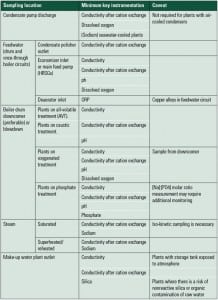
Recent advances in water laboratory instrumentation—from improved sample conditioning to advanced online instruments—have reached the market. Here’s a look at the equipment you’ll find in the best-equipped power plant laboratory this year.
-
Instrumentation & Controls
Twin Pac Controls Upgraded
In November 2008, a central Texas utility commissioned HPI, a full-service turbomachinery design and construction firm based in Houston, to perform a major upgrade of its plant’s power distribution and turbine control systems.
-
 O&M
O&MArtificial Intelligence Boosts Plant IQ
Neural networks have already found practical application in many plants, and recent advancements in artificial intelligence promise to shape the design of the next generation of power plant supervisory controls. Will future plant operators be fashioned from silicon?
-
 Instrumentation & Controls
K-Power Upgrades Combined- Cycle Automatic Generation Controls
Tightly managed grids require combined-cycle plants equipped with power block controls that can quickly respond to automatic generation control signals with minimal error. K-Power’s successful controls upgrade demonstrates that that goal—and more—is achievable.
-
 Instrumentation & Controls
Fully Automating HRSG Feedwater Pumps
Modern distributed control system platforms can provide many tools to capture best operating practices and automate them. This case study shows the steps taken to automate a hypothetical simplified feedwater pump system for a combined-cycle power plant. It describes a combination of controls automation strategies and human-machine interface techniques designed to increase the overall level of automation while improving ease of use.