
Hydro
-
 Hydro
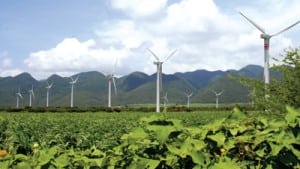
HydroPower in Mexico: Renewables Remain More Desired than Real
Mexico has already developed substantial large hydro and geothermal resources. However, without policy changes and government-sponsored financial incentives, unconventional renewable sources are taking the equivalent of baby steps.
-
 Hydro
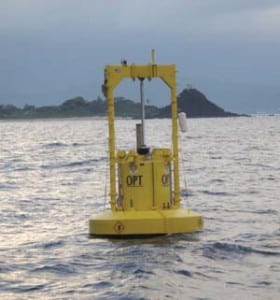
HydroMarines Get Power from Waves
Ocean Power Technologies Inc. (OPT) announced on Feb. 1 that it had successfully deployed one of its PowerBuoy wave energy devices about a mile offshore from a U.S. Marine Corps Base on the island of Oahu in Hawaii. The device generates up to 40 kW of power from the rise and fall of waves, and since its deployment in December 2009, it has been generating power within specifications.
-
 O&M
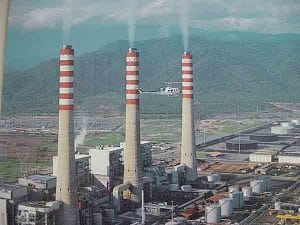
O&MVenezuela’s Power System on Brink of Collapse
Venezuela, a country that relies on hydropower for almost three-quarters of its electricity, has been battling a deepening electricity crisis since a drought in 2009 and a sudden 7% surge in demand brought the country’s power system to the brink of collapse.
-
 Hydro
HydroPeru: The Potential to Become a Regional Energy Hub
Water and gas provide the energy for Peru’s power generation sector, and the country could generate considerably more, especially from hydro and wind. While the nation strives to extend electricity service to all its citizens, it’s also looking beyond its borders for potential future customers.
-
 Hydro
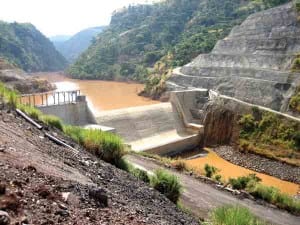
HydroEthiopia’s New Hydro Plant Boosts Region’s Generating Capacity
Ethiopia in mid-January officially inaugurated the 420-MW Gilgel Gibe II hydropower project, the second hydropower plant to be opened since November 2009, when the 300-MW Tekezé project began operations.
-
 O&M
O&MThe U.S. Gas Rebound
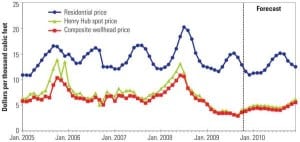
"It’s déjà vu all over again," said Yogi Berra. The Hall of Fame catcher could easily have been predicting the coming resurgence of natural gas – fired generation. Yes, a few more coal plants will be completed this year, but don’t expect any new plant announcements. A couple of nuclear plants may actually break ground, but don’t hold your breath. Many more wind turbines will dot the landscape as renewable portfolio standards dictate resource planning, but their peak generation contribution will be small. The dash for gas in the U.S. has begun, again.
-
 Coal
CoalBrazil: Latin America’s Beacon
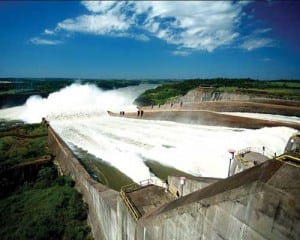
With the eighth-largest economy in the world, Brazil has a clear need for power, but balancing supply and demand has proven tricky in recent decades. Even in a country where over 80% of generation capacity comes from renewables, planning for future capacity additions isn’t straightforward or easy.
-
 Hydro
HydroTop Plants: Edison Sault Hydroelectric Plant Sault Ste. Marie, Michigan
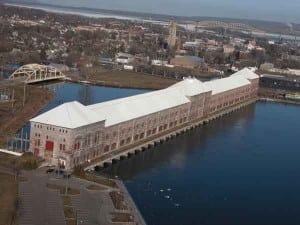
Located on the border with Canada and operational since 1902, the Edison Sault Hydroelectric Plant is one of the oldest continuously operating power plants in North America. This pioneer plant continues to generate between 25 to 30 MW when operating at full capacity. Modern wind and solar projects have captured the public’s interest, but this century-old hydroelectric project shows that time is the ultimate arbiter of a technology’s value to society.
-
-
 Hydro
HydroScotland Officially Opens 100-MW Glendoe Hydro Plant
In late June, Scotland officially opened the Glendoe Hydro Scheme, a 100-MW project whose construction near Loch Ness in the Scottish Highlands was the region’s biggest civil engineering project in recent times. Planning for the project began in 2001, and it took three years to build. Today, the project has the highest head — the […]
-
 Hydro
HydroEthiopia Completes Construction of Africa’s Tallest Dam
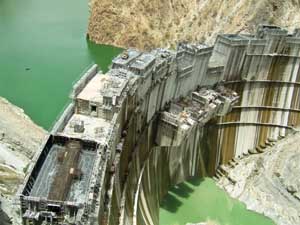
Ethiopia, the landlocked nation in East Africa from which key tributaries to the Nile River originate, completed construction of the continent’s highest dam, the 188-meter Tekezé Arch Dam (Figure 3) in February.
-
 Coal
CoalRecession Reduces Demand for Electricity
When roving Contributing Editor Mark Axford attended several recent energy conferences, he found the same questions asked at each one about new U.S. generation sources and consumption patterns. Unfortunately, the experts had few good answers to those questions.
-
 Coal
CoalCanada Moves to Rebalance Its Energy Portfolio
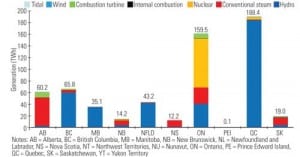
Though Canada is rich in fossil fuels, nuclear power may fuel a significant portion of the nation’s future electrical generation needs, especially in provinces that have traditionally relied on hydropower and fossil fuels.
-
 O&M
O&MTurkey Opens Electricity Markets as Demand Grows
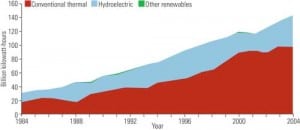
Turkey’s growing power market has attracted investors and project developers for over a decade, yet their plans have been dashed by unexpected political or financial crises or, worse, obstructed by a lengthy bureaucratic approval process. Now, with a more transparent retail electricity market, government regulators and investors are bullish on Turkey. Is Turkey ready to turn the power on?
-
 Coal
CoalPowering the People: India’s Capacity Expansion Plans
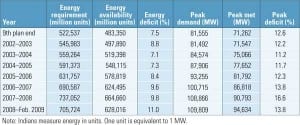
India has become a global business power even though hundreds of millions of its citizens still live in poverty. To sustain economic growth and lift its people out of poverty, India needs more — and more reliable — power. Details of government plans for achieving those goals demonstrate that pragmatism may be in shorter supply than ambition and political will.
-
Hydro
Renewable Project Finance Options: ITC, PTC, or Cash Grant?
Dozens of institutional investors in U.S. renewable energy projects pulled out of the market when the nation’s liquidity reserves dried up late last year. Some left the renewable market sector in search of more lucrative investment opportunities. Others found themselves unable to take advantage of the attractive tax credits because they themselves lacked profits against which to use the credits. The American Recovery and Reinvestment Act of 2009, approved February 13, changed the investor ground rules — again.
-
 Hydro
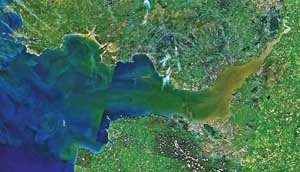
HydroTidal Barrages Could Power 5% of UK
Barrages across the Solway Firth, Morecambe Bay, and the Mersey and Dee estuaries in the northwest UK could provide more than 5% of the nation’s electricity and meet half the region’s electricity, a study by engineers at the University of Liverpool has found.
-
 O&M
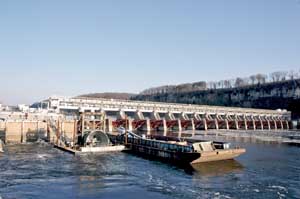
O&MHydrokinetic Plant Piggybacks on Existing Hydro Plant
Hydrokinetic energy — which generates power by using underwater turbines that harness moving water — is on the rise in the U.S. In January, the first U.S.-licensed, commercial, grid-connected hydrokinetic project installed the first of two 100-kW nameplate-rated turbines downriver from an existing run-of-river hydroelectric plant on the Mississippi River.
-
 O&M
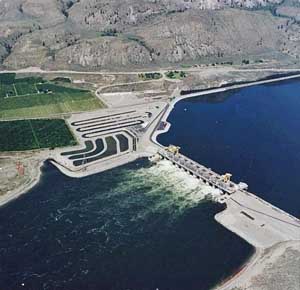
O&MFire Safety in Modern Hydroelectric Stations
It may seem counterintuitive, but fire can be a serious danger in hydropower plants. In some respects, the danger is even greater than in thermal power stations. Most U.S. hydro plants are 30 to 70 years old but can deliver another 20 or 30 years of service with upgrades — including state-of-the-art fire protection systems. The design options outlined here also apply in large part to other generating stations.
-
 Hydro
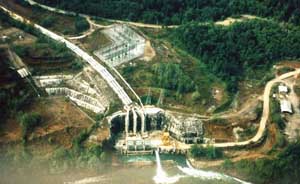
HydroFast-Tracking a Control System Retrofit
Upgrading a 1970s-era generator control system to new millennium technology in 12 days during a three-week shutdown would require careful planning and teamwork under any circumstances. The quick replacement of the governor and control system at the PT Inco smelter’s hydroelectric generation system is even more impressive because the facility is located in the middle of an Indonesian jungle.
-
 Hydro
HydroWhat’s Damming Hydrokinetic Power in the U.S.?
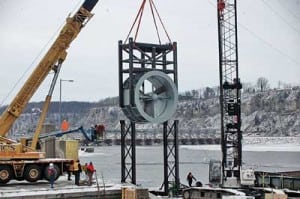
Barely a month after the U.S. Federal Energy Regulatory Commission (FERC) licensed the nation’s first commercial hydrokinetic power station, Houston-based Hydro Green Energy in January completed installation of the first of two turbines at an existing run-of-river hydropower plant on the Mississippi River for the Minnesota city of Hastings. When the second turbine is installed later this spring, the two hydrokinetic turbines will constitute a floating array that will sit on top of a barge at the Army Corps of Engineers’ Lock & Dam No. 2.
-
 Hydro
HydroSaving the Dead Sea
If measures aren’t taken immediately to replenish the rapidly shrinking Dead Sea, the very salty body of water in the Middle East will shrivel up within 50 years — and that could pose an environmental calamity, experts have warned.
-
Hydro
International Organization to Push Renewable Energy
Seventy-five countries from around the world joined a new political agency dedicated to the acceleration of green energy this January, but several notable nations — including the U.S., Canada, Australia, UK, Japan, and China — were not among them.
-
 Hydro
HydroBrazil Approves Hotly Contested Construction of Amazon Dam
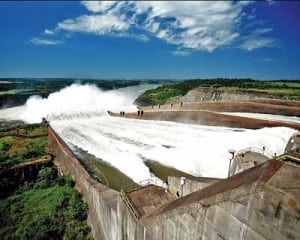
In an effort to more than double its power capacity by 2030, the Brazilian government in November approved construction of a controversial $3.9 billion hydroelectric dam on the Madeira River, in the Amazon. When completed in 2013, the Jirau hydroelectric plant could add 3,300 MW to the country’s already massive 59 GW hydroelectric capacity.
-
 Coal
CoalUnder construction in South Africa
This summary of power generation projects is a web-only supplement to the November 2008 special report titled “Whistling in the dark: Inside South Africa’s power crisis.”
-
 Hydro
HydroAdvanced tidal stream project planned for UK coast
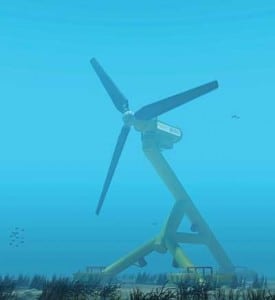
Scotland is strategically placed at the widening funnel in which the churning waters of the North Sea meet those of the Norwegian Sea. The region is thought to have 25% of Europe’s tidal power resources and 10% of its wave power potential. Recently, the Crown Estate, which owns the UK seabed and controls the rights […]
-
 Hydro
HydroNew workshop completes first overhaul
In early August, a special transport departed from Voith Siemens Hydro’s Heidenheim workshop bearing the company’s 300-ton, 300-MVA hydro motor-generator back to Schluchseewerk AG’s Wehr pumped-storage station in Germany’s Black Forest.
-
 Coal
CoalGlobal Monitor (July 2008)
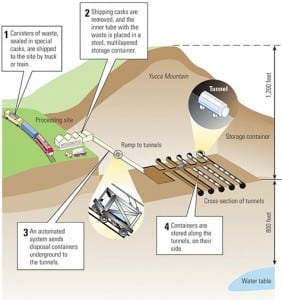
Yucca Mountain plan sent to NRC/ CPV cells get cooling chips from IBM/ StatoilHydro to pilot test first offshore floating wind turbine/ U.S. rivers next massive power source?/ Siemens delivers 500-MW gasifiers/ Algae: A green solution/ POWER digest
-
 Coal
CoalGlobal Monitor (June 2008)
Artificial photosynthesis for solar power? / Poultry litter to fuel 55-MW N.C. plan / First fuel cell-powered plane takes flight / First HTS transmission cable energized / PTC powers wind power industry / Renewing Greensburg / GAO deems coal-to-gas switch impractical / Assessing the Congo River’s power potential / POWER digest / Corrections
-
 Hydro
HydroA new wave: Ocean power
The idea of harnessing the vast power of Earth’s oceans has tantalized humans for more than a century. Today, the prospect of generating as much as 4,000 TW of clean energy from marine sources is fueling a resurgence of interest in a variety of technologies.