Hydro
-
Coal
Lawmakers Push for Financing Parity for Renewable Projects
Bipartisan legislation introduced on Wednesday by a bicameral group of lawmakers seeks to give renewable energy project investors access to an existing corporate structure whose tax benefits are now only available to investors in fossil fuel–based energy projects.
-
Hydro
Report: Global Renewable Investments in 2012 Tumble 11% as Market Shifts from West to East
Public and private investment in solar, wind, and other renewables worldwide declined 11% in 2012 from an adjusted 2011 record of $302 billion, a new survey from Pew Charitable Trusts shows. Yet the global renewable sector still registered a record 88 GW of new nameplate capacity last year, and China reclaimed the lead in global renewables investments from the U.S., it says.
-
Hydro
FERC, Coast Guard to Cooperate on Hydro as New Hydro Bill Is Introduced in Senate
The Federal Energy Regulatory Commission (FERC) and the U.S. Coast Guard within the U.S. Department of Homeland Security on Tuesday signed a memorandum of understanding (MOU) to cooperate with each other on the development of projects that generate power from waves, tides, ocean currents, and the flow of rivers. A group of bipartisan senators, meanwhile, introduced a companion bill to a recently passed House bill that seeks to expand hydropower in the U.S.
-
Renewables
The Spotlight on a Mexican Success Story
Energy demand in Mexico, according to the Secretary of Energy (SENER), will increase by approximately 4% each year for the next ten years, and with it the potential for private sector growth in the industry. Download the report.
-
Hydro
Brazil Drought Threatens Power Supplies
A pervasive drought in northeast Brazil has dried up power supplies from the region’s hydropower facilities, making the area prone to blackouts and crippling economic growth in one of the country’s emerging agricultural havens.
-
Coal
Senators Introduce “Carbon Fee” Bill, House Dems Call for Blue Ribbon Climate Panel
Boosted by President Obama’s inaugural address commitment to mitigate climate change, congressional Democrats have initiated several more climate measures. A legislative packet that seeks to mitigate climate change by enacting a carbon "fee" of $20 per ton of emitted carbon or methane equivalent was introduced last week by Sens. Bernie Sanders (I-Vt.) and Barbara Boxer (D-Calif.). In the House, as several Democratic amendments for climate change hearings were voted down, more than 40 lawmakers urged President Obama to create a panel that would help communities deal with climate change events.
-
Hydro
House Unanimously Approves Hydro Bill, Prospects for Passage Are Positive in Senate
The U.S. House voted 422–0 last week, approving a bill that could facilitate the development of small hydropower and conduit projects and direct the Federal Energy Regulatory Commission (FERC) to consider streamlining its two-year permitting process.
-
Coal
Murkowski’s Energy Blueprint Presses All Measures for OPEC Oil Independence
An energy blueprint released on Monday by Sen. Lisa Murkowski (R-Alaska), the ranking minority member of the Senate Energy and Natural Resources Committee, calls for complete independence from OPEC oil by 2020.
-
Hydro
Report: U.S. Has Lost Edge in Global Renewables Race
Once a world leader in innovation and manufacturing of clean energy technologies, the U.S. now faces significant competitive challenges from Europe and Asia, and it lags behind other nations on measures that include renewables deployment, manufacturing, and innovation, a new report suggests.
-
Hydro
House Committee Advances Two Hydro Bills to Streamline Permitting Process
The first official day of committee activity in the 113th Congress saw the advancement of two hydropower bills with bipartisan support in the U.S. House Energy and Commerce Committee.
-
Hydro
FERC Proposes Reforms to Diminish Barriers to Small Generator Interconnection
The Federal Energy Regulatory Commission (FERC) on Thursday proposed four reforms intended to reduce the time and cost to process transmission interconnection requests from generating facilities of 20 MW or smaller. The reforms would boost reliability by increasing energy supply and remove hurdles in the development of new renewable power sources, FERC said.
-
Coal
Virginia Moves to Repeal Incentives for Renewable Power
An agreement reached between the Virginia Attorney General’s office, Dominion Virginia Power, and Appalachian Power proposes to reduce financial incentives associated with the utilities’ generation of renewables and construction of new fossil fuel–fired power plants.
-
 Coal
CoalSlow Growth Ahead—with Unexpected Flares of Activity
North American shale gas was supposed to realign the generation fleet here and abroad (thanks to anticipated exports) far into the future. Turns out, that’s not exactly how the near term is shaping up. Despite stagnant (and even putrid) economies and legislative bodies in the U.S. and EU, there promises to be sufficient market volatility to keep everyone alert.
-
 History
The Russian Power Revolution
Exports of natural resources have given Russia increased global political and economic clout. But domestically, the world’s fourth-largest generator of electricity has had to embark on the most ambitious reforms ever undertaken to modernize dilapidated Soviet-era power infrastructure and incentivize a massive capacity expansion to support a revived economy.
-
Coal
Report: Fuel for Power Generation to Lead Energy Growth Through 2040
Fuel for power generation will account for about 55% of demand-related energy growth through 2040, ExxonMobil forecasts in its freshly released annual energy forecast. Like several other forecasters, the Irving, Texas–based oil and gas company also predicts that natural gas will emerge as the leading source of electricity generation by 2040. Among key findings in […]
-
Coal
EIA Projects Faster Growth of Natural Gas Production, Gas Generation
Compared to projections from last year, an Early Release Overview of the Energy Information Administration’s (EIA’s) Annual Energy Outlook 2013 (AEO2013) released on Wednesday foresees higher gas production and, with it, a higher share of gas generation by 2040. The outlook also projects a growing share of renewable and nuclear power, but dampened future coal use.
-
 History
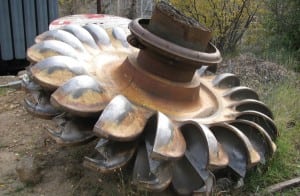
Modernization of Century-Old Hydro Facility Yields Rich History
When the Boulder Canyon Hydroelectric Facility was built in the steep, forested mountains between Boulder and Nederland, Colo., in 1910, it was the highest head hydroelectric facility in the western U.S.
-
 Hydro
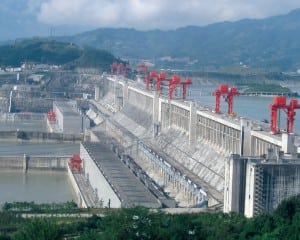
HydroTOP PLANT: Three Gorges Dam, Yangtze River, Hubei Province, China
After nine years of construction, installation, and testing, the Three Gorges Dam is now complete. On May 23, 2012, the last main generator finished its final test, increasing the facility’s capacity to 22.5 GW and making it the world’s largest capacity hydroelectric power plant.
-
 Hydro
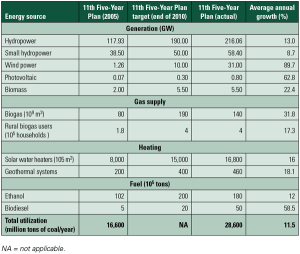
HydroRenewable Energy Development Thrives During China’s 12th Five-Year Plan
China’s 12th Five-Year Plan calls for expanding the use of renewable energy in all forms throughout the country. From solar and wind to biomass gas and briquettes, China has a true “all of the above” renewable energy policy.
-
Hydro
Hawaii’s Largest Wind Project Online as State Struggles to Integrate Renewables
On Monday, as First Wind announced its 69-MW Kawailoa Wind Project had gone into commercial operations on Oahu, other news underscored the difficulty the island state faces in trying to substitute renewables for expensive, imported fossil fuels.
-
Hydro
Trend Shows Growth of Renewables on Contaminated Lands
Renewable energy projects installed on potentially contaminated lands, landfills, and mine sites have increased by 40% since 2008, a new list released last week by the Environmental Protection Agency (EPA) shows. Solar photovoltaic (PV) systems make up the bulk of about 184.7 MW installed at 60 sites in 25 U.S. states.
-
 Hydro
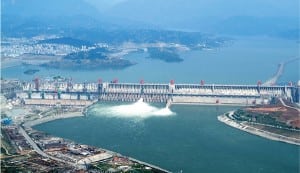
HydroThree Gorges Dam Completed Amid Technical Victories, Controversy
China in early July installed the 32nd and final turbine of its mammoth Three Gorges Dam, virtually completing the controversial 1994-initiated hydropower project on the middle reaches of the Yangtze River.
-
 Coal
CoalChile’s Power Challenge: Reliable Energy Supplies
Droughts, unreliable gas imports, and protests against proposed projects have hampered the Chilean power sector and its largest economic driver, the copper-mining industry. Recent policies designed to foster more reliable supplies are a move in the right direction, but remaining obstacles are formidable.
-
 Hydro
HydroMajor Developments for Solid Oxide Fuel Cells
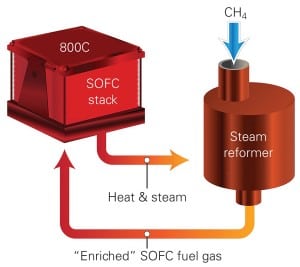
Solid oxide fuel cells (SOFCs), which oxidize a fuel to produce electricity, have received much attention of late for the technology’s myriad benefits, including high efficiency, long-term stability, fuel flexibility, and low carbon emissions—all at a relatively low cost.
-
 Hydro
HydroTubular Turbine Hydropower Plant Comes Online
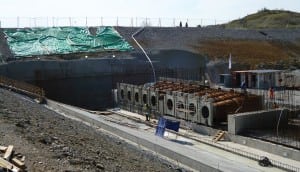
Albania this June inaugurated its first major hydropower project since the early 1980s, bringing online Ashta I, the first of two run-of-river plants with a combined capacity of 53 MW. At the inauguration ceremony, Albania’s Prime Minister Sali Berisha called the plant “a novelty” because it is the largest in the world to use advanced tubular turbines technology.
-
Hydro
FERC Rule 1000: What Does It Mean?
The Federal Energy Regulatory Commission (FERC) has the responsibility for ensuring just and reasonable rates and preventing undue discrimination by public utility transmission providers. Last year FERC defined a new framework for public utilities and regional transmission organizations planning new transmission networks. The framework is provided in Order No. 1000—Transmission Planning and Allocation by Transmission Owning and Operating Public Utilities. The Final Rule was issued on July 21, 2011, and reaffirmed by Order No. 1000-A on May 17, 2012.
-
 Coal
CoalPower in India: Opportunities and Challenges in a Fast-Growing Market
India’s long-term annual economic growth rate is projected at over 7%, and the country is investing in its hydroelectric, nuclear, and renewable resources. However, the primary fuel used to produce electricity remains coal, and the government has ambitious plans to significantly increase coal-fired capacity. Those plans have been challenged by a number of unexpected factors that threaten to stifle India’s economic growth. India’s long-term annual economic growth rate is projected at over 7%, and the country is investing in its hydroelectric, nuclear, and renewable resources. However, the primary fuel used to produce electricity remains coal, and the government has ambitious plans to significantly increase coal-fired capacity. Those plans have been challenged by a number of unexpected factors that threaten to stifle India’s economic growth.
-
 Hydro
HydroUtility Perspectives on Ramping Up Renewable Power
Panelists at ELECTRIC POWER discussed how U.S. utilities choose renewable power generation technologies based on their geographic locations, state requirements, economics, and other criteria—including reliability and federal regulations.
-
Commentary
Incentives Provide Boon to Hydropower Industry
The U.S. hydropower industry has undergone a renaissance in recent years. One of the major drivers of the industry’s growth, the establishment of the production tax credit (PTC) for hydro, has seen strong policy support from our elected officials in Washington, D.C. More than any other federal policy, tax incentives, particularly the PTC, have sparked a level of growth in the industry not seen in nearly two decades.