
Environmental
-
 Coal
CoalUsing an Optical PM CEMS with Wet FGD for MATS Compliance
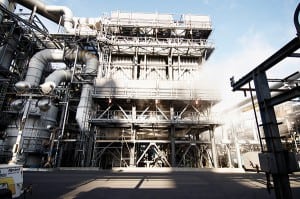
Of the three ways to comply with the Mercury and Air Toxics Standards for particulate matter (PM) measurement, using an optical PM continuous emissions monitoring system (CEMS) also delivers valuable side benefits, especially for units using wet flue gas desulfurization (FGD). Editor’s Note: This issue was published before the June 29, 2015, ruling by the […]
-
 O&M
O&MContinuous Water Washing in Wet Electrostatic Precipitators Reduces Capital Cost in the Chinese Market
As the Chinese government lowers the particulate matter (PM2.5) limits to 5 mg/Nm3 or less in coal-fired power plants, wet electrostatic precipitators are one of the key environmental components utilities select to meet this requirement. Optimization of continuous water washing of electrodes allows lower-cost alloys to be used, reducing capital expenditures. Wet electrostatic precipitators (WESPs) […]
-
 Coal
CoalDon’t Let Leachate Derail Your CCR Landfill Plans
Developing a compliance approach for a new regulation sometimes means overlooking unintended consequences of the chosen compliance method. Preparing for compliance with the new U.S. Environmental Protection Agency (EPA) regulations on coal combustion residuals (CCR Rule), published in the Federal Register on April 17, 2015, is causing many power producers to make significant changes to […]
-
 Gas
GasThe Need for Alternate PM2.5 Emission Factors for Gas-Fired Combustion Units
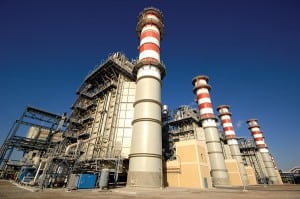
The Environmental Protection Agency’s emission factor resource, AP-42, is not your only option for developing particulate matter (PM) emission rates. Results of a prominent PM emissions measurement research program for gas-fired plants have been successfully used to support development and application of alternate PM2.5 emission factors by both regulatory agencies and permit applicants The regulatory […]
-
 Renewables
The Clean and Dirty of Landfill Gas Power
Despite its apparent environmental benefits and strong government backing, generating power from landfill gas hasn’t gained traction for a variety of reasons in the U.S. Will the Clean Power Plan bolster this “dirty” renewable power source? For the U.S. Environmental Protection Agency (EPA), the only clean thing about landfills—those engineered dumps that entomb America’s infinite […]
-
 Legal & Regulatory
Supreme Court Strikes Down EPA’s MATS Rule
In a 5–4 decision announced on June 29, the U.S. Supreme Court overturned the Environmental Protection Agency’s (EPA’s) rules limiting mercury and other hazardous air pollutants released from power plants. In April 2014, the U.S. Court of Appeals for the D.C. Circuit upheld the Mercury and Air Toxics Standards (MATS), ruling in a 2–1 decision […]
-
 Coal
CoalWhite House Warns Climate Change Inaction Could Result in Higher Power Demand and System Costs
Taking action on climate change could reduce electricity demand between 1.1% and 4% and save the U.S. $10 billion to $34 billion in power system costs by 2050, says a new report released by the White House and the Environmental Protection Agency (EPA) touting the U.S. economic, health, and environmental benefits of global climate action. […]
-
 Coal
CoalCanada’s SaskPower Opens Carbon Capture Test Facility
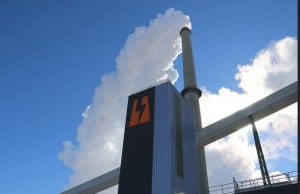
SaskPower, the Saskatchewan provincial utility that made history last year by developing the first full-scale post-combustion carbon capture retrofit for an operating coal-fired power plant, has taken the next step in fostering development of the technology. Its Carbon Capture Test Facility (CCTF) has officially been launched in Estevan, Saskatchewan. The June 18 launch was attended […]
-
 Legal & Regulatory
Experts: Coal Ash Legislation Would Resolve EPA Final Rule Complications
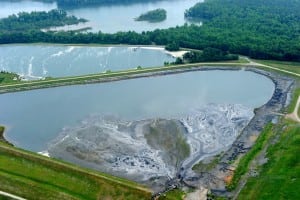
The Environmental Protection Agency’s (EPA’s) first-ever national standards for the disposal of coal ash are ridden with complications, warned witnesses at a Senate oversight hearing. The June 17 hearing before the full Committee on Environment and Public Works (EPW) featured five witnesses representing a coalition of state environmental agency leaders, the American Coal Ash Association, […]
-
 Renewables
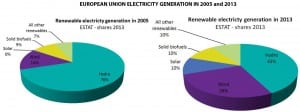
Report: Most of the EU Is on Track to Meet 2020 Renewable Energy Target
At least 25 of the European Union’s (EU’s) 28 member nations are on track to meet renewable energy targets, putting the bloc well on its way to meet its legally binding target of producing 20% of its energy with renewables by 2020, a new report shows. The European Commission’s (EC’s) 2015 report released on June […]
-
 Legal & Regulatory
House Subjects EPA Ozone Rule to Twofold Probe
The Environmental Protection Agency’s (EPA’s) proposed ozone rule came under scrutiny in two U.S. House of Representatives hearings held during the past week. The House Committee on Energy and Commerce’s subcommittee on energy and power on June 12 heard testimony on the rule from Janet McCabe, the EPA’s acting assistant administrator for the Office of […]
-
 Renewables
IEA Executive Director Praises Energy Price Coupling in Western Europe
At the annual Power-Gen Europe Conference held in Amsterdam, in the Netherlands, International Energy Agency (IEA) Executive Director Maria van der Hoeven called for greater leadership as Europe tackles de-carbonization, distributed energy, and market integration. She began her presentation by highlighting one of the biggest changes to Europe’s power markets: The May 20 decision to […]
-
 Legal & Regulatory
Federal Court Strikes Challenge to Proposed EPA Carbon Rule as Premature
The D.C. Circuit rejected challenges to the Environmental Protection Agency’s (EPA’s) proposed carbon rules for existing power plants, ruling that it has no authority to review rules that aren’t yet final. “Petitioners are champing at the bit to challenge EPA’s anticipated rule restricting carbon dioxide emissions from existing power plants. But EPA has not yet […]
-
 Legal & Regulatory
PRB Coal Users’ Group: Power Industry Regulatory Updates from Washington
What happens in Washington, D.C., seldom stays in Washington, D.C., so on April 21 at the 17th annual ELECTRIC POWER Conference & Exhibition, the Powder River Basin (PRB) Coal Users’ Group took a look at what is headed their way from the nation’s capital. The first item was, surprise, a success story, according to Rick […]
-
 Legal & Regulatory
DOE Highlights Challenges to Infrastructure in Quadrennial Energy Review
With unprecedented changes and challenges facing the U.S. energy sector, the Department of Energy has spearheaded a comprehensive assessment of the nation’s energy policy. Released the same day as ELECTRIC POWER 2015 opened, the first installment of this review was highlighted in the conference’s keynote address. U.S. energy infrastructure needs not just substantial investment for […]
-
Legal & Regulatory
Clean Power Plan Is Achievable, but Challenges Loom Large
The Environmental Protection Agency’s (EPA’s) Clean Power Plan (CPP) is feasible in its ultimate goals, but getting there will take a lot of work and some rethinking of how the targets are achieved
-
 Legal & Regulatory
EPA Takes Action to Eliminate Startup, Shutdown, and Malfunction Emissions Exemptions
The U.S. Environmental Protection Agency (EPA) issued a state implementation plan (SIP) call action to 36 states directing them to correct specific startup, shutdown, and malfunction provisions in their SIPs to ensure they are fully consistent with the Clean Air Act (CAA). The action comes in response to a petition for rulemaking filed by the […]
-
 Legal & Regulatory
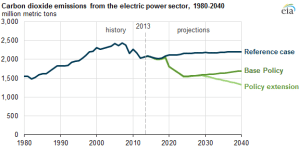
Clean Power Plan Will Cut CO2 Emissions to 1980s Levels, Says EIA
The Environmental Protection Agency’s (EPA’s) proposed Clean Power Plan (CPP) will cut power CO2 emissions to levels not seen since the 1980s in addition to giving a big boost to renewables at the expense of coal, the Energy Information Administration (EIA) said this week. In its “Analysis of the Impacts of the Clean Power Plan” […]
-
 Coal
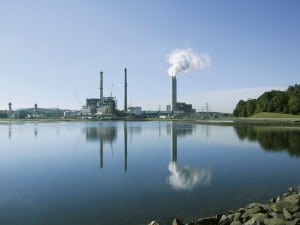
CoalDuke Announces Plan to Retire Asheville Coal Plant, Replace with CCPP
Duke Energy announced on May 19 that it will construct a new 650-MW natural gas–fired combined cycle power plant (CCPP) and retire its 375-MW Asheville coal power plant by early 2020. The plan also includes the addition of solar generation at the site as well as construction of a new substation and 40-mile transmission line […]
-
 Legal & Regulatory
Experts: More Nuclear Power Is Needed
“You can’t take a clean source of energy off the table.” That was the conclusion that a panel of four experts came to as they discussed the role that nuclear power should play in the battle to fight climate change. The panelists met on May 14 as part of the 62nd Annual Industry Conference and […]
-
 Environmental
NARUC Promotes State Coordination for Clean Power Plan Compliance
The National Association of Regulatory Utility Commissioners (NARUC) and the Eastern Interconnection States Planning Council have released a resource guide to help states overcome institutional barriers and coordinate on Clean Power Plan compliance. The Multistate Coordination Resources for Clean Power Plan Compliance guide—which was funded by the Energy Department—includes a multi-state planning checklist, a legislative […]
-
 Coal
CoalConsumers Energy Shuttering a Third of Its Coal Fleet
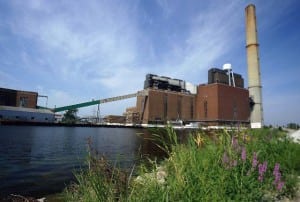
Michigan utility Consumers Energy formally announced on May 11 that it was closing seven of its oldest coal-fired units, which together represent 32% of its coal capacity. The units, representing about 950 MW of total generation, will be shut down by April 2016. Consumers—the state’s largest utility—blamed impending federal air quality regulations in its 2015 […]
-
 Renewables
U.S. Senators: Biomass Should Not Be Compliance Method for Clean Power Plan
Biomass combustion should not be an approved compliance method under the Clean Power Plant because burning trees is not carbon neutral, both senators from Massachusetts told the Environmental Protection Agency (EPA) on Friday. In a letter to EPA Administrator Gina McCarthy, Sens. Ed Markey (D-Mass.) and Elizabeth Warren (D-Mass) said that treating bioenergy as having […]
-
 Nuclear
Fire in Main Transformer Forces Shutdown of Indian Point 3 Nuclear Plant
A fire in one of the Indian Point nuclear plant main electrical transformers resulted in the forced shutdown of Unit 3 at the facility on May 9. The fire started at 5:50 p.m. local time on Saturday and it was quickly extinguished by an automated sprinkler system, along with the action of trained onsite personnel. […]
-
 Legal & Regulatory
DGR Is Preferred Nuclear Waste Solution for Canada, Scary for U.S.
A Canadian joint review panel issued an environmental assessment report on May 6 for a deep geologic repository (DGR) for long-term management of low- and intermediate-level radioactive waste (L&ILW), concluding that the project is “not likely to cause significant adverse environmental effects.” Ontario Power Generation (OPG) proposed the DGR, intending to locate the facility at […]
-
 Legal & Regulatory
Legal Challenges to Clean Power Plan Begin to Take Shape
Attorneys general from three states—Oklahoma, Texas, and West Virginia—stepped forward on May 5 to present their objections to the Environmental Protection Agency’s (EPA’s) proposed Clean Power Plan. During testimony before the Senate Environmental and Public Works Subcommittee on Clean Air and Nuclear Safety, West Virginia Attorney General Patrick Morrisey presented three specific problems he sees […]
-
 Environmental
California Adopts Ambitious 40% by 2030 GHG Reduction Target
California will seek to reduce its greenhouse gases (GHG) by 40% below 1990 levels by 2030, a new executive action by Gov. Edmund Brown Jr. orders. Executive order B-30-15 issued on April 29 comes ahead of the United Nations Climate Change Conference in Paris later this year. California is one of 20 U.S. states (plus the District of […]
-
Commentary
Clean Air Act Section 111(d): The Case for Multi-State Compliance
This summer, the Environmental Protection Agency (EPA) will finalize its Clean Power Plan under Section 111(d) of the Clean Air Act, requiring existing fossil fuel–fired electric generating units (EGUs) to cut carbon dioxide emissions to 30% below 2005 levels by 2030. The rule will require states to meet specific reduction goals and also allow states […]
-
 Coal
CoalThe Carbon Capture and Storage R&D Frontier
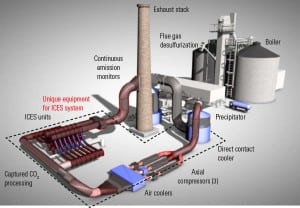
Given the costs and other concerns about currently available technologies for capturing and storing carbon dioxide from fossil-fueled power plants, interest in new technologies remains high. Here’s a look at some potentially promising approaches that are advancing the technology frontier. Frontiers represent the boundary between the known and the unknown. As researchers attempt to push […]
-
 Coal
CoalCCS Development, the Key to Coal Power’s Future, Is Slow
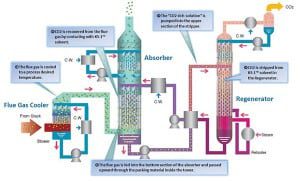
Advocates for the continued reliance on coal for baseload electricity cheered late last year when North America’s largest power-related carbon capture and sequestration (CCS) facility was commissioned. Since then, that pool of advocates is evaporating as prominent electricity industry decision-makers publicly distance themselves from coal and champion alternatives for a low- or no-carbon future. If […]