Environmental
-
 Legal & Regulatory
NERC: EPA’s Clean Power Rule Could Transform Coal Power Use
Implementation of the Environmental Protection Agency’s (EPA’s) proposed Clean Power Plan (CPP) could change the use of the U.S. coal-fired generating fleet from baseload to seasonal peaking—and pose grave implications for plant economics and operating feasibility, the North American Electric Reliability Corp. (NERC) suggests in new special assessment. The new report is the second […]
-
 Environmental
Clean Power Plan Achievable but Challenges Large, Say Experts
The Environmental Protection Agency’s (EPA’s) Clean Power Plan is feasible in its ultimate goals, but getting there will take a lot of work and some rethinking of how the targets are achieved, according to speakers at the Environmental Mega Session, Rebalancing the Electric System for Environmental Consideration, at the Electric Power Conference and Exhibition on […]
-
 Renewables
DOE Highlights Challenges to Energy Infrastructure in Quadrennial Energy Review
The U.S. energy infrastructure needs not just substantial investment for the future but also considerable rethinking about its role and functions in order to be positioned to deal with a rapidly changing energy landscape and evolving threats from cyber attack and climate change. That was the message from William F. Hederman, Jr., Department of Energy […]
-
 Legal & Regulatory
Maryland to Mandate Emergency NOx Reductions at Coal Plants
An emergency action proposed by Maryland regulators on Friday will require 14 coal-fired units in the state to minimize nitrogen oxide (NOx) emissions every day during the 2015 summer ozone season, starting as soon as May 1. The rule submitted on April 17 by the Maryland Department of the Environment (MDE) to the Joint Committee […]
-
 Coal
CoalPoll: Americans Are Not Too Worried About Climate Change, Still Favor Solar, Wind, and Nuclear
A Gallup poll completed last month found that only 32% of adults in the U.S. worry a “great deal” about global warming or climate change, while 45% worry “only a little” or “not at all.” The survey was taken via telephone interviews conducted during the first week of March using a random sample of 1,025 […]
-
Coal
White House Formally Submits Climate Pledge to Slash GHGs
The U.S. will seek to cut its greenhouse gas (GHG) emissions by 26% to 28% from 2005 levels by 2025, the White House said on March 31 in a target submitted to the United Nations Framework Convention on Climate Change (UNFCCC). The submission—otherwise referred to as an Intended Nationally Determined Contribution (INDC)—is a formal statement […]
-
Commentary
In a Word, Storage
What turns a trend from trendy to established? In the energy industry it can be any number of things, from a technology breakthrough, to a new market, to forces of nature. The shale gas boom in the U.S. is the most well-known example of a technology trend that has changed the economics for all power […]
-
 O&M
O&MKeeping Pollution Control Devices Online with Good Operating Practices
In order to comply with the Clean Air Act and subsequent regulations covering emissions, coal-fired utilities have installed multiple pollution control devices. Understanding key operating aspects of this equipment can help you avoid costly maintenance activities and forced shutdowns. Since the passage of the Clean Air Act in 1970, the regulatory environment for control of […]
-
 Legal & Regulatory
Proposed Ozone Rule May Be the Most Costly Regulation Ever
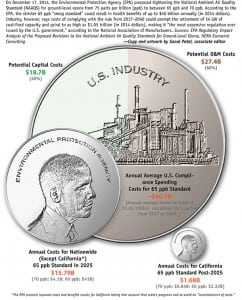
Estimates vary widely, but even the Environmental Protection Agency acknowledges that lowering the ozone standard will cost billions. How will it affect power companies? It could make approval of new projects much more difficult. Even in the annals of expensive environmental regulations and the hyperbole that often accompanies them, the numbers are eye-popping: $140 billion […]
-
 Legal & Regulatory
The State of U.S. Mercury Control in Response to MATS
As this month marks the compliance date for the Mercury and Air Toxics Standards (MATS), it’s a good time to take a step back from the many months of concern and consideration of options to see how coal-fired power plants are actually responding to the new rule. It’s also a good time to acknowledge that […]
-
 Coal
CoalIndustry in Turmoil: Coal Plants Shutting Down Around the World
Numerous announcements of plant closures during the past week are painting a grim picture for the future of the coal industry. On March 20, several news outlets reported that American Electric Power (AEP) had sent Worker Adjustment and Retraining Notification Act, or WARN, notices to workers at half a dozen coal-fired plants. Employees at the […]
-
 Environmental
IEA: For First Time in 40 Years, World Energy Sector GHG Emissions Stalled in 2014
Global emissions of carbon dioxide from the energy sector were unchanged from the preceding year—marking the first time in 40 years in which there was a halt or reduction in emissions of greenhouse gases that was not associated to an economic downturn, the International Energy Agency (IEA) said. The Paris-based autonomous organization said in a […]
-
 Coal
CoalExperts: EPA Clean Power Plan’s Legal Uncertainty May Have Lasting Impact
The Environmental Protection Agency’s (EPA’s) Clean Power Plan will certainly be challenged in court, but states and power companies must expend enormous resources developing and complying with state plans regardless of the outcome, witnesses testified on March 17 at a House hearing on the proposal’s legal and cost issues. The three-hour-long hearing at the House […]
-
 Coal
CoalTVA’s Draft Strategy Hints at Future Energy Efficiency Boosts, Coal Retirements
The Tennessee Valley Authority (TVA) may further reduce its coal-fired capacity and scrap its unfinished Bellefonte nuclear power plant, the utility’s long-awaited draft power generation strategy unveiled on March 9 shows. The federally owned corporation has been developing its 2015 Integrated Resource Plan (IRP), essentially a power planning roadmap to 2033, since fall 2013. The […]
-
 Coal
CoalFPL Seeks to Acquire and Phase Out Coal-Fired Power Plant
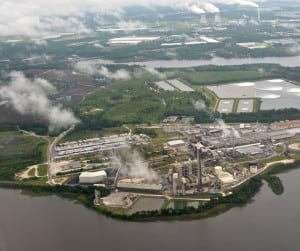
Florida Power and Light (FPL) wants to buy a 250-MW coal-fired facility in Florida to shut it down. The Juno Beach, Fla.–based company filed a petition with the Florida Public Service Commission (PSC) on Friday requesting approval to acquire the Cedar Bay Generating Plant for $520.5 million. FPL has had a long-term power purchase agreement […]
-
Legal & Regulatory
Illinois Mulls Low Carbon Portfolio Standard
A bipartisan group of Illinois legislators have introduced bills that propose a market-based solution to curb carbon emissions and ensure continued operation of the state’s nuclear power plants. The bills SB 1585 and HB 3293 introduced in the state Senate and House would enact the Illinois Low Carbon Portfolio Standard. That measure, like a renewable […]
-
 Legal & Regulatory
10 Industry Leaders Comment on the Future of Energy, Electricity, and the Grid
Here are selected thought-provoking (and even unexpected) comments made by presenters at the 10th annual MIT Energy Conference on Feb. 27 and 28 in Cambridge, Mass. Comments are summarized and paraphrased unless presented in quotes. For more on the event, see “Exelon: The Utility of the Future Views Change as Enabling, Not Disruptive” and the […]
-
 Geothermal
New Zealand Strives to Maximize the Value of Geothermal Wastewater
Geothermal resources have important strategic value for New Zealand, as they are able to directly supply both heat and electricity (see “New Zealand Geothermal Industry Is Poised for the Future” in this
-
Legal & Regulatory
FERC’s Work on the Clean Power Plan
Cheryl A. LaFleur One of the most controversial issues facing the energy world today is how our electric sector will respond to the U.S. Environmental Protection Agency’s (EPA’s) proposed Clean Power Plan
-
Renewables
POWER Digest (March 2015)
TIC to Build First U.S. J-series GT Plant. The Industrial Co. (TIC), a wholly owned subsidiary of Kiewit Corp. ,was recently awarded an engineering, procurement, and construction contract to build a gas
-
 Water
WaterWater and Wastewater Treatment Technology Update
Water is the lifeblood of a thermal power plant. As such, obtaining clean and pure makeup water and dealing with wastewater has been a requirement since the first steam generating unit went into operation. As
-
 Geothermal
Mining for Lithium in Geothermal Brine: Promising but Pricey
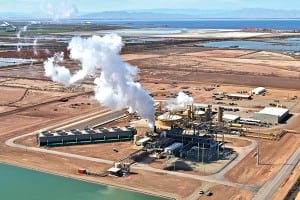
Worldwide, the U.S. is the largest producer of geothermal power; however, geothermal energy provides less than 0.5% of total generation in the U.S. Given geothermal’s small piece of the U.S. electricity pie
-
 Water
WaterFeedwater Chemistry Meets Stainless Steel, Copper, and Iron
Alloys found in the condensate and feedwater systems of power plants include carbon steel for piping, pumps, and in some cases heat exchangers. Many systems still have some copper-based alloys from admiralty
-
 Environmental
Save Power with Natural Cooling for Building Ventilation
With the final Clean Power Plan rule covering existing power plants scheduled for release this summer, and the amount of flexibility that has been afforded to the states to meet emissions targets, states have
-
 Coal
CoalSCR Reheat Burners Keep NOx in Spec at Low Loads
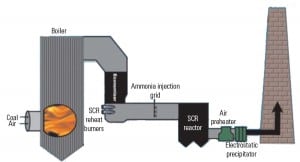
Selective catalytic reduction (SCR) systems installed in steam generators for NOx reduction are ordinarily designed for full boiler load conditions, when SCR inlet temperatures normally exceed unit-specific
-
 Solar
SolarEPA and Utilities Are “On the Wrong Track,” Say Experts
Speaking to a sparsely filled room as the last of four presenters during the keynote plenary session at the Energy, Utility & Environment Conference in San Diego, Calif., Feb. 16, Len Hering, executive director of the California Center for Sustainable Energy (CSE), made it clear that he doesn’t think natural gas is the answer to […]
-
 Legal & Regulatory
Ameren Comments on Suggested Revisions to the EPA’s Clean Power Plan
Although there has been plenty of discussion in the U.S. power industry about the challenges posed by the Environmental Protection Agency’s (EPA’s) proposed Clean Power Plan (CPP), Missouri-based Ameren Corp. is the first generating company to go public with a specific set of proposed revisions. On Feb. 11, Ameren released a white paper that proposed […]
-
 Renewables
10 Quotes Concerning Energy Transformation from the ARPA-E Summit
The sixth annual ARPA-E Summit wrapped up on Wednesday, and though there were too many sessions to cover in depth, here is a mini-summary by way of selected interesting comments. Speaker photos (where available) follow the comment. “Any disruptive technology will not fit an existing market.” —Brian Janous, Director of Energy Strategy, Microsoft “[The energy […]
-
 Renewables
ARPA-E Summit Takes the Pulse of Energy Technology Innovation
“The coolest thing on Earth” is, according to its new director, a young federal agency that has a unique focus on pushing technology frontiers and an “unblinking attention” to market realities. One thing you can say for sure about the energy world, said Dr. Ellen Williams (Figure 1), incoming director of ARPA-E (Advanced Research Projects […]