Environmental
-
 Coal
CoalEIA: 13.7 GW of Coal Capacity Was Retired in 2015
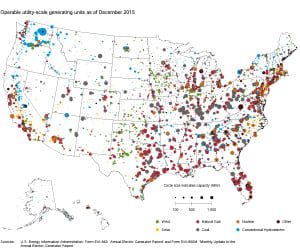
Of nearly 18 GW of U.S. generating capacity permanently shuttered in 2015, 77% was conventional steam coal–fired. About 30% of that 13.7 GW in coal capacity was retired in April 2015, when the Environmental Protection Agency’s (EPA’s) Mercury and Air Toxics Standards (MATS) rule went into effect, said the Energy Information Administration (EIA) on March […]
-
 Legal & Regulatory
Oregon Legislature Passes Bill to Eliminate Coal from State Power Supply
The Oregon Senate passed a bill on March 2 that will require electric companies in the state to eliminate coal-fired resources from their electrical supplies by January 1, 2030. The bill—which passed in the senate by a 17–12 vote—had already been passed by the Oregon House of Representatives (38–20). It now heads to Gov. Kate […]
-
 Legal & Regulatory
A Brief History of U.S. Coal Ash Since the Kingston Spill
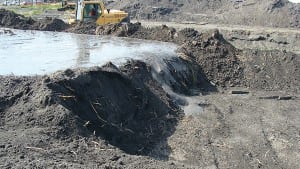
The disposal of coal ash, a combustion byproduct from coal-fired power plants, was propelled into the national conversation on December 22, 2008, when the Tennessee Valley Authority (TVA) Kingston power plant suffered one of the largest coal ash spills in history. Calls for regulatory action shifted pitch again after the Duke Energy Dan River spill […]
-
 History
Notable Coal Ash Spills [Slideshow]
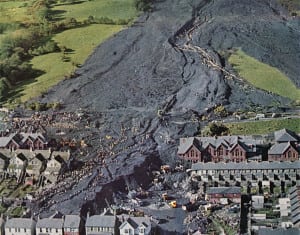
The coal ash spill in December 2008 at the Tennessee Valley Authority’s coal-fired Kingston power plant may have triggered regulatory action, but it wasn’t the first or the most devastating disaster in the coal industry’s history. Coal Ash Spills at Power Facilities [gss name=”example1″ link=”none” ids=”85886,85788,85786,85790,85778,85888,85794,85784,85776″] Other Notable Coal Ash Spills [gss name=”example2″ link=”none” ids=”85772,85780,85782″] —Sonal […]
-
 Legal & Regulatory
Belo Monte Hydro Plant Stunned, Revived Again
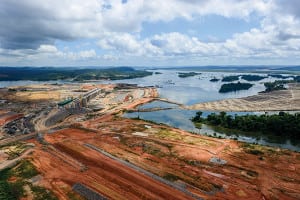
Legal battles to stall the 11-GW Belo Monte hydroelectric dam—being built on the Xingu River in Amazon forest for one of the world’s largest power plants—are raging on in Brazil (Figure 1). In January
-
Legal & Regulatory
Coal Ash Hits the Big Time
Regulatory attention is rarely welcome in the best of times. When the attention is focused on a practice that has been standard operating procedure for more than a century—especially a practice that has left
-
 Legal & Regulatory
Germany’s Energiewende at a New Turning Point
Germany’s Energiewende (energy transition) was adopted as policy beginning in September 2010, some six months before the disaster at Japan’s Fukushima nuclear plant, and full legislative support was
-
 Legal & Regulatory
Zero-Discharge Pozzolanic Brine Solidification: Another Option for Treating FGD Wastewater
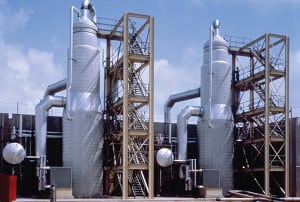
In late 2015, the U.S. Environmental Protection Agency (EPA) published new regulations governing wastewater discharge from steam electric power plants. These new regulations, or effluent limitation guidelines
-
 Legal & Regulatory
New Reports Say CPP and Renewable Tax Credits Have Big Implications for the Power Sector
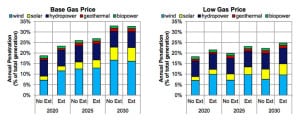
New reports released this week see big growth in renewables from the recently extended federal tax credits, but big uncertainty due to the possible end of the Clean Power Plan (CPP). New York-based consulting firm Rhodium Group says investment plans in the power sector will be radically different if the Clean Power Plan doesn’t happen. […]
-
 Legal & Regulatory
Twenty States Call on Supreme Court to Stay EPA Mercury Rule
Rallied by the Supreme Court’s unprecedented stay of the Environmental Protection Agency’s (EPA) Clean Power Plan, a coalition of 20 states has asked the high court to stay another disputed agency rule: the Mercury and Air Toxics Standards (MATS). The states are: Alabama, Alaska, Arizona, Arkansas, Idaho, Iowa, Kansas, Kentucky, Michigan, Mississippi, Missouri, Nebraska, North […]
-
 Legal & Regulatory
U.S. Power Sector Carbon Emissions See Fractional Increase
Power generators consumed 34% of total U.S. energy uses from fossil fuels and accounted for 39% of the nation’s carbon emissions from fossil fuel combustion in 2014—a fraction of a percent more than in 2013—the Environmental Protection Agency (EPA) said in its newly released Greenhouse Gas Inventory report. In 2014, 2,054.8 million metric tons […]
-
 Legal & Regulatory
EPA Chief: Clean Power Plan to Win on Merits
Despite the unprecedented stay by the Supreme Court, the Environmental Protection Agency’s (EPA’s) Clean Power Plan will withstand legal challenges “based on its merits,” predicted the agency’s head, Gina McCarthy, at the IHS CERAWeek conference in Houston. McCarthy discussed the plan and other recent initiatives to stem greenhouse gas emissions—including recently announced rules to curb […]
-
 Nuclear
DOE Secretary Moniz on WIPP and Spent Nuclear Fuel Storage
Department of Energy (DOE) Secretary Ernest Moniz reaffirmed that the Waste Isolation Pilot Plant (WIPP) in Carlsbad, N.M., is on track for reopening later this year, but he did not offer any encouragement to those in the southwest corner of the state who support using the site for permanent disposal of the country’s spent nuclear fuel.
-
 Legal & Regulatory
Seventeen U.S. Governors Sign Clean Energy Accord
The governors of 17 U.S. states on February 16 signed a landmark agreement to cooperate on expanding clean energy, energy efficiency, and modernizing energy infrastructure. The Governors’ Accord For A New Energy Future makes the case that “new energy solutions” can “provide more durable and resilient infrastructure, and enable economic growth, while protecting the health […]
-
Legal & Regulatory
Supreme Court Stays Implementation of Clean Power Plan
Dealing a major blow to the Obama administration’s climate agenda, the U.S. Supreme Court by a 5-4 vote stayed implementation of the Environmental Protection Agency’s (EPA’s) Clean Power Plan (CPP) pending a decision on its legality in the D.C Circuit Court of Appeals. The one-page order gives no explanation for the court’s action, but issuance […]
-
 Legal & Regulatory
Duke Energy Fined $6.6 Million for Dan River Coal Ash Spill
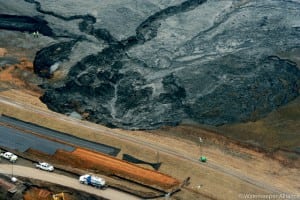
The North Carolina Department of Environmental Quality (NCDEQ) issued a $6.6 million fine to Duke Energy on February 8 for environmental violations related to the February 2014 coal ash spill from the Dan River power plant near Eden, N.C. Although the fine is not insignificant, it pales in comparison to the $102 million the company […]
-
 Coal
CoalKemper IGCC In-Service Date Pushed to Q3, Costs Surge Again
Mississippi Power’s lignite-fired Kemper County integrated gasification combined cycle (IGCC) power plant is seeing yet another delay and $110 million in new costs, a filing with state regulators shows. The company’s December 2015 monthly status report for the nation’s first commercial power plant that will capture and store carbon dioxide anticipates that it will now […]
-
 Legal & Regulatory
EPA, DOE Experts Upbeat on Regulatory Agenda
The Environmental Protection Agency’s (EPA’s) acting administrator of the Office of Air and Radiation, and the Department of Energy’s (DOE’s) head of clean coal and carbon management gave upbeat assessments of the Obama administration’s regulatory agenda and power sector priorities speaking at the EUEC 2016 conference in San Diego on February 3. Janet McCabe of […]
-
 O&M
O&MCoal Ash Mapping Using Electromagnetic Technology
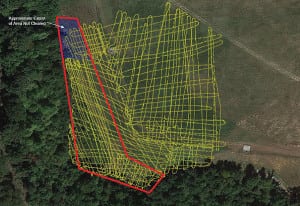
The identification and containment of coal ash has risen to the top of the priority list for plant managers across the U.S. after inadvertent releases of coal ash into unintended areas resulted in adverse
-
 Legal & Regulatory
CHP and Other Technologies Could Breathe New Life into U.S. Coal-Fired Power Plants
Since the U.S. Environmental Protection Agency (EPA) released its “new source performance standard” on August 3, 2015, requiring new coal power plants in the U.S. to emit no more than 636 kg (1,400 lb) of
-
 Renewables
Bagasse and Blended Biomass Cogeneration Advances in the Cuban Sugarcane Industry
Advances in firing biomass, including bagasse, in Cuban sugarcane operations.
-
 Legal & Regulatory
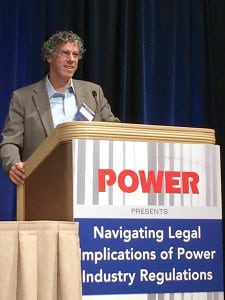
Navigating Legal Implications of Power Industry Regulations
A summary of POWER’s legal affairs conference on power industry regulations.
-
 Legal & Regulatory
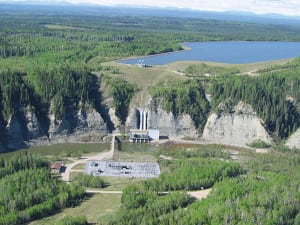
TransAlta Plays Defense with Coal Out, Renewables In
When it comes to a transition away from coal, TransAlta Corp. is playing political defense. The Canadian province of Alberta contains among the richest fossil energy resources in the world, including oil (and
-
 O&M
O&MWinter Storm Wallops East Coast, Disrupts Power
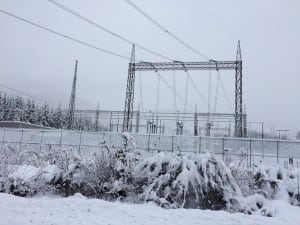
The historic winter storm that buried the Eastern U.S. in snow over the weekend shut the lights off for more than a million customers from Arkansas to Massachusetts as it downed power lines and hampered operations at some power plants. According to the Department of Energy’s Office of Electricity Delivery and Energy Reliability, at one […]
-
Legal & Regulatory
[UPDATED] Halt the EPA’s Clean Power Plan Now, 26 States Urge Supreme Court
Following the D.C. Circuit’s denial of motions for stay, 26 states have petitioned the U.S. Supreme Court to immediately block the Environmental Protection Agency’s (EPA’s) contentious Clean Power Plan from taking effect. The January 26 application, directed to Chief Justice John Roberts Jr., notes that the states filed petitions for review of the carbon rule […]
-
 Legal & Regulatory
Senate’s Failed Veto Override Leaves WOTUS Rule Intact
Congressional efforts to block the Environmental Protection Agency’s (EPA’s) contentious rule asserting federal authority over small bodies of water were derailed on Jan. 21. Senate Republicans voted 52–40, failing to override the president’s veto of the so-called “Clean Water Rule”—also “Waters of the United States” (or WOTUS) well short of the 60 necessary votes. Clean […]
-
Renewables
California Muni Says No to Coal Power
Silicon Valley Power (SVP)—Santa Clara, Calif.’s municipal electric utility—has decided to stop importing out-of-state electricity from the San Juan Generating Station, completely eliminating coal from its power supply. San Juan is a 1,646-MW four-unit coal-fired power plant located in Waterflow, N.M., and operated by PNM. SVP owns an interest in San Juan through its participation […]
-
 Legal & Regulatory
State RPSs Provide Significant Economic Benefits, DOE Study Says
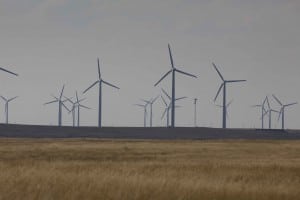
State renewable portfolio standards (RPSs) provide around $7.4 billion in annual economic benefits and substantial reductions in water withdrawals and consumption, according to a new study from the Department of Energy’s Lawrence Berkeley National Laboratory and National Renewable Energy Laboratory released on Jan. 6. The study, “A Retrospective Analysis of the Benefits and Impacts of […]