
Environmental
-
 Legal & Regulatory
Poland Shuns Wind, Doubles Down on Coal-Reliant Future
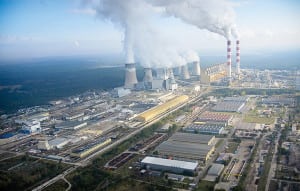
Poland, a country where hard coal and lignite power plants currently generate about 85% of the power, has passed a law that stymies a wind power expansion and is now mulling draft legislation that will help boost investments in new coal capacity. The eastern European country has bucked the trend toward renewable power that many […]
-
 Water
WaterPrevent Purified Water from Putting a Damper on Your Next Commissioning
When commissioning a new power plant, requirements for purified water can be large—often more than an unfinished plant can supply. When it’s time to bring in outside help, proper planning can help avoid problems and keep budgets under control. With all the complexity inherent in the commissioning of a power plant, the last thing anyone […]
-
 Legal & Regulatory
Even with Trump, America’s Coal Age Ends in 2016
Now that the political conventions are over and Americans must choose between two presidential candidates, the rhetoric around coal’s future continues to heat up. What neither candidate is telling you, however, is that no matter who is elected in November, no matter what the makeup of the next Congress is, America’s coal age is over. […]
-
 Coal
CoalFirstEnergy Moves to Deactivate Two Embattled Ohio Coal Plants
FirstEnergy Corp. will sell or deactivate 856 MW of coal-fired generation to reduce fleet operating costs. The company announced on July 22 that it plans to sell or deactivate the 136-MW Bay Shore Unit 1 in Oregon, Ohio, by October 2020. In addition, Units 1–4 (totaling 720 MW of capacity) at the company’s seven-unit W.H. […]
-
 Solar
Solar11 Things to Know About the Solar Sector’s Precarious Future
Despite escalating growth over the past decade, the U.S. solar power sector faces potentially crippling issues concerning module supply, workforce deficiencies, and grid interconnection obstacles, according to industry experts attending an international solar and energy storage convention. The country added an estimated 14.5 GW of new solar photovoltaic (PV) capacity in 2016, and by 2021, […]
-
 Legal & Regulatory
Federal Court Stays EPA’s Regional Haze Rule
A federal appeals court has stayed a regional haze rule finalized by the Environmental Protection Agency (EPA) earlier this year that had threatened to close up to 8.4 GW of coal-fired power capacity in Texas. In a unanimous ruling on July 15, the U.S. Court of Appeals for the Fifth Circuit granted a motion for […]
-
 Legal & Regulatory
Amid Scrutiny, Kemper IGCC Project Marks Big Syngas Production Milestone
Southern Co.’s Kemper County energy facility—the only carbon capture and storage (CCS) integrated gasification combined cycle (IGCC) power plant that is under construction—is producing syngas using lignite. The plant marked its most significant milestone to date on July 14, said Southern Co.’s Mississippi Power. It means that the first-of-its-kind technology to convert locally mined lignite […]
-
 Legal & Regulatory
Green Groups Challenge PJM’s Capacity Performance Rules
The “polar vortex” storm of January 2014 blew in big changes to PJM Interconnection’s operations. But these changes are now the subject of a lawsuit filed by environmental groups, alleging they discriminate against clean energy sources. The sub-zero temperatures froze coal piles and gearboxes. Natural gas plants, lacking firm contracts for fuel delivery, were unable […]
-
 Legal & Regulatory
Obama Administration’s Environmental Rules to Leave Lasting Legacy on Power Sector, Markets
Witnesses at a Congressional hearing raised concerns about the complexity, costs, legality, and feasibility of the 3,900 final rules published by the Environmental Protection Agency (EPA) during the Obama administration. A large portion of those rules affect the power sector, but none are more contentious than the Clean Power Plan, regulatory and citizen interest experts […]
-
 Commentary
Power’s Environmental Issues Then and Now
Discussions about environmental issues related to power plants and the regulations governing their operation are as old as the industry, I discovered while thumbing through the bound July through December 1914 issues of POWER. The specifics of the environmental concerns have become more detailed and complex as scientific knowledge, monitoring technologies, and mitigation solutions advance. […]
-
 Legal & Regulatory
Weighing the Environmental Impacts of Wind and Solar
Renewable generation is usually characterized as more environmentally friendly than fossil fuels, and in many respects, that’s true. But there is a growing recognition that solar and wind generation have their own impacts, and an increasing number of manufacturers and generators are looking for ways to minimize them. Iceland might be about the last place […]
-
 Legal & Regulatory
Generators Grapple with ELG Implementation
Plant wastewater treatment is not what it once was, and changes in the Environmental Protection Agency’s effluent limitations guidelines (ELG) have added a host of new wrinkles. A panel of power plant experts discussed what plant managers are planning and doing to keep things running smoothly within the new rules. For more than three decades, […]
-
 Renewables
Rwanda’s Power Production Triumph over a “Killer Lake”
Lake Kivu, the 1,040-square-mile “killer lake” that stretches over the border between Rwanda and the Democratic Republic of Congo (DRC), has long been a source of trepidation. Because it sits between two
-
 Coal
CoalEmploying Fuel Cells for Carbon Capture
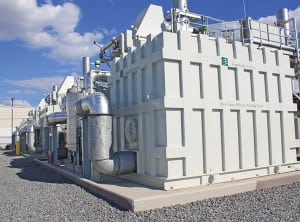
Fuel cells are a rapidly expanding option for distributed generation, with fuel cell–based power plants now being deployed in capacities into tens of megawatts (see “59-MW Fuel Cell Park Opening Heralds
-
 Legal & Regulatory
Simplify MATS Compliance with Particulate Matter Continuous Emission Monitors
Now that power plant operators have some experience under their belts related to Mercury and Air Toxics Standards (MATS) compliance, it’s time to reevaluate the options for demonstrating compliance. Starting
-
 O&M
O&MEmissions Catalyst Issues for Fast-Start Combined Cycle Power Plants
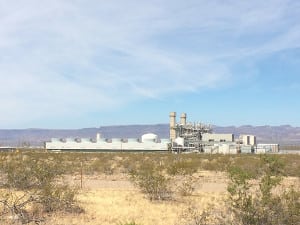
When gas-fired plants are required to cycle more than they were designed for, added stress on plant components isn’t the only consequence. You also need to pay closer attention to turbine catalyst systems. Traditionally, many combined cycle gas turbine (CCGT) power plant units were designed and permitted for a baseload or similar operating profile. Startups […]
-
Coal
Circulating Fluidized Bed Dry Scrubber Effectively Reduces Emissions
When owners of the Big Stone Plant researched air quality control system technology, they considered all available options and eventually settled on a design that was not in widespread use. Now that the
-
 Legal & Regulatory
Real-Time Environmental Data Integration Improves Air Quality Reporting
As power plant reporting requirements for emissions regulations increase in number and complexity, yesterday’s data collection and reporting systems can make the job harder than it needs to be. The electrical power generation sector is reportedly the largest source of greenhouse gas emissions in the U.S. As such, it is the focus of the Environmental […]
-
 Legal & Regulatory
Avoiding Wildlife Impacts from Renewable Energy in Europe
Courtesy: Ad Meskens/Wikimedia Commons Europe has been in the forefront of renewable energy development, and though the scientific research on wildlife impacts is limited, European environmentalists and developers are beginning to create baseline frameworks and guidelines. Developers around the world can learn from their experience. As more renewable energy systems come online, providers hope to […]
-
 Legal & Regulatory
The Coal Refuse Dilemma: Burning Coal for Environmental Benefits
The niche alternative energy industry that generates power from hazardous piles of coal waste that litter the U.S. is facing an environmental Catch-22. The torrent of coal mined and processed in the U.S. since
-
 Coal
CoalEvaluating the Use of CEMS for Accurate Heat Rate Monitoring and Reporting
Power plants are familiar with using continuous emissions monitoring systems (CEMS) to monitor pollutants, but these devices also may be able to measure heat rate—which could be handy for future compliance with the Clean Power Plan. Continuous emissions monitoring systems (CEMS) are used to monitor power plant flue gas emissions as a means to comply […]
-
 Legal & Regulatory
B&W to Restructure Power Business, Cites Dismal Coal Projections
Projections that coal utilization will decline faster than previously forecast have spurred Babcock & Wilcox Enterprises (B&W) to shed 200 jobs and restructure its traditional power business that serves coal-fired power generation in a bid to reduce overhead and improve efficiency. The Charlotte, N.C.–based energy and environmental technology and service company said on June 28 […]
-
 Legal & Regulatory
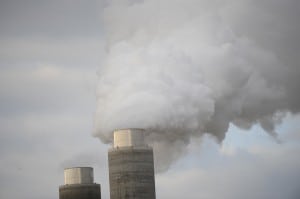
IEA: World’s Power Sector Trails Others in Air Emissions
The world’s power sector last year emitted a third of global sulfur dioxide (SO2) emissions, 14% of nitrogen oxides (NOx), and 5% of total particulate emissions (PM2.5), but those emission values have fallen drastically over the last decade even though coal power generation has seen a surge, the International Energy Agency (IEA) said in a […]
-
 Legal & Regulatory
U.S., Canada, Mexico Commit to 50% Carbon-Free Power by 2025
The U.S., Mexico, and Canada today announced an unprecedented goal to procure 50% of North America’s total power generation from renewables, nuclear, carbon capture and storage (CCS), and energy efficiency technologies by 2025. President Obama, Prime Minister of Canada Justin Trudeau, and the President of Mexico Enrique Peña Nieto, announced the continental goal, part of […]
-
 Renewables
District Energy Systems Improve Efficiency and Reduce Carbon Emissions
Although it’s not widely publicized, a majority of the energy used to generate electricity is wasted in the form of heat discharged to the environment. For better or worse, that’s just the way a typical thermal power plant works. Fuel, such as coal, biomass, natural gas, or uranium (in the case of nuclear plants), is […]
-
 Renewables
Utility Paradigm Changing Globally in Response to Distributed Energy and Digitization
Enrico Viale, head of global thermal generation for the Italian energy company Enel, kicked off an international power industry event yesterday with a keynote presentation describing the “needs” of utilities in the future.
-
 Legal & Regulatory
Despite Stay, EPA Proposes Details of Clean Power Plan Voluntary Incentive Program
The Environmental Protection Agency (EPA) has unveiled details of the Clean Energy Incentive Program (CEIP), a voluntary measure central to the judicially stalled Clean Power Plan that seeks to provide guidance to states and tribes that want to meet goals under the plan when it becomes effective. The final Clean Power Plan, finalized in […]
-
 Legal & Regulatory
Supreme Court Leaves Revised MATS in Place for Now
The Environmental Protection Agency’s (EPA’s) controversial Mercury and Air Toxics Standards (MATS) survived another day as the U.S. Supreme Court on June 13 declined to review the D.C. Circuit’s decision to leave the rule in place while the EPA revises it to comply with a 2015 Supreme Court ruling. The 2015 decision sent MATS back […]
-
 Legal & Regulatory
How Will the Supreme Court Stay Affect the Clean Power Plan?
One of the witnesses testifying before the U.S. Senate Committee on Environment and Public Works on June 9 believes states and regulated entities will be granted additional time to comply with the Environmental Protection Agency’s (EPA’s) Clean Power Plan (CPP), if the rule is ultimately found to be lawful. Currently, the U.S. Supreme Court has […]
-
 Renewables
Experts: Gas Power’s Expansion Riddled with Roadblocks
Even though it may dominate forecasts, natural gas–fired generation faces a troubled expansion in the U.S., according to experts from a variety of stake-holding entities—including an industry group, a utility, a generator, and a pipeline company. Challenges that have few solutions—from price volatility, to gas transport concerns, to rule uncertainty—may upend the nation’s dependence […]