Environmental
-
 Coal
CoalDemand for Rare Earths Sparks Research for Recovery from Coal
Global demand for the 17 periodic table elements—15 within the chemical group called lanthanides, plus yttrium and scandium—has soared in recent years as they become increasingly integrated in new technologies. Some major end uses include generators for wind turbines, permanent magnets and rechargeable batteries for hybrid and electric vehicles, automotive catalytic converters, fluid cracking catalysts […]
-
 Legal & Regulatory
Trump Reportedly Picks Oklahoma Attorney General Pruitt for EPA
President-elect Donald Trump has picked Oklahoma’s Republican attorney general, Scott Pruitt, to head the Environmental Protection Agency (EPA), the New York Times reported Wednesday afternoon, citing a transition official. The report had not been officially confirmed or denied as this article was written. Pruitt, 48, is a long-time supporter of the fossil fuel […]
-
 Renewables
Exelon Gets Its Christmas Wish—Illinois Legislation Will Save Nuclear Plants
After a lengthy process of give and take, the Illinois Legislature approved the Future Energy Jobs Bill (SB 2814) on December 1, the last day of the state’s veto session. The bill will now go to Gov. Rauner (R) for his signature, which is expected. Once signed, it will take effect on June 1, 2017, […]
-
 Coal
CoalUNESCO Recommends Relocation of Coal Plant in Bangladesh
In a rare intervention, the United Nations’ (UN’s) heritage conservation arm is urging Bangladesh to relocate a proposed 1,320-MW coal-fired power plant because it poses a serious threat to one of the world’s largest mangrove forests. Bangladesh-India Friendship Power Co. Ltd. (BIFPCL)—a joint venture of the Bangladesh Power Development Board (BPDB) and India’s largest power […]
-
 Coal
CoalOntario Power Generation: A Clash of Politics and Power Planning
Ontario—Canada’s most populous province and its major economic engine—has an electric power supply system so driven by provincial politics that it has pushed the province’s utility generating arm, Ontario Power Generation, into what appear to be incoherent resource policies. Late last September, in a stunning announcement, the Canadian province of Ontario’s Energy Ministry said it […]
-
 Renewables
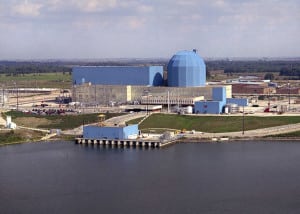
Exelon’s Legislative Effort to Save Illinois Nuclear Plants Moves Forward
The latest attempt by Exelon Corp. to save two of its struggling Illinois nuclear power plants passed a critical hurdle late last week: the Future Energy Jobs Bill—known as SB 2814—was introduced in the Illinois state General Assembly, after passing the House Energy Committee by a 9–1 vote. Exelon claims the bill would save and […]
-
 Coal
CoalCanada to Phase Out Coal Generation by 2030, Stricter Power Plant Rules on Horizon
Canada’s Ministry of Environment and Climate Change on November 21 announced regulatory actions to accelerate the phase-out of coal generation that lacks carbon capture and sequestration (CCS) across the country within the next few decades. The measures announced by Minister of Environment and Climate Change Catherine McKenna are part of a larger transition from “traditional” […]
-
 Renewables
COP22: Countries Challenge the World to Advance Clean Energy
Meeting in Marrakesh, Morocco, during the most recent United Nations climate change conference (COP22), Mission Innovation countries—a group of nations whose stated mission is to accelerate the pace of clean energy innovation—launched seven innovation challenges, designed as a global call to action for the research community, industry, and investors. The challenges are: Smart Grids Off-Grid […]
-
 Legal & Regulatory
Regulators’ Meeting Opens with Focus on Infrastructure Conundrum
“We’re at a very challenging time,” said former Federal Energy Regulatory Commission (FERC) Commissioner Tony Clark at the annual meeting of the National Association of Regulatory Utility Commissioners (NARUC) on November 14. We have a “need for infrastructure, but it’s more difficult to get it sited and built than ever before.” Clark’s comment, which he […]
-
 Legal & Regulatory
Election Roundup: What Trump’s Win Means for Energy and Environment
Donald Trump’s stunning victory in the U.S. presidential election portends enormous changes in U.S. energy and environmental policy, and a nearly complete turnover of the men and women who will administer that policy for the next four years.
-
 Coal
CoalUPDATED: Unexpected Outcomes for Energy Measures on State Ballots
The November 8 election yielded surprising results for controversial energy-related measures in three states. In Florida, voters rejected Amendment 1, a measure backed by utilities to curb the expansion of resident-owned solar rooftop installations. In Washington, the nation’s first state attempt to impose a carbon tax on fossil fuels and power generated from fossil fuels fell […]
-
Commentary
October Surprises—Power Industry Edition
The first week of October was noteworthy for the volume of potentially life-changing and industry-changing carbon and climate change–related news. While the U.S. power industry awaited a decision from the
-
 Legal & Regulatory
Next-Generation FGD Wastewater Bioreactor Technology Introduced for ELG Compliance
Compliance with one of the latest federal environmental regulations, the Effluent Limitations Guidelines (ELG), can be both costly and complicated. A newly available option offers features and capabilities that may make it a more attractive alternative than conventional approaches. In September 2015, the U.S. Environmental Protection Agency (EPA) finalized a new rule affecting flue gas […]
-
 Coal
CoalPlant Barry to Pilot Fuel Cell Carbon Capture from Coal and Gas Generation
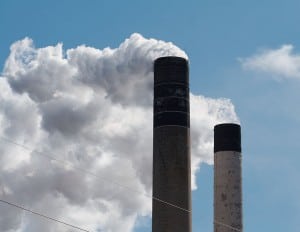
FuelCell Energy and ExxonMobil will test a novel fuel cell carbon capture technology at a Southern Co. 2.7-GW coal- and gas-fired power plant in Alabama, the companies said on October 27. The technology under development by the companies uses carbonate fuel cells to concentrate and capture carbon dioxide streams from power plants. A pilot plant […]
-
 Legal & Regulatory
H.F. Lee Coal Ash Spill Puts Duke Energy Under the Spotlight Again
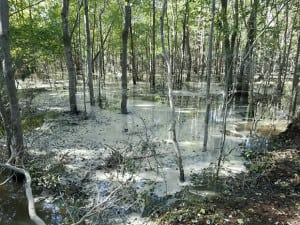
Although Duke Energy maintains that “only very minor erosion of material” migrated from an inactive coal ash basin on the H.F. Lee Power Plant site, several environmental advocacy groups are concerned that the spill has dirtied North Carolina’s Neuse River. “This spill is easily visible to anyone in a boat. The area looks like a […]
-
 Coal
CoalPilot Test of Pressurized Fluidized Bed Combustion Carbon Capture Technology Kicks Off in Canada
In a major development for a novel carbon capture technology, developers are preparing to commission a 1-MWt oxy-fired pressurized fluidized bed combustion (oxy-PFBC) pilot test facility in Canada’s capital city, Ottawa. The U.S. Department of Energy (DOE) and its Canadian counterpart, Natural Resources Canada, commemorated the facility’s construction and commissioning in a ribbon-cutting ceremony on October 18 […]
-
 Legal & Regulatory
Northeastern States File Suit to Force EPA Action on Ozone Transport Region Expansion
Six northeastern states are suing the Environmental Protection Agency (EPA) to force it to act on controlling air pollution blowing in from coal-fired power plants located in nine Midwestern and southern states. New York, Connecticut, Massachusetts, New Hampshire, Rhode Island, and Vermont on October 7 filed a lawsuit in the U.S. District Court for the […]
-
 Coal
CoalNew Technology Offers Hope for Cost-Effective Carbon Capture and Storage Systems
Academics at the University of Sheffield—a public research university in the UK—have begun two new carbon capture and storage (CCS) projects, searching for cheaper methods of capturing carbon dioxide (CO2) from fossil-fueled power plants. The work is being funded by the European Commission’s (EC’s) Horizon 2020 Low Carbon Energy program. Solvents Could Be Game-Changing The […]
-
 Legal & Regulatory
Paris Agreement Meets Final Requirement to Enter into Force
As of October 5, the Paris Agreement—the first global agreement on efforts to limit and mitigate the effects of climate change—had been ratified by a sufficient number of countries, representing at least 55% of global greenhouse gas (GHG) emissions, to bring the agreement into force.
-
 Coal
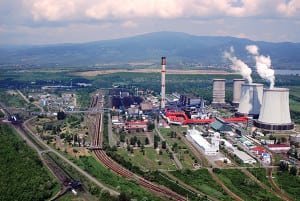
CoalTOP PLANT: Mátra Power Plant, Visonta, Hungary
Owner/operator: Mátra Power Plant Co. Ltd. Hungary’s largest coal-fired power plant is a model of efficiency and environmental impact despite its 1960s-era vintage. Continual upgrades have kept the plant running smoothly, and a modern dense slurry ash-handling system keeps combustion residuals under control and allows for a zero liquid discharge posture. Unlike some of its […]
-
 Coal
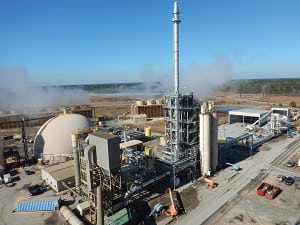
CoalCoal Combustion By-products Aren’t All Bad: The Beneficial Use Solution
While it’s true that coal ash can be an environmental hazard if it’s not properly managed, there are a lot of positive uses for coal combustion products that actually provide benefits to the world. Many beneficial uses have been around for decades, but valuable new options are being developed, and some are starting to make […]
-
 Coal
CoalDuke Energy Agrees to Pay $6 Million for Dan River Coal Ash Spill
Duke Energy agreed to pay a $6 million fine under a new settlement reached with North Carolina’s Department of Environmental Quality (DEQ) for the February 2014 coal ash spill at its Dan River power plant in Eden. State regulators fined the utility $6.8 million in February, but Duke Energy challenged the decision, which was the […]
-
 Legal & Regulatory
Dutch Parliament Vote Could End Coal Power Generation in the Netherlands
The Dutch parliament’s vote in favor of a motion to cut carbon emissions 55% by 2030 could spell the end of coal-fired power generation in the European nation. Although nonbinding, the measure would bring the Netherlands in line with agreements negotiated during the Paris climate talks that took place late last year. What it means […]
-
 Legal & Regulatory
LIVE UPDATES: The Clean Power Plan at the D.C. Circuit
Oral arguments on the merits of the Environmental Protection Agency’s (EPA’s) Clean Power Plan were concluded before an en banc panel (10 judges, rather than the anticipated three) at the D.C. Circuit Court of Appeals on September 27. West Virginia v. Environmental Protection Agency (No. 15-1363) is arguably the most important environmental case in nearly […]
-
 Renewables
Briefs: Mass., N.Y., Calif. Move to Address Greenhouse Gas Emissions
At least three states called for hefty new measures relating to greenhouse gas (GHG) goals over the past week. Mass. Gov. Directs State Officials to Implement Regulations to Annually Reduce GHG Massachusetts Gov. Charlie Baker (R) signed an executive order on September 16 directing state officials to develop rules for specific, yearly reductions in GHG […]
-
 Slideshows
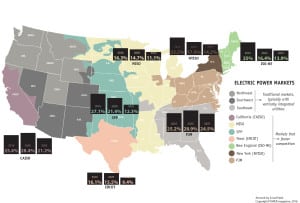
SLIDESHOW: An Alarming Trend Affecting U.S. Baseload Power
States, regulators, and market participants have in recent years called attention to a trend concerning uneconomic baseload generation in organized wholesale markets, specifically in ISO New England, New York Independent System Operator (NYISO), MISO, PJM, the Electric Reliability Council of Texas (ERCOT), and the California Independent System Operator (CAISO). Cheap natural gas, low power demand […]
-
 Renewables
DOE, DOI Roll Out National Strategy for 86 GW of Offshore Wind
A strategy rolled out by the Department of Energy (DOE) and Department of the Interior (DOI) to enable 86 GW of offshore wind capacity in the U.S. by 2050 highlights a number of key hurdles, including those related to technology, regulations, the environment, and markets. The DOE’s and DOI’s September 9–released joint document, “National Offshore […]
-
Legal & Regulatory
EPA Issues Updated CSAPR Rule in Push for Compliance with More Stringent 2008 Ozone NAAQS
Updates finalized by the Environmental Protection Agency (EPA) to its Cross-State Air Pollution Rule (CSAPR) identify nitrogen oxide emission (NOx) reductions from power plants in 22 states to help states address transported pollution under the agency’s more stringent 2008 ozone air quality standards. It marks the first time the EPA has updated an existing program […]
-
 Legal & Regulatory
Coal Power Plant Post-Retirement Options
Deciding to retire a coal-fired unit is often a tough call, but even tougher decisions follow. The next steps taken by a generation owner have multiple economic, environmental, and stakeholder consequences. Since 2000, U.S. generating companies (Gencos) have announced the closure of more than 200 coal-fired power plants, totaling 102 GW of generating capacity. Closures […]