
Coal
-
Coal
Emissions: Unintended Consequences of Problem-Solving
Most folks probably don’t think that power plants burning coal and ethanol — the latter touted as a having a smaller carbon footprint — have much in common. But at least one ethanol plant — Blue Flint Ethanol in Underwood, N.D. — is co-located with a coal-fired power plant in order to use its excess […]
-
 O&M
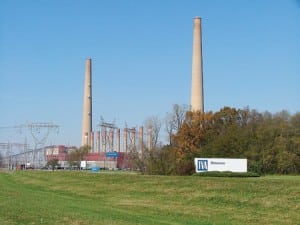
O&MTVA’s Shawnee Fossil Plant Unit 6 sets new record for continuous operation
Shawnee’s new 1,093-day long-run record is a testament to the plant’s highly qualified and trained staff, excellent operations and maintenance processes, and the quality leadership required to keep all the moving parts pointed in the right direction. If running a power plant is a team sport, then the staff of Shawnee are in a league of their own.
-
 O&M
O&MAlliant Energy sweeps EUCG Best Performer awards
The Fossil Productivity Committee of the EUCG conducts an annual analysis of its member plants’ operating results and selects the Best Performer in the categories of small and large coal plants. For 2007, Alliant Energy’s Lansing and Edgewater Generating Stations took the top spots—the first time in recent history that a single utility claimed both awards.
-
 Coal
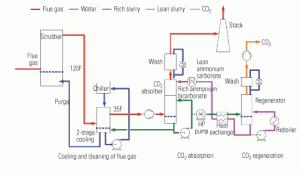
CoalAlstom’s chilled ammonia CO2-capture process advances toward commercialization
Carbon dioxide emissions aren’t yet regulated by the EPA, but it’s likely they will be soon. There are many technically feasible, but as-yet-undemonstrated ways to reduce the considerable carbon footprint of any coal-fired plant, whether it uses conventional or unconventional technology. One promising approach to removing CO2 from a plant’s flue gas uses chilled ammonium bicarbonate to drive the separation process.
-
 Coal
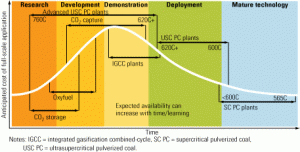
CoalAccelerating the deployment of cleaner coal plants
The dearth of commercial operating experience for advanced coal-fired facilities is forcing their early adopters and builders to use long development cycles and pay high costs for unique engineering design studies. A broad-based industry collaborative effort fostered by EPRI to address this issue is beginning to show results.
-
 O&M
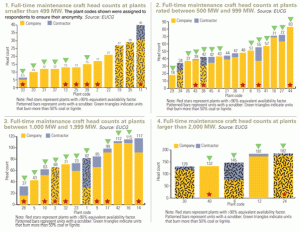
O&MWho’s doing coal plant maintenance?
POWER has reported on several EUCG benchmarking studies over the past several years. This month we examine the maintenance staffing of 45 coal plants reported by 13 EUCG member utilities. If you benchmark your plants or fleet, as you should, some of the study’s results challenge what is considered conventional wisdom.
-
 Commentary
What Congress can learn from Google
Chances are good that legislation to “cap and auction” greenhouse gas (GHG) emissions will become law as early as 2009. While many environmentalists, utilities, and energy companies agree that cap and auction is the right framework, huge differences remain. Environmentalists want an 80% reduction of GHG emissions by 2050, or sooner. Energy companies want more […]
-
 Coal
CoalGlobal Monitor (February 2008)
FutureGen picks Mattoon, Ill./Duke applies for first greenfield COL/PPL to work with UniStar on another COL
/Areva seeks NRC certification of its reactor/Mitsubishi also in line at the NRC/PV project shines in Nevada/SunEdison commissions Colorado PV plant/Big concentrating solar plant proposed/Super Boiler celebrates first anniversary/Small fuel cell uses JP-8 jet fuel/POWER digest -
 O&M
O&MFocus on O&M (February 2008)
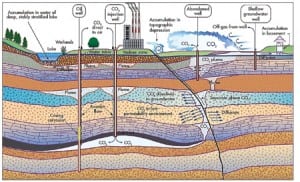
Survey captures industry’s carbon concerns; Sequestering coal plant emissions; Comparing mercury measurement methods
-
 Coal
CoalGlobal Monitor (January 2008)
Dominion applies for new Virginia reactor / ABB commissions world’s largest SVC / Google Earth adds air quality data / Alstom supplies integrated solar/CC project in Morocco / DOE updates coal plant database / Dam the Red Sea? / Complying with CWA Section 316
-
 Coal
CoalRegulatory risks paralyzing power industry while demand grows
In our second annual report on the state and future of the U.S. power generation industry, we combine the considerable experience of POWER’s editorial staff with the market savvy of Industrial Info Resources Inc. (see next story) to preview the industry’s direction in 2008. We anticipate that the specter of carbon control legislation will hobble coal and make renewables the hot ticket while nukes continue to inch forward in a generation market that is basically treading water.
-
 Coal
CoalGreater fuel diversity needed to meet growing U.S. electricity demand
Industrial Info Resources’ strengths are tracking capital projects and cost projections and providing intelligence about the power generation market, among others. IIR has used its large industry databases and numerous industry contacts to develop its outlook for 2008. Here’s what you should expect and plan for this year.
-
Coal
Speaking of Coal Power: With Chaos Comes Opportunity
Combat veterans use the phrase "fog of war" to explain why carefully prepared battle plans are quickly overwhelmed by chaos once the first bullet is fired. Survivors often describe experiences that are markedly different from those of others standing only yards away. The fog of our industry’s battle to build new generating plants permeates the […]
-
 Coal
CoalThe Coal Patrol: Growth in PRB Coal Use Will Be Fueled by New Projects
Production from Wyoming Powder River Basin (PRB) coal mines ended last year with a increase of only about 1.1%, reflecting a record 451.3 million tons, according to the Department of Energy’s Energy Information Administration. Production of PRB coal spiked with a record 10% growth in 2006 following two derailments on the PRB’s main triple-track line […]
-
 O&M
O&MThe Coal Patrol: Court Rejects Industry Suit Targeting Miner Safety Rules
A federal appeals court has rejected a National Mining Association (NMA) suit seeking to throw out new regulations issued by the Mine Safety and Health Administration (MSHA). The rules were to improve protection for miners in the wake of accidents at two West Virginia coal mines in January 2006 that killed 15. (See COAL POWER […]
-
Coal
Tech Notes: Giving PRB Coal the Respect It Deserves, Part 1
Use of Powder River Basin (PRB) coal for power generation set another record in 2007. In fact, PRB coal now accounts for about 40% of all the coal fired in the U.S. to produce electricity. Yet we have barely dented the estimated 800 billion tons of the fuel’s proven reserves in Wyoming. The size of […]
-
 O&M
O&MCoal Plant O & M: Condition Monitoring Cuts Mirant Mid-Atlantic’s Costs
Condition monitoring (CM) has become an increasingly important aspect of power plant maintenance philosophy. Today many utilities are using a variety of predictive maintenance (PM) techniques like CM to lower their operation and maintenance expenses. Over the years, gencos have developed a diverse collection of CM programs of various breadth, depth, and formality. All are […]
-
 Coal
CoalFutureGen: FutureGen Finds a Home But Can’t Pay the Mortgage
The FutureGen Industrial Alliance Inc. selected Mattoon, Ill., as the site of the $1.8 billion FutureGen project just before Christmas, but the plant may never move off the drawing board.. FutureGen, the proposed prototype of a near-zero-emissions coal plant, is to demonstrate advanced technologies for coal gasification, electricity production, emissions control, CO 2 capture and […]
-
 Coal
CoalIGCC: IGCC’s Future Hinges on a Workable Carbon Framework
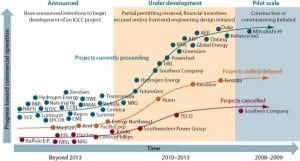
Integrated gasification combined-cycle (IGCC) technology, a process of gasifying coal that allows the capture of carbon dioxide emissions, has tremendous potential for meeting future baseload generation demand. Though it is one of the leading alternatives for producing clean power from coal, IGCC faces a precarious future due to rising capital costs and regulatory uncertainty. We’re […]
-
 O&M
O&MSafety: Worker Health and Safety Now Top Priorities for Alabama Power
Employees of Alabama Power, a Southern Company subsidiary, routinely work near energized wires, intense heat, nuclear fuel, heavy equipment, moving vehicles, and pressurized equipment, as well as under other conditions that require exceptional safety attitudes and measures. Though it is vitally important to provide electricity to customers, neither company believes that doing so is worth […]
-
 Coal
CoalGlobal Monitor (November 2007)
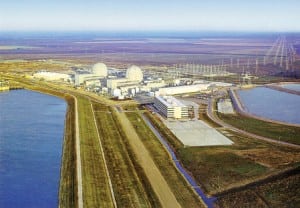
NRG applies for first COL / TVA green-lights Watts Bar 2 / Southern Co. and Florida muni launch IGCC project / UK approves wave energy "hub" / New Jersey-New York HV system launched / Membrane strips CO2 from methane faster / POWER digest
-
 O&M
O&MThe Coal Patrol: Demand Growth — and Reliability — Are Still Supply-Limited
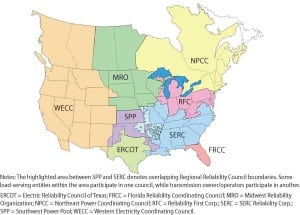
While noting marginal improvements since last year, America’s power reliability watchdog recently warned that the nation’s growing thirst for electricity will still far exceed planned increases in generation capacity over the next 10 years, and that reserve margins could dip below optimal levels within two or three years in California, the Rocky Mountain states, New […]
-
 Coal
CoalAdvanced Combustion: Cofiring Coal and Biomass or Non-Recyclable Waste
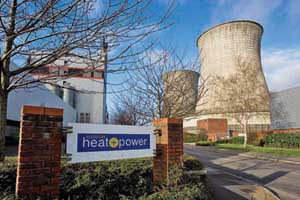
Burning biomass or nonrecyclable commercial, municipal, or industrial waste along with coal represents one of the nearest-term and lowest-cost options for reducing carbon dioxide (CO 2) emissions from existing utility power plants. At more than 150 plants worldwide, doing so has produced lower CO 2 emissions than burning coal alone. Indeed, with the number of […]
-
 Coal
CoalThe Coal Pile: Dreaming of a Green Christmas
On November 20, New York City Mayor Michael R. Bloomberg and top executives of the real estate company Tishman Speyer announced several energy conservation measures to be implemented at Rockefeller Center this holiday season. One is the outfitting of its famous Norway Spruce Christmas tree with 30,000 light-emitting diodes (LEDs) strung on five miles of […]
-
 Coal
CoalCoal Plant O&M: Retrofit Flyash-Handling System Pays Dividends
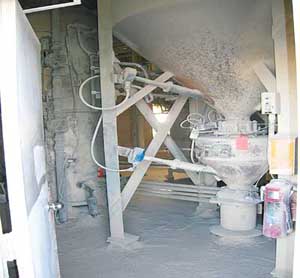
Like many older coal-fired plants, Westar Energy’s Jeffrey Energy Center (JEC) was built with traditional, pneumatic flyash-handling and removal systems. Such systems collect flyash in hoppers attached to the bottom of a unit’s electrostatic precipitator (ESP) and/or baghouse. Periodically, the hoppers are emptied into tanks and the flyash is conveyed away for disposal or beneficiation. […]
-
 Coal
CoalSafety: Detecting Fires on PRB Coal Conveyors
All conveyor systems are at risk of fire caused by the ignition of transported materials or equipment failure. But the propensity of Powder River Basin (PRB) coal to self-ignite introduces an exceptional hazard requiring special fire prevention and automatic detection and suppression efforts. To that end, this article discusses the technologies of linear heat detection […]
-
Coal
Speaking of Coal Power: Polar Bear Politics
During his June 2007 speech to the National Press Club, presidential candidate and former U.S. Senator John Edwards called America’s 37 million residents living below the poverty line "the great moral issue of our time." He proposed setting a national goal of ending poverty in 30 years. The Heritage Foundation, a conservative think tank, disputed […]
-
 O&M
O&MTech Notes: Intelligent Sootblowing Needed to Keep Uprated Units Clean
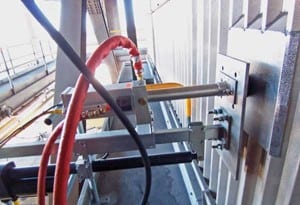
The National Coal Council estimates that 40,000 MW of additional generating capacity is available to existing U.S. coal-fired plants simply by making efficiency improvements. Because decreases in production costs go straight to a plant’s bottom line, efficiency projects usually have short payback periods, especially if implemented in concert with mandatory environmental upgrades. One often-overlooked consequence […]
-
 Coal
CoalPleasant Prairie Power Plant Air Quality Control Upgrade Project, Pleasant Prairie, Wisconsin
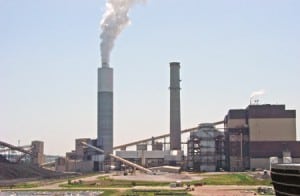
We Energies’ Pleasant Prairie Power Plant is a good example of how existing plants retrofitted with NOx and SO2 removal systems benefit from early planning and action. P4, as everyone calls it, recently completed a multiyear project to add a selective catalytic reduction system to one of its two units and a scrubber to both. The unique design and contracting aspects of the project make Pleasant Prairie one of POWER’s top coal-fired plants of 2007.
-
 Coal
CoalPolk Power Station Unit 1, Mulberry, Florida
Ten years ago, POWER selected Tampa Electric’s 250-MW Polk Power Station and its revolutionary integrated gasification combined-cycle demonstration project as the magazine’s 1997 Plant of the Year. Although no new commercial IGCC projects have been built since then, interest in deploying the coal-gasification technology is getting traction in some parts of the U.S. In 2007, POWER recognizes Polk Unit 1 as a Top Plant for developing trailblazing O&M practices and technical improvements that enable it to operate today as reliably as a modern pulverized coal plant, with lower pollutant emissions.