
Business
-
 Business
The Energy Crisis Boosted District Heating Development in Denmark
District heating in Denmark was developing in the same manner as in other countries before the energy crisis hit the western countries in 1973/74. However, by the beginning of the 21st century, the Danish energy consumption per capita for space heating had dropped more than 50% compared to 1973.
-
 Business
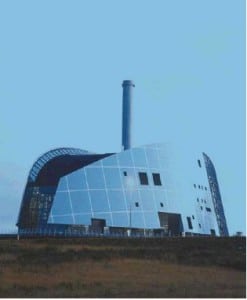
Waste-to-Energy in Denmark
Owing to visionary environmental and energy policies combined with coherent public planning, Denmark has developed the most efficient waste management system in Europe.
-
 Business
Merger and Acquisition “Truths”
Many representatives and advisors of renewable energy businesses believe (or at least hope) that 2010 will witness a significant “uptick” in merger and acquisition (M&A) activity across all renewable energy industries. As renewable energy businesses continue to attract funding and benefit from favorable governmental policies (or, conversely, as funding slows down or governmental policies change), such businesses should be in a position to attract suitors and/or explore growth opportunities. To the extent you are looking for or experience M&A opportunities, below are a few “M&A Truths.”
-
 Business
EarthEra®: Official Clean Energy Partner for RETECH 2010
ACORE is pleased to partner with EarthEra to balance the carbon emissions of this year’s conference. EarthEra is an innovative new program from NextEra Energy Resources, North America’s largest producer of wind and solar power. The EarthEra program provides a powerful new way for everyone, from large organizations to individual consumers to reduce their carbon footprint and help build a clean energy future. 100% of revenue received by EarthEra is directed to the EarthEra Renewable Energy Trust and used to build new renewable energy facilities.
-
 Business
DOE to Invest up to $12 Million to Support Early-Stage Solar Technologies
U.S. Department of Energy Secretary Steven Chu announced last week that the DOE’s National Renewable Energy Laboratory (NREL) will invest up to $12 million in total funding ($10 million from the American Recovery and Reinvestment Act) in four companies to support the development of early-stage solar energy technologies and help them advance to full commercial scale. The goal of this effort is to help further expand a clean energy economy and make solar energy more cost-competitive with conventional forms of electricity.
-
 Business
The Volvo Group and Sustainable Mobility
Efficient transport plays a crucial role in the development of society and its economy and, in many respects, commercial transport solutions are the lifeblood of the economy. At the same time, transportation has a negative impact on society, not least in the form of emissions and congestion. "The key is to strengthen the positive aspects of the transport system while working to combat the negative ones," says Stefan Lorentzson, President of Volvo Group North America. "The Volvo Group is continually developing new engine technologies which reduce emissions and increase fuel efficiency."
-
 Business
Alliance Promotes Federal Renewable Energy Standard
The RES Alliance for Jobs is a coalition of businesses and organizations that support Congressional enactment of a strong federal renewable energy standard (RES). The group’s members include companies and associations representing the wind, solar, biomass, waste-to-energy and hydro power business lines. The Alliance seeks to demonstrate that a strong RES would create sustainable growth in the renewable energy industries, enabling manufacturers to invest billions of dollars in the U.S. economy and create hundreds of thousands of high-quality American jobs that cannot be outsourced.
-
Business
Climate Change Pledge Is No Easy Sell on Hill
One day before the Copenhagen climate change summit was scheduled to end, negotiations had deadlocked. Developing nations led by China were demanding that rich countries pledge as much as $200 billion a year to help them cope with drought, rising sea levels and other ravages of global warming already afflicting some of the poorest countries on Earth. For its part, the United States was insisting on international verification of carbon emission reductions, a condition anathema to China but viewed as essential to gain Congress’ approval.
-
 Coal
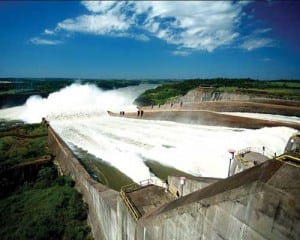
CoalBrazil: Latin America’s Beacon
With the eighth-largest economy in the world, Brazil has a clear need for power, but balancing supply and demand has proven tricky in recent decades. Even in a country where over 80% of generation capacity comes from renewables, planning for future capacity additions isn’t straightforward or easy.
-
-
Supply Chains
TREND: Gas Rebounds
After years of decline amid rising prices and fears of scarcity, natural gas as a power-generating fuel is on a rebound in the U.S., driven by new finds in Texas and the Mid-Atlantic states. These news stories highlight the trend.
-
Legal & Regulatory
The U.S. Has a New Dash for Gas
Natural gas has reemerged as the choice for new electric generation, according to the North American Electric Reliability Corp. Does this raise new reliability issues?
-
Legal & Regulatory
An Economist Looks at Climate Policy
An economist scratches his head in consternation as he looks at the discussion about climate change and energy conservation. Take his quiz to learn why commonly accepted assumptions make poor economic sense.
-
Legal & Regulatory
Where Are the New Engineers?
The U.S. isn’t producing the workforce it needs for the future of energy generation. And forget about “green jobs,” an undefined concept.
-
HR
Is the Future of Enterprise Computing in the Clouds?
“Cloud” computing has become the latest buzz in the information technology world. What does it mean? Is it real? And how can it affect your business world?
-
Legal & Regulatory
When It Comes to Nukes, Little Things Mean a Lot
It’s the little stuff that can lead to big stuff, the Nuclear Regulatory Commission tells FirstEnergy in relation to its Perry Nuclear Power Plant in Ohio.
-
Smart Grid
U.S. Smart Grid Forecast: Flurries of Activity
A number of factors are coalescing to create the most hospitable climate for smart grid development activities that has yet been seen in the U.S. Here’s a look at those elements and at the different models and motivations for smart grid project development across the country.
-
Legal & Regulatory
Addressing the Intraday Trading Position Conundrum
Power traders need to get faster, more accurate information on how markets are working and how they are swinging. They should look to telecommunications and manufacturing markets for solutions.
-
Smart Grid
What Do Customers Expect from the Smart Grid?
Xcel Energy’s SmartGridCity enterprise in Boulder, Colo., is one of the most talked-about smart grid projects. Here’s what some Boulder utility customers are saying about it.
-
 Solar
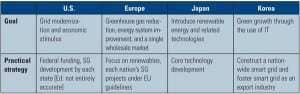
SolarWhich Country’s Grid Is the Smartest?
The U.S. isn’t the only country evaluating and implementing elements of smart grid technology. In fact, it could be argued that other nations are much farther along the path to a comprehensive, technically advanced system for integrating renewables, managing load, and creating a more flexible power grid.
-
 O&M
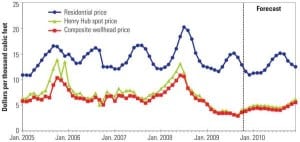
O&MThe U.S. Gas Rebound
"It’s déjà vu all over again," said Yogi Berra. The Hall of Fame catcher could easily have been predicting the coming resurgence of natural gas – fired generation. Yes, a few more coal plants will be completed this year, but don’t expect any new plant announcements. A couple of nuclear plants may actually break ground, but don’t hold your breath. Many more wind turbines will dot the landscape as renewable portfolio standards dictate resource planning, but their peak generation contribution will be small. The dash for gas in the U.S. has begun, again.
-
 Environmental
A New Regulatory and Environmental Milieu
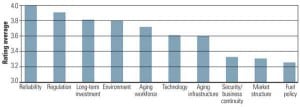
There will be no shortage of important issues to keep utility executives and their staffs busy throughout 2010. Few of these will be surprises, although a number will emerge quickly and assume larger-than-life significance. The confluence of the great recession and the sturm und drang of environmental legislation will create the liveliest of the debates, but more subtle trends will drive additional stressors. The results of Black & Veatch’s 2009 fourth annual industry strategic directions survey can offer guidance as to how these issues will affect the industry in the coming year.
-
 Coal
CoalThe Impact of Carbon Trading on Performance: What Europe’s Experience Can Teach North American Generators
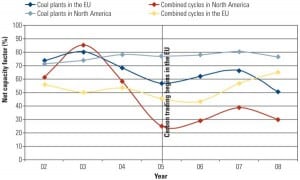
The European carbon trading system experience suggests that North American generators should expect severely altered coal-fired power plant operating profiles if cap-and-trade legislation becomes law. In a groundbreaking study, Solomon Associates predicts the reduction in mean run time that North American generators should expect. The trends outlined in this study provide an overview of some of the broad challenges facing generators in moving to a carbon-constrained market environment.
-
 Solar
SolarA New Foundation for Future Growth
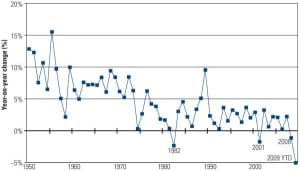
As the economy begins to grow again, the banking industry continues to stabilize, and lawmakers work on finalizing climate change legislation, the decisions made in 2010 will lay the foundation for the power industry for decades to come.
-
 Business
Dollars and Dirt: Investing in Infrastructure
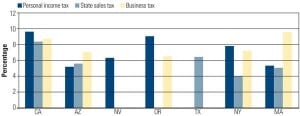
The familiar saying "as goes California, so goes the nation" seems to apply to the many states that have been unable to invest in infrastructure improvements because they are crushed by debt and shrinking revenues. Will California and energy project developers continue to invest in energy infrastructure in 2010 given the limited availability of private capital, shaky state finances, and shifting regulatory climate?
-
Smart Grid
The Smart Grid Has a Growth Spurt
Which country has the smartest grid? Which U.S. state has the most smart meters? What’s Google got to do with the grid? Answers to these questions and more can be found in our web exclusives. Here’s a taste of what you’ll find online.
-
Business
Despite Economic Downturn, Renewable Energy Development Expected to Move Forward
While the overall economy is down, the effort to add renewable energy resources in the U.S. continues to push project development forward.
-
Legal & Regulatory
NRC Withholds “Waste Confidence” Finding, Citing Yucca Decision
In a series of ironies, the U.S. Nuclear Regulatory Commission has voted to reject an early finding that the U.S. can adequately manage nuclear reactor spent fuel, in the wake of the Obama administration’s decision to pull the radioactive plug on Nevada’s Yucca Mountain. The vote by the majority Republicans on the commission effectively puts a temporary ban on new nuclear reactor construction in the U.S.
-
Legal & Regulatory
TREND: Coal in a Hole
While pundits opine that the U.S. economy is in recovery, that doesn’t show up in the world of coal-fired electric power plants (perhaps lagging economic indicators). For proof, see these recent stories.
-
HR
Social Media in the Workforce: Tweet, Tweet, Tweet, Tweedly-Deet
Social media have emerged as an important force in the workplace, both as new ways of doing business and as challenges to organization management. Among those challenges is defining acceptable employee behavior on and off the job.