
Business
-
 Business
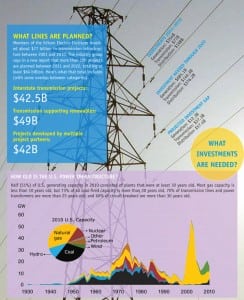
THE BIG PICTURE: Infrastructure
Aging infrastructure ranks at the top of the U.S. electric power sector’s concerns, flanked by the exorbitant investment needed to keep the system in good repair.
-
 Environmental
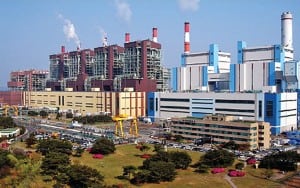
South Korea Enacts Cap-and-Trade Program
The Republic of Korea’s National Assembly on May 2 passed legislation that will mandate cuts in greenhouse gases (GHGs) starting in 2015. The Act on Allocation and Trading of Greenhouse Gas Emissions Allowances passed with a near unanimous vote of 140-0, with three abstentions. It follows the country’s voluntary GHG emissions reduction target of 30% […]
-
Business
POWER Digest (July 2012)
UK Unveils Draft Energy Reform Bill. A draft energy bill unveiled by the UK’s Department of Energy and Climate Change on May 22 seeks to attract £110 billion ($168 billion) of investment to build new nuclear, renewables, and carbon capture and storage (CCS) plants to replace nearly a fifth of the country’s total power capacity, […]
-
Hydro
FERC Rule 1000: What Does It Mean?
The Federal Energy Regulatory Commission (FERC) has the responsibility for ensuring just and reasonable rates and preventing undue discrimination by public utility transmission providers. Last year FERC defined a new framework for public utilities and regional transmission organizations planning new transmission networks. The framework is provided in Order No. 1000—Transmission Planning and Allocation by Transmission Owning and Operating Public Utilities. The Final Rule was issued on July 21, 2011, and reaffirmed by Order No. 1000-A on May 17, 2012.
-
Legal & Regulatory
When Successful Procurement Policies Fail
California is approaching a tipping point with respect to the near-term economic viability of existing non-utility generation. The procurement policies and practices implemented in response to the statewide energy crisis over a decade ago have evolved into market conditions that do not offer “uncontracted” existing resources with sufficient and stable enough revenue streams to recover going-forward costs. Continued adherence to these policies will subject such resources to an increasing risk of economic retirement, threatening long-term reliability and potentially costing electric consumers billions of dollars.
-
 Coal
CoalPower in India: Opportunities and Challenges in a Fast-Growing Market
India’s long-term annual economic growth rate is projected at over 7%, and the country is investing in its hydroelectric, nuclear, and renewable resources. However, the primary fuel used to produce electricity remains coal, and the government has ambitious plans to significantly increase coal-fired capacity. Those plans have been challenged by a number of unexpected factors that threaten to stifle India’s economic growth. India’s long-term annual economic growth rate is projected at over 7%, and the country is investing in its hydroelectric, nuclear, and renewable resources. However, the primary fuel used to produce electricity remains coal, and the government has ambitious plans to significantly increase coal-fired capacity. Those plans have been challenged by a number of unexpected factors that threaten to stifle India’s economic growth.
-
 Business
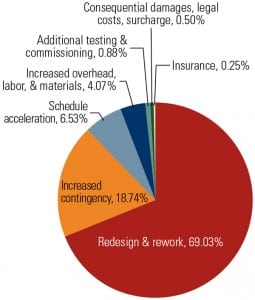
Allocating Project Risk
Power generators typically allocate construction risks through the process of aversion. Owners have a tendency to shift risk to a project’s primary contractor, who in turn pushes it to lower-tier parties in the contracting arrangement. Research by the Construction Industry Institute has found that there are more equitable ways to allocate project risk.
-
 Hydro
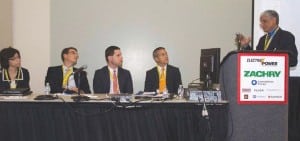
HydroUtility Perspectives on Ramping Up Renewable Power
Panelists at ELECTRIC POWER discussed how U.S. utilities choose renewable power generation technologies based on their geographic locations, state requirements, economics, and other criteria—including reliability and federal regulations.
-
 Coal
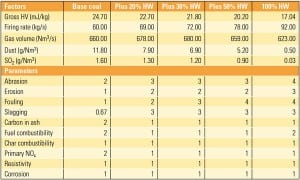
CoalNew Technologies Advance Biomass for Power Generation
As U.S. utilities seek to increase the percentage of carbon-neutral biomass used in their generation portfolios, they must deal with a number of complex challenges unique to this fuel source. Several breakthrough technologies are poised to help promote greater use of biomaterials.
-
O&M
Making the Switch: Converting a Simple-Cycle Plant to Combined Cycle
A lot goes into the decision to upgrade a simple-cycle plant to combined cycle. Careful planning and analysis can make the difference between a profitable, successful switch and an expensive hassle.
-
Business
Global Gas Power Projects Quarterly Status Report
A review of the global gas power industry shows solid growth in gas-fired generation. Here’s a snapshot of who’s doing what, and where.
-
Business
Maryland Regulators Order Construction of Combined-Cycle Plant
Not all is well in the realm of PJM, as several states in its jurisdiction have chafed under perceived roadblocks for expanding generation capacity. In April, Maryland fired a shot across the ISO’s bow, as its Public Service Commission ordered the construction of a new gas-fired plant.
-
Waste to Energy
Trash to Gas = Cash
Municipal landfills across the country have been quietly harnessing their methane emissions for years. But as the appetite for natural gas grows and the price of oil skyrockets, some creative sanitation departments are starting to make some real noise.
-
Environmental
Fracking Guidelines Expand as Technology Evolves
New federal regulations promise to change the fracking landscape in the coming years, perhaps substantially. But technology may be running ahead of the law, as improvements in the fracking process threaten to make some of the new rules unnecessary.
-
Business
U.S. LNG Exports Gather Steam
All but unthinkable a decade ago, the U.S. gas industry is gearing up for a major shift toward export of liquefied natural gas. Across the country, projects are afoot that could make the U.S. a serious LNG exporter within the next decade. GAS POWER reviews some of the major players and issues.
-
 Coal
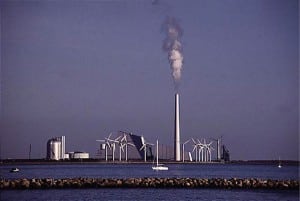
CoalDenmark Extends Renewables Standard to 100% by 2050
Denmark’s parliament in late March agreed to a new energy strategy seeking to wean the country off oil and gas. It could result in the Nordic country cutting its greenhouse gas emissions 34% by 2020, compared to 1990 levels, and decreasing energy consumption by more than 12%, compared to 2006.
-
Business
POWER Digest (June 2012)
ABB to Refurbish Generators at Two Swiss Hydro Plants. ABB on April 20 said it had received $20 million of orders from two power utilities managed by Axpo, a leading Swiss power utility, to refurbish the generators at two of its hydroelectric power plants. The plants are located in the mountainous canton of Wallis (Valais) […]
-
 Gas
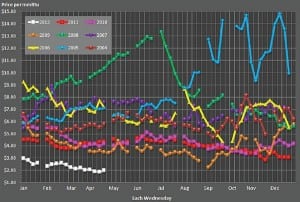
GasThe Quest at CERAWeek 2012
In March, Cambridge Energy Research Associates hosted its 30th annual CERAWeek, a conference that is renowned for high-profile attendees from around the world.
-
 Instrumentation & Controls
Ensuring the Cybersecurity of Plant Industrial Control Systems
Industrial control systems (ICSs) manage global industrial infrastructures, including electric power systems, by measuring, controlling, and providing a view of control processes that once were visible to the operator but now are not. Frequently, ICSs are not viewed as computers that must operate in a secure environment, nor are they often considered susceptible to cybersecurity threats. However, recent cybersecurity failures have proven these assumptions wrong.
-
 Gas
GasUnconventional Gas: The Great Game-Changer
Dr. Daniel Yergin, chairman of IHS Cambridge Energy Research Associates, is a Pulitzer Prize–winning author; leading authority on energy, international politics, and economics; and a recipient of the United States Energy Award for “lifelong achievements in energy and the promotion of international understanding.” He recently spoke with POWER about his latest book—and more.
-
 History
Japan Scrambles to Revamp Its Electricity Sector
The March 2011 Japanese earthquake and tsunami that destroyed a number of Japanese power plants—most notably, four nuclear units—hit quickly. Almost as speedy were calls to take all other nuclear units out of service for safety reviews. What will take much longer is developing a new, sustainable energy plan to fill the generation gap left by a potential total lack of nuclear power.
-
 Business
Going the Distance: Online Courses for Power Industry Professionals
Online learning is opening up new opportunities for those unable to attend classes on campuses. Bismarck State College and the University of North Dakota, for example, offer innovative online courses and degree programs to students who want successful careers in the electric power industry.
-
Supply Chains
End Game for Rare Earth Dispute?
The end of the long-running flap over access to markets for rare earth minerals may be in sight, driven by a combination of political and diplomatic pressure at high levels and the normal workings of the marketplace.

-
HR
Power Industry Needs to Focus on Grooming the Next Generation of Leaders
The power industry has not done a good job grooming and mentoring the next generation of leaders and, as a result, is facing a leadership gap as the current generation approaches retirement, two executive search professionals told MANAGING POWER. While prospects for entry-level recruitment have improved, it will be five to 20 years before this cohort is ready to lead. In the near term, a renewed focus on grooming future leaders is critical.
-
Business
Five Ways to Make Energy Real to Your Customers
Lack of customer participation—or outright customer resistance—is likely to kill at least one of your utility’s strategic initiatives. Perhaps it already has. But utilities can take a variety of easy steps to prevent the wounding or premature death of strategic initiatives such as smart meters, new rate and efficiency programs, or capital construction projects.
-
Legal & Regulatory
The Rebranding of Global Warming
Washington’s greenhouse gang has learned that global warming is a losing issue. They’re back with a new strategy.

-
Finance
Trend—M&A on the Move
Despite a quiet 2011, this year promises to be one of the biggest for power industry mergers in quite some time—if FERC lets it happen.
-
Finance
The Future of Renewable Energy Finance
Scaling back and outright expiration of government subsidies will make financing renewable energy projects more difficult in the future, according to experts at the law firm of Mintz Levin Cohn Ferris Glovsky and Popeo. But there will still be a greater appetite for renewables than there is supply, so it should still be possible to find the funds to build the projects.
-
Legal & Regulatory
Leveraging State Clean Energy Funds
Consider state clean energy funds as potential replacement funding sources for future clean energy projects.
-
Business
POWER Digest (May 2012)
Three South Korean Firms Opt for MHI’s J-Series Turbines. Japanese firms Marubeni Corp. and Mitsubishi Heavy Industries (MHI) on March 22 said they had been jointly awarded orders for three large-scale combined cycle electric power projects in Korea totaling 3,800 MW. The plants are the 950-MW 2nd Pyeongtaek Combined Cycle Power Plant, the 1,900-MW Dongducheon […]