
Business
-
Smart Grid
"Perfect Citizen" Program to Protect the Power Grid
The National Security Agency is launching a program to protect the grid from cyber attack, along with other civilian and military critical infrastructure, while a new Department of Energy report highlights grid vulnerabilities.
-
Legal & Regulatory
Coal Ash Regulation: Playing the Name Game
What’s in a name? Would coal ash labeled as “special” hazardous waste be as easily recycled as that labeled nonhazardous waste?
-
Legal & Regulatory
Will Nuclear 2.0 Be Better, Faster, and Cheaper than Nuclear 1.0?
The nuclear renaissance has been in play for several years yet not a shovel of dirt has been turned. Why should anyone believe that Nuclear 2.0 will be an improvement?
-
 Business
China Completes Ultra-High-Voltage Transmission Superhighway
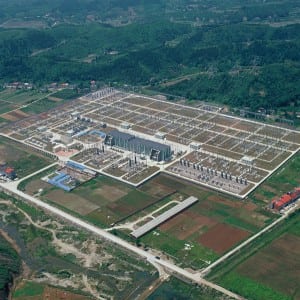
The State Grid Corp. of China (SGCC) in July put into operation the world’s first ultra-high-voltage direct current (UHVDC) superhighway when it commissioned the Xiangjiaba-Shanghai link. The ±800 kV project, completed in 30 months—a year ahead of schedule—has the capacity to transmit up to 7,200 MW from the Xiangjiaba hydropower plant in southwest China to Shanghai, the country’s leading industrial and commercial center, about 2,000 kilometers (km) away.
-
Smart Grid
Addressing Smart Grid and Consumer Info
As state regulators examine whether the smart grid benefits consumers, a federal agency is looking at what information consumers need to take advantage of the technology.
-
Business
POWER Digest (September 2010)
MHI, Foster Wheeler to Support FEED for UK CCS Project. A consortium of Mitsubishi Heavy Industries (MHI) and Foster Wheeler Energy Ltd. on August 5 announced that it had received an order from E.ON UK to support the front-end engineering design (FEED) for a post-combustion carbon dioxide (CO2) capture plant proposed as part of E.ON’s […]
-
HR
Where HR Meets Legal
Dealing with whistleblowers can be human relations quicksand, where unseen errors that could cost a company millions lay in the path to resolution of employee complaints. Recent legislation makes dealing with whistleblowers an even bigger challenge.
-
 Solar
SolarThe Feed-in Tariff Factor
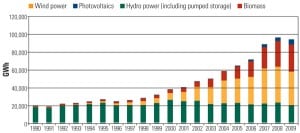
Most countries are trying to increase the percentage of their electricity supply that comes from renewable sources. But because capital costs for renewable generation still, in most cases, are higher per kilowatt-hour than for fossil-fueled power, governments are looking at all options for encouraging the development of greater renewable capacity. Feed-in tariffs (FITs) are one policy tool that has been used, most notably in Europe. Now North America is testing FITs as well.
-
Business
India Unveils a Potentially Revolutionary Tablet Computer
Imagine, a tablet computer than can surf the web, run word processing, take and send pictures, and run on sunlight. That’s what the government of India says it can produce…for $35 each. Imagine all the things your organization could do with computers that are essentially commodities.
-
 Gas
GasU.S. Gas-Fired Power Development: Last Man Standing
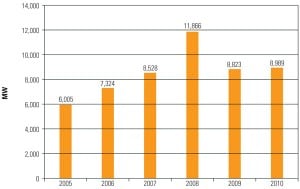
In 2010, U.S. wind power development has slowed, coal-fired power development remained stalled, and the much-awaited renaissance of nuclear power took a few tentative steps forward. That left natural gas power development as the last man standing.
-
Supply Chains
TREND: Solar Doldrums
While the Obama administration in Washington is lauding solar energy as a major part of an alleged transition to renewable energy, the U.S. companies that make solar modules to turn the energy in sunlight into electric power are hurting. Prices for PV cells are falling, and domestic firms are seeing waves of red ink on their books, falling investor interest, and are responding by moving production offshore.
-
Solar
What Utility Executives Think About the Smart Grid
This summary of results from a recent Platts/Capgemini survey of North American utility executives looks at what respondents had to say about all things related to the smart grid. Nearly half of respondents’ utilities have a smart grid strategy in place, while the other half said their utility has one in development.
-
 Nuclear
Bruce A Proves There Are Second Acts in Nuclear Power
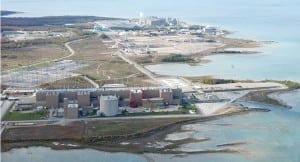
The refurbishment and restart of all four CANDU reactors at Bruce A may be Ontario’s most significant and complex power generation project since the first phase of the Bruce Nuclear Generating Station was built more than 30 years ago. Units 1 and 2 are expected to be synchronized in 2011 and return to commercial service by early 2012, joining Units 3 and 4, which restarted in 2004 and 2003 respectively. POWER visited Bruce A in April to witness the project’s progress.
-
 Coal
CoalLean Construction Principles Eliminate Waste
Eliminate waste in coal, gas, or nuclear power plant construction through a holistic application of lean principles.
-
 Coal
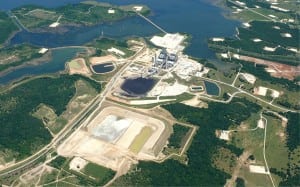
CoalLuminant’s Oak Grove Power Plant Earns POWER’s Highest Honor
Luminant used remnants of the ill-fated Twin Oaks and Forest Grove plants (which were mothballed more than 30 years ago) to build the new two-unit 1,600-MW Oak Grove Plant. Though outfitted with equipment from those old plants, Oak Grove also sports an array of modern air quality control equipment and is the nation’s first 100% lignite-fired plant to adopt selective catalytic reduction for NOx control and activated carbon sorbent injection technology to remove mercury. For melding two different steam generators into a single project, adopting a unique and efficient “push-pull” fuel delivery system, assembling a tightly integrated team that completed the project on time and within budget, and for completing what was started almost four decades ago, Oak Grove Power Plant is awarded POWER magazine’s 2010 Plant of the Year award.
-
Finance
Bid Smartly . . . or Walk Away
With some industries reeling in today’s economy, future revenue growth is still uncertain in certain markets. The bright exception is the "new energy" arena of renewables and sustainables. But that’s a tough market, with lots of competitors for the business and lots of opportunities to misfire and miss the boat. A key to success is bidding smartly on contract opportunities. Otherwise, don’t bid at all.
-
 Business
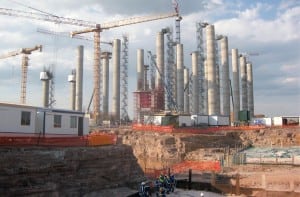
Is Eskom Ready for the World Cup?
The FIFA World Cup, the biggest sports event on the planet, is under way in South Africa through July 11. More than 300,000 fans are expected to attend the global soccer tournament, and hundreds of millions more will be watching on television. But a focus will also be on South Africa itself, which 20 years ago ended apartheid and has spent the following decades in a recovery process. And the pressure is on for Eskom, South Africa’s state-owned utility, which generates nearly 95% of the nation’s power (and 45% of Africa’s total).
-
Business
POWER Digest (July 2010)
Alstom and Schneider Electric Close AREVA T&D Acquisition Deal. Alstom and Schneider Electric on June 7 closed a €2.29 billion (US$2.75 billion) transaction to acquire AREVA’s transmission and distribution arm, AREVA T&D, after obtaining approvals from relevant competition authorities and the French Commission des Participations et des Transferts. A consortium agreement for the joint acquisition […]
-
Legal & Regulatory
TREND: Fire Safety Again Tops Nuclear Agenda
The U.S. Nuclear Regulatory Commission puts fire at the top of its safety concerns, calculating that fire constitutes half of all reactor safety risks, and lately fire safety has again become a major industry issue. For example . . .
-
 History
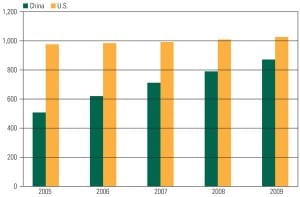
China: A World Powerhouse
It’s no surprise that China leads the world in recent power capacity additions. What may surprise you is the precise mix of options this vast country is relying upon to meet its ever-growing demand for electricity. As a result, this ancient civilization is fast becoming the test bed and factory for the newest generation and transmission technologies.
-
 Legal & Regulatory
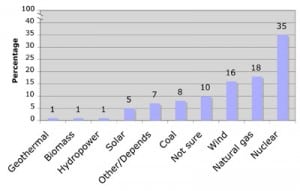
Regulators Embrace Nuclear—Awkwardly
A recent survey finds utility regulators contradicting themselves on the touchy subject of nuclear power. They say they like new nukes, but their actions belie their stated beliefs.
-
 Coal
CoalIndustry Pivots on Natural Gas, Hails Cap and Trade
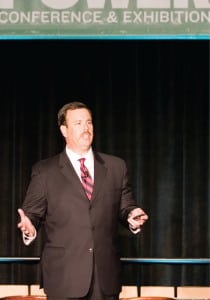
At the opening ELECTRIC POWER 2010 plenary session, both the keynote speaker’s address and discussion among the Power Industry Executive Roundtable participants pointed to the renewed appeal of natural gas and proposed cap-and-trade legislation as being potential game-changers for the U.S. power industry.
-
Supply Chains
DOE Helium Shortage Hits Nuke Security, Oil And Gas Industry
The Energy Department’s failure to recognize an impending supply squeeze for helium-3—a nonradioactive gas produced in the agency’s nuclear weapons complex—has created a national crisis requiring White House intervention and threatening key U.S. nuclear and homeland security programs, a wide range of medical and scientific research activities and development of U.S. oil and natural gas resources, according to testimony before a House subcommittee.
-
 HR
HRWasting Time and Hating the Job
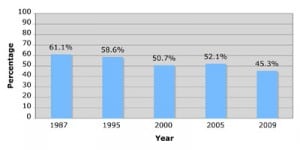
Does wasted work time equal job dissatisfaction? Two studies point in that direction.
-
 HR
HRHow Clipper Windpower Jump-Started Itself . . . Big Time
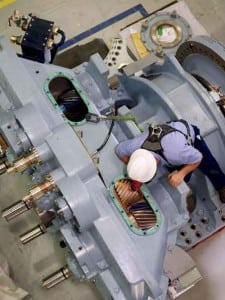
Clipper Windpower didn’t have the luxury of a decade or more of product development. Instead, it started big—with a 2.5-MW wind turbine. Here’s the story of how they did it.
-
Business
POWER Digest (June 2010)
AES Secures PPA with Electricity Vietnam for 1,200-MW Coal Plant. AES Corp. subsidiary AES VCM Mong Duong Power Co. Ltd. in April signed a power purchase agreement (PPA) with state power company Electricity Vietnam (EVN) for Mong Duong II, a proposed 1,200-MW coal-fired power plant. In support of this agreement, AES VCM has also entered […]
-
 Business
KEMA Conference Report: Competition Strengthens as Wholesale Power Prices Fall
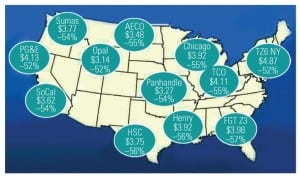
Since the collapse of Enron and the wholesale power markets, the vitality of competition in retail markets for electricity has waned in most regions of the U.S., with the exception of Texas. At KEMA’s 21st annual Executive Forum in late March, 300 attendees converged on Dallas to discuss and debate the dynamics and changes now facing residential and commercial customers in most regions of the U.S. and Canada. Founded in 1927, KEMA is a global provider of business and technical consulting, operational support, measurement and inspection, and testing and certification for the energy and utility industry. A summary of the many presentations follows.
-
 Business
A Proposed Definition of CHP Efficiency
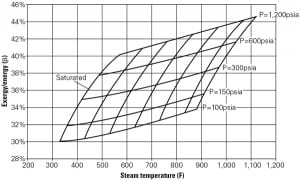
Many alternative approaches for determining a useful definition of combined heat and power fossil power plant efficiency have been proposed, although most fail to produce a universal definition. This follow-up report to our February story on plant efficiency shows how an exergy analysis supplies the elusive solution.
-
 Business
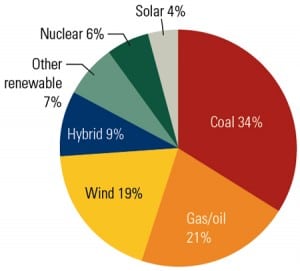
CERAWeek 2010: "Energy: Building a New Future"
For the past 26 years, Cambridge Energy Research Associates (CERA) has hosted an annual CERAWeek conference in Houston that is renowned for high-profile attendees from around the world. During the week of March 8, security was tight as oil ministers from the Middle East and CEOs from the largest oil and gas companies and electric utilities rolled into Houston to exchange ideas and forecasts. More than 1,200 delegates from 55 countries attended to hear more than 100 distinguished speakers discuss a business that seems to have renewed optimism about the future.
-
 Business
Power in Mexico: A Brief History of Mexico’s Power Sector
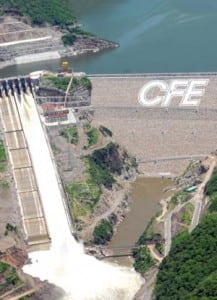
Mexico, one of the few countries in Latin America that has resisted the tide of liberalization, retains a monopolistic state player in the electricity market. In treading its own path by maintaining the government’s predominance in the sector, Mexico has an important question to answer: Is this path sustainable?