
Blog
-
 Commentary
Bipartisan Action, Not Litigation, Is Key to Solving Climate Change
If we plan on making real progress on beating back climate change, we’re going to have to work together. That means working across not just international borders, but party lines, aggressively pursuing realistic solutions that will make a difference. Democrats like me have always worked hard to not only be leaders on responsible environmental stewardship, […]
-
 Gas
GasHow Natural Gas Utilities Play a Role in the Future of Our Energy System
With a global pandemic and unprecedented extreme weather, we have seen how essential our energy delivery system is to our way of life. Through collaboration and innovation, we will make the system more resilient and fulfill our commitment to reducing emissions. American Gas Association members are already leading in these areas—providing customers with reliable and […]
-
 Connected Plant
Two Keys for Better Critical Infrastructure Cybersecurity
Two recent incidents have made the cost of not protecting our infrastructure and natural resources abundantly clear. First, there was the widely publicized SolarWinds attack that infected more than a dozen utility companies, and oil and gas manufacturing entities. Then, there was a dangerous incident in Florida, where a hacker gained access to a water […]
-
 Energy Storage
A 100-Day Look at U.S. Battery Supply Chain Challenges
On Feb. 24, 2021, the Biden administration unveiled a sweeping plan to review the U.S. supply chain. The 100-day review will include categories such as computer chips, rare earth minerals, and lithium-ion batteries for electric vehicles (EVs). China is a key supplier of many of these items. There is an increasing realization that the lack […]
-
 News
NewsLessons For Keeping Smart Home Data Private
The utility industry has undergone a remarkable shift over the past 10 years. What was traditionally a one-way commodity electron-flow to customers has now become bidirectional traffic of both electrons and bytes. With the rise of distributed energy resources (DERs) and customer demands for improved energy efficiency, utilities are handling an increasing amount of useful […]
-
 Markets
Yes, Texas’ Deregulated Electricity Market Has Problems, but It Can (and Should) Be Fixed
The severe winter storm that knocked out Texas’ electricity grid in February, plunging millions of people into a cold, dark ordeal, has led to a number of takes about what went wrong. The state’s deregulated energy market has been frequently singled out as the root cause. But, while a contributing factor, it wasn’t the only […]
-
 Electric Vehicles
The Surge in Electrification of Transportation Requires a Sustainable and Resilient Electrical Infrastructure
As society contends with the impacts of climate change, we need to aggressively pursue strategies for reducing carbon emissions. Although states in the U.S. are taking a variety of approaches to greenhouse gas (GHG) reduction, and following an equally diverse set of timelines, most state-level GHG emission goals announced so far are fairly consistent—to reduce […]
-
 International
The Tsunami Coming for Mexico
Although Mexican economic history shows moments of tension between the private sector and the federal government—for example, during the administration of President Luis Echeverría (1970-1976)—never in the modern era has such tension reached the levels experienced at this time. The attacks on the private sector, including foreign investment, that the current federal administration has carried […]
-
 Commentary
Our Iceberg Is Still Melting
In 2009, only three in 10 American adults said dealing with global climate change should be a top priority. Over the past 10 years, this number has more than doubled: Nearly seven in 10 American adults say the federal government is doing too little to reduce the effects of global climate change, with six in […]
-
 Commentary
All Fuels Are Important, but Thermal Power Generation Is Still Number 1
COMMENTARY Throughout my career—and also POWER magazine’s long history—thermal power generation has been the greatest source of dispatchable electricity generation. In my view, policymakers have run a very good and smooth evolution of power generation diversity off the rails. The Biden Administration and Democrat Congress policies constitute an anti-American war on carbon. These policies, if […]
-
 IIOT
IIOT2020 Was a Turning Point: The year of Transparency in the Grid
2020 was a lot of things, most of them sombre. However, there is one positive way I believe we in the distribution grid sector can describe the year, as an inflection point. In years to come, we may well look back on 2020 as the year when terms like “energy transition” and “digitalization” finally began […]
-
 News
NewsLicensing Green Technology Can Boost India’s Economy
During lockdown, Delhi, one of the world’s most polluted cities, enjoyed some of the freshest air that the capital has seen in decades. Having witnessed the benefits of eliminating pollution from their cities, politicians the world over are talking about “building back better” in the wake of Covid-19. For many countries that means accelerating investment […]
-
 Commentary
The Biden Administration Can Help Set American Energy on a Winning Course
The 46th president of the United States has officially been sworn in. During his inauguration address President Joe Biden spoke of unity, empathy, and the challenges Americans must face together. Challenges indeed abound for Biden’s incoming environmental and energy team, including New Mexico congresswoman Deb Haaland as Interior Secretary, former Michigan Gov. Jennifer Granholm as […]
-
 Energy Storage
We Don’t Have to Wait for Real-Time Markets to Bid Renewable Power Onto the Grid
Growing the amount of renewable power that’s available on the grid is equally as crucial for the energy transition as the ability to generate power from renewable sources. Fossil fuels continue to have the advantage because of market-bidding protocols that place their power on wholesale energy markets across the country, making it widely available to […]
-
Business
A Big Year for Transformational Change
The passing of 2020 is a great relief to many. The new year allows us to review not just the tremendous loss of life from the pandemic, but to consider the state of the global energy system. Despite the virus, 2020 was a great year for climate commitments. While COP26, the UN Climate Change Conference, […]
-
 Legal & Regulatory
Bird Policy Prepares for Another Migration With New Administration
The Trump administration’s final rule interpreting the Migratory Bird Treaty Act (MBTA) to not prohibit the incidental take (accidental injury or death) of migratory birds recently hatched. But with the Biden administration taking the regulatory reins on Jan. 20, 2021, this lame-duck regulation will be quickly grounded. COMMENTARY Anticipating this, power companies should remain vigilant […]
-
 Renewables
It’s Time to Embrace Brazil’s Green Economic Bounce
Latin America’s largest economy was already in a fragile state when the global pandemic added to its list of woes. However, despite being hit by a wave of corporate bankruptcies and soaring government debt, Brazil’s economy is predicted to shrink by only 5-6% in 2020, somewhat less of a contraction than many other economies expect. […]
-
 Commentary
Employment Issues Facing Energy Companies in 2021 and Beyond
Companies in the energy sector this past year faced unprecedented financial, economic and operational challenges, exacerbated by a once-in-a-century public health crisis. Falling energy prices, coupled with the economic downturn triggered by the COVID-19 pandemic, caused a significant labor contraction in the energy sector. The spread of COVID-19 required companies, including those involved in power […]
-
 Distributed Power
Renewables and Distributed Energy Resources Take Center Stage as Power Is Transferred to the People
2021 Predictions for Energy, Utilities, and Resources Even if the climate crisis is currently having to share headline space with the global pandemic, it has by no means lost its traction. Nor have the perils of climate change lost any of their urgency. Taking a global stance, I would say that the charge to lower […]
-
 Commentary
Overcoming Challenges on Energy Flexibility
By Aurelien Guichard Manager, Arthur D. Little As we near the close of 2020, companies are under greater pressure to source more energy flexibility to ensure security of supply as renewables and other “green” alternatives shift the energy mix. From board rooms to investors to social media, the decisions companies are making and the approaches […]
-
 Nuclear
FERC Rejects NYISO’s Capacity Market Plan, Creating Consternation
The Federal Energy Regulatory Commission’s (FERC’s) ruling on Sept. 4, 2020, rejected, in a three-to-one decision, the New York Independent System Operator’s (NYISO) proposal to change its capacity market rules, ostensibly intended to support, among other things, New York and New Jersey’s ambitious, and some say, unattainable renewable goals. The action comes directly on the […]
-
 Commentary
California’s Cautionary Tale Against the Green New Deal
California needs more reliable electricity. The ongoing rolling blackouts in the Golden State will likely become more frequent unless its elected leaders change their foolish energy policies. More importantly, California’s energy posture reveals some harsh lessons for the rest of America, as it provides a glimpse into the future of power generation should the Democrats […]
-
 Solar
SolarMitigating Emerging Utility-Scale Solar Project Risks
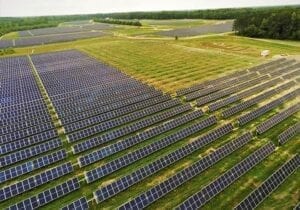
America’s energy systems are being led by renewables development, both now and in the foreseeable future. There should be no real argument about what the future of our energy economy looks like. Not just because renewables bolster needed decarbonization efforts, but because renewables are a better economic solution and embody core principles of American entrepreneurism. […]
-
 News
NewsFRR: Will it Uproot PJM and the Organized Capacity Markets?
It’s an article of faith in large parts of the U.S.—at least among power industry people—that organized and Federal Energy Regulatory Commission (FERC)–regulated “merchant” interstate power markets are the best way to ensure a sufficient supply of electricity, as well as to ensure fair and equitable prices for ratepayers. On that basis, large areas of […]
-
 Hydrogen
Power-to-Gas Offers an Optimal Path for a Carbon-Free California
California is widely regarded for environmental leadership, especially around clean energy policy. The state has set an ambitious goal of achieving 100% renewable energy by 2045. Decarbonizing its electric power sector requires new approaches and ways of thinking to meet carbon reduction goals, all while minimizing land use, emissions, and cost. One promising approach is […]
-
 Renewables
Keeping the ‘Clean’ in Clean Energy
Authored by Bryan Sillaman and James Alford of Hughes Hubbard In the midst of the global COVID-19 crisis, another unprecedented event took place that was largely overshadowed by more urgent, and life-threatening, circumstances. On April 20, 2020, the price of U.S. West Texas Intermediate crude oil dropped below zero dollars per barrel (bbl), plunging past […]
-
 Power Demand
Access Versus Productive Use of Energy: Is It Time to Craft SDG 7.4 for Africa?
In 2012, 17 Sustainable Development Goals (SDGs) were drafted at the United Nations Conference on Sustainable Development, which was held in Brazil. The goals were adopted by all the United Nations member countries in 2015. They replaced the Millennium Development Goals, which started in 2000 to tackle the challenge of extreme poverty across the world. […]
-
 Energy Storage
Hybrid Power Plants Are an Inefficient Usage of Battery Technology
Hybrid power plants, also known as solar plus storage or wind plus storage projects, have gained significant traction in recent years. These projects combine solar energy or wind energy with battery energy storage. The result is a somewhat dispatchable renewable energy power plant, which can provide smoother (less-volatile) energy, and can shift time of delivery […]
-
 Commentary
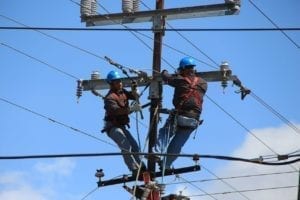
An Open Letter to Utility Managers and Workers: Thank You
Dear utility managers and workers, We’ve met some of you over the years, and as our employees have been sheltering in place with lights, internet, televisions, and many other modern comforts, we wanted to say thank you. Too often, energy providers only receive attention when something goes wrong. Because utilities in the U.S. are 99% […]
-
 Commentary
Lessons From New Jersey on Power Grid Protection
After Superstorm Sandy pummeled the great State of New Jersey in 2012, more than two million households were without power, many for close to two weeks. A silver lining is that this disaster occurred in the fall, after the heat of summer and before the onset of freezing conditions. With Sandy, New Jersey and the […]