
Articles By

-
General
Wind and Property Values: Relation Unknown
By Kennedy Maize Washington, Feb. 15, 2010 — Local opponents of wind farm developments often claim that the energy projects depress their property values. It’s a difficult issue to settle. The Department of Energy’s Lawrence Berkeley National Laboratory claimed last December in a $500,000 study, three years in the works – “The Impact of Wind […]
-
O&M
A Game Plan for Improving Boiler Operations
Operating a boiler is not difficult, but operating a boiler safely and efficiently requires skill and proper training. Following boiler operation best practices will keep your equipment in like-new condition for years to come. This game plan includes a compendium of best practices, with web links to a number of additional key resources you should be famililar with.
-
Coal
EPA Proposes To Tighten Ozone Standard
In one of the most far-reaching of numerous new air regulations expected from the Obama administration, the Environmental Protection Agency (EPA) has proposed to tighten the primary federal standard for ground-level ozone, the principal constituent of smog, to within a range of 60 to 70 parts per billion, saying the tougher standard is needed to protect human health.
-
Coal
DOE Official Floats NSR ‘Carve-Out’ for Some Coal Plants
The Energy Department’s top fossil energy official said [in December that] he might seek exemption or relaxation of “new source review” requirements for certain U.S. coal-fired power plants that are boosting efficiency through retrofits if the plants are also good candidates for subsequent installation of carbon capture and storage systems.
-
O&M
Fuels Used for Power Generation Expected to Rebound in 2010
The Energy Information Administraion has predicted that, as the economy gathers steam this year, rising demand for gasoline, crude oil, coal, and natural gas is expected to push up energy prices, aided by a projected boost in crude oil production.
-
Commentary
Electricity 2010: Opportunity Dressed as Hard Work
In their February 10 “state of the industry” speech to the financial community, reprinted here with permission, Edison Electric Institute leaders summarized the challenges and opportunities in the year ahead.
-
Commentary
Greens’ Nuclear Allergy and Its Carbon Costs
Nuclear was such a target of the environmental movement that it embraced the “anything but nuclear” policy with abandon. Is the movement’s consideration of nuclear now a case of better late than never?
-
Commentary
EPA’s Carbon Regs Challenged
In his recent State of the Union address, President Obama made only a passing reference to the American Clean Energy and Security Act of 2009 (H.R. 2545) passed by the House some months ago. “I’m eager to help advance the bipartisan effort in the Senate,” was President Obama’s acknowledgement that the House approach to controlling carbon in the U.S. faces an uncertain fate in the Senate. However, the Environmental Protection Agency’s (EPA’s) endangerment finding, released on the eve of the Copenhagen meetings last December could be the unnoticed uppercut that follows a weak congressional jab at controlling carbon.
-
 O&M
O&MConveyor Upgrades Increase Plant Availability, Reduce Airborne Dust
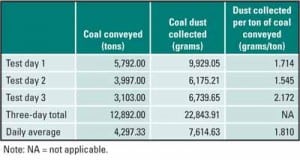
The loading and discharge of conveyor belts is the area where many, if not most, of the problems in solids conveying occur. Fortunately, a new technology provides chutes to accomplish conveyor loading and discharge without blockages while minimizing the dust generated: engineered-flow transfer chutes.
-
 Coal
CoalKnoxCheck Reports Reactor Potential and Catalyst Activity
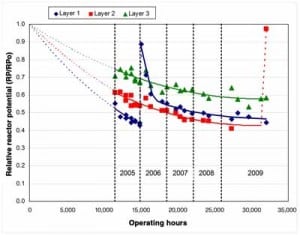
Adding a selective catalytic reduction (SCR) system to an operating coal-fired plant may be an expensive and time-consuming project, but the environmental benefits are without question. However, once construction is complete and operations staff assume control of the SCR, proper measurement tools are required to monitor the catalyst performance life cycle.
-
News
Investigation into Cause of Middletown Gas Plant Blast Continues
Investigative efforts continue into the cause and origin of Sunday’s catastrophic explosion that killed five workers and injured 27 others at Kleen Energy System’s natural gas–fired plant being built at a remote location in Middletown, Conn.
-
News
Renewable Industry Groups Jointly Call for Tax Incentives, Federal RES
Executives from U.S. wind, biomass, geothermal, hydropower, and solar industry groups on Tuesday jointly called on Congress to enact tax incentives, a federal renewable energy standard (RES), and comprehensive legislation—measures they said would accelerate growth in those energy sectors.
-
News
Coal Digest: Boosts for CCS Projects
The week brought important policy and technology news concerning carbon capture and storage (CCS) from around the world. President Barack Obama unveiled a task force to make “clean coal” a reality as the European Union struck a major deal with member states for CCS funding. Caterpillar joined the FutureGen Alliance, and Siemens Energy said it would conduct a feasibility study for a novel postcombustion CCS system in West Virginia.
-
News
Final Approval for Calpine’s Hayward Plant Includes GHG Limits
Calpine Corp. last week received final approval to build its long-delayed 600-MW Russell City Energy Center in the City of Hayward, Calif. The Prevention of Significant Deterioration (PSD) permit issued by the Bay Area Air Quality Management District (BAAQMD) puts limits on the natural gas–fired power plant’s carbon emissions.
-
News
Report: World Nuclear Power Renaissance Unlikely Before 2030
Despite some powerful drivers, nuclear power faces too many barriers compared to other means of generating electricity, and that means that a significant expansion of nuclear power is unlikely to occur before 2030, the Centre for International Governance Innovation (CIGI), a Canadian think tank, said in a report on Thursday.
-
News
AREVA to Acquire CSP Firm Ausra
French nuclear giant AREVA on Monday said it had acquired 100% of Ausra, a major U.S.-based provider of large-scale concentrated solar power (CSP) plants. The acquisition marks AREVA’s foray into solar power. The company already has major offshore wind and biomass ventures.
-
General
What to Make of Climate Science
By Kennedy Maize Here at my western Maryland farm, we just got the fourth significant snowfall of the winter. We caught four inches while we were on vacation in the South Pacific in late November, over 20 inches on December 20, six inches a few days ago, and four inches last night (Feb. 2). The […]
-
News
Exelon to Join FutureGen Alliance
Exelon Corp. last week said it intends to join the FutureGen Alliance, a consortium developing a 275-MW integrated gasification combined cycle power plant with carbon capture in Matoon, Ill.
-
News
Countries Commit to Emissions Targets by UN Deadline
The Secretariat of the United Nations Framework Convention on Climate Change (UNFCC) on Monday said it had received pledges from 55 countries to limit and reduce greenhouse gas (GHG) emissions by 2020. The international climate change body said the countries together accounted for about 78% of global GHG emissions from energy use.
-
News
SEC Votes for Disclosure of Climate Change–Related Business Risks
The Securities and Exchange Commission (SEC) last week voted to approve interpretive guidance that calls for disclosure of climate-related business risks. These include the anticipated impact of climate change on assets and financial risks associated with compliance costs for existing and pending regulations.
-
News
Brazil Grants Environmental License to 11,000-MW Amazonian Hydro Project
The Brazilian government granted an environmental license to the controversial 11,000-MW Belo Monte hydroelectric dam in the Amazon rainforest on Monday in hopes that the $17 billion project will help the country cope with growing demand.
-
News
Obama’s 2011 Budget Boosts Nuclear, Renewables
President Barack Obama emphasized the role of nuclear power, offshore oil and gas exploration, and carbon capture and sequestration (CCS) in his first State of the Union speech last week. The proposed $28.4 billion Fiscal Year 2011 budget for the Energy Department released by the White House this week could provide a much-needed boost to these and other measures.
-
 Coal
CoalPlant Efficiency: Begin with the Right Definitions
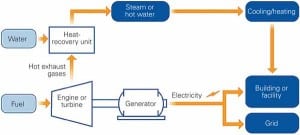
The race is on to claim the title of "most efficient coal-fired power plant" on the planet. However, it’s tricky identifying finalists because of the widespread misuse of the term "efficiency" and all those nagging assumptions. Let’s first establish clear definitions and then identify the title contenders.
-
 News
NewsAREVA Makes Debut in Renewables with German Offshore Turbines
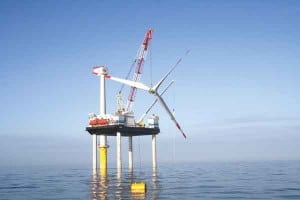
The first six of a dozen high-capacity turbines were commissioned in mid-December at the 60-MW Alpha Ventus project in the North Sea, Germany’s first offshore wind park. All 12 turbines of the €250 million project are already standing, put up in just seven months by a consortium of EWE, E.ON, and Vattenfall — formally known as Deutsche Offshore Testfeld und Infrastruktur (DOTI).
-
O&M
Widespread Voltage Collapse Demonstrates the Importance of Generator Acceptance Testing
A September 2005 power outage that affected two million people in the California Southland was initiated when workers cut live electrical wires after consulting erroneous design drawings, but it was exacerbated by a number of extant problems with local generation and protection configurations.
-
 O&M
O&MLow-Cost Wireless Sensors Can Improve Monitoring in Fossil-Fueled Power Plants
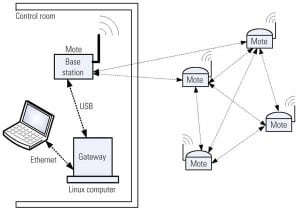
As equipment ages in fossil-fueled power plants, component wear leading to machinery failure increases as a result. Extending equipment life requires increased attention to maintenance, and one way to improve maintenance planning is to detect faults prior to failure so maintenance can be scheduled at the most cost-effective, opportune time. This type of strategy benefits from the use of additional sensors, and wireless ones can often be installed with the least time and cost.
-
 News
NewsOf Floating Power Barges and Ships
More than 60 floating power stations are in operation around the world, deploying some 4 GW at continental shores where electricity is most needed. Though these feature a variety of power sources (including nuclear, gas, and heavy fuels), most are power barges — they do not have their own propulsion systems and would have to be towed to desired locations.
-
O&M
How to Avoid Alarm Overload with Centralized Alarm Management
In 1999, the Engineering Equipment and Materials Users’ Association (EEMUA) released its general guide to the design, management, and procurement of alarm systems for industrial plants. The guidance document (EEMUA 191), however, is vague about applications to specific facilities, such as electric power plants. This article specifies EEMUA 191 standards and practices applicable to the electric power industry and spells out specific variations in alarming practices that are tailored for today’s power plants.
-
 News
NewsThe Age of the 800-kV HVDC
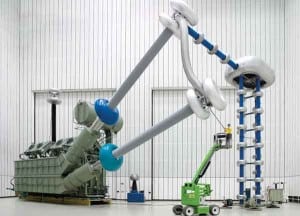
High-voltage direct current transmission (HVDC) has come a long way since 1882 when the first of its type carried power from Miesbach in Bavaria to an electricity exhibition in Munich, 57 kilometers (km) away, at a mere 1,400 V. Last December, just before the world ushered in the new decade, Siemens Energy and grid operator China Southern Power Grid put into operation the first pole of a transmission link between the southern Chinese provinces of Yunnan and Guangdong, a 1,418-km ultra-high-voltage direct current (UHVDC) system. That line has a transmission capacity of 5 GW, and it operates at a voltage of 800 kilovolts (kV) — a world record.
-
Nuclear
Nontechnical Issues Affecting Digital Upgrades at Nuclear Power Plants
Existing nuclear power plants are increasingly facing the conversion to digital instrumentation and controls technology. Meanwhile, new nuclear designs have digital technology integrated throughout the plant. Digital controls will soon be inevitable, so how do we make the transition as smooth as possible? Without losing focus on the technical solutions, organizations have to pay attention to the nontechnical issues as well.