
Articles By

-
News
DOE Loan Guarantee for Hawaiian Wind Project
On Friday, First Wind, an independent U.S.-based wind energy company, was offered a conditional commitment from the Department of Energy for a $117 million loan guarantee to finance the construction of its proposed 30-MW Kahuku Wind project in Kahuku, Hawaii. The project is expected to include a battery energy storage system.
-
News
Consensus on Land-Based Wind, Not on Offshore
On Friday, Secretary of the Interior Ken Salazar praised the work of the 22-member Wind Turbine Guidelines Federal Advisory Committee, which reached consensus on a set of draft recommendations aimed at minimizing the impacts of land-based wind farms on wildlife and its habitat.
-
News
First Solar Contracts with PG&E for 300-MW PV Project
First Solar Inc. has signed a power purchase agreement to supply Pacific Gas and Electric Co. (PG&E) with renewable electricity from a 300-MW photovoltaic (PV) solar power facility that First Solar is developing in Southern California.
-
News
Secretary Chu Announces up to $154 Million for NRG Energy CCS Project
American Recovery and Reinvestment Act (ARRA) funds keep flowing from Washington. On Tuesday, Secretary of Energy Steven Chu announced that a project with NRG Energy has been selected to receive up to $154 million, including funding from ARRA. Located in Thompsons, Texas, the post-combustion capture and sequestration project will demonstrate advanced technology to reduce emissions of the greenhouse gas carbon dioxide. It will also assist with enhanced oil recovery efforts from a nearby oil field.
-
News
AEP Recognized as a Top Company for Executive Women
American Electric Power has been named one of the top 50 companies for executive women by the National Association for Female Executives (NAFE) for a second time.
-
News
Entergy Earns 12th Consecutive EEI Award for Storm Response
Entergy Corp. accepted a national award on Mar. 3 for its work restoring power following a destructive ice storm last year in Arkansas. It is the 12th consecutive year Entergy has received a storm response award from the Edison Electric Institute (EEI).
-
News
$100 Million in DOE Funding Now Available for Innovative Research Projects
Last week the first-ever ARPA-E Energy Innovation Summit brought encouraging news to companies seeking to move their green technologies from the drawing board into the marketplace by announcing the availability of stimulus fund money. The Advanced Research Projects Agency (ARPA-E), part of the Department of Energy, is modeled on the Pentagon’s Defense Advanced Research Projects Agency (DARPA), which led to developments including military and networking technologies.
-
News
Vt. Senate Decision Likely to Kill Vermont Yankee Relicensing and Entergy Spinoff
Last Wednesday, Vermont’s state Senate voted to disallow the operation of Vermont Yankee Nuclear Plant after its current license expires March 21, 2012. The plant would change ownership if Entergy were allowed to spin off a new company consisting of its merchant nuclear fleet. The likelihood of that happening now looks very dim.
-
News
Calvert Cliffs Offline after Roof Leak Triggers Shutdown
Both units of the Calvert Cliffs nuclear power plant in southern Maryland were offline for 10 days after water leaked through the plant’s roof on Feb. 18, causing a ground fault at Unit 1 that led to a series of events resulting in the automatic shutdown of both units.
-
News
Wyoming Plant Shuts Down after Scrubber Is Damaged
The 365-MW Powder River Basin coal–fired Wyodak Power Plant near Gillette, Wyo., shut down last Friday after one of its 140-foot-tall scrubber vessels sustained significant structural damage.
-
News
CSB Identifies Cause of Conn. Gas Plant Explosion
In a statement last Thursday, the U.S. Chemical Safety Board (CSB) recommended that power plants and industry discontinue the gas venting practice that resulted in the massive explosion on Feb. 7 at the Connecticut Kleen Energy plant, which was not yet online.
-
News
1-MW CSP Plant Planned for New Mexico
Concentrix Solar, a German supplier of concentrator photovoltaic systems, announced on Feb. 24 that it has signed a contract with Chevron Technology Ventures for the deployment of a 1-MW concentrating solar power (CSP) plant to be installed at a Chevron Mining facility in Questa, New Mexico.
-
News
Wind Capacity to Soar in Sweden
On Tuesday, Sweden’s enterprise minister, Maud Olofsson, announced in an editorial in Dagens Nyheter that his country would build 2,000 new wind turbines in 10 years for a total added capacity of 10 TWh by 2020. Sweden currently has the largest percentage (about 20%) of renewable energy in Europe and has a goal of supplying at least 50% of its energy from renewables by 2020.
-
News
Nuclear Plants for Iran, Emirates, and Vietnam but not Pakistan
While nuclear power is taking one step forward and two steps back in the U.S. (see top two stories), several other nations, particularly in Asia and the Middle East, are lining up to build new—or their first—reactors.
-
HR
Protect Yourself from Toxic Colleagues
Just one person behaving badly at work can send company morale into a downward spiral. It’s time to call out those morale-and-productivity-busting personalities so managers can spot them and steer clear of the mess they make.
-
 Hydro
HydroPeru: The Potential to Become a Regional Energy Hub
Water and gas provide the energy for Peru’s power generation sector, and the country could generate considerably more, especially from hydro and wind. While the nation strives to extend electricity service to all its citizens, it’s also looking beyond its borders for potential future customers.
-
 News
NewsHigh-Power 355-nm Industrial Laser
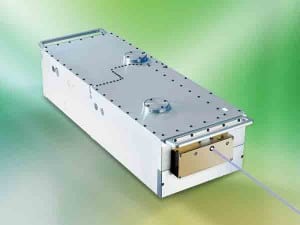
Spectra-Physics, a Newport Corp. brand, introduced an addition to its Pulseo family of Q-Switched diode-pumped solid-state industrial lasers. The rugged and reliable Pulseo 355-10 provides 10 W of 355-nm output at 90 kHz with a short pulse width of less than 23 ns. Key applications for the Pulseo 355-10 are crystalline silicon photovoltaic solar cell […]
-
Finance
U.S. Wind Capacity Soars, Manufacturing Doesn’t
Wind generating capacity hit new highs in 2009, but that didn’t mean much for the wind power manufacturing sector, meaning fewer “green” jobs than the Obama administration hoped to see.
-
 Coal
CoalReal-Time Control of Coal Quality Improves Reliability
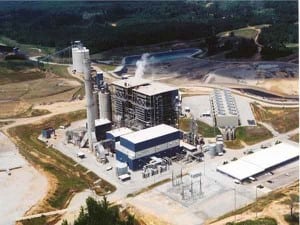
Poor lignite fuel quality had plagued the Red Hills Power Plant since it began operation eight years ago. The solution: real-time measurement of coal properties that has allowed Red Hills Mine to carefully monitor fuel quality and adjust fuel collection processes to ensure that only high-quality fuel is delivered to the plant. Now all delivered fuel is consumed, and plant reliability is much improved. It’s a classic win-win project.
-
News
POWER Digest (March 2010)
Masdar, BP Hydrogen Power Plant to Be Completed in 2014. The $2.2 billion Hydrogen Power project — a joint venture between the United Arab Emirates’ renewable energy initiative Masdar (60%) and oil company BP (40%) — should be completed in 2014, the companies said on Jan. 18. The 420-MW plant, located in Abu Dhabi, would […]
-
Commentary
Socrates, Pharmacies, and Regulatory Conferences
How do pharmacy product displays and regulatory conferences differ? A prominent regulatory thinker ponders the differences, and, ironically, the similarities.
-
 Water
WaterStrategies to Reduce Sulfuric Acid Usage in Evaporative Cooling Water Systems
Concentrated sulfuric acid is often used to prevent calcium-based scale formation on condenser and heat exchanger tube surfaces in power plant evaporative cooling water systems. Unfortunately, the chemical’s price has jumped more than 300% over the past three years. If the rising cost of water treatment has you under the budget gun, here are some alternative strategies that can reduce or even eliminate your sulfuric acid usage.
-
 Nuclear
China Nuclear Plant Construction Gets Boost—With Technology Transfer
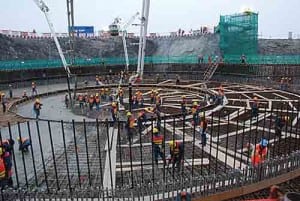
China’s nuclear power plant building spree got a little more frenzied this January, as the country kicked off its 21st project at Ningde 3.
-
Commentary
Motivation: Reward Is in the Eye of the Beholder
Motivating workers can be simple and low-cost: Make your employees feel valued and important.
-
 Coal
CoalDetermining Carbon Capture and Sequestration’s Water Demands
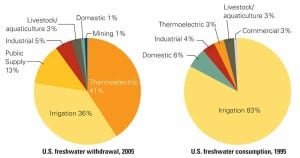
The U.S. Department of Energy’s National Energy Technology Laboratory is pursuing a new integrated energy-water R&D program that addresses water management issues relative to coal-fired power generation that takes into account the major impacts of CCS on water use. The goal of this research is to promote more efficient use of water in power plant operations and increase the availability of heretofore unusable waters for power plant use. Those practices can mitigate the impacts of CCS on power plant water use and allow for continued development of energy resources.
-
 Gas
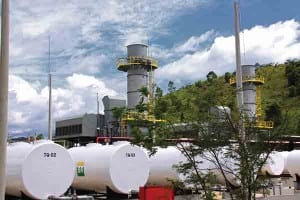
GasBrazil Beings Operation of Ethanol Power Plant
Brazil’s state-owned oil producer, Petrobras, on Dec. 31, 2009, said it had inaugurated the world’s first power plant to run exclusively on ethanol.
-
Commentary
Are Cap’n’Trade and a National RPS Dead?
Data shenanigans and recent political developments in the U.S. suggest that the climate change frenzy is rapidly fading. Could the backlash also sink renewable energy portfolio standards?
-
 Water
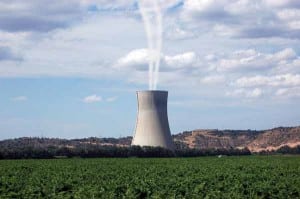
WaterHarnessing Energy from Upward Heat Convection
The atmospheric vortex engine exploits the natural energy content of the vortex produced during upward heat convection in the atmosphere. The heat source can be solar energy, warm sea water, warm humid air, or even waste heat rejected in a cooling tower. When mature, the technology — currently in the small-scale testing phase — promises to be an efficiency game-changer for fossil-fired power plants.
-
 Coal
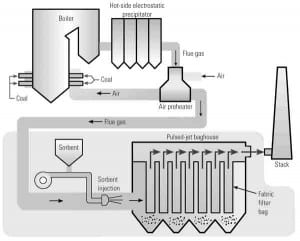
CoalNETL, We Energies Successfully Complete TOXECON Demonstration
A three-year demonstration of the TOXECON process, a technology to reduce mercury emissions while increasing the collection efficiency of particulate matter (PM), was last year successfully completed at a Michigan coal power plant, the U.S. Department of Energy’s National Energy Technology Laboratory (NETL) reported in January.
-
 News
NewsUniversal Beam Clamps
Harrington Hoists launched its new Universal Beam Clamps, a product line that complements its core product offering of hoists, cranes, and material-handling equipment. The beam clamps are available in metric tons rated 1 through 10; they meet ASME BTH-1 and ASME B30.20, and comply with portions of ASME B30.16; and they have a design factor […]