
Articles By

-
 Coal
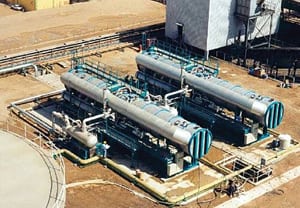
CoalAdding Desalination to Solar Hybrid and Fossil Plants
Shrinking water supplies will unquestionably constrain the development of future power plants. A hybrid system consisting of concentrated solar thermal power and desalination to produce water for a plant, integrated with a combined cycle or conventional steam plant, may be the simple solution.
-
 Environmental
Dry Injection of Trona for SO3 Control
In 2006 and 2007, POWER ran a three-part series on the formation of SO3, O&M issues caused by SO3, and sorbent injection control for SO3 control. Three years later, many plants still struggle with their SO 3 mitigation systems or remain undecided on which mitigation path to follow. This article explores the advantages of dry sorbent injection technology.
-
 Nuclear
Resurrecting Nuclear: "We Have to Get It Right"
Offers of nuclear loan guarantees are pending, construction permit applications are at an industry high, and the political stars seem to be properly aligned. However, there remains one obstacle in the development path of the next-generation of nuclear plants: How will these plants be financed?
-
 Business
Power in Mexico: A Regulatory Framework with Little Flexibility
Mexico’s federal government retains almost total control over who builds and owns what electricity infrastructure. But if you know how to work within the strict constraints, it is possible to engage in profitable projects.
-
 News
NewsCombo Temp and Humidity Sensor
E Instruments has just released its TH300 humidity and temperature sensor, which is ideal for applications that require a single, high-accuracy instrument. The sensor measures relative and absolute humidity, dew point, wet and dry temperatures, and enthalpy. The range of measurement is from 0% to 100% relative humidity and – 40F to 356F. Accuracy is […]
-
 Business
Power in Mexico: Three Keys to Success for the Service and Manufacturing Sector
NAFTA was both good and bad for Mexico. In both cases, it required a different approach to doing business, and the effects of that shift are still playing out.
-
News
Bridge to a Dead End
The Brattle Group released a provocative study paper in March in which the authors postulate that using more natural gas for generating electricity could reduce our dependence on coal-fired generation and reduce carbon emissions. Also discussed is an unexpected side effect: Renewables could push natural gas plants down in the dispatch mix in the future. […]
-
Supply Chains
Trend: Natural Gas Is Hot, Hot, Hot
Despite the political kerfuffle over Obama administration loan guarantees for new nuclear generating plants, the ubiquitous hand-wringing about fossil fuels and climate change, and the hype about wind and solar renewable power generation, the new reality of natural gas may be a game-changer.
-
Commentary
How Green Is Green Power?
The demand for "green" electricity — electricity produced from renewable sources like wind, solar, hydropower, geothermal, and biofuels — is at an all-time high in the U.S. Over the past decade, solar and wind capacity have increased dramatically due largely to mandatory renewable portfolio standards (RPS), which have now been adopted by 27 states.
-
 Business
Power in Mexico: Risks and Rewards
State control of the electricity sector may mean fewer customers, but it also can mean clearer expectations.
-
Commentary
In Praise of Electric Power
The fear of losing electric power inspires thoughts about how vital electricity is to our lives. It is fundamental to modern living, and that’s entirely a good thing.
-
News
Bridge to a Dead End
The Brattle Group released a provocative study paper in March in which the authors postulate that using more natural gas for generating electricity could reduce our dependence on coal-fired generation and reduce carbon emissions. Also discussed is an unexpected side effect: Renewables could push natural gas plants down in the dispatch mix in the future. Just because natural gas reserves are at a record high and the price is at historic lows doesn’t mean that gas demand will increase.
-
 O&M
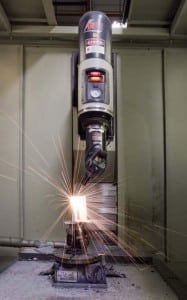
O&MLaser Hole-Shaping Improves Combustion Turbine Efficiency
Laser shaping technology has evolved from a two-step process into a single process that drills and shapes holes through a TBC, bond coat, and airfoil base metal to create a finished product.
-
Commentary
Wind’s Cost Is Underestimated; Its Value Overestimated
Wind power’s cost is hidden in subsidies; its value is overstated and based on false metrics that don’t account for reliability and dispatchability.
-
 Business
CERAWeek 2010: "Energy: Building a New Future"
For the past 26 years, Cambridge Energy Research Associates (CERA) has hosted an annual CERAWeek conference in Houston that is renowned for high-profile attendees from around the world. During the week of March 8, security was tight as oil ministers from the Middle East and CEOs from the largest oil and gas companies and electric utilities rolled into Houston to exchange ideas and forecasts. More than 1,200 delegates from 55 countries attended to hear more than 100 distinguished speakers discuss a business that seems to have renewed optimism about the future.
-
 News
NewsWireless Clamp Meter
Extech Instruments introduced the EX845, a 1,000A AC/DC CAT IV clamp meter with new METERLiNK technology and a built-in infrared thermometer. METERLiNK wirelessly connects FLIR infrared cameras to Extech meters via Bluetooth to simplify inspections. During infrared inspections of electrical components, users can transmit key electrical readings such as current or voltage from an Extech […]
-
General
Scientific Spam on Climate Health Effects
By Kennedy Maize Washington, D.C., April 28, 2001 — Having spent decades as a Washington reporter, I’ve read more government reports that I can count. Paper is policy currency in D.C. But this week’s interagency report – A Human Health Perspective on Climate Change – is the loopiest I can recall. This report, honchoed by […]
-
News
Kerry-Graham-Lieberman Bill Stalls as Graham Withdraws Support
The long-awaited Kerry-Graham-Lieberman bill saw more delays this week as Senator Lindsey Graham (R-S.C.) abandoned efforts to work with Senators John Kerry (D-Mass.) and Joseph Lieberman (I-Conn.) on the legislation, citing frustration with reports that indicated congressional leadership and the administration were prioritizing immigration over climate and energy legislation.
-
News
EPA Submits Final Tailoring Rule to White House OMB
The U.S. Environmental Protection Agency (EPA) last week sent its final so-called “Tailoring Rule” to the White House Office of Management and Budget (OMB) for review. The move signals that the rule, which could require power plants and other entities to obtain operating permits to emit greenhouse gases, is close to finalization.
-
News
Utah Backs Out of Western Cap-and-Trade Program
Utah is the latest state to announce that it will not participate in the Western Climate Initiative (WCI) when the regional cap-and-trade program begins in January 2012. Republican governor Gary Herbert’s office told reporters that the state would not entirely quit the initiative, even though the governor disagreed with some principles favored by it.
-
News
Australia Ditches Carbon Trading Plan
The Australian government has reportedly shelved controversial plans for a national carbon trading program until at least 2013, citing political and public opposition to the proposal. The world’s biggest coal exporter was proposing to reduce greenhouse gases by 5% to 15% of 2000 levels via a carbon trading system similar to Europe’s within the next decade.
-
News
Canada, Georgia, Colorado, and Washington Move to Phase Out Coal Power Plants
Last week brought news of several more proposed coal-fired plant closures from Canada, Georgia, Colorado, and Washington State.
-
News
DOE to Spur Commercialization of Solar and Water Power Technologies
The Department of Energy on Earth Day last week announced it would invest more than $200 million over five years to accelerate the development and commercialization of solar and water power technologies. Investments include initiatives to spur photovoltaic (PV) manufacturing, to develop the PV supply chain, and to accelerate marine and hydrokinetic technologies.
-
News
First U.S. Offshore Wind Project Finally Gets Green Light
The Department of the Interior (DOI) today gave its approval to the first U.S. offshore wind farm, a long-disputed and much-delayed project on federal submerged lands in Nantucket Sound. The approval comes with conditions, however, including requiring the developer of the $1 billion wind farm to agree to additional binding measures to minimize the potential adverse impact of construction and operation of the facility.
-
General
Charlie Brown and the Senate Energy Bill
By Kennedy Maize Washington, D.C., April 25, 2010 — The Senate has again failed to kick off debate on energy/climate legislation. A bipartisan group — Sens. John Kerry of Massachusetts (D), Joe Lieberman of Connecticut (I-D), and Lindsey Graham of South Carolina (R) — have been laboring for a year to create a bill that […]
-
News
2009 Saw Historic Power Demand Plunge, FERC Says
Demand for electricity in the U.S. dropped by 4.2% in 2009—the greatest decline in a single year in at least 60 years, the Federal Energy Regulatory Commission (FERC) found in its annual State of the Markets Report, released last week.
-
News
Duke Energy: Edwardsport IGCC Plant to Cost 23% More
The scale and complexity of Duke Energy’s Edwardsport coal gasification plant under construction in southwest Indiana has added about $530 million to project costs—a 23% increase—company officials told state regulators last week. The integrated gasification combined cycle (IGCC) plant slated to begin operation in 2012 is now estimated to cost $2.88 billion. The total project, […]
-
News
Congressional Briefs: Climate Change and Energy News
Last week, as news emerged that the Kerry, Graham, and Lieberman draft bill is expected to be released on April 26—and it could hit Senate floor before July 4—the Institute for Policy Integrity hailed the Cantwell-Collins CLEAR Act. Meanwhile, the EPA received a two-week extension to a legally imposed deadline for proposing boiler standards.
-
News
Tenaska, Environmental Group Reach Deal on Texas Coal Project
Tenaska on Monday signed an agreement with the Environmental Defense Fund (EDF) to limit water use and capture at least 85% of carbon dioxide produced by a proposed advanced coal plant under development near Sweetwater, Texas, if the environmental group drops legal opposition to the plant.
-
News
Industry Groups: U.S. Solar, Geothermal Projects Surged in 2009
Despite the recession, reports from U.S. renewable industry groups show that the nation’s solar energy industry enjoyed a 36% increase in revenue and overall 5% increase in installations in 2009, while geothermal projects under development grew more than 26%.