
Articles By

-
News
EPA Defers GHG Permitting for Carbon-Emitting Biomass Sources by Three Years
Greenhouse gas (GHG) permitting requirements for carbon dioxide as they apply to biomass-fired and other biogenic sources of power will be deferred three years so that the Environmental Protection Agency (EPA) could have enough time to better weigh the issue, the federal agency announced today.
-
News
Illinois Senate Vote Jeopardizes Future of Taylorville IGCC Carbon Capture Project
In its last item of business before a new General Assembly took office today, the Illinois Senate rejected—for the second time since last week—a bill that would have procured $3.5 billion from ratepayers for the construction of Tenaska’s Taylorville Energy Center, an integrated gasification combined cycle power (IGCC) plant proposed for central Illinois. The vote puts the future of the controversial coal-fired plant in doubt.
-
News
Duke Energy-Progress Energy Merger Creates Nation’s Largest Utility
North Carolina–based utilities Duke Energy and Progress Energy agreed to an all stock merger valued at $13.7 billion on Monday. The combined company, to be called Duke Energy, will be the nation’s largest utility. It will have a $65 billion enterprise value, $37 billion in market capitalization, and 57 GW of domestic generating capacity—including the largest regulated nuclear fleet in the country.
-
News
Nuclear Briefs from Brazil, Minnesota, and China
The past week saw a spate of nuclear-related news from around the world. Brazil said it would issue approvals for four nuclear plants and a massive hydropower dam in 2011; a Minnesota House committee voted to lift the state’s 20-year ban on new nuclear power; and a Chinese firm that owns the incident-plagued Hong Kong Daya Bay nuclear plant said it would boost operational transparency to quell public concern.
-
News
Cape Wind Completes Federal Permitting Process
The 130-turbine Cape Wind offshore wind farm proposed for construction on Horseshoe Shoal in Nantucket Sound, Mass., on Friday received two key approvals—from the Environmental Protection Agency (EPA) and the U.S. Army Corps of Engineers—completing its federal permitting process.
-
News
EPA Sues 2-GW Coal-Fired Homer Generating Plant for NSR Violations
The U.S. Department of Justice filed a Clean Air Act complaint on behalf of the U.S. Environmental Protection Agency (EPA) alleging that owners and operators of the 2-GW coal-fired Homer City Generating Station in Homer City, Indiana County, Pa., violated New Source Review (NSR) requirements.
-
News
South Korea Newest Customer for Siemens H-Class Gas Turbine
South Korean utility GS Electric Power and Services Co. is Siemens Energy’s newest customer for the German firm’s new high-efficiency H-Class gas turbine. Siemens said today that it would supply—for the first time—a complete combined cycle power plant equipped with the new-generation gas turbine.
-
News
Virginia Regulator Denies Request to Delay PATH Procedural Hearings
Virginia’s State Corporation Commission on Monday denied a request by Allegheny Energy and American Electric Power to delay regulatory proceedings for a proposed 765-kilovolt, 275-mile transmission project from Putnam County, W.Va., to Frederick County, Md.
-
General
Game Over: FERC 1, WSJ 0
By Kennedy Maize Washington, D.C., January 11, 2011 — The Federal Energy Regulatory Commission this week engaged in a spitting match with the editorial page of the Wall Street Journal. FERC won. At issue is the commission’s Dec. 16 order sorting out the incredibly complex issue of how to connect remote renewable generation into the […]
-
News
EPA GHG Rules Take Effect—Everywhere But in the Lone Star State
As regulations from the Environmental Protection Agency (EPA) to curb greenhouse gases from power plants and other large stationary sources took effect for the first time this week, a federal appeals court temporarily stayed the federal agency’s plan to seize control of greenhouse gas permits from Texas.
-
News
Ormat Shuns $330M in Loan Guarantees, Cites Permitting “Uncertainties,” Costs
Ormat Technologies last week said it would not proceed with Part II of a loan guarantee application for three geothermal projects in California and Nevada, shunning the opportunity for up to $330 million in federal funds. The Reno-based company said it had instead decided to “explore” commercial financing, citing uncertainties in the project permitting process and transaction costs associated with the program.
-
News
German 1.1-GW Staudinger Coal Plant Gets Green Light
The German state governing council of Hesse last week partially approved a 1.1-GW coal-fired power plant proposed for construction by Germany firm E.ON at its Staudinger site. If E.ON receives clearance for actual operation of the plant, the plant will be the sixth block at the site, replacing three older units built in the 1960s and 1970s.
-
News
Project Demonstrates Removal of Water from Ultrafine Coal Waste
A novel technology that could help release some currently unusable energy in an estimated 2 billion tons of coal waste in the U.S. has been demonstrated by a Department of Energy–supported project, the federal body said on Tuesday.
-
News
NRC Publishes Savannah River MOX Facility Safety Evaluation Report
The Nuclear Regulatory Commission (NRC) last week said it had published its final Safety Evaluation Report (SER) for the Mixed-Oxide (MOX) Fuel Fabrication Facility at Savannah River.
-
News
FERC Approves Constellation’s $1.1B Acquisition of BostonGen Plants
The Federal Energy Regulatory Commission (FERC) last month approved Constellation Energy’s $1.1 billion acquisition of BostonGen’s five power plants in the Boston area, which have a combined capacity of 2,950 MW. The approval marks closing of the sale of the third-largest generating portfolio in the New England region.
-
Commentary
The Art of Ruthless Focus
A million possibilities and distractions are in the business environment. Tom Hall and Wally Bock, authors of the new book Ruthless Focus, say the companies that win in the long term are the ones that can drown out the background noise and keep dancing with the strategy that brought them to the party.
-
Commentary
Double A Energy Policy
With climate legislation dead in the U.S., it is worthwhile to take a look at how discussions of energy and environmental policy ebb and flow in the country, generally without reaching serious resolution.
-
Commentary
Stop "Doing" and Start Leading
A key challenge for new leaders is to make a transition from actually doing the work to making sure that the work gets done. That takes a mind shift.
-
Finance
TREND: Hydro on the Rise
Although it doesn’t get much attention, the world’s first and largest source of renewable electricity, water power, is still a major player on the world stage. Though viewed as politically incorrect by some folks, mostly in the developed world, and despite its well-known environmental impacts, using water to turn turbines to generate electricity represents an attractive way to generate electricity with no fuel costs, even in the U.S. Here’s what’s being talked about in the U.S., India, Turkey, Nigeria, and China.
-
Commentary
Outsource Management?
Whatever happened to the venerable military institution of KP? It’s been outsourced, along with a lot of other tasks in the work environment. Outsourcing often makes sense, but it isn’t a panacea.
-
Legal & Regulatory
Postmortem: U.S. Electric Transmission Siting Policy
Despite high-powered congressional legislation in 2005, the U.S. is still unable to site high-voltage interstate transmission lines in a timely fashion. Two new reports suggest ways out of the gridlock.
-
Finance
MIT: Uranium Supplies Adequate
Uranium remains plentiful around the world, says a new resource study from MIT, obviating the need to "close" the nuclear fuel cycle by reprocessing and developing breeder reactors.
-
Business
Look Before You Leap into the Cloud
Given cloud computing’s potential to lower operating costs and increase flexibility, it’s no wonder that it is on the cusp of sending the corporate world into a paradigm shift.
-
Finance
The Pitfalls of Pollution Allowance Trading
The process of banking allowances under the existing schemes for creating markets for pollution reductions has created a set of difficult problems as those programs have changed, wiping out significant value from the allowances.
-
Legal & Regulatory
A Really Basic Checklist for Employee Benefits in Mergers and Acquisitions
As mergers and acquisitions in the power sector heat up again, questions arise about how employee benefits are affected by these complex business deals.
-
 Gas
GasMHI Prepares to Test J-Series in Japan
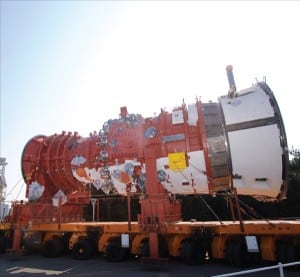
Mitsubishi Heavy Industries (MHI) has begun converting a combined-cycle plant in Japan to prepare for verification testing of its long-anticipated J-Series gas turbine in February 2011—a system that the company claims has the most power generation capacity and highest thermal efficiency in the 1,600C turbine inlet temperature class (Figure 3). The work being carried out at the Takasago Machinery Works facility in Hyogo Prefecture (where the company’s G-Series gas turbines were tested) includes installation of the J-Series turbine, and it marks another major milestone in the technology’s development.
-
 Smart Grid
Which Side of the Meter Are You On?
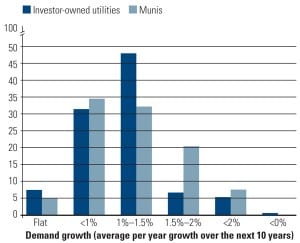
Utilities have achieved success by supplying electricity from central station plants (the supply side) to a grid that carries electricity to customers (the demand side). One way to improve the efficiency of this supply chain is by adopting smart grid technology. The weak link in that chain is convincing customers to use, and regulators to invest in, the smart grid.
-
 Gas
GasTransCanada Opens 683-MW Halton Hills Combined-Cycle Plant
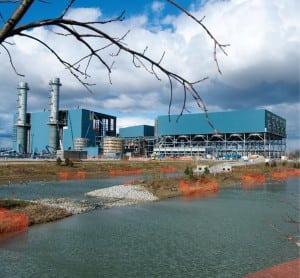
TransCanada Corp. on Oct. 28 officially opened its C$700 million Halton Hills Generating Station. The 683-MW 2 x 1 combined-cycle plant on a greenfield site in Ontario (Figure 5) will operate under a 20-year power purchase agreement with the Ontario Power Authority (OPA). Construction of the peaker plant started in December 2007 and was completed on time and on budget, TransCanada said.
-
 Business
Mitsubishi Looks to High-Efficiency Combustion and Wind Turbines in 2011
Bill Newsom—vice president, sales & marketing, Mitsubishi Power Systems Americas Inc.—talks about taking the long view with the company’s U.S. investments.
-
Distributed Energy
Smart Grid 2011: More than Meters
The concept of a smart grid may have been born in the U.S.A., but it’s hitting an adolescent growth spurt just about everywhere else first. Meanwhile, in the U.S., both the regulators and companies that see great potential in a smarter grid are realizing that making substantial smart grid progress will first require making both people and policies smarter. There’s one exception, one piece of the smart grid, that could face fewer obstacles to adoption, and that’s because it offers more obvious and visible benefits to its users: electric vehicles (EVs).