
Articles By

-
Coal
State Proposal to Resolve EPA Dispute Calls for Retirement of San Juan Coal Units
A settlement proposed by New Mexico’s Environment Department on Wednesday calls for retiring two units at the 1,800-MW San Juan Generating Station located 15 miles west of Farmington, N.M., by December 2017 and installing selective noncatalytic reduction, a less-costly air emissions control technology than one proposed by the U.S. Environmental Protection Agency (EPA), on the other two units, 3 and 4. Plant owner PNM Resources said in statement that it was hopeful the state’s proposal would resolve a long-standing dispute with the EPA to address regional haze.
-
Coal
GenOn, Progress Shutter 972-MW of Coal-Fired Capacity on Oct. 1, Rocky Mountain Considers Closure
On Oct. 1, GenOn shuttered its 482-MW coal-fired Potomac River Generating Station as Progress Energy Carolinas retired three coal-fired units—two at the 316-MW Cape Fear plant near Moncure, N.C., and the 177-MW H.B. Robinson Unit 1 near Hartsville, S.C. Utah’s Rocky Mountain Power, a unit of PacifiCorp, meanwhile reportedly warned employees and public officials that it may close its 190-MW coal-fired Carbon Power Plant in northeastern Utah over the next few years because it has no room to install air emissions controls to make it compliant with federal rules by 2015.
-
Business
$1.2 B Pennsylvania–New Jersey Line Gets Federal OK
The National Park Service on Monday approved a $1.2 billion 500-kV transmission line that will run from the Berwick area in Pennsylvania to Roseland, N.J., a project that developers Public Service Electric and Gas Co. (PSE&G) and PPL Electric Utilities say will boost electric service reliability and provide a significant economic stimulus to the region.
-
 Coal
CoalGermany’s Reliance on Coal Grows
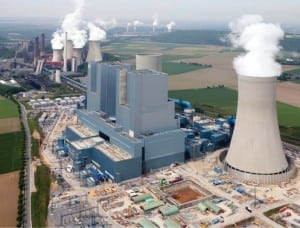
This August, instead of the usual fanfare at the official commissioning ceremony of RWE’s twin-unit 2.2-GW coal-fired BoA Units 2 and 3—a $3.3 billion lignite-fired power plant in Grevenbroich-Neurath near Cologne (Figure 1)—Germany’s premier of the state of North Rhine–Westphalia, Hannelore Kraft, and the newly installed federal minister of the environment, Peter Altmaier, requested a rapid cutback in power production. As 400 guests watched, the output of one unit was reportedly reduced by more than 150 MW in five minutes, and then restored just as fast. The demonstration was to show how quickly the plant could offset the intermittency of wind and solar power, the officials said, proclaiming the plant an “important element” of Germany’s energy strategy.
-
 News
NewsMotor Control Center Addresses Arc Flash Incidents
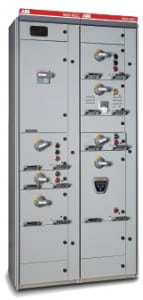
ABB says its newly introduced MNS-MCC motor control center is the first in the industry to address the causes of arc flash incidents while providing superior equipment and personnel protection. The product uniquely allows operators to remove a unit with the door closed, with no tools, and without disconnecting any wires. This easy “bucket removal” […]
-
 News
NewsPowering Curiosity on Mars—And Beyond
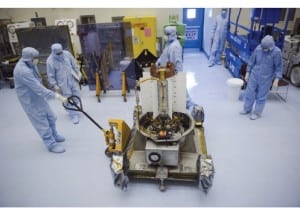
With the precarious descent of NASA’s Mars rover Curiosity into the Red Planet’s Gale Crater a success, NASA now plans to gather geological and environmental data from the Martian surface to determine whether the planet has ever offered environmental conditions favorable for life—and collect data for a manned mission.
-
 News
NewsRubber Disc Return Rollers
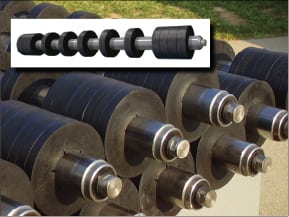
New Rubber Disc Return Rollers from Elite Roller Manufacturing feature four tapered roller bearings (two in each hub) for smooth operation and a service life that is up to three times longer than traditional two-bearing roller designs. The patented “quad bearing” design also withstands more severe applications than traditional rollers, and it allows the reuse […]
-
 Nuclear
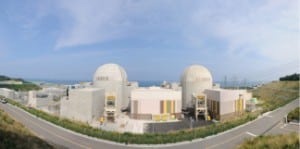
South Korea Connects Two New Reactors to the Grid
3. An atomic leap. South Korea is looking to boost nuclear capacity to 43.4% of its total power profile by 2020. Two new reactors became commercially operational this summer, the 960-MW Shin Kori 2 plant near Nae-ri and the Shin Wolsong 1 (shown here) in the southwest city of Gori. Courtesy: Korea Hydro and Nuclear […]
-
Legal & Regulatory
New Approaches to Project Mitigation
The First Law of Thermodynamics holds that the amount of matter and energy in the universe is constant and that no new matter or energy can be created. The corollary Second Law is that when energy is put to use, unusable energy or entropy results. One lesson—other than to beware of lawyers purporting to lecture on physics—is that everything we do has a consequence. -
 News
NewspH-Measuring App
California-based Sensorex has developed an industry-first mobile accessory for pH measurements. Compatible with Apple iPod, iPhone, and iPad devices, the PH-1 pH meter accessory measures and records pH values in the lab or field for use in environmental, education, and industrial applications. The patent-pending PH-1 accessory plugs into the standard Apple dock connector and uses […]
-
 Nuclear
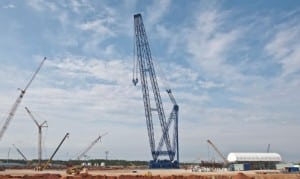
Plant Vogtle Moves Forward, as Do Costs and Schedules
At Plant Vogtle in Georgia, where Southern Co. subsidiary Southern Nuclear is building two new 1,100-MW AP1000 units for Georgia Power and co-owners Oglethorpe Power Corp., the Municipal Electric Authority of Georgia, and Dalton Utilities, work on the first new nuclear units built in the U.S. in 30 years is progressing—albeit with hiccups.
-
 Coal
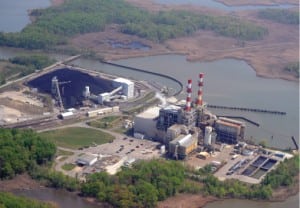
CoalTOP PLANT: C.P. Crane Generating Station, Middle River, Maryland
A desire to do things right led Constellation Energy to invest $70 million to convert its 400-MW C.P. Crane Generating Station to burn Powder River Basin coal and develop the culture critical to making that conversion a success. In addition to being named a 2012 POWER Top Plant, the PRB Coal Users’ Group recognized the plant for its efforts with its Plant of the Year Award
-
 News
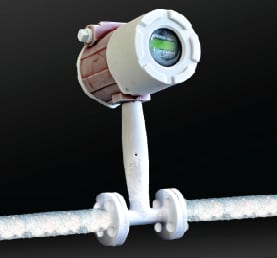
NewsCryogenic Mass Vortex Flow Meter
Sierra Instruments launched a new cryogenic version of its InnovaMass 240 multivariable mass vortex flow meter for advanced, more reliable measurement of liquefied gases, including liquid nitrogen, liquid oxygen, liquefied natural gas, and liquefied petroleum gas, down to –330F. The InnovaMass contains no moving parts that will wear out or require service. This new meter […]
-
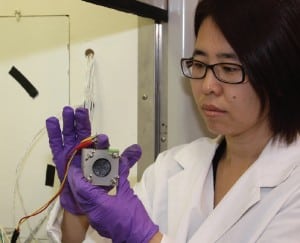 News
NewsMicrobial Fuel Cells Promise Power from Sludge
A microbial fuel cell technology developed at Oregon State University (OSU) promises to produce 10 to 50 times more electricity per volume directly from wastewater than most other approaches using microbial fuel cells. The breakthrough could reportedly have significant implications for waste treatment plants by replacing the “activated sludge” process that has been widely used for almost a century. The new approach could produce significant amounts of electricity while effectively cleaning the wastewater, OSU researchers say.
-
 Coal
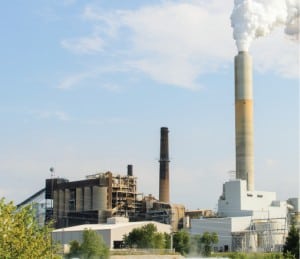
CoalTOP PLANT: Merrimack Station’s Clean Air Project, Bow, New Hampshire
To comply with the New Hampshire law governing mercury emissions, Merrimack Station management recently installed a single scrubber system on the facility’s two coal-fired boilers. The plant’s Clean Air Project was completed on Mar. 30, 2012, ahead of schedule and under budget. Now the 440-MW Merrimack Station has reduced its mercury and sulfur dioxide emissions by more than 95% and is one of the cleanest coal-fired power plants in the nation
-
 News
NewsElectronic Differential Pressure Sensor
The Deltabar FMD72 Electronic Differential Pressure measurement system launched by Endress+Hauser uses two pressure sensor modules connected electronically to a single transmitter and eliminates the need for impulse lines or capillaries and their related issues of icing up, clogging, leaky taps, dry/wet leg inconsistencies, and problems with temperature changes. Ambient temperature changes cause measurement drift […]
-
Business
POWER Digest (October 2012)
Chile Supreme Court Strikes Plans for $5B Coal Plant. Chile’s Supreme Court on Aug. 28 rejected the $5 billion Central Castilla thermoelectric power plant planned by Brazilian firm MPX Energia and Germany’s E.ON, citing environmental reasons. Developers argued that the 2,100-MW plant is needed by Chile, the world’s foremost copper producer, which struggles with high […]
-
 Coal
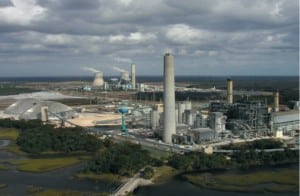
CoalTOP PLANT: Northside Generating Station, Jacksonville, Florida
Since the Northside Generating Station’s two repowered units were placed into service in 2002, a series of modifications and repairs have been undertaken to make its two circulating fluidized bed boiler plants reliable. The two chief problems were ash agglomeration on heat transfer surfaces and poor Intrex heat exchanger performance. JEA reports these problems have been permanently resolved, and data shows the two units have joined the top tier of reliable fossil plants.
-
Commentary
Veterans and Utilities: A Valuable Partnership
The brave men and women of the U.S. military spend years crafting special skills and developing traits that prepare them for the challenging assignments they will be given throughout their terms of service. They receive orders for tours of duty and venture without hesitation into places steeped in peril and instability. Because of their consistently courageous responses to unimaginable challenges, civilians herald America’s servicemen and women as heroes. How can we begin to repay our veterans for defending our freedom?
-
Gas
Blowing Sunshine
The influx of cheap Chinese-manufactured solar panels has upended the solar industry in more ways than one. The saga offers some lessons on what to do about LNG exports.
-
 O&M
O&MFly Ash Erosion Control and Prevention
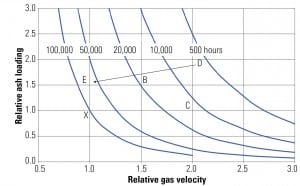
Boiler tube failures (BTFs) are responsible for the largest portion of availability loss (about 4%) in the fossil boiler industry, and approximately 25% of all tube failures are due to fly ash erosion (FAE). An Electric Power Research Institute report indicated that the problem was being managed in U.S. utilities by maintenance activities that were put into effect each time a boiler was taken off-line. The cost of an individual repair was a small fraction of the forced outage cost, and therefore has been considered justified in the past. However, many forced outages continue to be experienced each year due to FAE, and in many cases, these occur at identical locations, indicating that applied solutions relieve, but do not cure, the problem.
-
 Coal
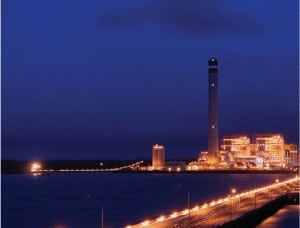
CoalTOP PLANT: Tanjung Jati B Electric Generating Station, Central Java Province, Republic of Indonesia
Units 3 and 4 expand the Tanjung Jati Electric Generating Station’s capacity by adding 1,320 MW of reliable power that helps to boost Indonesia’s growing economy. Now the 2,640-MW coal-fired facility provides approximately 12% of the electricity available on the Java-Bali grid. The new units feature a flue gas desulfurization system and electrostatic precipitators that reduce air emissions and protect the environment.
-
 Water
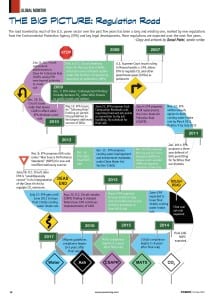
WaterTHE BIG PICTURE: Regulation Road
To view a larger version of this graphic, download the file here.
-
O&M
Major Noise Sources and Mitigation Cost Estimates for Gas-Fired Power Facilities
Natural gas–fired power plants can generate substantial amounts of noise. With proper planning and foresight during the design phase, major noise sources can be effectively mitigated, while failing to plan can be very expensive in the long run.
-
 Solar
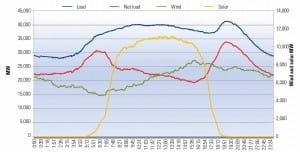
SolarMaintaining Grid Reliability with a High Renewables Portfolio
The first problem with high renewable penetration is that wind and solar are not dispatchable.
-
 Coal
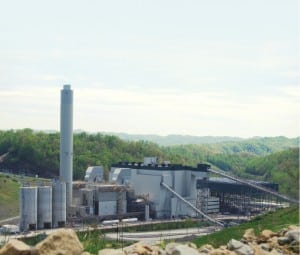
CoalTOP PLANT: Virginia City Hybrid Energy Center, Virginia City, Virginia
Dominion’s 585-MW Virginia City Hybrid Energy Center, located in southwestern Virginia, relies on two circulating fluidized bed boilers that burn coal and local waste coal mixed with up to 20% biomass. The project also features one of the industry’s largest air-cooled condenser systems to minimize the plant’s water usage. The $1.8 billion project entered commercial service July 10, on budget and on schedule
-
Coal
Replacing Coal: U.S. Combined Cycle Development Trends, Challenges
There’s plenty of uncertainty in gas-fired power these days, with low prices and impending coal plant retirements. Even so, many generators are forging ahead with some ambitious projects and plans for the future.
-
O&M
Predictive Maintenance That Works
This is the sixth in a series of predictive maintenance (PdM) articles that began in the April 2011 “Focus on O&M” in which the essentials of PdM were introduced. In this occasional segment, we have explored specific PdM techniques, such as motor-current signature analysis, oil analysis and thermographic analysis and their routine use, and ultrasonic and vibration analysis. In this issue we look at lubricating oil wear-particle analysis.
-
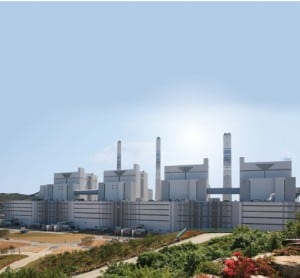 Coal
CoalTOP PLANT: Yeongheung Power Station Unit 3, Yeongheung Island, South Korea
The insatiable power demands of a huge modern metropolitan area like Seoul call for both big thinking and flexibility. The successful launch of this large, state-of-the-art supercritical coal plant required adapting to unforeseen changes in fuel supply while meeting highly restrictive environmental controls. The resulting high-availability facility is a POWER Top Plant
-
Natural Gas: The Logical Alternative
Natural gas is poised to revolutionize how the United States uses energy, but only if government and industry leaders seize the opportunities it offers.