
Articles By

-
Legal & Regulatory
NERC Cyber Security Rules: Evolution or Brownian Motion?
Making sense out of the NERC cyber security rules is inherently difficult; the ever-changing regulatory scene makes it even harder. With Version 4 now in hand, Version 5 is on the way.
-
Supply Chains
Rare Earths: China Strikes Back
Facing increasing competition and a slumping economy, China is moving to strengthen its already robust monopoly over rare earth minerals vital to many advanced energy technologies.
-
HR
Helpful Tips When Terminating an Employee
Firing a worker is not an easy task, something no conscientious manager takes lightly. And the decision can come back to bite. But it is sometimes necessary and there are ways to do the job that minimize the risks to the organization.
-
Business
Energy PR—Forget Facts, Show Value
Whatever utility communicators are selling these days, it doesn’t look like customers are buying. And the problem likely will get worse before it gets better.
-
Legal & Regulatory
Understanding Consequential Damages
One set of legal provisions that anyone in a business or operational role should be aware of is the “consequential damage waiver.” These provisions dictate two of the most vital aspects of any contract: What can you recover if the other party breaches the contract, and what do you have to pay if you do?
-
Commentary
Thriving in a World Without 30-Year Careers
Long careers with one company ending with the presentation of a gold watch are passé. It’s every person for themselves these days. You should be preparing for that new job right now.
-
Commentary
If This Is What It Takes to Produce 8 Kilowatts . . .
The cost of regulatory review is often equal to the cost of the cost of installation for very small projects. It’s time some common sense is used by legislators and government regulators when it comes to small power projects.
-
Solar
Ariz. Now Home to World’s Largest Solar PV Plant
The title of world’s largest operating solar photovoltaic (PV) power plant goes to Arizona. On Monday, First Solar Inc. announced that the Agua Caliente solar project has achieved a peak generating capacity of 250 MW connected to the electrical grid. The project, under construction in Yuma County, will have a total capacity of 290 MW when completed.
-
Smart Grid
Regulators Cannot Move Fast Enough to Protect Grid, FERC Warns
In testimony before a congressional subcommittee, Joseph McClelland, director of the Federal Energy Regulatory Commission (FERC) Office of Electric Reliability, enumerated the ways in which the U.S. regulatory system is ill-equipped to deal with time-sensitive threats to physical and cyber assets of its power system.
-
Nuclear
Quebec’s Only Nuclear Plant to Close
The Canadian province of Quebec’s newly elected Parti Quebecois government announced on Tuesday that it has decided to shutter the province’s 30-year-old Gentilly-2 nuclear plant.
-
Solar
DOE Offers $10M to Bring Down Rooftop PV "Soft Costs"
The Department of Energy (DOE) on Wednesday announced its SunShot Prize, a new competition to make it faster, easier, and cheaper to install rooftop solar energy systems. A total of $10 million in cash awards are available to the first three teams that repeatedly demonstrate the non-hardware costs, or price to plug in, can be as low as $1 per watt for small-scale photovoltaic (PV) systems on American homes and businesses.
-
General
Energy Politics of Republicrats and Democans
By Kennedy Maize (@kennedymaize) Washington, D.C., 9 September 2012 — If you are looking for direction on what energy policy and politics in the U.S. might look like after the November election, don’t expect much guidance from the two party platforms. Nor have the contenders had much of substance to say on the topic. Given […]
-
Nuclear
NRC to Start EIS, Revise Waste Confidence Rule for Spent Nuclear Fuel
The Nuclear Regulatory Commission (NRC) on Thursday directed its staff to develop an environmental impact statement (EIS) and a revised waste confidence decision and rule on the temporary storage of spent nuclear fuel (SNF). Last week’s decision was in response to a June 8 federal court ruling, which said the NRC had erred in deciding that SNF from the nation’s power plants could be stored as long as 60 years after a plant’s operating license expires.
-
Coal
Congressional Briefs: Back from Recess
Congress has returned from its summer break. As the House prepares to vote on its Upton-Stearns "No More Solyndras Act," lawmakers also expect to focus on a bill that could prohibit finalization of any Environmental Protection Agency (EPA) power plant rules that curb greenhouse gas emissions while carbon capture and storage technology is commercially unavailable. House Democrats, meanwhile, called for hearings to examine the impacts of climate change on the nation’s generators.
-
Business
Western Cuba Goes Dark After Power Line Disruption
Residents of Cuba’s capital Havana and millions of others living in an area stretching 450 miles from the nation’s southeastern province of Camaguey to the westernmost province of Pinar del Rio experienced a massive blackout on Sunday night caused by an "interruption" in a 220-kV transmission line, the government said.
-
Smart Grid
USDA Reaches $250M Goal for Smart Grid Technologies
The U.S. Department of Agriculture (USDA) last week said it had reached its $250 million goal to finance smart grid technologies. Agriculture Secretary Tom Vilsack also announced nine rural electric cooperatives and utilities in 10 states would receive loan guarantees to make improvements to generation and transmission facilities and implement smart grid technologies.
-
News
DOE Boosts Methane Hydrate Research with $5M in Grants
The Department of Energy (DOE) on Friday awarded more than $5 million to 14 new research projects across 11 states that will examine the potential of methane hydrates as a future energy supply. Interest in methane hydrates, the 3-D ice-lattice structures found both onshore and offshore with natural gas locked inside, has been mounting since the U.S. and Japanese researchers were able to extract a steady flow of natural gas from methane on the North Slope of Alaska earlier this year.
-
News
Canada Finalizes GHG Rules for Coal-Fired Power Plants
Final regulations that seek to tamp down greenhouse gas (GHG) emissions from new and end-of-life coal-fired power plants announced by Canada’s federal government on Wednesday, and which will become effective on July 1, 2015, apply a more relaxed performance standard than proposed in the draft rule.
-
News
NRC Denies Calvert Cliffs COL on Foreign Ownership Concerns
A panel of judges on the Nuclear Regulatory Commission’s (NRC’s) Atomic Safety and Licensing Board last week denied a construction and operating license (COL) for a new reactor proposed at the Calvert Cliffs Nuclear Plant in Maryland by Unistar, ruling that applicant Électricité de France (EDF) was completely “foreign-owned.” The decision could have implications for two proposed reactors in Texas, which are partly owned by Toshiba America.
-
News
Dominion to Convert another Coal Plant to Natural Gas
Dominion Virginia Power plans to convert its oldest coal-fired power plant, the 227-MW Bremo Power Station near Bremo Bluff, Va., to natural gas, the company said on Wednesday. The two-unit plant would be the ninth in its fleet to be closed or converted to alternative fuels.
-
News
ERCOT Forecasts Enough Power for Fall and Winter
Texas will have enough power to serve consumer needs within the Electric Reliability Council of Texas (ERCOT) during the fall, a new seasonal assessment of resource adequacy (SARA) shows. The assessment, released on Tuesday, comes on the heels of announced plans by the state’s largest generator Luminant to mothball its coal-fired Monticello 1 and 2 units, each rated 582 MW, for at least six months.
-
News
Steam Blast at French Nuclear Plant Injures Two Workers
Two workers suffered minor injuries on Wednesday when a blast of oxygenated steam escaped in an auxiliary building in the Fessenheim nuclear power station in eastern France and triggered a brief fire alert.
-
News
NRC Finalizes Guidance for Post-Fukushima Requirements
The Nuclear Regulatory Commission (NRC) on Friday issued Interim Staff Guidance (ISG) to U.S. nuclear power plants to ensure adequate implementation of three orders it issued in March in response to lessons learned from the Fukushima Dai-ichi nuclear accident.
-
 Wind
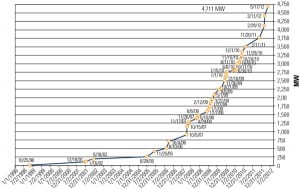
WindWhere More Is Not Merrier: The Battle Between Wind and Water in the Pacific Northwest
Bonneville Power Administration is torn between delivering the tremendous amount of inexpensive hydroelectric power produced in its region and a rapidly growing wind energy industry that has been ordered to reduce generation when hydroelectric plants are dispatched to protect fish habitats. Which renewable energy asset will win?
-
 Gas
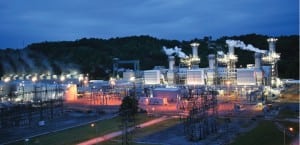
GasTOP PLANTS: John Sevier Combined Cycle Project, Rogersville, Tennessee
The Tennessee Valley Authority (TVA) is known for its large fleet of coal-fired plants. With TVA’s renewed emphasis on nuclear power and gas-fired generation, the organization will soon fulfill its new goal: “to be one of the nation’s leading providers of low-cost cleaner energy by 2020.” Construction of the 880-MW John Sevier Combined Cycle Plant puts TVA one step closer to achieving that goal.
-
Nuclear
Too Dumb to Meter, Part 4
As the book title Too Dumb to Meter: Follies, Fiascoes, Dead Ends, and Duds on the U.S. Road to Atomic Energy implies, nuclear power has traveled a rough road from its origin as a tightly controlled military program to civilian applications meant to benefit society as a whole. In this POWER exclusive, we present the fourth and fifth chapters, “What Friendly Atom?” and “The Atomic Chimera.”
-
 Gas
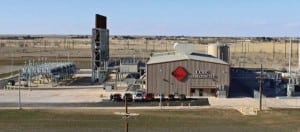
GasTOP PLANTS: LCEC Generation Plant, Lovington, New Mexico
Faced with the need to begin generating its own power after decades of relying on larger regional suppliers, and impending renewable portfolio standard requirements, the Lea County Electrical Cooperative had to get creative. Its choice of a highly flexible gas-fired engine plant that will work together with a nearby wind farm makes this a POWER Top Plant.
-
 Gas
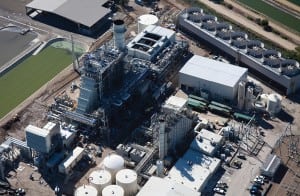
GasTOP PLANTS: Lodi Energy Center, Lodi, California
Set to begin commercial operation on Sept. 17, 2012, the 280-MW Lodi Energy Center is the first “fast-start” combined cycle power plant in the U.S. The advantages of the gas turbine’s shorter startup capabilities are reduced fuel costs, lower emissions, and the versatility to effectively partner with intermittent renewable energy sources. The new power plant is located next to the city of Lodi’s municipal wastewater treatment plant and uses its treated wastewater for cooling purposes.
-
News
Perception Is Not a Science
Is your summer warmer than normal, or did your winter seem colder than in the past? We may perceive changes in weather patterns and draw conclusions, but personal experience is of limited value in science. It’s all about the data. Dr. James Hansen, a senior NASA scientist and long-time global warming apologist, first achieved notoriety […]
-
 Gas
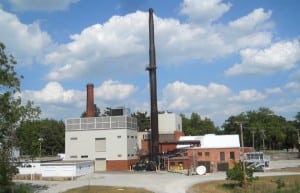
GasTOP PLANTS: University of Iowa Research Park Tri-Generation Power Plant, Iowa City, Iowa
As part of the University of Iowa Research Park’s efforts to promote renewable energy use, the new campus power plant’s engine generators are designed to operate primarily on landfill gas when the pipeline from the Iowa City Landfill is completed, with natural gas as a secondary fuel source. To make it more efficient, the plant’s waste heat recovery system captures waste heat from the gas engine generator’s cooling and exhaust systems to produce hot water for heating, or chilled water for cooling, campus facilities.