
Articles By

-
 Solar
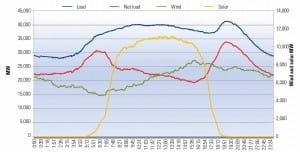
SolarMaintaining Grid Reliability with a High Renewables Portfolio
The first problem with high renewable penetration is that wind and solar are not dispatchable.
-
 Coal
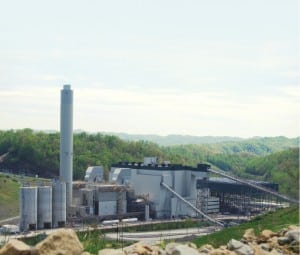
CoalTOP PLANT: Virginia City Hybrid Energy Center, Virginia City, Virginia
Dominion’s 585-MW Virginia City Hybrid Energy Center, located in southwestern Virginia, relies on two circulating fluidized bed boilers that burn coal and local waste coal mixed with up to 20% biomass. The project also features one of the industry’s largest air-cooled condenser systems to minimize the plant’s water usage. The $1.8 billion project entered commercial service July 10, on budget and on schedule
-
Coal
Replacing Coal: U.S. Combined Cycle Development Trends, Challenges
There’s plenty of uncertainty in gas-fired power these days, with low prices and impending coal plant retirements. Even so, many generators are forging ahead with some ambitious projects and plans for the future.
-
O&M
Predictive Maintenance That Works
This is the sixth in a series of predictive maintenance (PdM) articles that began in the April 2011 “Focus on O&M” in which the essentials of PdM were introduced. In this occasional segment, we have explored specific PdM techniques, such as motor-current signature analysis, oil analysis and thermographic analysis and their routine use, and ultrasonic and vibration analysis. In this issue we look at lubricating oil wear-particle analysis.
-
 Coal
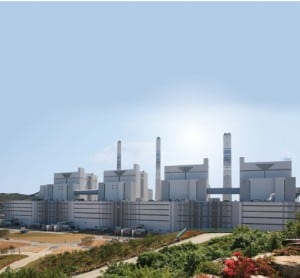
CoalTOP PLANT: Yeongheung Power Station Unit 3, Yeongheung Island, South Korea
The insatiable power demands of a huge modern metropolitan area like Seoul call for both big thinking and flexibility. The successful launch of this large, state-of-the-art supercritical coal plant required adapting to unforeseen changes in fuel supply while meeting highly restrictive environmental controls. The resulting high-availability facility is a POWER Top Plant
-
Natural Gas: The Logical Alternative
Natural gas is poised to revolutionize how the United States uses energy, but only if government and industry leaders seize the opportunities it offers.
-
 O&M
O&MReducing Ash Agglomeration in JEA’s CFB Boilers
A chronic operational problem with circulating fluidized bed boilers is ash buildup or agglomeration that turns into slag, which forces frequent shutdowns for cleaning. Solving the problem is tricky, because combustion efficiency relies on good fuel quality, but the best fuel for efficiency may not be the best fuel for minimizing furnace and tube fouling and ash plugging.
-
Gas
Why EDF Is Working on Natural Gas
Many environmental groups are calling for a ban on hydraulic fracturing and are even lobbying to end natural gas development altogether. The Environmental Defense Fund is not. The EDF energy program chief counsel explains why.
-
 Coal
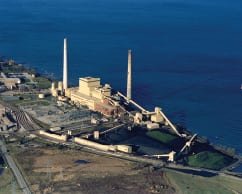
CoalAre Economics Trumping Regulation?
The fate of coal-fired generation remains fluid as owners weigh environmental rules, the effect of low natural gas prices, and the shifting cost of investing in emissions control technology. An analysis of generating unit data suggests that smaller, older, less-efficient, and less-frequently dispatched assets are most vulnerable to retirements. Recently accelerated retirement dates for some units indicate that economic factors are a more important determining factor than pending environmental mandates
-
Gas
New Study Advocates Shift Toward Long-Term Gas Supply Agreements
Current low gas prices offer a unique opportunity to lock in savings for years to come—but only if utilities, gas suppliers, and regulators have the vision to commit to a new way of doing business.
-
 Coal
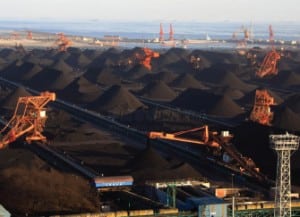
CoalChina’s Power Generators Face Many Business Barriers
China’s five largest power generators own half of that country’s power generating assets. Faulty policies and the rapidly changing global economy have made it difficult for these companies to fulfill the high expectations arising from enactment of the Power System Reform Scheme of 2002
-
Gas
Global Prospects for Gas-Fired Power Generation
Driven by the decline of coal in the developed world, new sources of production, broadening availability, and expanding LNG development, installed capacities of gas-fired plants should rise strongly worldwide.
-
 Coal
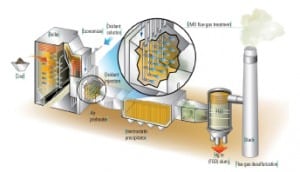
CoalEMO Technology Promises Improved Mercury Removal
The latest Environmental Protection Agency mercury control limits in the Mercury and Air Toxics Standards present a significant technical challenge to the power industry. Shaw offers a cost-effective process that promotes mercury oxidation and removal in fossil fuel combustion applications that can potentially achieve consistent mercury oxidation above 95%. Shaw’s E&I Group EMO technology provides the industry with an alternative to halogen salt addition and activated carbon injection that can also be used to augment the performance of existing Hg control applications and strategies
-
Gas
Tomato or To-mah-to? GE Gas Engines Do Triple Duty in California Hothouse
Growing hothouse tomatoes might not be the first application that comes to mind for a natural gas–fueled combustion engine, but that’s exactly what an innovative grower in Southern California is doing, with some help from General Electric (GE).
-
Water
Evaluating Technologies to Address Proposed Effluent Guidelines
Upcoming revisions to U.S. federal effluent guidelines are anticipated to include new discharge limits for mercury and selenium in flue gas desulfurization wastewater, in addition to other potential revisions. Collaborative R&D is helping inform the rulemaking and is evaluating the cost and performance of technology options that might be used to meet the new targets.
-
O&M
Upgrading Legacy Gas Turbines’ Fuel Control Systems
Relatively simple upgrades to legacy turbine systems can yield big payoffs in efficiency and reduced maintenance.
-
 Coal
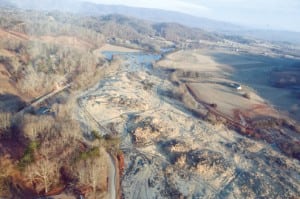
CoalEPA Stalls on Coal Combustion Residuals
In 2010, the U.S. Environmental Protection Agency (EPA) proposed federal rules regulating coal combustion residuals (CCRs) for the first time to address the risks posed by coal-fired power plants’ disposal of such waste byproducts. The need for new regulations remains a topic of debate, heightened by the EPA’s reticence to release the rule. The EPA says that it will release the new rule by the end of this year–over two years late.
-
News
Hollow Victory
Cato Institute senior fellows Jerry Taylor and Peter Van Doren in an Aug. 31 Forbes website blog suggest that the Environmental Protection Agency’s (EPA’s) carbon pollution standard for new coal-fired power plants (Standard) is a meaningless skirmish in President Obama’s “war on coal.” The Standard may have no tangible impact on the industry in the future, but it has great strategic benefit to the administration.
-
 News
NewsPower Supply Signal Conditioning
Pepperl+Fuchs’ new KFU8-VCR-1 Transmitter Power Supply Signal Conditioners feature various inputs for standard voltage and current inputs. These 1-channel signal conditioners offer maximum installation flexibility to suit a wide range of application needs. Input and output signal ranges are selected by switches located on the front of the device. This enables fast, easy setup and […]
-
 Coal
CoalGermany’s Reliance on Coal Grows
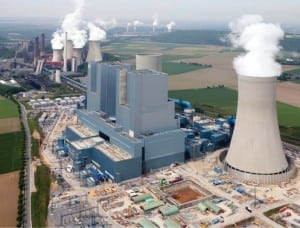
This August, instead of the usual fanfare at the official commissioning ceremony of RWE’s twin-unit 2.2-GW coal-fired BoA Units 2 and 3—a $3.3 billion lignite-fired power plant in Grevenbroich-Neurath near Cologne (Figure 1)—Germany’s premier of the state of North Rhine–Westphalia, Hannelore Kraft, and the newly installed federal minister of the environment, Peter Altmaier, requested a rapid cutback in power production. As 400 guests watched, the output of one unit was reportedly reduced by more than 150 MW in five minutes, and then restored just as fast. The demonstration was to show how quickly the plant could offset the intermittency of wind and solar power, the officials said, proclaiming the plant an “important element” of Germany’s energy strategy.
-
 News
NewsMotor Control Center Addresses Arc Flash Incidents
ABB says its newly introduced MNS-MCC motor control center is the first in the industry to address the causes of arc flash incidents while providing superior equipment and personnel protection. The product uniquely allows operators to remove a unit with the door closed, with no tools, and without disconnecting any wires. This easy “bucket removal” […]
-
 News
NewsPowering Curiosity on Mars—And Beyond
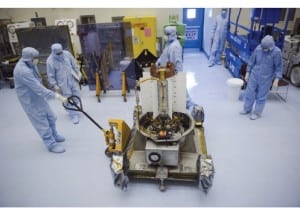
With the precarious descent of NASA’s Mars rover Curiosity into the Red Planet’s Gale Crater a success, NASA now plans to gather geological and environmental data from the Martian surface to determine whether the planet has ever offered environmental conditions favorable for life—and collect data for a manned mission.
-
 News
NewsRubber Disc Return Rollers
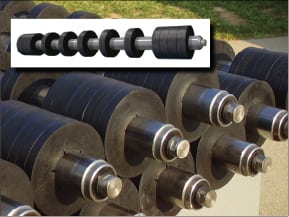
New Rubber Disc Return Rollers from Elite Roller Manufacturing feature four tapered roller bearings (two in each hub) for smooth operation and a service life that is up to three times longer than traditional two-bearing roller designs. The patented “quad bearing” design also withstands more severe applications than traditional rollers, and it allows the reuse […]
-
 Nuclear
South Korea Connects Two New Reactors to the Grid
3. An atomic leap. South Korea is looking to boost nuclear capacity to 43.4% of its total power profile by 2020. Two new reactors became commercially operational this summer, the 960-MW Shin Kori 2 plant near Nae-ri and the Shin Wolsong 1 (shown here) in the southwest city of Gori. Courtesy: Korea Hydro and Nuclear […]
-
Legal & Regulatory
New Approaches to Project Mitigation
The First Law of Thermodynamics holds that the amount of matter and energy in the universe is constant and that no new matter or energy can be created. The corollary Second Law is that when energy is put to use, unusable energy or entropy results. One lesson—other than to beware of lawyers purporting to lecture on physics—is that everything we do has a consequence. -
 News
NewspH-Measuring App
California-based Sensorex has developed an industry-first mobile accessory for pH measurements. Compatible with Apple iPod, iPhone, and iPad devices, the PH-1 pH meter accessory measures and records pH values in the lab or field for use in environmental, education, and industrial applications. The patent-pending PH-1 accessory plugs into the standard Apple dock connector and uses […]
-
 Nuclear
Plant Vogtle Moves Forward, as Do Costs and Schedules
At Plant Vogtle in Georgia, where Southern Co. subsidiary Southern Nuclear is building two new 1,100-MW AP1000 units for Georgia Power and co-owners Oglethorpe Power Corp., the Municipal Electric Authority of Georgia, and Dalton Utilities, work on the first new nuclear units built in the U.S. in 30 years is progressing—albeit with hiccups.
-
 Coal
CoalTOP PLANT: C.P. Crane Generating Station, Middle River, Maryland
A desire to do things right led Constellation Energy to invest $70 million to convert its 400-MW C.P. Crane Generating Station to burn Powder River Basin coal and develop the culture critical to making that conversion a success. In addition to being named a 2012 POWER Top Plant, the PRB Coal Users’ Group recognized the plant for its efforts with its Plant of the Year Award
-
 News
NewsCryogenic Mass Vortex Flow Meter
Sierra Instruments launched a new cryogenic version of its InnovaMass 240 multivariable mass vortex flow meter for advanced, more reliable measurement of liquefied gases, including liquid nitrogen, liquid oxygen, liquefied natural gas, and liquefied petroleum gas, down to –330F. The InnovaMass contains no moving parts that will wear out or require service. This new meter […]
-
O&M
Unit Cycling Makes the Impossible the Ordinary, EUCG Members Say
Low natural gas prices and still-soft electricity demand are forcing low-load and cycling operations at traditionally baseloaded coal units across the country. The resulting challenges were top of mind at the Electric Utility Cost Group’s (EUCG’s) fall meeting in Denver last week. One member of the EUCG’s fossil generation committee from an Ohio Valley utility said that cycling and low-load operations pose challenges for one of his company’s 1,300-MW coal-fired plants that “two years ago we wouldn’t have considered possible.â€