Manufacturers respond with gigawatt-scale deployments, fast-start technology, and expanded production capacity.
The global appetite for electricity has never been more insatiable, and at the heart of this surge stands an insatiable driver: artificial intelligence (AI). Data centers, once modest consumers of grid power, have transformed into voracious energy hubs demanding gigawatts of reliable, rapidly deployable capacity. In response, reciprocating engine manufacturers are experiencing a surge in demand, securing contracts that would have seemed improbable just a few years ago. The technology that powered industrial facilities and provided backup generation is now being positioned as primary infrastructure for the digital economy.
Recent announcements from major engine manufacturers reveal an industry scrambling to meet unprecedented demand. From multi-gigawatt commitments in North America to strategic partnerships spanning Europe and Southeast Asia, the scale of deployment is reshaping how utilities, independent power producers, and technology companies approach energy infrastructure. What distinguishes these projects from conventional power plant development is not merely their size, but the specific characteristics engines bring to data center applications: rapid start capability, load-following flexibility, and the ability to deliver power within months rather than years.
The Data Center Imperative
The mathematics of AI-driven power consumption are staggering. While traditional data centers operated with relatively predictable load profiles, facilities supporting AI workloads experience rapid fluctuations that stress conventional power delivery systems. Graphics processing units (GPUs) cycling between idle and full computation create load swings that demand generation assets capable of near-instantaneous response. Grid connections alone often cannot guarantee the power quality and reliability these operations require.
This reality has pushed major technology companies and infrastructure developers toward behind-the-meter generation solutions. American Intelligence and Power Corp. (AIP) exemplifies this approach with its Monarch Compute Campus in West Virginia, where Caterpillar will supply 2 GW of fast-response natural gas generator sets. The G3516 platform at the heart of this deployment can ramp from zero to full load in approximately seven seconds, a capability very well-suited for AI-driven workloads characterized by rapid load fluctuations and stringent power quality requirements.
The project, announced in late January 2026, represents more than equipment supply. Designed as a fully self-supplied, behind-the-meter power platform with an existing microgrid designation, Monarch generates power onsite without requiring incremental utility transmission or distribution infrastructure. The strategic alliance between Caterpillar, its dealer Boyd CAT, and AIP establishes frameworks for equipment optimization, phased expansion planning, and long-term lifecycle performance that could serve as templates for future deployments.

In This Issue
Full issueGigawatt-Scale Commitments Reshape the Market
The scale of recent orders has fundamentally altered the reciprocating engine market. INNIO Group announced what it called the largest order in company history: a 2.3 GW power infrastructure project with VoltaGrid featuring 92 power packs, each delivering 25 MW of output. The collaboration is engineered specifically to accelerate data center deployment and maximize GPU performance for AI-driven operations. According to INNIO, the solution maintains full power and efficiency even at ambient temperatures up to 122F (50C) and delivers superior transient performance capable of handling highly volatile load fluctuations.
Caterpillar has secured multiple gigawatt-scale agreements in rapid succession. Beyond the Monarch project, the company announced collaboration with Joule Capital Partners to provide 4 GW of total energy capacity to a data center campus in Utah. That project employs Caterpillar’s G3520K generator sets alongside combined cooling, heat, and power (CCHP) systems with a liquid cooling architecture designed for high-density server systems. The deployment includes 1.1 GWh of grid-forming battery energy storage along with backup power generation served by diverse fuel sources.
A separate agreement with Hunt Energy targets up to 1 GW of power generation capacity for data centers across North America, with the first project expected to launch in Texas. The partnership leverages Caterpillar’s diverse portfolio of power solutions, including natural gas and diesel generation equipment, gas turbines, switchgear, controls, and engineering design services. Hunt Energy brings its experience in battery energy storage systems (BESS), having deployed more than 310 MW of BESS solutions in recent years.
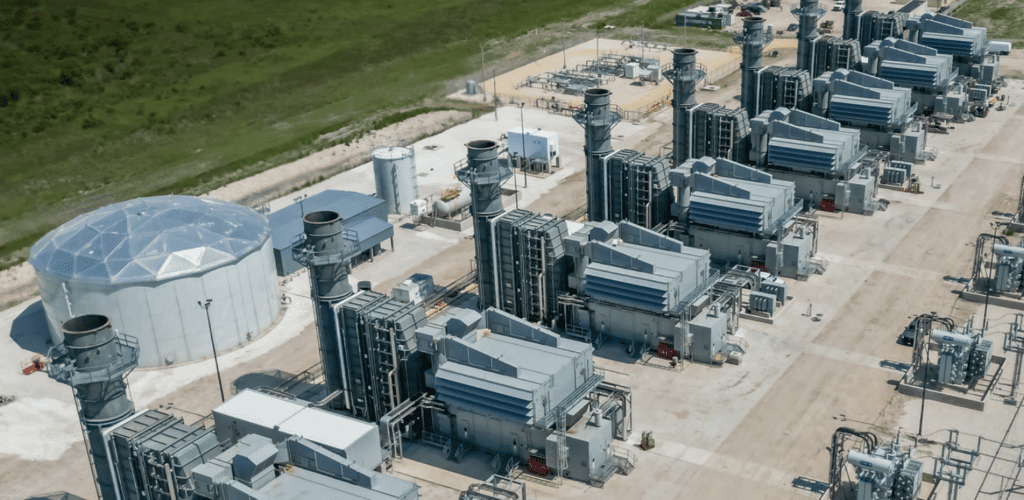
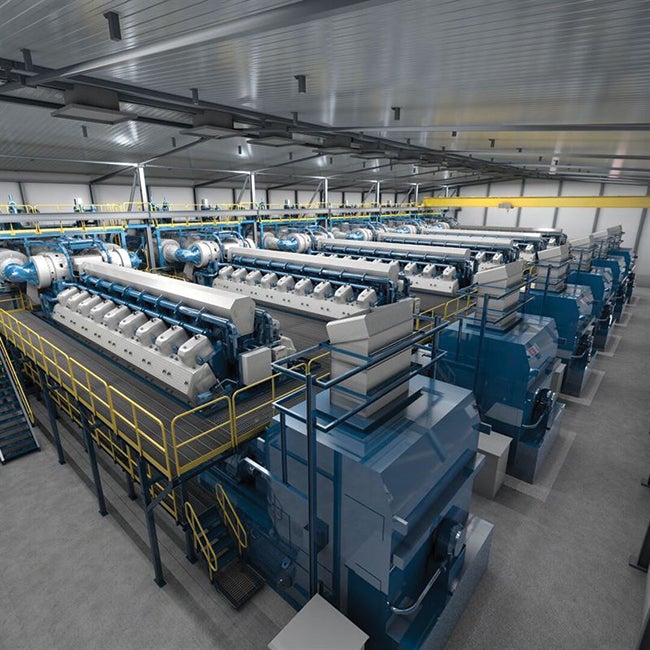
Wärtsilä has similarly captured significant market share in the data center segment. The company announced an order for 24 Wärtsilä 50SG engines (Figure 1) delivering 429 MW of output for an American power plant serving a data center, the equipment destined for an investor-owned utility. In a separate Texas project, Wärtsilä will deliver generating sets for a 123-MW power plant in Odessa, which will become the largest Wärtsilä 31 installation in the world when commissioned. The company will operate and maintain the facility under a 10-year agreement.
 |
|
1. Wärtsilä has been awarded an order to supply engines for an American power plant owned and operated by an investor-owned utility. This order is for 24 Wärtsilä 50SG engines delivering an output of 429 MW. Courtesy: Wärtsilä Corp. |
Fast-Start Technology Becomes Standard Requirement
The defining technical characteristic driving engine adoption for data center applications is rapid start capability. Where conventional power plants may require hours to reach full output, modern gas engines measure startup times in seconds or minutes. This capability has become a critical differentiator as grid operators and data center developers seek resources that can respond instantly to demand fluctuations.
Rolls-Royce is expanding its portfolio with new mtu gas engines featuring enhanced fast-start capability specifically suited for data center applications. The new 20-cylinder mtu Series 4000 L64 engine for the 60-Hz market will deliver its full output of 2.8 MW in 45 seconds when it becomes available this year. Performance has increased by 10% compared to the previous version, and the latest design eliminates the gearbox requirement, delivering significant space savings for data center operators.
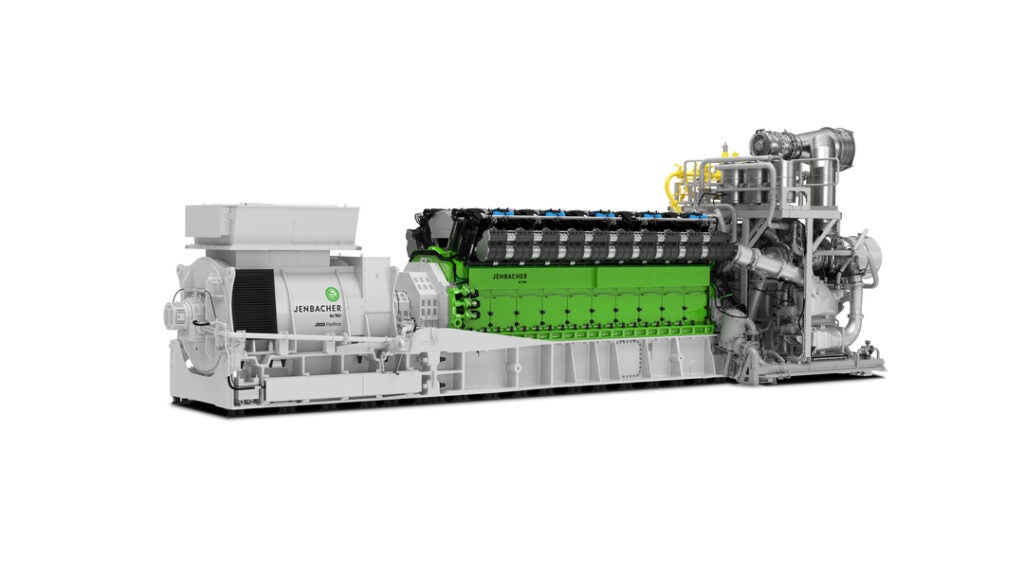
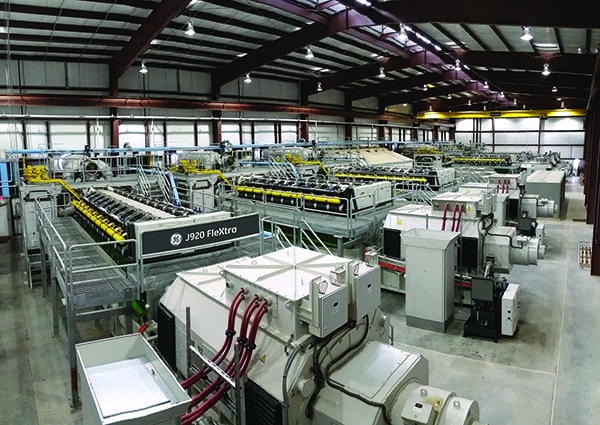
INNIO’s Jenbacher J920 FleXtra engine, the largest in the company’s gas engine portfolio, achieves full load within two minutes. This capability is being deployed at a landmark 104-MW power plant in Greenville, Texas, where 11 engines will provide peak load coverage and grid stability services for more than 17,200 customers. The project groundbreaking took place in December 2025, with commissioning scheduled for summer 2027.
In the UK, INNIO and Clarke Energy are delivering one of the world’s largest high-speed gas engine peaking power plants in Thurrock, England. The 450-MW flexible generation facility, being constructed by Statera Energy, is expected to achieve full operations by late 2026. The Jenbacher engines feature rapid start-up in less than five minutes and are touted as “Ready for H2,” capable of operating on a variety of fuel blends including biomethane and hydrogen.
Wärtsilä emphasizes similar performance attributes. The Wärtsilä 31SG power-optimized engine reaches full output in two and a half minutes, a characteristic the company describes as ideal for systems where renewables are integrated. The Kentucky Municipal Energy Agency has selected four Wärtsilä 50SG engines for its 75-MW Energy Center I facility, which will play an important role in enabling increased levels of renewable energy from solar and wind to be integrated into the system while providing reliable electricity supply within minutes when needed.
The technical specifications underscore why these assets appeal to data center operators and grid operators alike. The Wärtsilä 50SG engine delivers high efficiency in a compact footprint while offering both reliability and flexibility, suitable for primary power and balancing needs. Its fast-start capability allows it to respond quickly to changes in power demand, whether driven by varying data center loads or the intermittency of renewable generation. These characteristics position reciprocating engines as assets that can serve multiple value streams simultaneously.
Supporting Grid Stability and Renewables Integration
While data center demand captures headlines, engine power plants are simultaneously addressing broader grid reliability challenges. As renewable energy penetration increases across power systems worldwide, the need for flexible thermal generation to balance intermittent wind and solar output has created substantial market opportunities for reciprocating engines.
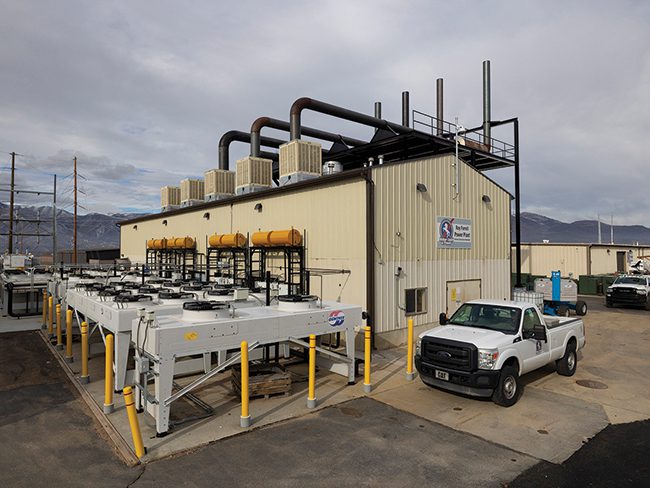
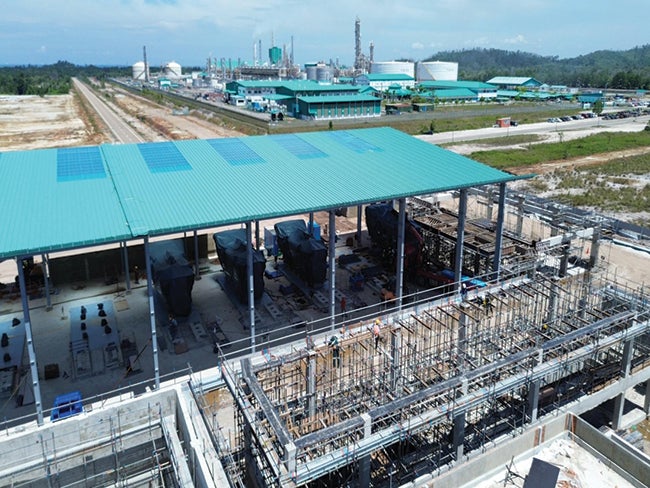
In Malaysia, Everllence is supplying a cumulative 240 MW of engine capacity across three power plant projects on Borneo (Figure 2). The installations highlight the company’s role in supporting the country’s ambitious decarbonization targets, with climate neutrality to be achieved by 2050 primarily through expansion of hydropower and solar energy. In markets traditionally dominated by gas turbines, engine power plants are gaining importance due to their short response times and high efficiency at partial loads.
 |
|
2. The location of the 52-MW power plant in Sipitang, Sabah, Malaysia. Courtesy: Everllence |
The 18V51/60DF engines Everllence is deploying feature dual-fuel capability, allowing seamless switching between gaseous and liquid fuels during operation. This flexibility contributes to energy security for grids still dependent on natural gas while providing optionality as fuel availability evolves. One of the Malaysian projects supplies energy to a solar-glass production facility in Sabah, an example of decentralized industrial self-generation independent of the public grid.
In Texas, Everllence signed an operation and maintenance agreement with the Kerrville Public Utility Board to run a new 124-MW balancing power plant in Colorado County. The facility was the first project financed by the Texas Energy Fund, established to support gas-fired power generation projects across the state. The plant will help reduce electricity price volatility for more than 24,000 households and businesses in Kerrville and the surrounding area while providing fast and flexible power during peak demand or when other sources are unavailable.
Sustainability Considerations and Future Fuel Pathways
Environmental performance has become central to engine manufacturers’ value propositions. Rolls-Royce has taken the unusual step of developing environmental product declarations (EPDs) for its mtu emergency power generators, becoming one of the first engine manufacturers to verify and publish the environmental footprint of such systems. The declarations, developed in collaboration with sustainability expert Sphera and registered in the international EPD system, document the entire environmental lifecycle of the equipment from raw material extraction to end-of-life recycling.
The mtu emergency power generators are already approved for operation with sustainable fuels such as hydrotreated vegetable oil (HVO) and e-fuels, which can be used as a full replacement for fossil diesel without technical modifications. In combination with sustainable fuels, Rolls-Royce states that CO2, NOx, and particulate emissions can be reduced by more than 90%. The company has also introduced certified service offerings enabling quarterly testing intervals rather than monthly checks, reducing both costs and emissions.
Volvo Penta has introduced its G17 natural gas engine, a 17-liter, six-cylinder, spark-ignited model that operates on both pipeline-quality conventional natural gas and renewable natural gas. Delivering approximately 450 kWe at 1,800 rpm, the engine offers high power output from a compact footprint while supporting customers seeking to reduce their carbon intensity. The design allows operators to connect directly to existing gas infrastructure, simplifying installation and eliminating the need for additional fuel-conditioning systems.
The pathway to hydrogen operation represents a longer-term consideration for many manufacturers. As previously mentioned, INNIO’s Jenbacher engines deployed at Thurrock are designated “Ready for H2,” designed to operate on hydrogen blends as fuel availability develops. The company describes its energy systems for the KMW (Kraftwerke Mainz-Wiesbaden AG) power plant in Germany as offering “a sustainable alternative to traditional diesel generators, with up to 95% lower nitrogen oxide emissions.” Rolls-Royce similarly notes that its mtu gas engines can be operated with biogas, biomethane, and ultimately 100% hydrogen or a hydrogen admixture.
Strategic Partnerships Accelerate Deployment
The complexity of data center power requirements has driven engine manufacturers toward strategic partnerships that extend beyond equipment supply. Vertiv and Caterpillar announced a collaboration on advanced energy optimization solutions that integrates Vertiv’s power distribution and cooling portfolio with Caterpillar’s and Solar Turbines’ expertise in power generation and CCHP systems. The initiative delivers pre-designed architectures that simplify deployment, accelerate time-to-power, and optimize performance for data center operations.
Vertiv characterizes the collaboration as a cornerstone of its “Bring Your Own Power & Cooling” strategy, aligning with its “grid-to-chip framework” that offers resilient, on-site power generation solutions. The pre-engineered, interoperability-tested building blocks enable customers to design, build, and deploy systems concurrently with predictable outcomes. The partnership addresses growing demand for on-site energy solutions and offers what the companies describe as a “coordinated, customer-first approach to solution design and implementation.”
INNIO’s partnership with KMW illustrates another deployment model, with 12 modular energy systems intended to support both grid stabilization and backup power for the “Green Rocks” data center being built by KMW and Norwegian data center operator Green Mountain. The decentralized energy solutions serve as backup in case of blackout due to grid failure while also providing peaking power for the broader system.
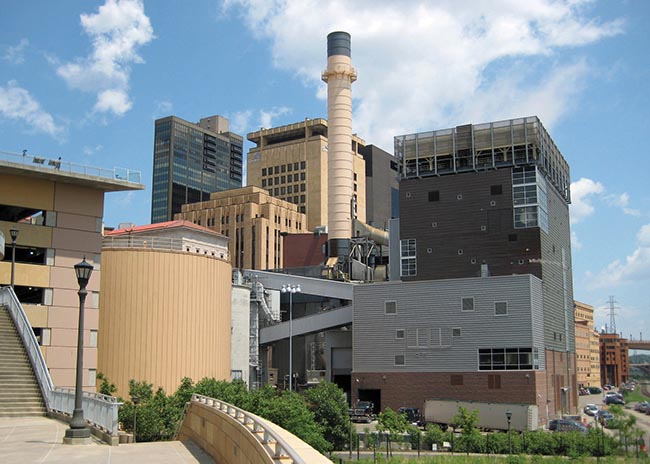
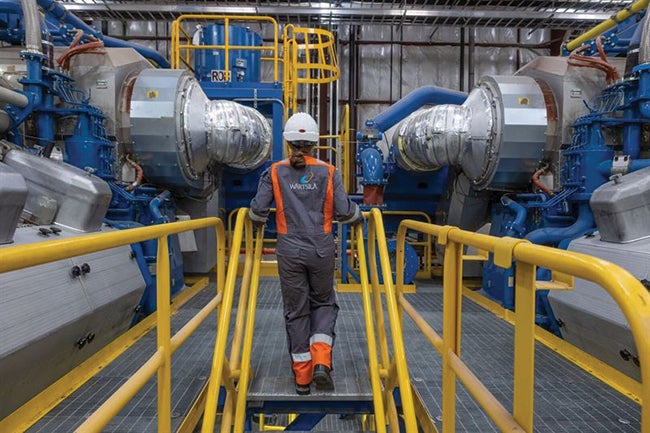
The long-term service agreement model has become increasingly common as operators seek predictable maintenance costs and access to manufacturer expertise. Wärtsilä’s 10-year operation and maintenance agreement with independent power producer EMPower for the Odessa, Texas, facility exemplifies this approach, as does the company’s optimized maintenance agreement with Kentucky Municipal Energy Agency (Figure 3) that includes maintenance planning, remote operational support from Wärtsilä Expertise Centres, asset diagnostics, and some spare parts supply. These agreements reflect recognition that engine power plant performance depends not only on equipment quality but on operational excellence throughout the asset lifecycle.
 |
|
3. Wärtsilä has signed a 10-year optimized maintenance agreement with the Kentucky Municipal Energy Agency in the U.S. Courtesy: Wärtsilä |
Manufacturing Capacity Expansion Responds to Demand
The sustained surge in orders has prompted significant manufacturing investments. Wärtsilä announced a €140 million ($165.4 million) investment to expand production capacity by 35% at its Sustainable Technology Hub in Vaasa, Finland, along with associated global supply chain enhancements. The expansion positions the company to deliver higher volumes of engines and support continued business growth, with new production capacity expected to be commissioned in the first quarter of 2028.
Wärtsilä President and CEO Håkan Agnevall cited multiple demand drivers: industries electrifying, climate warming driving cooling needs, data centers scaling at unprecedented speed, requirements to renew aging power generation infrastructure in North America and Europe, and increasing renewable energy integration accelerating demand for thermal balancing power worldwide. The Sustainable Technology Hub, opened in 2022, now encompasses 90,000 square meters and employs more than 2,000 professionals, with all engine types in Wärtsilä’s portfolio manufactured at the site.
Caterpillar emphasizes its expanding U.S.-based manufacturing footprint as a competitive advantage, noting that full generation packages can be delivered ahead of most other generation technologies. This speed-to-power capability is increasingly critical as data center developers face pressure to bring capacity online quickly to capture market opportunities in AI computing.
A Market Transformed
The convergence of AI-driven electricity demand, grid reliability challenges, and renewable energy integration requirements has created conditions uniquely favorable to reciprocating engine technology. Manufacturers have responded with products specifically optimized for these applications: fast-start capability measured in seconds rather than minutes, load-following performance that accommodates volatile demand profiles, and pathway flexibility toward lower-carbon fuels.
The scale of recent commitments—multiple gigawatts of capacity across numerous projects—suggests this market transformation is structural rather than cyclical. When Rolls-Royce notes that energy consumption of data centers worldwide will double by 2030, or when Wärtsilä describes data centers scaling at unprecedented speed, they are describing market conditions likely to persist for years. Whether delivering primary power behind the meter, providing grid stability services, or serving as backup for critical infrastructure, engine power plants have secured a central role in the energy systems of the digital economy.
Beyond data centers, the critical infrastructure applications for engine power plants continue expanding. Rolls-Royce claims it secures critical infrastructure worldwide with more than 85,000 mtu emergency power systems, including at airports, data centers, hospitals, industrial plants, and energy suppliers. The company’s recent contract to supply seven mtu backup-power generators for Kuwait International Airport’s new Terminal 2, where systems must operate reliably in ambient temperatures up to 55C (131F), demonstrates the technology’s versatility across demanding operating environments. At major international airports including Frankfurt, Germany; Dubai, United Arab Emirates; Madrid, Spain; Prague, Czech Republic; and Hurghada, Egypt, mtu gensets and combined heat and power systems have been in reliable operation for years.
For utilities, independent power producers, and data center developers navigating these market dynamics, the message from engine manufacturers is consistent: capacity is available, deployment timelines can be compressed, and the flexibility to accommodate evolving grid conditions and fuel pathways is engineered into the equipment. The question is no longer whether engines can meet data center power requirements, but how quickly the industry can scale to match explosive demand growth.
—Aaron Larson is POWER’s executive editor.