America has a once-in-a-generation opportunity to rebuild its energy backbone. For the first time in decades, capital investment, technological innovation, and bipartisan political will are aligning to modernize the infrastructure that powers our economy.
Whether we seize this moment will define our nation’s strength for decades to come. Meeting rising energy demand is both an economic imperative and a matter of national security. If we fail to build, we will strain working families, weaken our national dynamism, and watch competitors abroad move faster to secure energy independence and industrial leadership. This is the time to choose innovation over inertia, building over stagnation, and abundance over scarcity.
Surging Demand Is Reshaping America’s Energy Needs
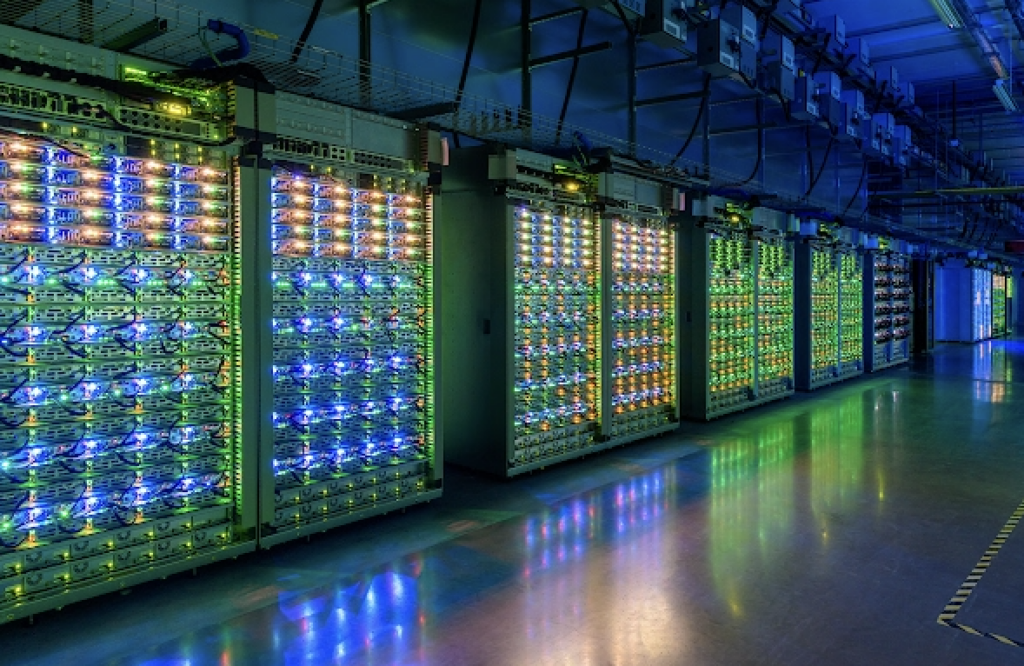
Artificial intelligence and advanced manufacturing are fueling an extraordinary surge in energy demand. The rapid expansion of data centers promises life-changing breakthroughs but also places unprecedented pressure on our grid. By 2030, U.S. data centers could consume more electricity than the entire steel, aluminum, and chemical industries combined. Supply simply won’t keep up unless we act now.
If we hesitate, we risk losing affordable energy, economic momentum, and America’s position as the world’s innovation engine. In our states of Utah and Hawaii, we are proving that responsible growth and environmental stewardship can go hand in hand.
Hawaii, which faces the nation’s highest energy prices due to reliance on imported oil, is investing heavily in renewable energy and storage to cut costs and reduce dependence on foreign fuel. The Puna Geothermal Venture already provides about 10% of the Big Island’s electricity and is expanding capacity by a quarter—saving the average household $23.62 a month. Across the islands, 22% of power now comes from solar, and seven new projects coming online in 2025 will add 260 MW of generation and more than a gigawatt-hour of storage. Hawaiian Electric has already reduced its annual oil use by 57 million gallons.
Natural Gas and Nuclear Power Fill Gaps
These are major steps forward. Yet, renewables and storage alone cannot yet provide the consistent, around-the-clock power needed for a growing economy, especially as legacy plants retire. Until new technologies mature, we must use the cleanest fossil fuels available—and U.S. production remains among the cleanest in the world. I (Gov. Josh Green) recently signed an agreement with JERA, Japan’s largest energy company, to import liquefied natural gas (LNG) to power O‘ahu’s grid while we also scale up non-carbon-emitting generation sources. Our bipartisan colleagues in Wyoming and New Mexico also recently outlined a plan with Japanese Ambassador Shigeo Yamada to export LNG to Japan and other Asian countries.
In This Issue
Full issueWe also believe nuclear energy must be part of the solution. Utah recently launched the Utah Advanced Nuclear and Energy Institute, and signed agreements with leading companies to advance next-generation reactor technologies. Private sector developers from around the country are choosing to build the nuclear supply chain in Utah.
Hawaii is exploring this path as well. The legislature is considering a task force to study how nuclear energy could safely strengthen the islands’ independence and resilience.
Nuclear power is already America’s largest source of carbon-free energy. In 2020, it prevented 471 million metric tons of carbon dioxide emissions—the equivalent of removing 100 million cars from the road—and produced the same amount of power as a wind farm on 360 times less land, or solar on 75 times less. It’s a proven, scalable tool for a clean-energy future, which was highlighted at a recent Western Governors’ Association workshop in Idaho Falls, Idaho.
Permitting Reform Is Part of the Path Forward
Of course, producing energy is only half the challenge. America’s greatest bottleneck is building the infrastructure to move it. Transmission lines, pipelines, and storage projects take far too long to permit and complete.
Consider Gateway South, a 416-mile high-voltage line delivering 1,500 MW of new wind and solar energy from Wyoming through Colorado and Utah. I (Gov. Cox) began advocating for that project in 2009, when I was a county commissioner. It was completed 15 years later. The route barely changed, but the cost tripled. That’s not environmental protection. It’s gridlock.
This must change. Regulatory reform is squarely within reach. As governors and former legislators, we know how to build coalitions to streamline permitting, modernize outdated processes, and unleash private investment in the infrastructure America desperately needs.
The path forward depends on cooperation—regional, bipartisan, and public-private. If we work together, we can build energy infrastructure that is secure, affordable, clean, and abundant.
The tools are already in our hands. America has led every major wave of innovation in modern history, from industrial manufacturing to the digital revolution. We can lead again in energy if we choose to build now.
—Spencer Cox (R) is governor of Utah, serving since 2021, and Josh Green (D) is governor of Hawaii, serving since 2022.