Heat waves, droughts, and other weather and climate phenomena; economic woes; aging or inadequate infrastructure; fuel shortages. These are some of the most obvious causes that have led to record peaks in power demand or sudden drops in available capacity. The results have been sometimes debilitating load-shedding, brownouts, and blackouts around the globe this summer (and, in some cases, much longer). Here’s a detailed look at which countries have been affected. (For the illustrated overview, see the September issue.)
Argentina
Argentina, South America’s second- largest economy, has tightened power supplies and is rationing natural gas as winter in the Southern Hemisphere boosts demand. The country has experienced a seven-year shortage of the fuel.
Supplies to industries have been cut and "will return to normal once the current cold wave is over," Planning Minister Julio De Vido was quoted as saying in a statement on the presidential website this July. Companies could avoid being subject to rationing by agreeing to pay higher prices, he said.
Australia
The mining boom in Western Australia could increase power demand and cause domestic power shortages unless the state government provides additional infrastructure, news media have widely reported.
Earlier this year, nearly 150,000 homes were without power for as long as three weeks when widespread floods ravaged Queensland.
Bahamas
The Bahamas Electricity Corp. has been forced to implement rolling blackouts after three generators failed this summer. The company has blamed the failing units on a lack of maintenance stemming from its strained financial situation, reported The Nassau Guardian in August. The shortages were felt as demand surged amid record summer heat.
Bangladesh
Despite increased foreign investment, Bangladesh suffers inadequate infrastructure, and power production continues to lag behind growing demand. The country’s current demand is 6000 MW while actual capacity varies at 4200 MW and 4800 MW. The gap has been attributed to a gas shortage.
The current administration has added a total of 1922 MW since coming into office in 2009, and it plans to increase capacity to around 7000 MW by 2013.
Bolivia
Bolivia’s state-owned power company Empresa Nacional de Electricidad (ENDE) in July warned power supplies had become increasingly tight as demand outpaced supply and reserve capacities had dipped to around 16%. The power situation, attributed primarily to a lack of infrastructure, has been exacerbated by a long drought.
Canada
Hydropower-dependent British Columbia could see an extreme drought that could endanger its power supply, researchers from the U.S. and Canada have warned, saying the province’s snow pack has shrunk 18% between 1956 and 2005.
The nation has an aging infrastructure that will need a C$293 billion overhaul over the next two decades, Pierre Guimond told the Ottawa Citizen’s editorial board in July. If governments don’t make the needed investments, Canadians could see higher power prices, and even brownouts and blackouts.
Chile
Chile is seeing its second drought in four years. The country, which depends on hydropower for about 45% of installed capacity in the country’s main power grid, has turned to more expensive oil-fired generation to cover shortfalls.
China
China has been battling critical shortages this summer on the back of skyrocketing demand from its manufacturing sector and a lack of capacity. Power shortages in China can also be attributed to several structural problems, including a grid that fails to transmit power from northeastern and northwestern China to northern, central, and southern China. For in an in-depth analysis on China’s power issues, see "China: A World Powerhouse."
This summer, a new report commissioned by specialist consultants in the China primary aluminum raw materials markets, AZ China, suggests that the country will be short at least 30 GW as a result of heightened coal prices. "This shortage has arisen because coal prices are too high, relative to the revenue arising from converting that coal into electricity," the group says. "With the big power generators already feeling the profit pinch, they are reluctant to take any more risks."
The report says shortages are set to worsen next year. Capital investment in power stations has been slowing, and the gap between power and absolute supply is set to widen.
This summer, an official with the China Electricity Council said that the country will face a power shortage of up to 70 million kW in 2013, worsening from 50 million kW in 2012. Wei Shaofeng, deputy director of the council, said China’s power crunch in the next few years will be worse than the situation in the five years to 2010, with lack of electricity hitting a wider range of areas.
Democratic Republic of Congo
Power cuts in the war-torn Democratic Republic of Congo were severe this summer as the country’s main hydropower plants, Inga I and II dams, were running at half capacity due to low water levels. Plant operators are struggling with broken equipment at the decades-old plants, which could lead to continued outages, even if water levels come back up, reported Reuters on Aug. 16.
Greece
Striking workers from Public Power Corp. SA (PPC) in Greece this June shut down a number of power units in that country and created a shortfall that placed "the stability of the system in a critical situation," Greece’s Energy Ministry said. The shortage led to extended power cuts for two days.
Workers began strikes on June 20 to protest government plans to reduce its stake in the company to 34% from 51%. The divestment is expected raise €50 billion through 2015 and help the debt-laden country that is in financial straits.
India
India, a country that has seen booming economic growth on the back of huge inflows of foreign direct investment, has been battling shortages attributed primarily to a critical coal shortage.
In August, a parliamentary panel said that coal availability for power plants designed to run on indigenous coal would be only 417.5 MT in the current fiscal year, as opposed to the requirement of 480 MT. The reduction of coal from state-owned mining company Coal India means that new generation capacity could be affected by 15,000 MW, the Standing Committee on Energy said in its new report.
India has ambitious goals to add 17,600 MW of new capacity this year, including 2,000 MW from new nuclear. The country currently suffers a peak power shortage of about 13%. Even with 17,600 MW of new capacity additions, the country would see only an addition of a little over 52,000 MW during the 11th Plan period (2007-12), much lower than the revised target of 62,374 MW, reported the Economic Times on Aug. 18.
State-owned power generator NTPC (formerly National Thermal Power Corp.) has already closed two 500-MW units at Talcher stage-II following a closure notice from the Orissa State Pollution Control Board on 28 June.
Indonesia
Indonesia is Southeast Asia’s largest economy, but because it has been stricken by chronic power shortages that have made blackouts commonplace and stunted its economic growth, the nation’s government is pushing for massive infrastructure improvements. In 2006, the government began implementing a two-phase "fast track" program to increase power capacity in the country. In the first track, it plans add 10 GW of mainly coal-fired power to its grid by 2013, and in its second phase (added in 2008), it will add a 10 GW of non-coal power by 2014.
The government in August agreed to guarantee geothermal development as part of its fast-track program. The country is looking to add 4,000 MW of new geothermal capacity as part of its second track.
Iraq
Iraq is experiencing a severe power shortage and must build 50 power plants with a capacity of 100 MW by the summer of 2012, but contracts have only been made for 44 of the 50—and all are in limbo, Iraqi officials reported in early August. Iraqis receive just a few hours of national grid power a day with which to run air conditioners and refrigerators in blistering 122F-plus heat, the AFP reports.
Japan
The deadly earthquake and tsunami in March that caused the world’s worst nuclear disaster in 25 years have sparked fears about nuclear power, and Japan could see all 54 of its reactors go offline if safety fears delay their restart after regular maintenance in May 2012. Research by the Institute of Energy Economics for Japan estimated that Japan’s power supply without any nuclear reactors would fall 7.8% short of an estimated 182,000 MW peak demand next summer.
The energy forecaster is predicting the shortage despite its assumption that utilities will boost run rates for existing coal-, oil- and gas-fired plants to 85%, almost 100% and 70%, respectively, Reuters reported in July. Only 16 nuclear reactors are now operating in the wake of the natural disasters, and the share of nuclear power in the nation’s energy supply fell to about 18% in June from about 30% before March 11. Across the country, dozens of other fossil-fuel plants have been fired up, and Japan is importing billions of dollars worth of liquefied natural gas, coal, and oil to keep them running.
Kenya
The drought devastating the Horn of Africa this summer has forced Kenya to use the water in its power dams sparingly. Paired with broken-down generation units, this has led to severe blackouts. Electricity distributor Kenya Power instituted a rationing plan that will have Nairobi’s industrial district going without power for six hours a week, leaving manufacturers with the option of using expensive diesel-powered generators to keep their operations going or shut the plants down and shed some jobs.
The power distributor has also blamed the shortage on delayed installation of new thermal power generators that have experienced delayed processing of security guarantees for investors in the energy sector, planned maintenance, and breakdowns of generators.
Kuwait
Lawmakers in Kuwait this summer insisted that authorities fill generation gaps ensuing from surging summertime demand with rental power. Kuwait’s Ministry of Electricity and Water was asked to install temporary power generation units in Block Three, Al-Qasr, just one of the areas to suffer a series of power cuts recently. The cuts have been blamed on equipment failure.
The country recently put into operation the first phase of a six-turbine gas power plant at Sabiya, around 100 kilometers north of Kuwait City, alleviating the power crunch. The 1,400-MW plant, which will come online in 2012, will supply about 10% of Kuwait’s current total capacity.
Lebanon
Diverging economic views and political "bickering" have led to a general disregard of Lebanon’s energy sector-and a lack of adequate capacity has caused a critical power shortfall in recent decades, The Daily Star reported this summer.
The country is having more frequent power cuts nationwide. In rural areas, blackouts run up to 12 hours a day, and for the whole country, the supply of energy averages only 18 hours a day, the newspaper reported.
The newspaper cited a new report from Blominvest that said average capacity in 2009 was 1,500 MW while average demand was 2,100 MW (peaking in summer at 2,450 MW). One main reason for the shortfall was the "inefficient and uneconomic way" power company Electricite du Liban operates, which was "partly due to the deteriorating administrative status."
Malaysia
Sabah Electricity Sdn Bhd on June 25 took critical measures to prevent the Sabah Grid System from total collapse and to counter a shortfall of 150 MW due to insufficient power generation. The shortfall was in large part due to the unavailability of several major generation sets at several plants owned by independent power producers.
Minister of Public Utilities Datuk Amar Awang Tengah Ali Hassan in August said the country planned to build a multi-billion ringgit backbone transmission line to ensure security and reliable power supply.
Pakistan
Almost all provinces and major cities in Pakistan have been facing severe blackouts lasting days at a time—a problem that it has endured for years. The country is facing a critical shortfall of 5 GW: It has a capacity of 13,240 MW against a peak demand of 18,065 MW.
On Aug. 9, Gulfnews.com reported that protests are growing in intensity over the lack of electricity. In July two people were killed and 30 injured after a protest about the blackouts turned sour between police and locals in a town in Punjab province. On Aug. 4, residents in many cities held protests, some events shutting down all business and commercial establishments.
In late August, Prime Minister Yousaf Raza Gilani told reporters that the government would import electricity from Iran and Central Asia to overcome the energy crisis. He said that in the past three years, the government had worked tirelessly and added 3,000 MW to the national grid.
Philippines
Power distributors and electric cooperatives in April resorted to an average 1-hour brownout on a rotation basis as transmission company, National Grid Corp. of the Philippines, slashed 350 MW of power supply to the entire Mindanao grid. The short-lived measures were necessary due to a reduction in generation from a hydropower plant and unscheduled outages.
President Bengino S. Aquino III told reporters in June that although his administration is pushing for renewable sources of energy, balancing the country’s power needs was more critical. The president made the statement during an informal press conference at the KEPCO SPC power plant site—a coal-fired plant he was inaugurating in Naga City, Cebu.
Peru
Peru’s mining companies in the northern part of the Latin American country were hit by power rationing in early August, attributed to a lack of infrastructure. Mines and Energy Minister Carlos Herrera said his government was taking emergency measures such as purchasing 40 MW of power from Ecuador to address the energy shortage
Saudi Arabia
Oil-rich Saudi Arabia, like some other Gulf nations, has been routinely suffering summertime power shortages, but the country’s energy woes are worsening on an urbanization boom that is fueling demand for power.
Saudi Arabia’s demand for power is expected to surge 8% annually from the current peak levels of 44,000 MW, tripling to 121,000 MW by 2032. The kingdom is set to spend close to $100 billion in boosting energy production over the next decade, including building new power plants, expanding existing ones, and improving transmission and distribution systems across the country. Plans include construction of a new 850-MW thermal plant at the port of Yanbu on the Red Sea.
Senegal
Senegalese President Abdoulaye Wade in July forecast that electricity blackouts lasting 20 hours at a time that had gone on for months would be over by September as temporary generating facilities came online. The state-owned electric utility, Senelec, has hired generators with a capacity of 150 MW. The president was responding to violent protests incited by the long blackouts.
Tanzania
Tanzania, an African country poised for sharp economic growth, has seen prolonged power blackouts in various parts of the country since March. State-owned power producer Tanzania Ltd. said in late August that the shortages have been caused by prolonged droughts in the country, resulting in shut down or reduced capacity at hydropower generation units around the country. Deputy Minister for Energy and Minerals Adam Malima said in an official release that until Aug. 12, all power sources had the capacity of generating 612 MW for the national grid, but due to various technical faults at the sources, power generation fell by 200 MW.
He said Tanzania Ltd., which had the capacity of producing 100 MW, was only producing 20 MW when the oil dealers went on strike earlier this summer. Breakdown of gas processing machines exacerbated issues and reduced power production from between 80 MW to 125 MW, he said.
U.S.
Hurricane Irene blacked out more than five million homes and businesses as it pummeled the East Coast, from North Carolina to Vermont in late August, causing one of the worst electrical outages since the 2003 Northeast blackout.
Earlier in the summer, heat waves that swept across the U.S. led to record spikes in demand and unusually high prices. The Electricity Reliability Council of Texas (ERCOT) twice in August was forced to curtail power to some industrial customers, but it avoided wider power disruption while the state endured three weeks of continuous 100F-plus temperatures.
The tight supply was exacerbated by generation outages of about 5,000 MW and lower output from wind farms. Peak-hour demand has exceeded 66,000 MW on 15 days in August and has exceeded 67,000 MW on at least five days, according to initial data from ERCOT. The grid operator earlier in August called for two 120-MW gas plants to be returned to service from mothball status after real-time prices reached $3,000/MWh-the maximum under a market cap.
On July 22, meanwhile, a heat wave that swept across the Midwest and Northeast set new records (58,450 MW) for PJM Interconnection, the nation’s largest grid operator. In ISO-New England, real-time pricing in some areas eclipsed $560 per MWh, approximately 10 times the average 2011 hourly real-time price.
Uganda
Uganda’s current rampant load-shedding is unavoidable because tariffs are high from thermal plants dependant on expensive diesel fuel, officials of the country’s electricity distribution network company, Umeme, told ministers of parliament in August.
Costs will come down when new hydro projects like the 250-MW Bujagali come online later next year, but right now the country does not have enough capacity to meet demand, Umeme officials said.
The country’s state-owned Uganda Electricity Generation Co. shut down one of its 500-MW thermal generation units because of a fuel shortage in July. Managing Director Eriasi Kiyimba told Bloomberg that the fuel shortage was made worse because "we are indebted to suppliers."
Venezuela
Venezuela this summer saw a renewed set of power outages. The largest oil producer in South America announced measures to curb power consumption for a second year in a row, prompted by a blackout in the country’s most populated state of Zulia in June. The state’s power grid has been strained since a severe drought last year threatened to stop supplies from its largest hydroelectric plant.
The country experienced a more severe, nationwide blackout on Apr. 7, which knocked out about 10,000 MW—or 65% of demand. President Hugo Chavez has installed about 1,700 MW of new capacity since last year—but that figure is well below the government’s target of 5,000 MW. The country is expected to add 2,568 MW to the grid this year.
Vietnam
Vietnam has been unable to meet demand for power by about 3% in the past five years, and state-owned power producer Vietnam Electricity (EVN) has said the manufacturing sector will face power shortages in 2011-even as the economy is expected to grow at a slower pace of 6.5% this year and next. EVN expects to invest US$3 billion a year for new power plants and transmission infrastructure between 2011 and 2015 to put 38 projects online. Coal is expected to take over from hydropower as the leading fuel for new power generation in Vietnam in the next five years, during which demand is expected to surge by 15% annually.
Meanwhile, the country’s coal output has peaked, and industry officials anticipate severe shortages by 2020.
Yemen
Blackouts in Yemen are commonplace. The country’s capital, Sana’a, this summer had power outages of more than 20 hours or more per day. The country’s power sector is battling a crumbling infrastructure, lack of capacity, and security issues. This May, armed tribesman attacked power circuits in the country’s main power station in northeast Marib province, triggering a blackout in major provinces, including the capital.
Zimbabwe
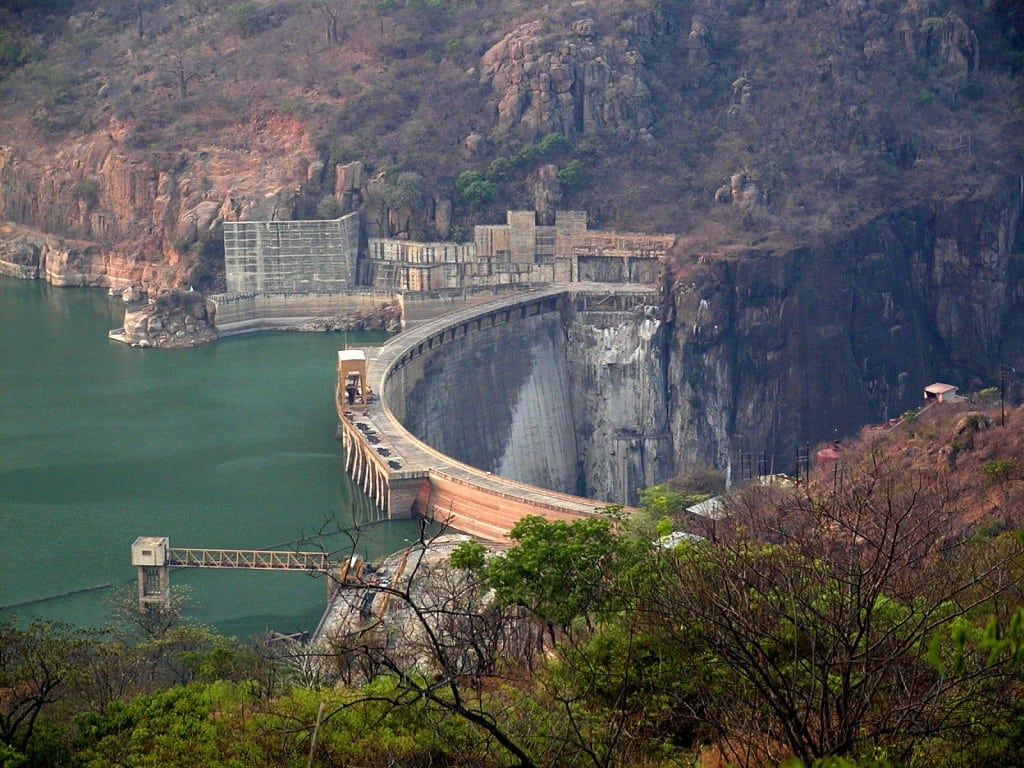
In Zimbabwe, load shedding is expected to remain "a way of life" until the government expands generation at Hwange and Kariba, the Zimbabwean said in July. The country has a capacity of around 1,400 MW against national demand of 2,200 MW.
—Sonal Patel is POWER’s senior writer.