A number of automotive manufacturers, electric utilities, electric power associations, and research groups are working to develop and evaluate technical approaches to integrating plug-in electric vehicles (PEVs) into the U.S. electrical grid system. This is a key requirement of facilitating widespread, near-term adoption of PEVs by the American public.
The automotive sector is undergoing an electrifying transformation. Since the introduction of automobiles that used internal combustion engines, gasoline has been the fuel of choice. Now, however, a number of diverse groups are working hard to make electricity the fuel source for a new breed of transportation vehicles.
To learn more about the emerging electric transportation sector, in April, POWER interviewed three individuals who have a variety of perspectives: representatives from a leading electric power trade association, a major U.S. utility, and an electric power research group.
Basic Overview of Electric Vehicles
There are three broad categories of electric vehicles (EVs):
- Hybrid electric vehicles (HEVs) use a combination of a gasoline engine and an electric motor to power the car. The electric motor generates electricity during braking, which can subsequently power the vehicle at slower speeds.
- Plug-in hybrid electric vehicles (PHEVs) are a derivative of HEVs that typically have a larger battery and can be plugged into a charger on the wall of the owner’s garage or at a charging station. This enables a PHEV to travel true electric miles with power from the grid for a limited distance at limited speeds. PHEVs can also run on gasoline for as long as needed between charges.
- Plug-in electric vehicles (PEVs) have a specially designed battery and use only an electric motor to power the car. PEVs are fueled exclusively from grid electricity and have no tailpipe or gas tank.
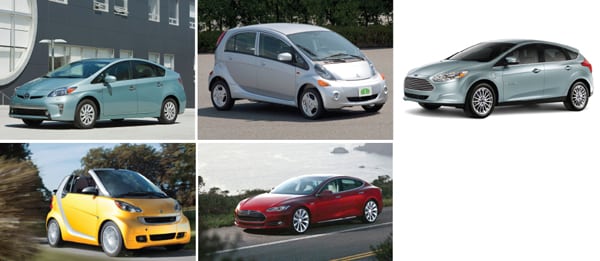
One PEV model, the Nissan Leaf, is now available in the U.S. Another PEV model, the Ford Focus Electric (Figure 1), will be available in the U.S. later this year. According to a Car & Driver article published in January, Ford expects the Focus Electric to have a better miles-per-gallon-equivalent (MPGe) rating than the PHEV Chevrolet Volt’s 93 MPGe. The Nissan Leaf scores a 99 MPGe rating. The Focus Electric’s battery is about the same size as the Leaf’s, which is estimated to enable the Leaf to go approximately 70 miles on a single charge. However, even more than with gas-powered vehicles, actual range on a full charge depends on terrain, speed, weather, and driver habits.
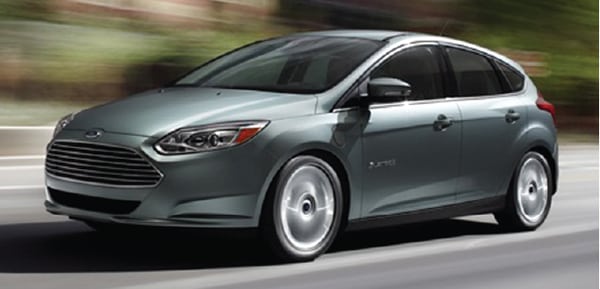 |
| 1. Cruising into the future. The 2012 Ford Focus Electric vehicle’s all-electric design features an electric motor, charging port, and high-voltage lithium-ion battery pack. The car is targeted to go up to 100 miles on a single charge, and the battery is rechargeable using a 120- or 240-volt outlet. Courtesy: Ford Motor Corp. |
Electric Vehicles’ Impact on the U.S. Grid
Some critics are concerned that the transition from traditional automobiles to PEVs could have a potentially negative impact on the U.S. electrical grid system. The main question is whether the grid will be able to handle all those electric cars recharging their batteries at the same time, or whether the grid will be sufficiently modernized in time to more easily accommodate the new vehicles. (For a discussion of the intersection of EVs and the smart grid, see “Smart Grid 2011: More Than Meters,” in our January 2011 issue and “The Smart Grid and Distributed Generation: Better Together,” in our April 2011 issue or our online archives at https://www.powermag.com.)
“Studies have shown that even in neighborhoods with older or smaller-capacity transformers, three to four electric vehicles would have to be added to a single transformer to become a problem,” Rick Tempchin, the executive director of Retail Energy Services at the Edison Electric Institute, told POWER. “Transformer maintenance and grid management are part of what electric utilities do; the coming of mass market electric cars is no different than previous waves of new electric products such as air conditioners or large-screen TVs.”
The grid has surplus capacity built into it, particularly at night, when electricity demand is at its lowest, and when PEVs are most likely to be recharging. Also, it will be several years before PEVs become widespread enough to put a serious strain on the grid, according to Tempchin.
Arun Banskota, president of NRG EV Services (a subsidiary of NRG Energy), explained to POWER that the utility NRG Energy is in the process of setting up “eVgo,” which is a dedicated system of home EV charging docks and network charging stations united by set-rate charging plans.
“The Texas cities where eVgo is building our infrastructure have a strong grid that can handle the projected number of electric vehicles for the foreseeable future,” he said. “As more electric vehicles are sold, we will be able to monitor charging locations to ensure we can increase the transformer number and size as well as distribution lines, as appropriate.”
Improving EV Performance
Despite earlier challenges, automotive manufacturers recently have made a number of advances in EV design.
“The modern electric vehicle has been in development for over 20 years,” said Mark Duvall, director of Electric Transportation at the Electric Power Research Institute (EPRI). “This started in the 1990s with vehicles like the GM EV1 and other battery electric vehicles from Toyota, Ford, etc. Plug-in vehicles require a whole host of ‘new’ automotive components, including advanced batteries, high-power drive motors, power electronics, and electrified accessories.”
He explained that automotive companies have been working on these technologies in their current form, first in electric vehicles, then hybrids and fuel cell vehicles, and now plug-in hybrids and electric vehicles (again). Most of the advances lead to smaller size, increased durability, and lower cost.
Banskota also commented on the need for continuing improvement in the design of PEVs. “While there is a sizeable market for subcompact cars, most Americans want their electric vehicles to give them the same capabilities in regard to size, power, and capability that their fossil fuel cars provide,” he said. “We are making inroads here but achieving greater parity will be needed to have electric vehicles replace fossil fuel vehicles in large quantities.”
The Development of Improved Battery Technology
“Lithium-ion battery technology (there are many different chemistries and designs within the Li-ion family) is a relatively mature technology,” Duvall explained. “The performance (power, range, etc.) of batteries from the best companies is pretty good. While improvements in energy density (for longer range), power density (greater acceleration) are welcome, the primary focus of the automotive companies is in developing battery systems that meet their very precise requirements.”
He explained that companies including Nissan, GM, Toyota, Ford, and others are using cells from the same manufacturer but are integrating them into systems in very different ways to meet their individual needs. Battery technology is viewed much like engine technology—each manufacturer owns its particular design and invests a lot of intellectual capital in it (Figure 2).
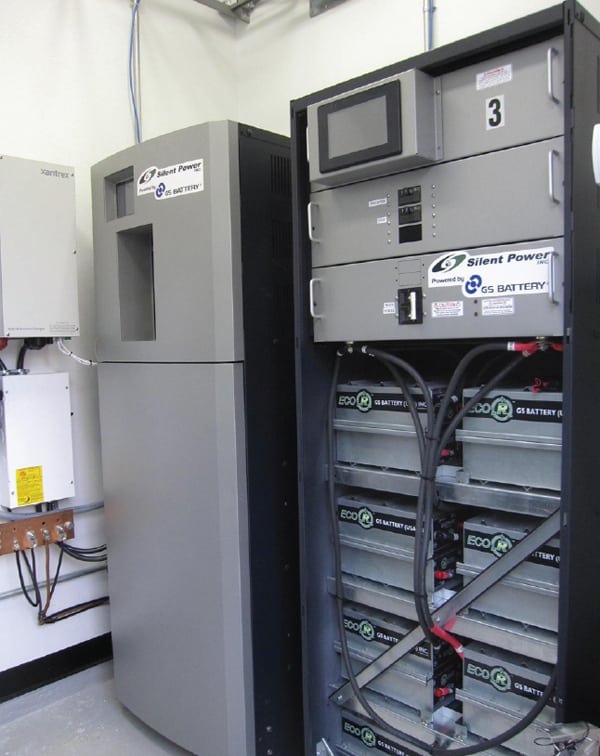 |
| 2. Battery breakthroughs. The SMART Charging Station energy storage system from GS Battery USA includes three 10-kW battery charger/inverters and three sets of (48) SLC-70-4 batteries for a total of 960Ah (46.08 kWh) of storage. Courtesy: Electric Power Research Institute (EPRI) |
Banskota agreed with Duvall that advancing battery technology is one of the key elements needed to encourage EV adoption.
“Significant investments are being made in increasing the ability for vehicle batteries to store energy, reducing the time needed to charge the batteries, and importantly, reducing the cost,” he said. “Continued success in these three areas will be critical to making the electric vehicle a viable option for widespread adoption in America.”
Charging Technology
All the new PEVs and PHEVs come with a standardized cable that can be plugged into a wall outlet so owners can be ready to charge at any time, Tempchin explained (Figure 3). This “Level 1” charger, as it is called, uses 110 volts and will fully recharge electric cars in 5 to 20 hours, depending on the size of the car’s battery. If PEV owners want a faster recharge, a “Level 2” charger can get the job done in 4 to 6 hours.
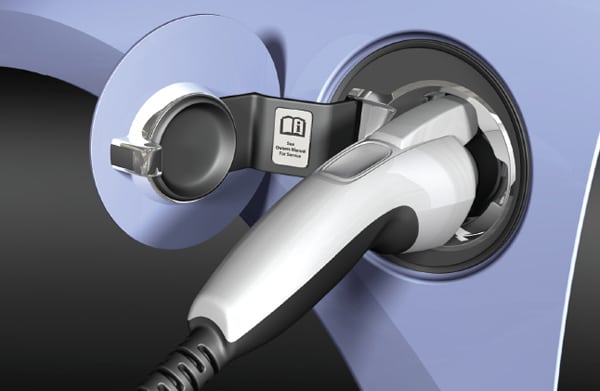 |
| 3. Plug power. All the new plug-in electric vehicles and plug-in hybrid electric vehicles come with a standardized cable that can be plugged into a wall outlet or a charging station so vehicle owners can be ready to charge at any time they have access to an outlet. Courtesy: EPRI |
The Level 2 charger uses 208 to 240 volts and requires a special, heavy-duty electrical outlet, similar to the one used for clothes dryers. Typically, the cost to buy and install a Level 2 outlet is between $1,000 and $2,000. No separate meter would be needed.
There are also “Level 3” or “fast charge/CHAdeMO” chargers that are said to be able to fully charge an EV in under an hour. An online article in AllCarsElectric in March of this year reported that there are only two such charging sites in the U.S. to date, though there are more than 530 in Japan. In June, the Oregon Department of Transportation and AeroVironment announced that they plan to install an undisclosed number of 480-volt chargers on a 150-mile stretch of Interstate 5 between the California/Oregon state border and the Willamette Valley area. The chargers, they say, will fully recharge batteries in under 30 minutes.
Sales of PEVs are still a tiny proportion of the U.S. automotive market. However, as the price of gas rises and automakers start introducing an increasing number of PEVs, the demand for away-from-home charging will no doubt experience rapid growth. Charging stations are starting to crop up across the U.S. EPRI has even constructed the SMART Charging Station at its EPRI research laboratory in Knoxville, Tenn. (Figures 4 and 5).
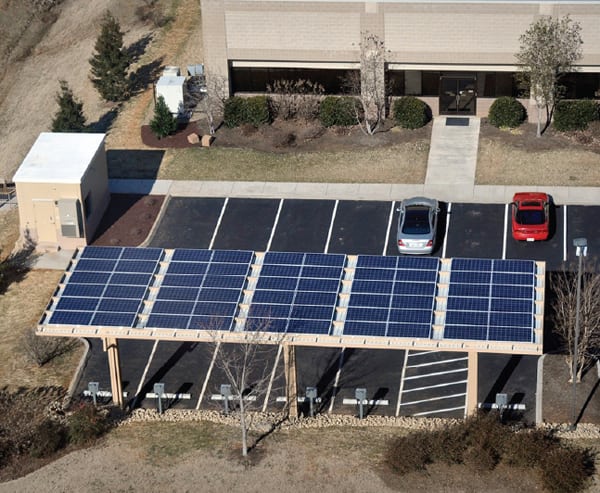 |
| 4. Turning sunshine into speed. The SMART Charging Station at EPRI’s research laboratory at Knoxville, Tenn., features a solar photovoltaic charging array and a battery storage system. Courtesy: Tennessee Valley Authority |
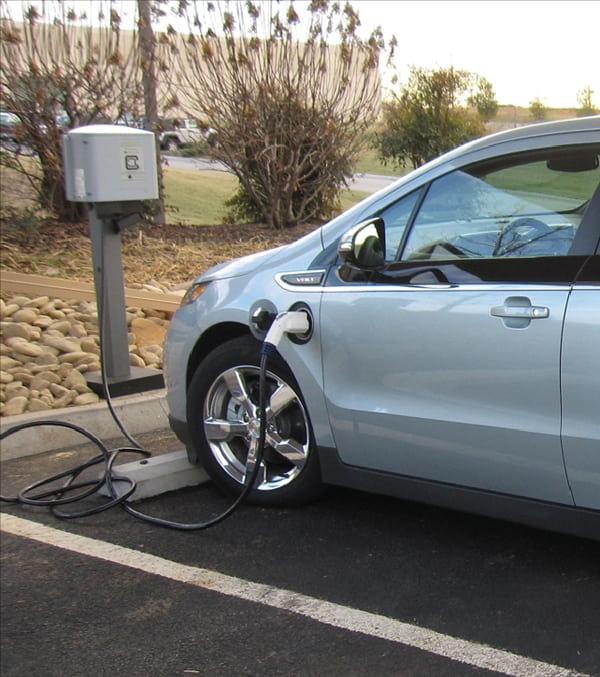 |
| 5. The best of both worlds. A Chevrolet Volt is shown being charged at the SMART Charging Station in Knoxville, Tenn. The Volt operates as a pure battery electric vehicle until its plug-in battery capacity is depleted; at that point, its gasoline-powered engine takes over to extend the vehicle’s range. Courtesy: EPRI |
The ChargePoint network is now the largest network of PEV charging stations in the country. The company even has a smart phone application (“app”) that customers can use to alleviate their concern about running out of electricity if they are experiencing “range anxiety.” The app tells users the location of the closest ChargePoint charging station, whether it’s vacant or in use by another PEV driver, and whether it’s free or for-pay.
Range anxiety remains a nontrivial concern. In June this year, Greentech Media reported that two participants in the Charged 2011 symposium on electric transportation, held in Silicon Valley, ironically found themselves stranded when driving home from the event as a result of their Nissan Leafs running out of charge. Other participants also shared stories of running out of power “at inconvenient times.” Though these drivers clearly are supporters of EVs, their experiences point to the need for charging infrastructure buildout and more reliable range estimates.
Environmental Advantages
Even though EVs have no direct air emissions, some opponents argue that if larger numbers of EVs are used in the U.S. in the future, that could lead to an increase in undesirable emissions if the additional electricity were to be generated by coal-fired power plants. Duvall countered that “the criticism that electric vehicles will increase air emissions is unfounded.”
He pointed out that in 2007, EPRI released the results of a comprehensive study related to this specific issue that the research group did in partnership with the Natural Resources Defense Council. The study showed that there were no significant impacts on air quality from increased power generation. In fact, the switch to EVs created modest air quality improvements everywhere, though particularly in urban areas.
“When considering the entire energy cycle (well-to-wheels), plug-in vehicles would reduce greenhouse gas emissions (even when comparing them to hybrids and considering higher emitting fossils plants that are part of the generation mix) by an amount approaching half a billion tons by 2050,” he said. “This includes the portion of the electricity for plug-in vehicles that would be coal-generated.”
Banskota also took the position that the widespread use of PEVs would be beneficial to the environment. “Even if powered by the generation from a coal plant built in the last 30 years, electric vehicles have fewer emissions, including carbon, than fossil fuel–powered vehicles,” he said. “However, electric vehicles are charged on a mixture of generation fuels, so they are markedly cleaner.”
He pointed out that in Texas, for example, the generation mixture includes zero-emission wind and nuclear, as well as natural gas. West Texas wind blows most strongly at night, which is when most people are expected to charge their EVs, thus maximizing the mix of renewable power used in charging EVs.
In addition, most nonattainment areas under the Clean Air Act criteria are in cities, where the majority of the vehicles are. In contrast, power generating plants are by and large in rural areas, so at the very least there is a dispersion of emissions when EVs are used. Across the board, EVs are cleaner than fossil-fueled vehicles and help promote better air quality, according to Banskota.
Encouraging Consumers to Buy EVs
One of the main hurdles that PEV manufacturers currently have is convincing customers to buy EVs when they are still considered to be a new technology. Recent EPRI consumer survey research suggests that, based on today’s circumstances, between 10% and 15% of new car purchasers show strong intentions in the next five years of buying an EV, either a PHEV or all-electric vehicle, Duvall said. However, he warned that “there are important rigidities that could lower the near-term level of adoption.”
“There is a gap between perceived and actual electric vehicle characteristics and ownership experience,” he said. “While most respondents indicate that they were aware of electric vehicles, there appears to be a considerable gap between what they initially perceive to be the EV ownership experience, and what they conclude after education about electric vehicles as a result of completing the survey. The ‘likelihood of purchase’ score rose after exposure to the survey information.”
Duvall pointed out that some utilities have aggressively taken actions to foster EV adoption by rolling out EV readiness programs that:
- Provide consumers with information about EV technology and its environmental advantages.
- Conduct detailed assessments of premise readiness for a Level 1 and Level 2 charging installation.
- Assess the sturdiness of the distribution system to accommodate EVs, and especially clusters charging on the distribution end node.
Such efforts comport with survey findings that consumers expect their electric utility to be centrally and persistently involved in helping them understand the EV advantage, and once an EV is purchased, to ensure a beneficial ownership experience, according to Duvall.
Banskota discussed strategies that the management of NRG Energy’s eVgo program is using to promote the greater use of EVs among its customer base. That program is trying to counter three charging challenges:
- eVgo is giving its subscribers the option to charge their vehicles at home in the “service station of the future,” the garage, at no up-front cost. The average home installation costs $2,000 to $2,500, and through eVgo, there is no up-front cost.
- eVgo also is giving customers “range confidence” through a series of fast-charging (480 V DC) Freedom Station sites conveniently located in specific eVgo cities.
- eVgo is providing customers assurance concerning how much EV ownership will cost through a fixed-rate subscription system that covers chargers and electric power consumed.
“As with any technology, reducing the higher up-front cost of electric vehicles through rebates, such as the current federal program of $7,500 per electric vehicle, is extremely useful,” Banskota said.
Private- and Public-Sector Promotion of EVs
Banskota spelled out what he considers to be appropriate actions by the U.S. private and public sectors related to the advancement of EVs.
“We believe the best model is the privately funded model used by eVgo that allows a comprehensive network backed up with a business model. This approach allows for the charging stations to be maintained and to grow as electric vehicle adoption increases,” he said. “We do not support rate-basing electric vehicle infrastructure. Asking people who cannot afford a car to subsidize an affluent person’s purchase of an electric vehicle as a second or third car is not in anyone’s public interests.”
In his opinion, the benefits in cleaner air, greater energy independence, and much lower operation and maintenance costs warrant government encouragement of EV adoption. He pointed out that “the rebates on electric vehicles are very valuable as the cost of this new technology is currently higher than fossil fuel technology, but that is a temporary need, as the price of electric vehicles should come down as they are built in greater numbers.” Besides continuing these rebates, he also advocated that the government provide EV drivers with access to HOV (high occupancy vehicle) lanes, preferred parking, and other “convenience” benefits.
EVs Poised to Move into the Fast Lane
Both Duvall and Banskota are optimistic about the long-term prospects of EVs in the U.S.
“Over the next five years, expect the introduction of many new models of plug-in vehicles from as many manufacturers as possible and increasing awareness of the public to their benefits,” Duvall said. “These vehicles will always cost a little more, but the Chevrolet Volt and the Nissan Leaf are—today—economically competitive with their gasoline counterparts over the life of the vehicle.”
He also pointed out that manufacturers like GM and Nissan are attempting to scale up production and reduce cost. He predicted that over the next 10 to 20 years, PEVs will be clearly economically advantageous over gasoline-fueled or hybrid vehicles, and the public will generally be aware of this fact.
“Public charging will be everywhere, even in small towns and rural areas,” he added. “You will be able to buy at least a plug-in hybrid in every model of vehicle currently on the market—compact cars to full-size pickup trucks.”
Banskota also sees EV sales picking up speed in the future. “With volume production, electric vehicles will gain greater parity with fossil-fueled vehicles in capital cost,” he said. “There will also be huge improvements in battery capacity, speed of charge, and size and power of the vehicles. These advances, coupled with the lower cost of maintenance on an electric vehicle, will make them the obvious choice for consumers.”
— Angela Neville, JD, is senior editor of POWER.